Imagine an instrument you play without touching. No keys, no strings, no bow. Just your hands moving through the air, shaping sound from invisible fields. That’s the theremin, invented in 1920 by Russian physicist Léon Theremin. Its sound—a wavering, ethereal wail—has haunted film scores and inspired electronic music for a century.
But the theremin is more than a curiosity. It emerged from early radio engineering, using vacuum tubes and the heterodyne principle to turn capacitance changes into music. The same technology that made it sing also made it a tool for espionage. From Carnegie Hall concerts to Cold War listening bugs, the theremin’s story weaves science, music, and history into a single, strange thread.
The Instrument That Senses Your Hands
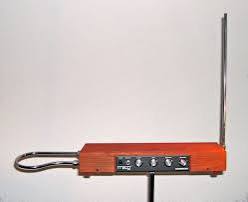
A theremin looks like a wooden box with two antennas. One, a vertical rod, controls pitch. The other, a horizontal loop, controls volume. You play by moving your hands near these antennas—closer to the pitch antenna raises the frequency, closer to the volume antenna softens the sound. No contact needed.
How does it work? Inside, two high-frequency radio oscillators hum at slightly different frequencies. This is the heterodyne principle: when two frequencies mix, they produce a beat frequency equal to their difference. If one oscillator runs at 500,000 Hz and the other at 500,500 Hz, the difference is 500 Hz—an audible tone. Your hand acts as a capacitor, changing the electric field around the antenna. This alters one oscillator’s frequency, sliding the pitch up or down.
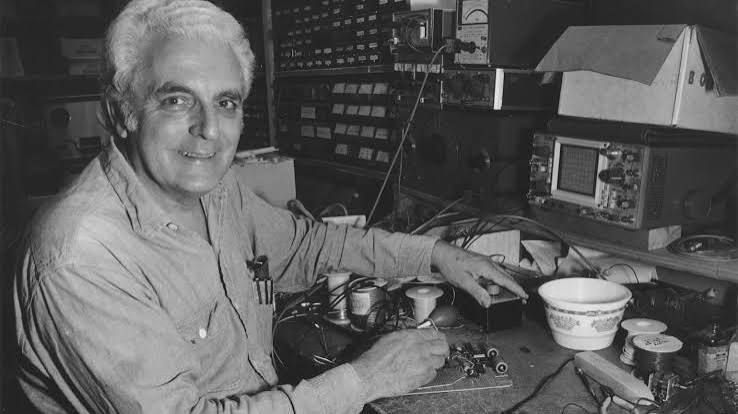
The original design used vacuum tubes, the same thermionic valves that powered early radios. In 1920, Léon Theremin was working on proximity sensors for the Soviet military when he noticed the pitch changes caused by his hand’s position. He realized he’d stumbled onto a musical instrument.
From Lenin’s Lessons to Carnegie Hall
Theremin demonstrated his invention—initially called the Termenvox or etherophone—to Lenin in 1922. The Soviet leader was reportedly fascinated and took lessons, though his musical career didn’t last. By 1928, Theremin had moved to the United States, patented his instrument, and launched commercial production with RCA. The RCA Model A sold poorly—around 500 units—but the theremin found its audience in concert halls.
In 1929, Clara Rockmore gave a landmark performance at Carnegie Hall. A Lithuanian-American violinist, Rockmore developed a precise technique using finger positioning rather than whole-hand movements. Her control turned the theremin’s notoriously slippery pitch into a expressive voice, capable of phrasing that rivaled a singer’s.
The theremin arrived during a period of intense musical experimentation. Futurists wanted to break from tradition, atonal composers sought new harmonic languages, and everyone looked for sounds beyond the orchestra. The theremin delivered something genuinely new: a glissando-heavy, vibrato-rich tone that was both human—like a voice or string—and alien. It was the first electronic instrument to achieve international fame.
Eerie Sounds for Dark States of Mind
The theremin’s cinematic career began in the 1940s, when composer Miklós Rózsa used it to score psychological turmoil. In Spellbound (1945), the theremin represents the protagonist’s obsessive, guilt-ridden mind. In The Lost Weekend (1945), it voices the agony of alcoholism. In The Red House (1947), it underscores a dark secret. Rózsa chose the theremin for its ability to convey the intangible—madness, intoxication, the supernatural.
Why does it sound eerie? The theremin produces continuous pitch, sliding between notes without discrete steps. This is uncommon in Western music, which typically uses fixed pitches. Our ears, trained to expect steps, perceive the gliding as unsettling. Combine that with its unstable intonation and rich vibrato, and you get a sound that feels out of control. It’s the sonic equivalent of a nervous tremor.
This sonic shorthand stuck. From there, the theremin appeared in sci-fi and horror films throughout the 1950s and beyond. Its sound became shorthand for the otherworldly, even when audiences didn’t know what instrument they were hearing.
A Spy in the Orchestra
Léon Theremin’s life took a strange turn in 1938. He returned to the Soviet Union under murky circumstances—likely forced repatriation by the NKVD. Instead of performing, he worked in a sharashka, a prison laboratory for scientists, developing espionage technology.
His most famous creation was the Great Seal bug, also called “The Thing.” Hidden inside a carved wooden seal of the United States, it was a passive listening device that hung in the U.S. Ambassador’s Moscow residence from 1945 to 1952. It used a variant of the heterodyne principle: external radio waves struck the device, which modulated them with nearby audio, allowing Soviet agents to eavesdrop. The bug wasn’t discovered until 1952, and it’s now considered a precursor to RFID technology.
The same physics that made music also made espionage possible. The capacitance-sensing principle behind the theremin is now everywhere—from smartphone proximity sensors to gesture-controlled devices. Theremin’s accidental instrument was a bridge between early radio and modern touchless tech.
The Legacy: Electronic Music and Beyond
The theremin’s influence on electronic music is foundational. It proved that music could be synthesized from pure electronics, without acoustic sources. This paved the way for synthesizers, which emerged decades later. The theremin also inspired other early electronic instruments like the Ondes Martenot (1928) and the Trautonium (1930), but it was the first to capture the public imagination.
After Theremin’s death in 1993, interest surged. His grand-niece Lydia Kavina carried on the performing tradition, teaching a new generation. Today, you’ll hear theremins in pop songs, film scores, and experimental music. Bands like the Pixies and Portishead have used it; composers like Howard Shore have scored films with it.
The theremin’s eerie voice remains instantly recognizable, a century after its invention. It’s a reminder that technology and art often arrive in the same package. A Soviet physicist built a device to sense proximity; he ended up creating the first electronic instrument. And when that instrument sang, it sang of things beyond words—obsession, mystery, and the unknown.
The theremin is more than a novelty or a horror movie cliché. It’s a testament to how a single scientific principle—heterodyning—can produce both music and surveillance. Its inventor lived a life stranger than fiction, from Lenin’s lessons to Cold War espionage. And its sound, once heard, is never forgotten. Next time you hear that eerie wail in a film, remember: you’re listening to a vacuum tube, a capacitance field, and a century of imagination.
Summary
- The theremin (1920) is the first fully electronic musical instrument, played without physical contact by moving hands near two antennas.
- It works via heterodyning: two high-frequency oscillators create an audible difference frequency, altered by the hand’s capacitance.
- Clara Rockmore’s virtuosity defined its expressive potential in classical repertoire.
- Miklós Rózsa’s 1940s film scores established the theremin as shorthand for psychological states and the supernatural.
- Léon Theremin also invented espionage devices, including the Great Seal bug, linking the instrument’s science to Cold War history.
FAQ
Q: How does a theremin produce sound without being touched?
A: The theremin uses two high-frequency radio oscillators. The difference between their frequencies produces an audible tone. Your hand’s capacitance changes one oscillator’s frequency, altering the pitch. Volume is controlled similarly by a second antenna.
Q: Why does the theremin sound so eerie?
A: Its continuous glissando—sliding between pitches without discrete steps—is unusual in Western music. Combined with wobbly intonation, it creates an unsettling, otherworldly effect.
Q: Who was Clara Rockmore?
A: She was a Lithuanian-American violinist who became the theremin’s greatest classical performer. Her precise finger technique allowed expressive playing that defined the instrument’s potential.
Q: How is the theremin connected to espionage?
A: Inventor Léon Theremin created the Great Seal bug, a covert listening device that used heterodyne principles. It hung in the U.S. Ambassador’s residence for seven years before being discovered.
Q: Is the theremin still used in music today?
A: Yes. It appears in film scores, pop songs, and experimental music. Many modern synthesizers and touchless sensing technologies trace their lineage to its principles.