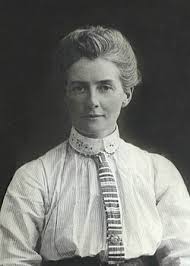
At 7:00 AM on October 12, 1915, a 49-year-old British nurse named Edith Cavell was led before a German firing squad in Brussels. Her crime: helping roughly 200–300 Allied soldiers, Belgian volunteers, and French civilians escape German-occupied Belgium to the neutral Netherlands. Her last words, spoken to the Anglican chaplain the night before, have echoed through history: “Patriotism is not enough. I must have no hatred or bitterness towards anyone.”
Cavell was not a soldier, nor a spy. She was a matron at a Red Cross hospital, a professional nurse who had dedicated her life to caring for the sick. But when her adopted country fell under occupation, she chose to resist — not with weapons, but with courage, compassion, and a network of guides that ferried stranded men to safety. Her execution turned her into a martyr, a symbol of Allied propaganda, and a lasting question about the rules of war and the limits of humanity.
From Norfolk to Brussels: The Making of a Nursing Pioneer
Edith Louisa Cavell was born on December 4, 1865, in the small village of Swardeston, Norfolk, where her father was a vicar. She trained as a nurse at the London Hospital under the formidable Matron Eva Lückes, a demanding mentor who instilled in her a rigorous professional standard. After a stint as a private nurse, Cavell’s career took a decisive turn in 1907 when Dr. Antoine Depage recruited her to become the matron of the newly established Berkendael Medical Institute in Brussels.
At the time, nursing in Belgium was far behind British standards. Cavell transformed the institute into a secular nursing school, training hundreds of nurses and earning widespread respect in Belgian medical circles. By 1914, she had built a reputation as a skilled administrator and a compassionate caregiver. When Germany invaded neutral Belgium in August 1914, Brussels fell within weeks, and Cavell’s hospital became part of the Red Cross, treating soldiers from both sides. But the occupation brought with it a moral dilemma that Cavell could not ignore.
Edith Cavell’s execution was a turning point in the First World War, a moment that crystallized the brutality of the conflict and the heroism of those who resisted it. Her story is not just a tale of martyrdom; it is a reminder that courage can take many forms, and that even in the darkest times, individuals can choose to act with compassion. Her legacy endures in the statue in St Martin’s Place, in the postage stamp issued in 2015, and in the quiet pride of a nation that remembers her as one of its greatest. But perhaps her most lasting message is the one she whispered to the chaplain: that patriotism, while noble, is not enough — we must also strive to be human.
Summary
- Edith Cavell was a British nurse who helped 200–300 soldiers and civilians escape German-occupied Belgium during WWI.
- She was arrested, court-martialed, and executed by firing squad on October 12, 1915.
- Her last words, “Patriotism is not enough,” became a rallying cry for the Allies and a symbol of her Christian forgiveness.
- Her execution sparked international outrage and was used extensively in Allied propaganda.
- Her legacy includes a statue in London, recognition as one of the 100 Greatest Britons, and a memorial at Norwich Cathedral.
FAQ
Q: How many people did Edith Cavell help escape?
A: Cavell is estimated to have helped roughly 200–300 Allied soldiers, Belgian volunteers, and French civilians escape to the Netherlands between November 1914 and August 1915.
Q: What was Edith Cavell’s crime?
A: She was charged with treason under German military law for assisting enemy soldiers to cross into neutral territory. She confessed to her role, stating she felt it her duty to help those who came to her.
Q: Why was her execution controversial?
A: Many believed she was treated unfairly: she was held in solitary confinement, denied legal counsel until the trial, and the proceedings were conducted in German, which she did not speak. The international community saw the execution as a German atrocity, while Germany maintained it was a legal necessity.
Q: What did Edith Cavell say before she died?
A: To the Anglican chaplain, Rev. Stirling Gahan, she said: “Patriotism is not enough. I must have no hatred or bitterness towards anyone.” The exact wording is debated, but the sentiment of forgiveness has endured.
Q: Where is Edith Cavell buried?
A: She was originally buried in Brussels, but after the war her body was exhumed and reinterred at Norwich Cathedral in England, where her grave remains today.