In 1602, a group of Dutch merchants pooled their money to fund a risky voyage to the Spice Islands. That gamble became the Vereenigde Oostindische Compagnie (VOC)—the world’s first multinational corporation. It invented the stock market, controlled trade across half the globe, and at its peak was worth more than Apple, Amazon, and Google combined. But within two centuries, this colossal enterprise collapsed into bankruptcy. How did a company that once commanded the world’s oceans end up a cautionary tale? The answer lies in its own brilliant, and brutal, innovations.
The Birth of a Corporate Giant
The VOC was born from a crisis. In the 1590s, Spain closed Lisbon’s port to Dutch ships, cutting off their access to Asian spices. Dutch merchants had to sail directly to the East Indies, but the voyages were long, dangerous, and expensive. Competing Dutch companies were undercutting each other, driving up prices in Asia and crashing them in Europe. So the Dutch government forced them to merge. In 1602, they formed a single entity with a 21-year monopoly on trade east of the Cape of Good Hope and west of the Strait of Magellan.
The VOC’s structure was revolutionary. It had a permanent capital base, funded by public investment. Anyone could buy shares, and those shares could be traded on the newly established Amsterdam Stock Exchange. This was the world’s first initial public offering (IPO). Investors weren’t just funding a single voyage; they were buying into a company that would exist indefinitely. This model of permanent, transferable equity became the blueprint for modern corporations.
The company was governed by a board of 17 directors, the Heeren XVII, with Amsterdam holding 8 seats. Six regional chambers managed operations, but the real power lay in the boardroom. The VOC wasn’t just a trading company; it was a state within a state. It could wage war, sign treaties, and govern territories. Its charter gave it the authority to maintain its own army and navy.
The Spice Monopoly and the Brutal Logic of Profit
The VOC’s core business was spices—pepper, nutmeg, cloves, and cinnamon. These were luxury goods in Europe, worth more than gold by weight. The company’s “Grand Design” was to control the entire supply chain, from production to distribution. That meant conquering the source of the spices and eliminating competitors.
Jan Pieterszoon Coen, the Governor-General from 1619, embodied this ruthless strategy. He established Batavia (modern Jakarta) as the company’s Asian headquarters, and from there, he waged a campaign to dominate the spice trade. The most infamous incident was the Banda Islands massacre in 1621. The local population, who sold nutmeg to the English, were systematically killed or enslaved to secure a monopoly. Coen’s actions were brutal, but they were effective. The VOC achieved a near-total control of the nutmeg market, and profits soared.
At its peak, the VOC operated over 150 merchant ships and 40 warships, employing more than 70,000 people. It maintained forts and trading posts from the Cape of Good Hope to Japan. In Japan, it was the only Western company allowed to trade, operating from the artificial island of Dejima in Nagasaki harbor. The VOC was, in every sense, a global enterprise.
Financial Innovation and the World’s First Stock Market Bubble
The VOC’s financial innovations were as groundbreaking as its military conquests. By issuing shares that could be freely traded, it created a secondary market. This allowed investors to buy and sell stakes without waiting for a voyage to return. The Amsterdam Stock Exchange, established in 1602, became the hub of this new financial world.
The company’s dividend policy was remarkably consistent. Over its lifetime, the VOC paid an average annual dividend of 18%. At its height, its market capitalization was estimated to be worth roughly $7.9 trillion in modern dollars, adjusted for inflation and GDP share. That makes it the most valuable company in history relative to the global economy.
But this success bred complacency. The VOC’s permanent capital meant shareholders had little say in management, and the directors grew increasingly corrupt and inefficient. The company’s focus shifted from innovation to exploitation. It relied on forced cultivation and monopolistic practices, which alienated local populations and invited competition.
The Long Decline: Corruption, Competition, and Changing Tides
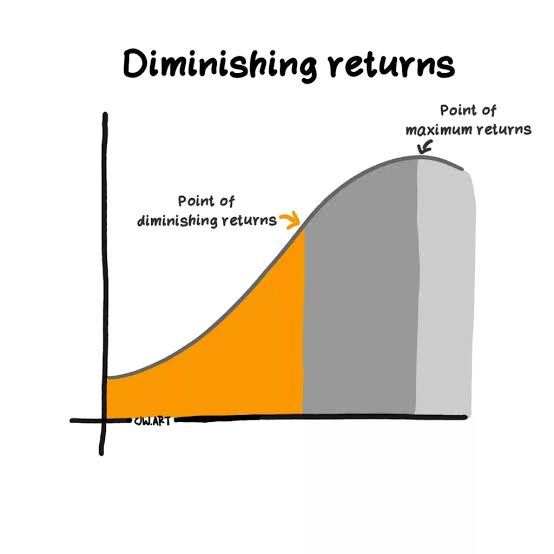
The VOC’s decline was gradual but inexorable. By the late 17th century, its profitability was already waning. The company paid high dividends even when profits were falling, borrowing to maintain the payouts. This eroded its financial base. Corruption was rampant; directors and employees embezzled funds, and the company’s books were a mess.
Competition from the English and French East India Companies eroded its monopoly. The VOC’s military costs soared as it fought to maintain its territories. The Fourth Anglo-Dutch War (1780-1784) was a disaster, crippling its navy and trade. By the 1790s, the company was effectively bankrupt.
In 1799, the VOC was formally dissolved, and its debts were taken over by the Dutch state. Its territories became the Dutch East Indies, which would remain a Dutch colony until 1949. The company that had once been the world’s mightiest corporation ended in ignominy.
Lessons for Modern Business
The VOC’s rise and fall offer enduring lessons. Its innovations—permanent capital, transferable shares, and limited liability—became the foundation of modern capitalism. But its failures also highlight the dangers of unchecked power, corruption, and a short-term focus on dividends. The VOC was a pioneer, but it also showed how a company can become too big, too arrogant, and too detached from the realities of its market.
Today, as multinational corporations wield unprecedented influence, the VOC’s story is a cautionary tale. It reminds us that corporate power, when left unchecked, can lead to exploitation and collapse. But it also shows the transformative potential of financial innovation. The VOC didn’t just build an empire; it built the template for the global economy we live in today.
The End of an Era
When the VOC was dissolved, it left behind a legacy of innovation and brutality. Its rise was driven by a bold vision and financial genius; its fall was a result of hubris and decay. The world’s first multinational was a product of its time, but its influence persists. Every time a company issues shares on a stock exchange, it is following in the footsteps of the Dutch East India Company. And every time a corporation collapses under the weight of its own excess, it echoes the VOC’s final days.
The Dutch East India Company was a marvel of its age, a corporation that changed the course of history. Its innovations laid the groundwork for modern finance, but its methods were often brutal, and its decline was as dramatic as its ascent. The VOC’s story is a reminder that even the mightiest companies are not immortal. They rise on the strength of their ideas, but they fall when they lose sight of the very principles that made them great.
Summary
- The VOC, founded in 1602, was the world’s first multinational corporation, with a permanent capital base and publicly traded shares.
- It controlled the spice trade through territorial conquest and brutal monopolistic practices, including the Banda Islands massacre.
- At its peak, it employed 70,000 people, operated 150 ships, and had a market cap equivalent to $7.9 trillion today.
- Its decline was fueled by corruption, excessive dividends, military overreach, and rising competition from the English and French.
- Dissolved in 1799, the VOC’s legacy includes the blueprint for modern corporations and a cautionary tale about unchecked corporate power.
FAQ
Q: Why was the Dutch East India Company considered the first multinational?
A: It was the first company to operate across multiple continents with a permanent capital base, tradeable shares, and a hierarchical governance structure. It had operations from Africa to Asia and was chartered by a government to act with quasi-sovereign powers.
Q: What was the VOC’s most significant financial innovation?
A: The VOC pioneered the concept of a permanent, transferable equity capital. It issued shares that were freely traded on the Amsterdam Stock Exchange, allowing for liquidity and continuous investment. This became the foundation of modern stock markets.
Q: How did the VOC maintain its monopoly on spices?
A: Through a combination of military force and strategic treaties. The company conquered key spice-producing regions, such as the Banda Islands, and used violence to eliminate competitors, ensuring its sole control over the supply.
Q: Why did the VOC decline?
A: The decline was due to a mix of internal corruption, excessive dividend payouts that drained cash, rising competition from rival East India companies, and costly military conflicts. The company became overextended and inefficient.
Q: What can modern businesses learn from the VOC?
A: The VOC’s rise shows the power of financial innovation and strategic vision. Its fall warns against complacency, corruption, and a short-term focus on shareholder returns at the expense of long-term sustainability.