Every 3 seconds, someone in the world develops dementia, and Alzheimer’s disease is the most common cause, representing 60–80% of cases. With over 55 million people currently living with dementia—a number projected to hit 139 million by 2050—the need for earlier detection and effective treatments has never been more urgent.
Artificial intelligence is stepping into this gap. While no cure exists yet, AI is already helping researchers spot the disease years earlier, identify new drug candidates from existing medicines, and design more efficient clinical trials. This article explores what AI is actually doing today in Alzheimer’s research, grounded in current scientific evidence, without overpromising.
The Challenge: A Disease That’s Hard to Detect and Harder to Treat
Alzheimer’s is a complex neurodegenerative condition marked by amyloid-beta plaques, tau tangles, and progressive brain cell death. For decades, the ‘amyloid hypothesis’ dominated research, but repeated drug trial failures have shown that the disease involves multiple factors—genetics, vascular health, and immune response—making it multifactorial. This complexity is one reason why AI’s ability to integrate diverse data is so valuable.
Current treatments like donepezil and memantine only manage symptoms, and even the newly approved anti-amyloid antibodies (aducanumab, lecanemab) modestly slow progression at best. The global cost of dementia care exceeds $1.3 trillion annually, and the historical failure rate for Alzheimer’s drug candidates is around 99%. These numbers highlight the pressing need for new approaches.
What AI Does Today: Concrete Applications
Imaging Analysis: Seeing What the Eye Misses
Deep learning models, especially convolutional neural networks (CNNs), can analyze PET and MRI scans to detect amyloid plaques, tau tangles, and brain atrophy. Studies since 2016 have shown these models achieve accuracy above 90% in diagnosing Alzheimer’s from MRI, sometimes outperforming expert radiologists. For example, the FDA has already approved an AI-based diagnostic tool called ICADx for brain imaging, signaling regulatory acceptance.
Blood Biomarkers: A Simple Test for Early Signs
Machine learning is being used to identify combinations of plasma proteins and genetic markers that predict Alzheimer’s pathology years before symptoms appear. Notably, assays for p-tau217 are showing promise. In large validation cohorts, AI-driven blood biomarker panels are approaching clinical utility, potentially enabling population-wide screening with a simple blood draw.
Drug Repurposing: Finding New Uses for Old Drugs
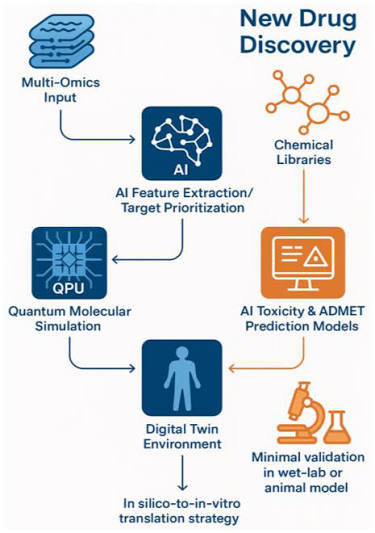
AI platforms like BenevolentAI and Insilico Medicine have analyzed existing drugs and identified candidates for Alzheimer’s clinical trials. For instance, metformin, a common diabetes drug, and certain anti-inflammatory medications have emerged as potential repurposing candidates. This approach could cut the traditional 10–15 year drug development timeline down to 3–5 years.
Speech Analysis: Listening for Early Clues
Natural language processing (NLP) models can detect subtle linguistic changes in voice recordings—word-finding difficulties, unusual pauses, syntactic errors—that correlate with early cognitive decline. This non-invasive method could be used for low-cost screening in primary care settings.
Clinical Trial Design: Improving Success Rates
AI is helping to stratify patient populations, predict trial outcomes, and reduce the staggering 99% failure rate. By identifying which patients are most likely to respond to a given therapy, AI can make trials smaller, faster, and more likely to succeed.
The Science Behind the Scenes
Several AI techniques are at work:
– Deep learning (CNNs) for imaging analysis.
– NLP for electronic health records and speech.
– Reinforcement learning for optimizing drug dosing and combination therapies.
– Generative models (GANs, VAEs) for synthesizing missing imaging data and simulating disease progression.
– Graph neural networks for modeling protein-protein interactions in Alzheimer’s pathways.
These methods allow researchers to integrate multi-omic data—genomics, proteomics, imaging, and clinical records—to understand the disease as a system, not in isolation.
Why Now? The Perfect Storm
The convergence of three factors explains the recent surge in AI for Alzheimer’s:
- Data explosion: Datasets like the Alzheimer’s Disease Neuroimaging Initiative (ADNI) and UK Biobank provide thousands of longitudinal scans and clinical records, giving AI models the training data they need.
- Computational advances: GPU computing and cloud infrastructure make training large models feasible.
- Funding and regulatory support: The NIH’s AIM-AHEAD program and the Alzheimer’s Association’s AI initiatives have injected substantial funding, while the FDA is developing frameworks for AI in drug discovery.
The Optimistic View: What Could Be Possible
If current trends continue, AI could enable:
– Population-wide screening using cheap blood tests and voice analysis, catching Alzheimer’s 10–15 years earlier than current methods.
– Personalized medicine by stratifying patients into subtypes (e.g., ‘inflammatory,’ ‘metabolic,’ ‘vascular’ Alzheimer’s) and matching them to targeted therapies.
– Accelerated drug discovery through in silico screening of millions of compounds.
These possibilities are grounded in today’s research, but translating them into routine clinical practice will require rigorous validation and careful integration into healthcare systems.
AI is not a magic bullet for Alzheimer’s, but it is already a powerful tool in the research arsenal. From detecting the disease on brain scans to repurposing existing drugs, AI is helping scientists move faster and think more broadly. While a cure remains elusive, the combination of AI’s analytical power and growing biological understanding offers a realistic path toward earlier diagnosis and more effective treatments. The next decade will likely see these tools move from research labs into clinics, changing how we approach this devastating disease.
Summary
- AI models can detect Alzheimer’s on brain scans with accuracy comparable to or better than expert radiologists.
- Machine learning is enabling blood tests that predict Alzheimer’s pathology years before symptoms appear.
- AI-driven drug repurposing has identified existing drugs like metformin as candidates for Alzheimer’s trials.
- Natural language processing can spot early cognitive decline through subtle changes in speech.
- AI is improving clinical trial design by better stratifying patients, potentially reducing the 99% failure rate for Alzheimer’s drugs.
FAQ
Q: Can AI diagnose Alzheimer’s disease?
A: AI models can analyze brain scans (MRI, PET) and blood biomarkers to detect signs of Alzheimer’s with high accuracy, often comparable to expert doctors. However, AI is not yet used as a standalone diagnostic tool in routine clinical practice; it assists clinicians by providing additional data.
Q: How does AI help find new Alzheimer’s treatments?
A: AI helps in two main ways: by screening existing drugs for repurposing (identifying new uses for current medications) and by analyzing biological data to discover new drug targets. For example, AI platforms have identified metformin as a potential Alzheimer’s therapy.
Q: Is AI currently being used in Alzheimer’s clinical trials?
A: Yes, AI is used to select participants, predict outcomes, and monitor progression. This can make trials more efficient and increase the chances of detecting a treatment effect.
Q: What are the limitations of AI in Alzheimer’s research?
A: AI models require large, high-quality datasets, and they can be biased if the data is not diverse. Also, AI findings need validation in real-world settings. Finally, AI does not yet provide a cure; it helps with diagnosis and drug discovery.
Q: When will AI-based Alzheimer’s tools become widely available?
A: Some AI-based diagnostic tools have already been approved by regulators (e.g., ICADx for brain imaging). Blood tests and speech analysis are in advanced stages of validation and could become common within the next few years, but widespread use depends on regulatory approvals and healthcare adoption.