Tag: Dresden

  • The Firestorm Over Dresden: Was It a War Crime?

    The Firestorm Over Dresden: Was It a War Crime?

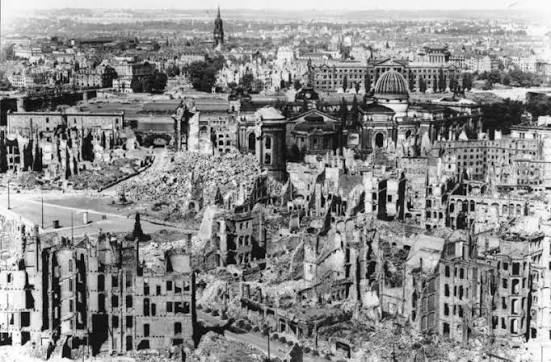
    On the night of February 13, 1945, the sky over Dresden turned orange. Within 24 hours, more than 1,300 bombers from the Royal Air Force and the US Army Air Forces had dropped nearly 4,000 tons of explosives and incendiaries. The resulting firestorm a self-sustaining inferno with winds like a hurricane and temperatures exceeding 1,000°C consumed the baroque heart of a city known as ‘Florence on the Elbe.’ By the time the last plane left on February 15, an estimated 22,000 to 25,000 people lay dead. Three-quarters of the built-up area was rubble.

    Seventy-five years later, the question still smolders: Was the bombing of Dresden a war crime? The answer depends on how you weigh military necessity against civilian suffering, and on which facts you choose to emphasize. This article lays out the arguments on both sides, grounded in the historical record, and lets you decide where the line falls.

    The City Before the Storm

    Dresden in early 1945 was not the untouched cultural jewel of Allied propaganda. It was a functioning military hub. The city’s factories produced fuses, optics, and aircraft parts. Its rail yards moved troops and supplies toward the Eastern Front, where the Red Army was pushing westward. The German military used Dresden as a garrison and a communications center.

    But it was also a city swollen with refugees. Its normal population of about 600,000 had grown to perhaps double or triple that, as civilians fled the Soviet advance from the east. They packed the streets, the parks, and the cellars. Many had no homes left. They had come to Dresden because it had been spared the bombing that had flattened other German cities. That safety was about to end.

    The Attack: Four Waves, One Firestorm

    The raid unfolded in four distinct waves over three days. The first two were RAF night raids, beginning on February 13. The bombers dropped a mix of high-explosive and incendiary bombs. The high explosives blew off roofs and shattered windows, exposing the wooden beams and flammable interiors of the old buildings. The incendiaries ignited them.

    The result was a firestorm, a rare and terrifying phenomenon. The fire created its own wind system, sucking in oxygen from the surrounding streets and fueling the flames. Temperatures reached over 1,000°C. People in cellars suffocated as the fire consumed the oxygen. Others were incinerated in the open. The USAAF followed with two daylight raids on February 14 and 15, targeting marshalling yards and industrial areas, but the city was already a blazing ruin.

    The death toll is disputed. The official German commission in 2010 estimated up to 25,000 dead. Earlier claims of 100,000 or more, popularized by the British writer David Irving, have been discredited by historians. The modern consensus is 22,000–25,000, although some argue for slightly higher figures. The destruction was staggering: about 75% of the built-up area was damaged or destroyed, including 23,000 houses and the historic Altstadt.

    The Case for Military Necessity

    The defenders of the raid argue that Dresden was a legitimate target. It was a rail and communications hub, an industrial center, and a garrison city. The attack was coordinated with the Soviet command, which saw Dresden as a strategic priority to disrupt German logistics on the Eastern Front. The raid was part of a broader Allied strategy of area bombing, designed to destroy German morale, industry, and transportation—and to hasten the end of the war.

    In the context of total war, civilian casualties were an accepted consequence. The Allies believed that bombing, even area bombing, would shorten the war and save overall lives. Arthur Harris, the head of RAF Bomber Command, defended area bombing as a way to break Germany’s will and capacity to fight. Dresden was not uniquely singled out; it was one of many German cities subjected to this policy. The Nuremberg Trials, which judged the crimes of the Nazi regime, did not charge anyone for the Dresden bombing. That silence, defenders argue, is telling.

    The Case for War Crime

    Those who call the bombing a war crime point to the principle of proportionality. By February 1945, the war was effectively decided. Germany was crumbling. The strategic value of Dresden—a city crowded with refugees, many of them women and children—was negligible compared to the civilian carnage. The raid served little military purpose and may have been intended as a show of force to the Soviets, a signal of Allied air superiority as the post-war map was being drawn.

    The attack violated the laws of war as they were understood at the time. The Hague Conventions and customary international law prohibited attacks that caused disproportionate harm to civilians. Dresden was not a military target in the narrow sense; it was a city of people, and the firestorm killed them indiscriminately. Some argue this was terror bombing—deliberately targeting civilians to break morale, which is a war crime under any definition.

    The refugee factor compounds the charge. These were not soldiers or munitions workers. They were families fleeing an army. They had no military value, and their deaths were not a necessary consequence of a legitimate military operation. The sheer scale of destruction—a city of baroque beauty reduced to ash—suggests an intent to annihilate, not just to disrupt.

    The Moral Fog of War

    Neither the military nor the legal case is clean. The Allies did not formally classify Dresden as a war crime. No one was prosecuted. But the debate is not settled by a tribunal. It is a moral question, and it refuses to go away.

    In the immediate aftermath, the bombing was a propaganda tool. Joseph Goebbels used it to rally German resistance. Later, Soviet-aligned East Germany used it to criticize Western Allied conduct, framing their own suffering as a moral indictment of capitalism. In the West, the bombing was initially defended, but the publication of Kurt Vonnegut’s Slaughterhouse-Five in 1969—a novel based on his own experience as a prisoner of war in Dresden—forced a new generation to confront the human cost.

    The debate today is not just about Dresden. It is about the nature of war itself. Modern conflicts continue to raise the same questions: What is a legitimate target? How many civilian deaths are acceptable? When does military necessity become a crime? Dresden is a test case, a moment when the line seemed to blur.

    The firestorm was real. The deaths were real. The question is whether they were justified.

    The bombing of Dresden remains a haunting example of the moral compromises of war. It was not a simple act of evil, nor was it a clean military operation. It was a policy decision made by men who believed they were ending war faster, and it killed tens of thousands of civilians in a firestorm of their making. Whether that constitutes a war crime depends on where you place the burden of proof—on the necessity of the target or on the proportionality of the harm. The historical record does not give a final answer. It gives us the facts, and the choice to weigh them.

    Summary

    • The bombing of Dresden took place February 13–15, 1945, in four waves by the RAF and USAAF, killing an estimated 22,000–25,000 people and destroying 75% of the city.
    • Defenders argue Dresden was a legitimate military target—a rail hub, industrial center, and garrison—and that the raid was part of a broader strategy to shorten the war.
    • Critics argue the attack violated proportionality under the laws of war, especially given the city’s crowded refugee population and the war’s nearing end.
    • No international tribunal classified the bombing as a war crime; the Nuremberg Trials did not charge anyone for it.
    • The debate remains unresolved, reflecting the enduring tension between military necessity and civilian protection in war.

    FAQ

    Q: How many people died in the Dresden bombing?
    A: Modern estimates range from 22,000 to 25,000 deaths, based on the official German commission’s 2010 report. Earlier claims of 100,000+ have been discredited.

    Q: Was Dresden a legitimate military target?
    A: Yes, Dresden had military significance as a railway and communications hub, with factories producing military equipment. However, its value as a target is disputed given the war’s status in February 1945.

    Q: Why did the Allies bomb Dresden?
    A: The raid was part of the Allied area bombing strategy and Operation Thunderclap, aimed at disrupting German logistics, supporting the Soviet advance, and demonstrating air superiority.

    Q: Was the Dresden bombing ever classified as a war crime?
    A: No. The Nuremberg Trials did not charge anyone for the bombing, and no international tribunal has classified it as a war crime.

    Q: What was the firestorm?
    A: A firestorm is a self-sustaining conflagration caused by incendiary bombs, creating hurricane-force winds and temperatures over 1,000°C. It caused most of the casualties in Dresden.
  • The Firestorm Over Dresden: The Ethics of Area Bombing and the Civilian Cost of War

    The Firestorm Over Dresden: The Ethics of Area Bombing and the Civilian Cost of War

    At 10:15 PM on February 13, 1945, the first wave of RAF Lancasters began dropping their loads on Dresden. Within minutes, the city’s narrow streets were ablaze, and a firestorm—a self-sustaining conflagration with hurricane-force winds—was born. Over the next 48 hours, four raids by the Royal Air Force and the United States Army Air Forces would turn one of Europe’s most beautiful cities into a smoking ruin, and spark a moral controversy that still rages today.

    The attack on Dresden was not an anomaly but the culmination of a strategic doctrine—area bombing—that had evolved over four years of total war. Its goal was not to strike a specific factory or rail yard, but to destroy the city itself, to kill and displace its inhabitants, and to break the will of the German people. The ethical questions it raised—about the distinction between combatants and civilians, the limits of military necessity, and the meaning of proportionality—remain painfully relevant in an age of urban warfare and drone strikes.

    The Rise of Area Bombing

    Area bombing did not emerge from a vacuum. In the interwar years, international norms—such as the 1923 Hague Draft Rules and the 1938 League of Nations resolution—explicitly prohibited bombing civilians. But these were never ratified, and when war came, the taboo eroded quickly. The German bombing of Rotterdam in May 1940 and the Blitz on London that followed broke the implicit agreement, and the RAF, which had already experimented with area bombing in 1940, embraced it fully.

    The turning point came with the Butt Report of 1941. It revealed that RAF precision bombing was disastrously inaccurate: only one in five bombers dropped its payload within five miles of the target. For Bomber Command’s commander, Air Chief Marshal Arthur “Bomber” Harris, the conclusion was stark. If you couldn’t hit the factory, you could still destroy the houses around it. The Area Bombing Directive of February 1942 explicitly authorized attacks on civilian morale, and the Casablanca Directive of January 1943 called for the “progressive destruction and dislocation of the German military, industrial, and economic system.” In practice, this meant the systematic destruction of Germany’s cities.

    The RAF’s 1942 “dehousing” plan was chillingly explicit: “the destruction of houses, public utilities, transport and human lives; the creation of a refugee problem on an unprecedented scale; the breakdown of the orderly life of the community” would cripple German war production. The logic was simple—if you destroy the homes of workers, they cannot work. But the cost was measured in civilian lives.

    Why Dresden?

    By February 1945, the war was nearly over. The Red Army was advancing from the east, and the Allies were closing in from the west. Dresden, known as “Florence on the Elbe,” had been spared the worst of the bombing so far. It was a major transport hub, a garrison city, and home to factories producing fuses, optics, and aircraft parts. But it was also a cultural jewel, and its population had swelled with refugees fleeing the Soviet advance.

    The Soviet Union, at the Yalta Conference, requested bombing of Berlin and eastern German cities to disrupt troop movements and refugee flows. Dresden was a natural target. It was a critical rail and road junction, and destroying it would hinder German reinforcements moving to the Eastern Front. Some historians also argue that the raid was partly intended to demonstrate Allied air power to the Soviets in the emerging post-war power struggle.

    Whatever the strategic rationale, the execution was devastating. On the night of February 13–14, two waves of RAF bombers dropped a mix of high-explosive blast bombs and incendiaries. The goal was to create a firestorm—and they succeeded. The conflagration generated winds that reached hurricane force, sucking oxygen from the streets and consuming everything in its path. The following day, USAAF bombers returned for two daylight raids, targeting the remaining infrastructure and adding to the chaos.

    The Toll

    The exact death toll remains a matter of bitter dispute. The German commission of 2010 concluded that between 18,000 and 25,000 people died, with a plausible upper bound of 40,000. Most modern historians accept a range of 25,000 to 40,000. But for years, the figure was inflated by Nazi propaganda—which claimed 135,000 or more—and later peddled by Holocaust deniers to equate Allied bombing with Nazi genocide. The city’s population had been swollen by refugees, many of whom perished in the flames.

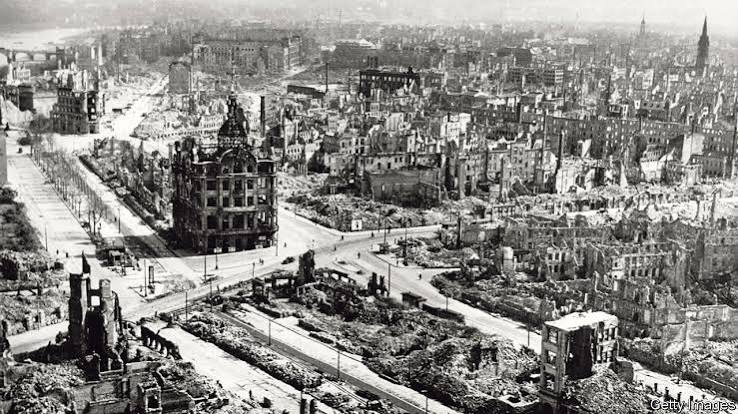
    The physical destruction was staggering. Approximately 15 square kilometers—about 90% of the city center—was destroyed. Of Dresden’s 220,000 dwellings, some 25,000 to 35,000 were destroyed or severely damaged. A city that had stood for centuries was reduced to rubble in 48 hours.

    The Ethical Quandary

    The military necessity argument for Dresden is straightforward. Dresden was a legitimate target—a communications center, a garrison city, and an industrial producer. The raid disrupted German logistics and demoralized the Wehrmacht, potentially shortening the war. Area bombing, its defenders argue, was a rational response to the inaccuracy of existing technology. Precision bombing was not yet feasible, and the Allies were fighting a total war against a regime that had initiated the bombing of civilians at Warsaw, Rotterdam, and London.

    But the moral condemnation is equally powerful. The raid killed tens of thousands of civilians, including refugees, women, and children, with no clear military payoff so late in the war. The firestorm was deliberately engineered—incendiaries were chosen specifically to maximize civilian casualties. The bombing violated the principles of discrimination (distinguishing combatants from non-combatants) and proportionality (the harm caused must not be excessive relative to the military advantage gained).

    Winston Churchill himself seemed to recognize this. In a draft memo that he never sent, he called the bombing “an act of sheer terrorism.” The fact that he distanced himself from the raid after the fact suggests a deep unease, even among its architects.

    The Legacy

    The debate over Dresden is not merely historical. It raises questions that still haunt military ethics: How do we weigh the lives of civilians against the imperative to end a war quickly? Does the wickedness of an enemy justify the means used to defeat them? And where do we draw the line between legitimate military targets and unacceptable civilian casualties?

    The advent of precision-guided munitions has made area bombing seem obsolete, but the ethical questions remain. In modern conflicts, civilian deaths are often described as “collateral damage,” but the principle is the same. The firestorms of Dresden serve as a warning: once you accept the logic of area bombing, the civilian cost of war becomes a matter of degree, not of kind.

    The Allied bombing of Dresden remains one of the most controversial acts of World War II. It was a military operation with a clear strategic rationale, but it exacted a terrible toll in civilian lives. The ethical questions it raised—about discrimination, proportionality, and the limits of military necessity—continue to resonate. As we grapple with the morality of modern warfare, Dresden stands as a stark reminder of what happens when the targeting of civilians becomes a deliberate strategy. The debate over its necessity and morality will never be fully resolved, but the firestorm that consumed Dresden should never be forgotten.

    Summary

    • The Dresden raids (February 13–15, 1945) killed an estimated 25,000–40,000 civilians, with the city center nearly destroyed.
    • Area bombing was a deliberate strategy born of the RAF’s inability to precision-bomb, as shown by the Butt Report of 1941.
    • Dresden was a legitimate military target—a transport hub and industrial center—but the firestorm deliberately targeted civilians.
    • The ethical debate centers on the principles of discrimination and proportionality, which the raid arguably violated.
    • The controversy persists, with figures ranging from 18,000 to 135,000, the latter inflated by Nazi propaganda and Holocaust deniers.

    FAQ

    Q: Was Dresden a legitimate military target?
    A: Yes, Dresden was a major transport and communications hub, with factories producing military equipment. However, the scale of civilian casualties and the deliberate creation of a firestorm raise questions about whether the attack was proportionate.

    Q: How many people died in the Dresden bombing?
    A: The death toll is contested, but most modern historians and the official German commission of 2010 estimate between 18,000 and 40,000, with a plausible upper bound of 40,000. The higher figure of 135,000 was Nazi propaganda.

    Q: Why did the Allies use area bombing instead of precision bombing?
    A: Early in the war, precision bombing was highly inaccurate. The Butt Report of 1941 showed that only 1 in 5 bombers hit within 5 miles of the target, leading to the adoption of area bombing as a practical, albeit brutal, strategy.

    Q: Did the bombing of Dresden shorten the war?
    A: The raid disrupted German logistics and demoralized the Wehrmacht, but Germany surrendered only months later. The military advantage gained is debatable, especially given the high civilian cost.

    Q: What ethical principles did the Dresden bombing violate?
    A: The bombing violated the principles of discrimination (distinguishing combatants from non-combatants) and proportionality (the harm caused must not be excessive relative to the military advantage). The deliberate targeting of civilians is the core of the moral condemnation.