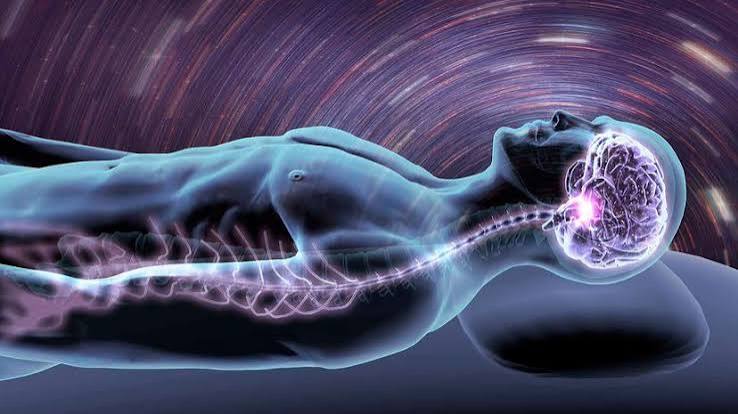
Every night, you slip into a mysterious world where the impossible becomes real, and your brain runs its own private cinema. Dreams have fascinated humans for millennia, from ancient oracles to modern neuroscience. But why do we dream? And what is happening in your brain while you sleep? This article unpacks the science of sleep, from the architecture of your nightly cycles to the leading theories of dreaming, and reveals why those bizarre nighttime narratives are more than just random noise—they’re essential to your mental and physical health.
The Architecture of Sleep: A Nightly Journey
Sleep isn’t a single, uniform state. Instead, it’s a carefully orchestrated sequence of stages that cycle throughout the night. Think of it as a symphony with two main movements: Non-Rapid Eye Movement (NREM) and Rapid Eye Movement (REM) sleep.
NREM sleep has three stages, labeled N1, N2, and N3. N1 is the lightest, the drowsy transition between wakefulness and sleep. N2 is deeper, marked by sleep spindles—brief bursts of brain activity that help consolidate memories. N3 is the deepest, also known as slow-wave sleep because of the slow delta waves that dominate your brain’s electrical activity. This is the most restorative stage, crucial for physical recovery and feeling refreshed.
REM sleep is the other major player. Despite its name, your eyes dart rapidly under closed lids, and your brain becomes almost as active as when you’re awake. Your body, however, is temporarily paralyzed—a safety mechanism that prevents you from acting out your dreams. REM is where the most vivid, story-like dreams occur.
A typical night includes 4 to 6 cycles, each lasting about 90 minutes. Early in the night, you spend more time in deep N3 sleep. As the night progresses, REM periods lengthen, with the longest episodes occurring in the early morning hours. That’s why you’re more likely to remember a dream if you wake up just after one.
The Brain’s Night Shift: What’s Happening Upstairs
During sleep, your brain doesn’t shut off—it shifts into different modes of operation. In REM sleep, brain activity resembles wakefulness, with high-frequency, low-amplitude waves. The default mode network, a set of brain regions active when you’re awake and daydreaming, shows altered connectivity during sleep, which may contribute to the associative, non-linear nature of dreams.
Deep NREM sleep, on the other hand, features slow delta waves and reduced metabolic activity. This stage is critical for memory consolidation—the process of stabilizing and strengthening memories. The hippocampus, a brain region vital for forming new memories, replays the day’s events, transferring them to the cortex for long-term storage.
Neurochemicals also play a starring role. Melatonin regulates your circadian rhythm, rising in darkness to signal sleep. Orexin promotes wakefulness; its loss causes narcolepsy. Acetylcholine is high during REM and wakefulness but low in deep sleep, influencing dream vividness. Serotonin and norepinephrine are suppressed during REM, which contributes to muscle paralysis and the lack of logical oversight in dreams. Adenosine accumulates during wakefulness, creating sleep pressure; caffeine blocks its receptors, which is why it keeps you awake.
Why Do We Dream? Five Leading Theories
Dreams have puzzled humanity for centuries. Ancient cultures saw them as divine messages. Freud called them the ‘royal road to the unconscious,’ a window into repressed desires. Jung saw them as a balancing act for the conscious mind. But modern science offers several compelling theories.
1. Activation-Synthesis: The Brain’s Best Guess
In 1977, psychiatrists J. Allan Hobson and Robert McCarley proposed that dreams are simply the brain’s attempt to make sense of random neural signals from the brainstem. According to this view, the cortex—the brain’s outer layer—receives chaotic input and weaves it into a narrative, much like a person seeing shapes in clouds. Dreams, then, have no inherent meaning; they’re a byproduct of brain activity.
2. Threat Simulation: A Virtual Reality for Survival
Evolutionary psychologist Antti Revonsuo suggested in 2000 that dreams evolved as a kind of virtual reality simulator. By rehearsing threatening scenarios in a safe environment, our ancestors could practice fight-or-flight responses, improving their chances of survival. This theory explains why many dreams are anxiety-laden or involve danger.
3. Memory Consolidation and Synaptic Homeostasis: The Cleaning Crew
Giulio Tononi and Chiara Cirelli proposed that sleep, especially slow-wave sleep, is when the brain prunes weak synaptic connections and strengthens important ones. This process, called synaptic homeostasis, helps consolidate memories and clear out irrelevant information. Dreams, in this view, are a byproduct of the brain’s housekeeping.
4. The Default Mode and Social Simulation: The Mind’s Theater
Cognitive neuroscientists like G. William Domhoff and Kieran Fox argue that dreams reflect the mind’s ongoing simulation of the social world. Drawing on the default mode network and autobiographical memory, dreams allow us to rehearse social interactions, process emotions, and explore possible futures. This theory aligns with the fact that dream content often involves familiar people and settings.
5. Emotion Regulation: The Overnight Therapist
Matthew Walker and Rosalind Cartwright have shown that REM sleep plays a crucial role in emotional processing. During REM, the brain decouples the emotional charge from memories, allowing you to process difficult experiences without the accompanying stress response. This is why a good night’s sleep can make a problem seem more manageable, and why sleep deprivation can leave you emotionally reactive.
The Role of Sleep in Memory and Learning
Sleep is not just a passive state; it’s an active participant in learning and memory. Different types of memories benefit from different sleep stages. Declarative memories—facts and events—are consolidated during deep NREM sleep, thanks to hippocampal replay. Procedural memories—skills like playing an instrument or riding a bike—and emotional memories are enhanced during REM sleep.
Sleep spindles, those brief bursts of activity in N2 sleep, are particularly linked to learning. Studies show that people who have more sleep spindles after learning a new task tend to perform better the next day. This suggests that sleep is not a waste of time but a crucial investment in cognitive function.
Dreams and Mental Health: The Clinical Connection
Dreams can also be a window into mental health. In PTSD, nightmares are a common and distressing symptom, reflecting a failure of emotional processing. Treatments like imagery rehearsal therapy—where patients practice changing the ending of a nightmare while awake—can help reduce their frequency and intensity.
Lucid dreaming, where the dreamer becomes aware they’re dreaming and can sometimes control the dream, has been studied by researchers like Stephen LaBerge at Stanford. Lucid dreamers can even signal to researchers using eye movements, providing a unique window into the dream experience. This phenomenon has potential therapeutic applications, such as overcoming nightmares or practicing skills.
Conclusion
Sleep is far more than a nightly shutdown. It’s a dynamic, active process essential for memory, emotion, and physical health. Dreams, whether they’re bizarre adventures or quiet reflections, are a natural byproduct of a brain hard at work. By understanding the science of sleep, we can appreciate the intricate machinery that keeps our minds sharp and our emotions balanced. So tonight, when you drift off, remember: your brain is about to embark on a vital journey—one that shapes who you are when you wake.
The science of sleep reveals a world of complexity and purpose. From the cycling stages of NREM and REM to the neurochemical ballet that orchestrates it all, sleep is a cornerstone of brain health. Dreams, once mysterious, are now understood as a window into memory consolidation, emotional processing, and even evolutionary survival. By prioritizing sleep, you’re not just resting—you’re actively enhancing your cognitive and emotional well-being. So the next time you wake from a vivid dream, take a moment to appreciate the remarkable processes that made it possible.
Summary
- Sleep consists of NREM (stages N1, N2, N3) and REM, cycling every 90 minutes, with deep sleep early and REM later.
- Dreams occur in both REM and NREM, but REM dreams are more vivid and story-like.
- Key theories of dreaming include activation-synthesis, threat simulation, memory consolidation, social simulation, and emotion regulation.
- Deep sleep consolidates declarative memories, while REM enhances procedural and emotional memories.
- Sleep is vital for mental health; nightmares in PTSD reflect disrupted emotional processing, and lucid dreaming offers therapeutic potential.
FAQ
Q: How much sleep do I really need?
A: Most adults need 7-9 hours per night, but individual needs vary. The key is waking up feeling rested and alert.
Q: Why do I forget my dreams so quickly?
A: You forget 95-99% of dreams because the brain doesn’t prioritize storing them as memories. Waking during or immediately after a dream increases recall.
Q: Can I learn to lucid dream?
A: Yes, some people can train themselves to become aware in dreams through techniques like reality testing and mnemonic induction. It takes practice and isn’t guaranteed.
Q: Do dreams have meaning?
A: It depends on the theory. Some say dreams are random brain noise, while others see them as reflections of your emotions, concerns, and memories. There’s no scientific consensus on a universal meaning.
Q: What causes nightmares?
A: Nightmares can be triggered by stress, trauma, medications, or sleep deprivation. In PTSD, they’re a core symptom. Treatments like imagery rehearsal therapy can help.