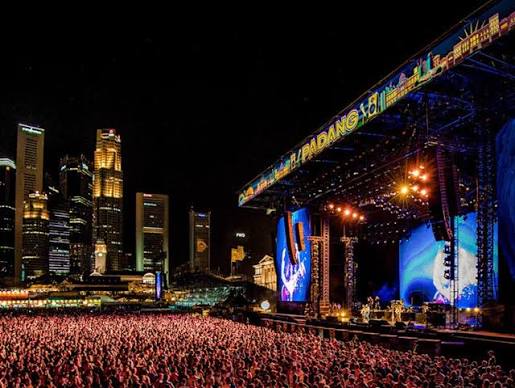
British electronic group Massive Attack has issued a new statement detailing a tense post-concert encounter with Singaporean authorities, saying band members were detained, isolated, and had their passports temporarily confiscated. The statement, posted on the band’s official Instagram account, sheds light on the aftermath of their recent performance in the city-state, raising questions about the limits of artistic expression in Singapore’s tightly regulated environment.
The band, known for its politically charged music and visuals, did not specify what triggered the police action, but the incident has sparked debate among fans and observers about the balance between free speech and local laws. Singapore has strict regulations governing public performances, and authorities have broad powers to investigate potential breaches of public order.
The Band’s Account
In a statement released on Instagram, Massive Attack said that following their concert in Singapore, band members were “detained by the police, isolated and separately questioned.” The statement also mentioned that some members’ hotel rooms were searched and their passports were temporarily confiscated as part of the process. The band framed the experience as heavy-handed and intimidating, using language that suggests a punitive or coercive atmosphere.
Robert “3D” Del Naja and Grant “Daddy G” Marshall, the core members of the group, have a long history of political activism, and their live shows often include provocative imagery and commentary. However, the statement did not elaborate on what specific aspects of the performance or behavior may have drawn the attention of authorities.
Context: Singapore’s Regulatory Environment
Singapore is known for its strict laws regarding public assembly, political speech, and content that could cause “ill-will” or “hostility” between groups. The Info-communications Media Development Authority (IMDA) regulates content, and the police have broad powers under the Public Order Act and other legislation to investigate potential breaches. Performances that touch on sensitive topics, such as religion, race, or foreign relations, can come under scrutiny.
This is not the first time an international artist has faced issues in Singapore. In the past, performers have been fined or censored for violating content guidelines. However, the detention and questioning of band members after a show is relatively rare, making this incident notable.
The Aftermath: What Triggered This?
The exact cause of the police action remains unclear. The band’s statement does not specify whether the issue was related to on-stage content, audience behavior, or a security concern. Some speculate that the band’s history of political statements, including pro-Palestinian and anti-war messages, may have played a role. Others suggest it could be linked to a specific complaint or a routine investigation.
Without official confirmation from Singaporean authorities, the full picture is incomplete. The police have not publicly commented on the incident, and it is unknown whether any charges will be filed.
Reactions and Implications
The incident has drawn mixed reactions. Some fans and free-speech advocates view it as an overreach by an authoritarian state, while others see it as the band knowingly pushing boundaries and facing consequences. The episode could have a chilling effect on other international artists considering performing in Singapore, potentially making them think twice about making political statements on stage.
Legal experts note that “detained” does not necessarily mean “arrested” in Singapore. Police can hold individuals for questioning without formal arrest, and passport confiscation is a specific legal action that can be taken during investigations. The distinction is important, as it affects the legal implications for the band members.
Looking Ahead
As of now, Massive Attack has not indicated whether they will take further action or if they have been cleared of any wrongdoing. The band’s statement serves as a warning to other artists about the potential consequences of political expression in Singapore. It also highlights the ongoing tension between artistic freedom and national laws, a debate that is likely to continue as the global music industry navigates diverse regulatory landscapes.
Massive Attack’s statement offers a rare glimpse into the post-concert reality for artists performing in Singapore, where strict laws and broad police powers can lead to unexpected consequences. While the full details of what prompted the detention remain unclear, the incident underscores the challenges of balancing artistic expression with local regulations. As the band and authorities remain silent on the specifics, the music community watches closely to see what this means for future performances in the city-state.
Summary
- Massive Attack says band members were detained, isolated, and questioned by police after their Singapore concert.
- Hotel room searches and temporary passport confiscation were part of the process, according to the band’s statement.
- The exact trigger for the police action is unknown, but Singapore has strict laws on public performances and political content.
- The incident has sparked debate about free speech and could have a chilling effect on other artists.
- Legal experts note that “detained” does not necessarily mean “arrested” in Singapore.
FAQ
Q: Were Massive Attack members arrested?
A: The band says they were “detained,” which in Singapore can mean held for questioning without formal arrest. The distinction is important, as it affects legal implications.
Q: What triggered the police action?
A: The band’s statement does not specify, and authorities have not commented. It could be related to on-stage content, a complaint, or a security assessment.
Q: Has Massive Attack faced similar issues before?
A: The band has a history of political activism, but this specific incident in Singapore appears to be unprecedented.
Q: What are Singapore’s laws on concert content?
A: Singapore has strict regulations under the IMDA and the Public Order Act, prohibiting content that could cause ill-will or hostility between groups.
Q: Could this affect other artists performing in Singapore?
A: Yes, the incident may deter artists from making political statements, fearing similar consequences.