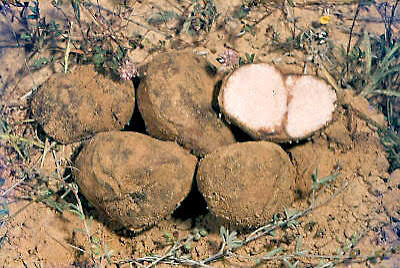
In the arid expanses of the Sahara and the Arabian Peninsula, where rain is a rare blessing, a humble fungus pushes through cracked soil after the first downpour. It has no perfume, no gnarled black exterior just a smooth, pale sphere that locals call ‘terfez’ or ‘fahma.’ For millennia, these desert truffles have been a vital food source, a trade commodity, and a cultural touchstone, long before European truffles became the gold standard of gourmet dining.
While the Périgord black truffle commands thousands of dollars a kilogram and is sniffed out by trained pigs in French oak forests, desert truffles grow in sandy soils, partner with sun-loving shrubs, and are sold for a fraction of the price. Yet their story is older, spanning biblical texts, Saharan rock art, and the bustling markets of Baghdad. This is the hidden life of desert truffles how they shaped trade routes, enriched cuisines, and sustain fragile ecosystems.
What Exactly Is a Desert Truffle?
Desert truffles belong mainly to the genera Terfezia and Tirmania, though some species fall under Picoa and Delastria. They form mycorrhizal associations with the roots of Helianthemum (rockroses) and certain Cistus shrubs. The fungus and plant exchange nutrients: the truffle provides minerals and water from the soil, while the plant supplies sugars from photosynthesis.
Unlike their European cousins, desert truffles lack the intense aroma that makes Tuber species so coveted. Their scent is mild — earthy, nutty, or mushroom-like — and their flesh has a potato-like texture. They range from walnut-sized to grapefruit-sized, and some specimens can exceed a kilogram. The interior is firm and cream-colored, sometimes marbled with brown veins.
Key species include Terfezia claveryi, the most commercially important, found across North Africa, the Middle East, and Spain; Tirmania nivea (white desert truffle) prized in the Arabian Peninsula; and the Kalahari truffle (Terfezia pfeilii), harvested by the San people of Botswana and Namibia.
Ancient Roots: From Rock Art to Biblical ‘Manna’
Desert truffles have been part of human diet for thousands of years. In the Tassili n’Ajjer region of Algeria, rock art dating to around 7000–5000 BCE depicts figures that some archaeologists interpret as truffle gatherers, though this reading is debated. Babylonian texts from around 2000 BCE reference a food called ‘kamasu,’ which scholars believe refers to desert truffles.
The Bible mentions the poor gathering ‘mallows’ in Job 30:4, and some scholars argue this could be desert truffles. In classical antiquity, Theophrastus (c. 371–287 BCE) wrote about truffles as ‘plants without roots’ that arise from rain and thunder. Pliny the Elder called them ‘the most wonderful of all things’ for springing from nothing.
Islamic tradition elevated their status. The Prophet Muhammad is recorded in hadith literature as saying truffles are ‘manna’ — a divine gift — and that their juice cures eye ailments. This religious endorsement made them a revered food in Islamic culture, appearing in 10th–13th century cookbooks from Baghdad and Andalusia.
The Caravan Trade and Culinary Traditions
Desert truffles were traded along caravan routes across the Sahara and the Arabian Peninsula, carried by camel trains to markets in North Africa and the Middle East. They were a valuable food source for travelers because they could be dried and stored, providing sustenance during long journeys.
In medieval Arab cuisine, truffles were a delicacy. Recipes from Ibn Sayyar al-Warraq’s Annals of the Caliphs’ Kitchens (10th century) and the anonymous Kitab al-Tabikh (13th century) show them cooked in stews, roasted, or pickled. The milder flavor made them versatile, absorbing spices and broths.
Today, desert truffles remain a seasonal luxury in Saudi Arabia and Kuwait, where prices spike during Ramadan. In Morocco and Algeria, they are sold fresh in local markets, often fried in butter or simmered in tagines. The Kalahari truffle is a staple for the San people, who have harvested them for generations, using their knowledge of the land to find the subtle cracks in the soil that signal a truffle below.
Harvesting: A Skill Passed Down Generations
Desert truffles fruit after seasonal rains — typically from January to April in the Northern Hemisphere, following winter rains, and from May to August in southern Africa, after summer rains. The process requires a precise sequence: sufficient autumn or winter rain to trigger mycorrhizal colonization, followed by a dry period, then heavy rains that trigger fruiting.
Harvesting is traditionally done by hand. Locals scan the ground for subtle cracks or heaves in the soil, a skill honed over years. In North Africa, some use donkeys, which are said to detect truffles by scent. Increasingly, trained dogs are used, as they are more effective and less likely to damage the truffles than pigs, which are not used in desert truffle hunting.
Unlike European truffles, desert truffles have a short shelf life — only 3 to 7 days refrigerated. This limits export and means they are mostly consumed locally. Prices are dramatically lower than European truffles, typically $20–$100 per kilogram, but premium early-season specimens can fetch more.
Ecological Role and Modern Cultivation
Desert truffles play a crucial role in their ecosystems. As mycorrhizal partners, they help Helianthemum shrubs survive in poor, arid soils by enhancing water and nutrient uptake. In return, the shrubs provide the fungi with carbohydrates. This symbiosis also benefits the soil, improving its structure and fertility.
The fungi are also a food source for animals. Rodents, insects, and even some birds dig up truffles, dispersing spores in the process. This helps the truffles propagate across the landscape.
In recent years, there has been growing interest in cultivating desert truffles. Spain has seen some success with irrigated Helianthemum plantations, and research is ongoing in other regions. Cultivation could provide a sustainable income for rural communities in arid areas, reducing pressure on wild populations.
However, desert truffles are sensitive to climate change. Changes in rainfall patterns can disrupt the delicate timing of fruiting, leading to poor harvests. Overharvesting is also a concern, as is habitat destruction from agriculture and development.
A Delicacy Worth Rediscovering
Desert truffles may not have the cachet of their European relatives, but they have a rich history and a unique flavor profile that chefs are beginning to explore. Their earthy, nutty taste pairs well with butter, garlic, and herbs. In the Middle East, they are often cooked with rice and meat, while in North Africa, they are featured in couscous dishes.
For those lucky enough to find fresh desert truffles, the experience is a connection to an ancient food that has nourished people for millennia. Whether you call them terfez, kames, or fahma, these hidden fungi are a testament to the resilience of life in the world’s driest regions.
Desert truffles are more than a culinary curiosity; they are a living link to our past, a vital part of arid ecosystems, and a potential resource for sustainable agriculture. As climate change and market forces reshape the world of gourmet foods, these unassuming fungi deserve a closer look — not for their aroma, but for their story.
Summary
- Desert truffles (genera Terfezia and Tirmania) grow in arid regions, forming mycorrhizal partnerships with Helianthemum shrubs.
- They lack the strong aroma of European truffles but have a mild, earthy flavor and a potato-like texture.
- Ancient evidence includes Saharan rock art, Babylonian texts, and references in the Bible and Islamic tradition.
- They are harvested by hand after seasonal rains and are a seasonal delicacy in the Middle East and North Africa.
- Prices are much lower than European truffles, but cultivation efforts in Spain show promise for sustainable production.
FAQ
Q: What do desert truffles taste like?
A: Desert truffles have a mild, earthy, nutty flavor, often compared to mushrooms or potatoes. Their texture is firm and crunchy when raw, becoming tender when cooked.
Q: How are desert truffles different from European truffles?
A: European truffles (e.g., Périgord black) have a strong, complex aroma and grow in temperate forests. Desert truffles grow in arid regions, lack the strong scent, and are much less expensive.
Q: Can desert truffles be cultivated?
A: Yes, some species like Terfezia claveryi have been successfully cultivated in Spain using irrigated Helianthemum plantations, though commercial production is still limited.
Q: Why are desert truffles not exported widely?
A: They have a short shelf life (3–7 days refrigerated), which makes long-distance shipping difficult. Most are consumed fresh in local markets.
Q: Are desert truffles mentioned in religious texts?
A: Yes, hadith literature records Prophet Muhammad describing truffles as ‘manna’ and their juice as a cure for eye ailments. Some scholars also interpret biblical ‘mallows’ as desert truffles.