Tag: data centers

  • AI Data Centers Are Driving Up Power Bills – This Map Shows Where

    How AI Data Centers Are Sending Your Power Bill Soaring

    The rise of artificial intelligence has brought us chatbots, image generators, and self-driving car research. But there’s a hidden cost to this digital revolution: your electricity bill. As AI data centers spring up across the country, they’re consuming massive amounts of power, and utilities are passing those costs on to everyday consumers. This article explores the geographic hotspots where this is happening and why it matters to you.

    The Invisible Energy Hungry Beast

    Imagine a single building that uses as much electricity as a small town. That’s a data center. These facilities house thousands of servers that process and store the data powering everything from your email to AI models. But AI is different from traditional computing. Training a large AI model like GPT-3 can consume as much energy as hundreds of homes use in a year. And once the model is trained, running it (called inference) also requires significant power. This is why AI data centers are so energy-intensive.

    The Map: Where the Power Goes

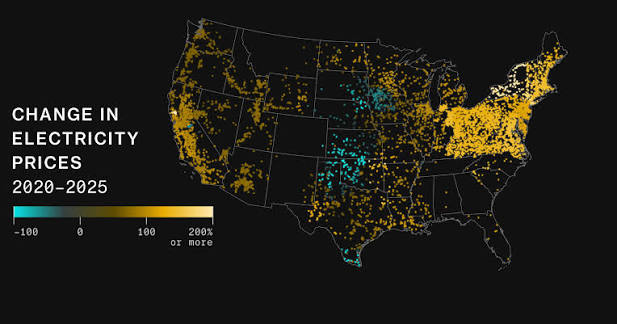
    The map in question highlights regions where data center demand is highest and where rate increases are most pronounced. The most notable hotspot is Northern Virginia, often called “Data Center Alley” because it hosts the largest concentration of data centers in the world. Other key areas include Texas (around Dallas and Austin), California’s Silicon Valley, and increasingly the Midwest (Ohio, Illinois) and Mountain West (Utah, Arizona). Internationally, Ireland, the Netherlands, and Singapore are also feeling the strain.

    Why Your Bill Goes Up

    Utilities are regulated monopolies. They’re required to provide electricity to everyone, and they earn a profit on the investments they make in infrastructure. When data centers need more power, utilities must build new power plants, upgrade transmission lines, and ensure grid stability. These costs are passed on to all ratepayers through higher base rates or special charges. For example, Dominion Energy in Virginia has filed for rate increases citing data center load growth. Similarly, AEP in Ohio and PacifiCorp in the Mountain West have done the same.

    The Bigger Picture: A Grid Under Pressure

    For decades, U.S. electricity demand was flat. But now, data centers, electric vehicles, and manufacturing are driving the first sustained load growth in a generation. This is a structural shift, not a temporary blip. The grid is aging and wasn’t designed for this load. Interconnection queues are backlogged, with some data centers waiting 3–5 years to connect. This has led to a surge in natural gas plant proposals and renewed interest in nuclear power, including small modular reactors.

    Who’s Paying? The Consumer’s Burden

    The core issue is fairness. When a data center moves in, it brings jobs and tax revenue, but it also brings higher electricity costs. Utilities argue that these investments benefit everyone by modernizing the grid and ensuring reliability. But critics say that ordinary households are subsidizing corporate AI profits. Many data centers receive tax breaks and pay industrial rates, which are often lower than residential rates. Yet the cost of new infrastructure is spread across all customers.

    Different Perspectives

    • Utilities emphasize the economic benefits and the need for investment to avoid blackouts.
    • Data center companies point to their investments in renewable energy and efficiency, and note they often pay higher industrial rates.
    • Environmentalists worry about the surge in natural gas plants and the water used for cooling, which conflicts with climate goals.
    • Regulators are caught between approving rate hikes and protecting consumers. Some states are considering “data center-specific tariffs” or requiring data centers to pay for their own grid upgrades.
    • Local communities often court data centers for jobs, but these facilities create few permanent jobs, mostly in security and maintenance.

    Common Misunderstandings

    It’s important to note that data centers aren’t the only cause of rate increases. Inflation, grid upgrades for renewable energy, and other factors also play a role. However, in regions with heavy data center concentration, they are a significant driver. Also, not all data centers are the same; some are more efficient than others, and some use renewable energy directly.

    What Can Be Done?

    Policymakers have options. They can require data centers to pay for their own grid connections, rather than spreading the cost to all ratepayers. They can also encourage efficiency and the use of renewable energy. Some utilities are exploring innovative solutions like using data center waste heat for district heating. But ultimately, the demand for AI is only going to grow, so the pressure on the grid will continue.

    Conclusion

    The map showing AI data center hotspots is a wake-up call. It makes the abstract issue of rising electricity bills tangible. As AI becomes more integrated into our lives, we must have a conversation about who pays for the infrastructure that powers it. It’s not just a tech issue; it’s a consumer issue that affects every household.

    Summary

    • AI data centers are causing electricity prices to rise in specific regions, as utilities pass on the costs of new infrastructure.
    • The map highlights hotspots like Northern Virginia, Texas, and California, where data center demand is highest.
    • Rate increases are driven by the need for new power plants and grid upgrades, which are funded by all ratepayers.
    • This is part of a broader trend of load growth from data centers, EVs, and manufacturing.
    • Policymakers are considering ways to make data centers pay their fair share, such as special tariffs.

    FAQ

    Q: Why do AI data centers use so much electricity?\nA: AI models require massive computational power for training and running, which consumes far more energy than traditional cloud computing. A single training run can use as much electricity as hundreds of homes in a year.\n\nQ: How are data center costs passed on to consumers?\nA: Utilities build new power plants and upgrade grids to meet demand, then recover these costs through rate increases or special charges on all customers’ bills.\n\nQ: Are data centers the only reason for rising power bills?\nA: No, other factors like inflation and renewable energy integration also contribute. However, in data center-heavy regions, they are a major driver.\n\nQ: What can be done to protect consumers?\nA: Regulators can require data centers to pay for their own grid upgrades, implement data center-specific tariffs, and encourage efficiency and renewable energy use.\n\nQ: Do data centers bring any benefits?\nA: Yes, they bring jobs, tax revenue, and economic development, though the number of permanent jobs is relatively small.

  • AI’s Debt Binge: The $1.65 Trillion Hidden Borrowing That Can’t Last

    AI's debt binge draws European telco parallels

    The artificial intelligence boom has sparked an unprecedented spending spree. Tech giants are pouring hundreds of billions of dollars into data centers, GPUs, and the energy to power them, all in the hope that AI will revolutionize the world and generate massive returns. But there’s a catch: much of this spending is financed by debt that’s not showing up on corporate balance sheets. In fact, hidden borrowing has reached an estimated $1.65 trillion, and it’s creating a ticking time bomb that could threaten the entire AI ecosystem.

    This isn’t just a story about numbers on a spreadsheet. It’s about how the world’s most valuable companies are using financial engineering to mask the true cost of their AI ambitions. By keeping debt off their books, they’re able to maintain high credit ratings and keep investors happy, but they’re also building a mountain of obligations that will eventually come due. As interest rates rise and the economy tightens, the question isn’t whether this debt will become a problem—it’s when.

    The AI Capex Supercycle

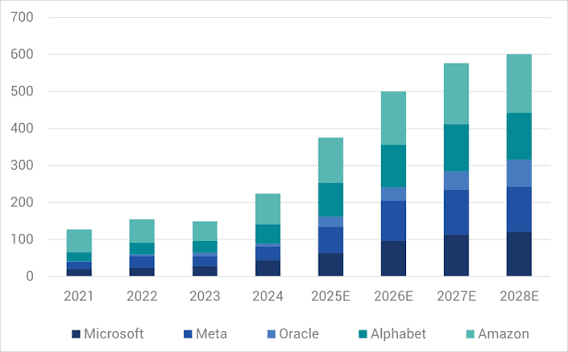
    Since ChatGPT burst onto the scene in late 2022, the world’s largest tech companies—Microsoft, Amazon, Google, Meta, and others—have been locked in a race to build AI infrastructure. They’re buying millions of Nvidia GPUs, constructing massive data centers, and securing power supplies to run them. The annual capital expenditure (capex) for these ‘hyperscalers’ has surged past $300–400 billion combined, and it’s still climbing.

    The logic is simple: AI is the future, and whoever builds the most powerful infrastructure will dominate the market. But this spending spree is based on a huge assumption—that AI demand will grow exponentially and eventually generate enough revenue to justify the investment. So far, that revenue hasn’t materialized at the scale needed, and the gap is being filled with debt.

    The Hidden Debt Machine

    When we think of corporate debt, we usually imagine bonds or bank loans that appear on a company’s balance sheet. But the AI industry has found ways to borrow money without making it visible to investors and regulators. This is done through a variety of financial structures:

    • Special Purpose Vehicles (SPVs): Companies create separate legal entities to own data centers. These SPVs take on debt to build the facilities, and the parent company signs long-term leases to use them. The debt stays on the SPV’s books, not the parent’s.
    • Sale-Leasebacks: A company sells its data centers to an investor or real estate investment trust (REIT) and then leases them back. This converts a capital expense into an operating expense, freeing up cash and keeping debt off the balance sheet.
    • Vendor Financing: Chipmakers like Nvidia extend credit to their customers, allowing them to buy GPUs now and pay later. This is essentially a loan from the supplier, but it’s not recorded as debt by the buyer.
    • Project Finance: Lenders provide non-recourse debt secured against a specific asset, like a data center, rather than the parent company’s overall balance sheet. If the project fails, the lender can seize the asset, but the parent company isn’t on the hook.

    These techniques are legal and have been used for decades in industries like airlines and real estate. But in the AI world, they’ve been deployed on a massive scale, and the cumulative hidden debt has reached an estimated $1.65 trillion.

    Why Hide the Debt?

    The motivation is simple: to keep reported leverage ratios low and protect credit ratings. If these companies showed all their debt on their balance sheets, their credit ratings would likely be downgraded, making borrowing more expensive and spooking equity investors who are already nervous about AI’s return on investment.

    By keeping debt hidden, companies can present a healthier financial picture than reality. This allows them to continue borrowing at favorable rates and maintain their stock prices. But it also means that the true risk is invisible to the market, creating a dangerous situation.

    The Math Doesn’t Add Up

    Let’s do some simple math. If the hidden debt is $1.65 trillion and interest rates are around 5–7%, the annual interest expense would be $80–115 billion. But what is the revenue generated by AI infrastructure? While cloud services like Azure AI and AWS Bedrock are growing rapidly, the total revenue from AI-specific infrastructure is still far below that interest burden.

    This means that companies are borrowing money to build infrastructure that isn’t yet generating enough income to cover the interest payments. They’re essentially betting that future revenue will catch up, but if it doesn’t, they’ll face a crisis.

    The Circular Financing Problem

    One of the most concerning aspects is the role of vendor financing, particularly from Nvidia. Nvidia is the dominant supplier of GPUs, and it has been extending generous credit terms to its customers, including AI startups. This allows Nvidia to book revenue now, even if the customer might not be able to pay later.

    This creates a circular situation: Nvidia’s earnings look great, and the AI ecosystem appears healthy, but the risk is hidden. If a major customer defaults, Nvidia would take a hit, and the ripple effects could be felt throughout the industry.

    The Maturity Wall

    Another problem is the ‘maturity wall.’ Much of this hidden debt is structured with maturities in the 2027–2029 period. When that debt comes due, companies will need to refinance it. But if interest rates remain high or credit conditions tighten, refinancing could be expensive or even impossible.

    If a company can’t refinance, it faces a choice: default on the debt, issue new equity (diluting existing shareholders), or sell assets at fire-sale prices. Any of these options would be painful and could trigger a broader crisis.

    The Bull Case: It’s Not All Doom and Gloom

    Of course, there’s another side to the story. AI optimists argue that the infrastructure being built is an asset, not a liability. Data centers and GPUs have residual value—they can be repurposed for other uses if AI doesn’t pan out as expected. And similar fears were raised about fiber-optic overbuilding in the late 1990s and cloud capex in the 2010s, both of which eventually paid off, though with some casualties along the way.

    Moreover, off-balance-sheet financing is a standard practice in many industries. It’s not inherently fraudulent, and as long as it’s disclosed in footnotes, it’s legal. The key is whether the underlying projects generate enough cash flow to service the debt.

    The Bear Case: A Ticking Time Bomb

    But the skeptics have a point. The scale of the hidden debt is unprecedented, and the revenue projections may be overly optimistic. If AI doesn’t deliver the promised returns, the consequences could be severe. A single major default could trigger contagion, affecting not just the tech sector but the entire financial system.

    Regulators and credit rating agencies are starting to pay attention. They’re ‘pulling back the curtain’ on these off-balance-sheet structures, and increased scrutiny could make it harder for companies to hide their debt. This could lead to a sudden repricing of risk, with devastating effects.

    What This Means for You

    If you’re an investor, this is a warning sign. The AI boom has been a major driver of stock market gains, but if the debt bubble bursts, it could take the whole market down with it. If you’re a consumer, you might not feel the impact directly, but a financial crisis would affect everyone.

    For policymakers, this is a call to action. They need to ensure that off-balance-sheet financing is properly disclosed and that the risks are understood. The last thing we need is another Enron-style scandal, but on a much larger scale.

    The AI revolution is real, and the infrastructure being built today could transform the world. But the way it’s being financed is unsustainable. The $1.65 trillion in hidden debt is a ticking time bomb that could explode if AI revenue doesn’t materialize as expected. It’s time for companies, investors, and regulators to face the truth: you can’t build the future on a foundation of hidden debt.

    Summary

    • The AI industry has accumulated an estimated $1.65 trillion in hidden, off-balance-sheet debt to finance its capital expenditure boom.
    • This debt is hidden through SPVs, sale-leasebacks, vendor financing, and project finance structures.
    • The interest expense on this debt ($80–115 billion annually) far exceeds current AI infrastructure revenue.
    • A maturity wall in 2027–2029 poses a significant refinancing risk, especially if interest rates remain high.
    • The situation is unsustainable and could lead to a financial crisis if AI revenue doesn’t catch up.

    FAQ

    Q: What is off-balance-sheet debt?
    A: Off-balance-sheet debt is borrowing that a company does not report on its main balance sheet. It’s often done through special purpose vehicles or other structures, allowing the company to keep its reported debt levels low.

    Q: Why do companies hide debt?
    A: Companies hide debt to maintain high credit ratings, keep borrowing costs low, and avoid spooking investors who might be concerned about high leverage. It’s a legal but controversial practice.

    Q: How does vendor financing work?
    A: Vendor financing occurs when a supplier, like Nvidia, extends credit to a customer to buy its products. The customer gets the goods now and pays later, effectively borrowing from the supplier.

    Q: What is a maturity wall?
    A: A maturity wall is a period when a large amount of debt comes due at the same time. If a company can’t refinance or repay, it may default, causing financial distress.

    Q: Could this hidden debt cause a financial crisis?
    A: It’s possible. If AI revenue doesn’t grow as expected, companies may struggle to service their debt, leading to defaults that could spread through the financial system, similar to the 2008 crisis.