Tag: copyright

  • The AI Drake and Weeknd Song That Topped the Charts and Sparked a Legal Firestorm

    The AI Drake and Weeknd Song That Topped the Charts and Sparked a Legal Firestorm

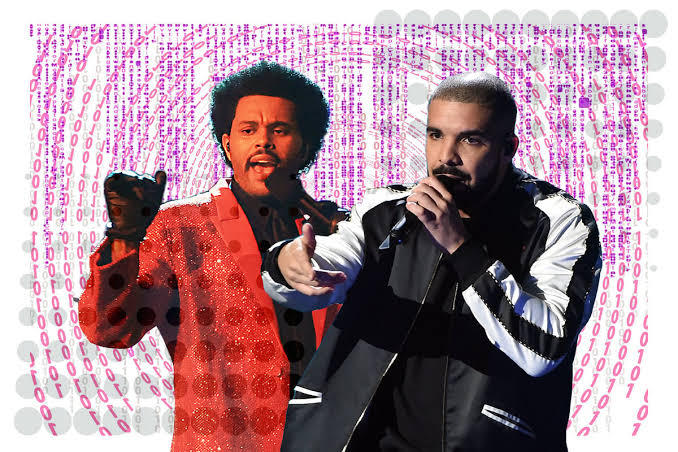
    In April 2023, a track called “Heart on My Sleeve” appeared on Spotify, Apple Music, and YouTube. It sounded like a collaboration between Drake and The Weeknd—but neither artist had anything to do with it. The vocals were generated by artificial intelligence, cloned from their voices, and the song rocketed to the top of Spotify’s viral chart, outpacing Taylor Swift’s “Anti-Hero” before being yanked offline.

    That brief, chaotic week raised a question the music industry had been dreading: what happens when anyone can make a hit song in a superstar’s voice without permission? The answer, as “Heart on My Sleeve” showed, is a legal gray area that’s still being sorted out.

    The Song That Fooled Millions

    “Heart on My Sleeve” was the work of an anonymous producer known as Ghostwriter977. The track featured AI-generated vocals that mimicked Drake and The Weeknd with unsettling accuracy—down to their distinctive cadences and vocal tics. The lyrics even name-dropped Selena Gomez, a nod to The Weeknd’s past relationship with the pop star.

    Within days of its release, the song had racked up over 600,000 Spotify streams, 15 million TikTok views, and 275,000 YouTube views. It hit #1 on Spotify’s US Viral Chart and briefly appeared on Apple Music’s Top 100. Headlines screamed that an AI song had “beaten” Taylor Swift—a reference to the fact that it displaced her single “Anti-Hero” from the top of Spotify’s Global Viral 50, even though it never came close to the Billboard Hot 100.

    The track was pulled from streaming platforms on April 17, 2023, after Universal Music Group (UMG), which represents both Drake and The Weeknd, filed a DMCA takedown request. But the damage—or the revelation, depending on your perspective—was already done.

    How Did They Make It?

    Ghostwriter977 reportedly used a custom-trained AI model on Drake and The Weeknd’s voices, likely using open-source tools like So-VITS-SVC. These tools can clone a voice from just a few minutes of reference audio. The producer then wrote original lyrics and a beat that deliberately mimicked the dark, moody trap-R&B style both artists are known for.

    The result was a track that felt authentic enough to fool casual listeners and even some industry insiders. It wasn’t a crude deepfake—it was a polished pop song with vocals that sounded like the real thing. That level of quality is what made it different from earlier AI experiments, which mostly produced instrumental or ambient music.

    Why the Taylor Swift Comparison Was Misleading

    The viral headlines about “beating Taylor Swift” were technically true only for Spotify’s viral chart, which measures social sharing and streaming momentum, not overall popularity. Swift’s “Anti-Hero” was still dominating official charts like the Billboard Hot 100 at the time. But the comparison stuck because it captured the cultural moment: an AI-generated song, made by an unknown, was outselling one of the biggest pop stars in the world on a major streaming platform.

    It also highlighted how vulnerable the music industry is to AI-generated content. If a viral song can outpace a superstar without any label backing, what happens when AI becomes more sophisticated?

    The Creator’s Defense

    Ghostwriter977 didn’t disappear after the takedown. Instead, they framed the song as “a statement” about the future of music. In a statement to Variety, they said they were “not trying to harm anyone” and that the goal was to show that the next big hit doesn’t need a label or a famous face—just a good song and AI tools.

    They even expressed interest in signing a record deal, saying they wanted to be “on the right side of history.” Whether that was a genuine offer or a publicity stunt remains unclear, but it underscored the awkward position the music industry finds itself in: the people creating these songs aren’t necessarily trying to destroy the industry—they’re trying to break into it.

    The Legal Mess

    UMG’s takedown was based on two claims: copyright infringement and violation of artist likeness. The first is straightforward—if the song sampled or interpolated elements of existing UMG recordings, that’s a clear violation. The second is murkier. In most jurisdictions, a person’s voice is not protected by copyright law, though some states, like California, have right-of-publicity laws that guard against unauthorized commercial use of a person’s likeness.

    The U.S. Copyright Office had already ruled in March 2023 that AI-generated works are not copyrightable if they lack human authorship. But “Heart on My Sleeve” had human-written lyrics, which complicates things. The song’s composition might be copyrightable, but the AI-generated vocals aren’t—leaving a legal gray area that experts are still debating.

    UMG also sent letters to streaming services demanding they block AI services from scraping lyrics and melodies. That suggests the industry is preparing for a broader fight, not just against individual songs, but against the tools that make them possible.

    What It Means for the Future

    “Heart on My Sleeve” was a flashpoint, but it wasn’t the first AI song—and it won’t be the last. Projects like OpenAI’s Jukebox and AIVA have been generating music for years, but the rise of voice-cloning tools like ElevenLabs and Resemble AI in 2022–2023 made it possible to replicate a specific singer’s timbre with just a few minutes of audio.

    The song’s brief success showed that AI-generated music can be commercially viable. It also showed that the legal framework is woefully unprepared. As AI tools become more accessible, we’re likely to see more artists like Ghostwriter977 pushing the boundaries—and more labels fighting back.

    The music industry has two options: adapt or sue. So far, it’s choosing the latter. But as the technology improves, the lawsuits may not be enough to stop the next viral AI hit.

    The story of “Heart on My Sleeve” is a preview of the battles ahead. It was a song that shouldn’t have existed, made by someone using tools that were never meant for this purpose, and it briefly outshone one of the biggest stars in music. The takedown was swift, but the questions it raised—about ownership, creativity, and the very definition of an artist—are far from resolved.

    Summary

    • “Heart on My Sleeve” was an AI-generated song mimicking Drake and The Weeknd, released in April 2023 by anonymous artist Ghostwriter977.
    • It hit #1 on Spotify’s US Viral Chart and briefly appeared on Apple Music’s Top 100, leading to misleading headlines about beating Taylor Swift.
    • UMG filed a DMCA takedown, and the song was removed from streaming platforms within days.
    • The creator defended it as a “statement” about the future of music, and even expressed interest in a record deal.
    • The legal case highlights gray areas in copyright and likeness rights, as AI-generated vocals aren’t clearly protected by existing laws.

    FAQ

    Q: Did the AI song actually beat Taylor Swift on the charts?
    A: No. It reached #1 on Spotify’s Global Viral Chart, temporarily displacing Swift’s “Anti-Hero” on that specific chart, but it never charted on the Billboard Hot 100.

    Q: How was the song made?
    A: The creator reportedly used a custom-trained AI model on Drake and The Weeknd’s voices, likely using open-source tools like So-VITS-SVC, and wrote original lyrics and a beat in their style.

    Q: Why was it taken down?
    A: Universal Music Group, which represents both artists, filed a DMCA takedown request on April 17, 2023, citing copyright infringement and violation of artist likeness.

    Q: Is it legal to use AI to mimic an artist’s voice?
    A: It’s a gray area. Copyright law doesn’t clearly protect a person’s voice, but some states have right-of-publicity laws. The U.S. Copyright Office also ruled that AI-generated works aren’t copyrightable if they lack human authorship.

    Q: Who is Ghostwriter977?
    A: The identity is unknown. The creator claimed the song was a “statement” about the future of music and expressed interest in signing a record deal.

  • How AI Could Pay Publishers Back: Licensing, Lawsuits, and the Future of Content Compensation

    How AI Could Pay Publishers Back: Licensing, Lawsuits, and the Future of Content Compensation

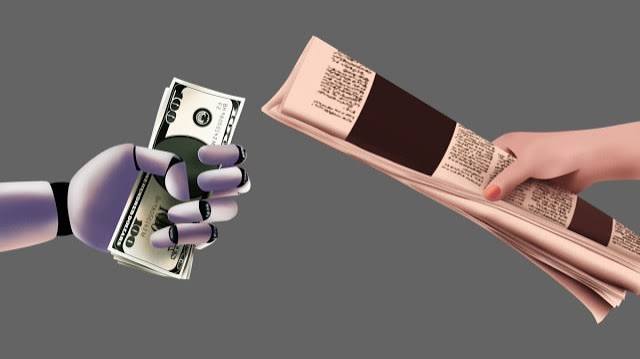
    Every time you ask ChatGPT a question, there’s a chance it’s drawing on an article written by a journalist who won’t see a cent for that use. Generative AI models were trained on vast swaths of the open web, including copyrighted news, books, and essays. Publishers argue they deserve compensation; AI companies claim fair use. The result is a legal and economic standoff that will shape the future of digital content.

    But money is already moving. OpenAI has signed licensing deals with major publishers like News Corp and Axel Springer. Google pays French publishers under neighboring rights. Perplexity shares ad revenue. These early arrangements offer a glimpse of what ‘giving back’ might look like—and who gets left out.

    The Core Problem: Your Content Trained the Model

    Generative AI models are built on web crawls like Common Crawl, which contains billions of pages. News articles, blog posts, and book excerpts form a significant chunk of that data. The models don’t store exact copies, but they learn patterns, facts, and styles from the text. This is where the trouble starts.

    Publishers see this as unauthorized use of their property. AI companies call it transformative fair use. The U.S. Copyright Office hasn’t settled it, and the courts are only beginning to weigh in. The most closely watched case is The New York Times’ lawsuit against OpenAI and Microsoft, filed in December 2023. The Times alleges ‘massive copyright infringement’ and seeks billions in damages. OpenAI says the claim is ‘without merit.’ The outcome will likely set the rules for everyone else.

    The Compensation Models Already in Play

    While lawsuits drag on, some publishers have cut deals. These fall into three broad categories:

    • Licensing agreements: OpenAI has signed multi-year deals with Axel Springer, the Associated Press, News Corp, and Le Monde. Google has similar arrangements with French publishers under the EU’s neighboring rights law. These are typically flat fees or annual payments for access to content.
    • Revenue sharing: Perplexity, an AI search engine, launched a publisher program that shares a portion of ad revenue when its chatbot cites a source. It’s an experiment, but one that directly links compensation to usage.
    • One-time payments: Some smaller outlets have accepted flat fees for content use, though the amounts are often undisclosed and rarely recurring.

    Still, the vast majority of publishers and independent creators receive nothing. The deals are selective, favoring big names with legal teams and bargaining power.

    Why the ‘Value Gap’ Matters

    The real conflict isn’t just about unpaid training data. It’s about what happens after. AI tools like ChatGPT and Perplexity can answer a user’s question directly, without sending them to the publisher’s website. That means fewer page views, less ad revenue, and fewer subscriptions. Publishers call this the ‘value gap.’

    AI companies counter that citations drive traffic and that the impact is overstated. Studies are mixed. Some show a decline in referral traffic from search engines; others suggest AI tools can boost brand visibility. The uncertainty hasn’t cooled the rhetoric.

    Historical Precedents: Google Books and the Music Industry

    This isn’t the first time technology outpaced copyright law. Google Books scanned millions of books and showed snippets. The Authors Guild sued, but courts ruled it was fair use. AI companies cite that case as precedent.

    A closer parallel might be the music industry’s fight against Napster. After years of litigation, the industry shifted to licensed streaming—Spotify, Apple Music—which now generates billions in revenue. Some argue AI compensation will follow the same arc: disruption, litigation, then licensing. But the music industry had a central collection society (ASCAP, BMI) to manage royalties. Publishing has no such mechanism, making collective licensing harder.

    Regulatory Pressure and the EU’s Example

    The EU has moved further than the U.S. The 2019 Copyright Directive gave publishers ‘neighboring rights’—the right to be paid when their content is used online. The EU AI Act, passed in 2024, adds transparency requirements: AI companies must disclose what they train on. In practice, this has forced Google and others to negotiate with French publishers.

    The U.S. has no federal AI copyright law. The Copyright Office has issued reports but stopped short of recommending sweeping changes. State-level bills are emerging, but a patchwork of laws could create more confusion. The UK has proposed a ‘text and data mining’ exception that allows training unless publishers opt out—a model publishers strongly oppose, because it puts the burden on them.

    What Could ‘Giving Back’ Look Like?

    Beyond the current deals, several models are on the table:

    • Collective licensing: A central body (like a music rights society) that collects fees from AI companies and distributes them to publishers. The EU’s neighboring rights hint at this, but no equivalent exists in the U.S.
    • Pro-rata revenue sharing: AI companies could set aside a percentage of revenue to be split among publishers based on how often their content is cited or used in training. This would require new metrics and transparency.
    • Micro-payments and blockchain: Some startups propose per-use payments via blockchain, but adoption is low and the infrastructure is untested.
    • Bundled deals with platforms: Rather than individual contracts, publishers could negotiate collectively through trade associations. The News Media Alliance has proposed a similar approach.

    Each model has flaws. Collective licensing is slow to set up. Revenue sharing needs reliable tracking. Micro-payments may not scale. But the direction is clear: AI companies will have to pay for the content that powers them. The question is how much, and who gets to decide.

    The standoff between AI companies and publishers won’t be resolved by a single lawsuit or regulation. The most likely future is a messy hybrid: court rulings that chip away at fair use, licensing deals that expand beyond the biggest players, and new technologies that track content usage in real time. For independent creators, the outlook is less certain—they lack the leverage of a News Corp. But the principles are the same: if AI profits from human creativity, some of that value should flow back to the creators. How to make that fair, efficient, and scalable is the defining challenge of the AI era.

    Summary

    • The problem: AI models are trained on copyrighted content without compensation, sparking lawsuits like The New York Times v. OpenAI.
    • Existing models: Licensing deals (OpenAI with News Corp, Google with French publishers), revenue sharing (Perplexity), and one-time payments cover only a fraction of publishers.
    • The value gap: AI tools reduce traffic to publisher sites, threatening ad revenue and subscriptions.
    • Precedents: Google Books set a fair use precedent, but the music industry’s shift to licensed streaming suggests a similar path for publishing.
    • Future options: Collective licensing, pro-rata revenue sharing, and micro-payments are emerging ideas, but none is fully realized yet.

    FAQ

    Q: Is AI training on copyrighted content legal?
    A: It’s contested. AI companies argue fair use, while publishers say it’s infringement. The U.S. Copyright Office hasn’t ruled definitively, and the outcome of The New York Times v. OpenAI will be pivotal.

    Q: What does a typical licensing deal look like?
    A: Multi-year agreements with flat fees or annual payments for access to content. Examples include OpenAI’s deals with Axel Springer, the AP, and News Corp. Terms are usually confidential.

    Q: How can independent creators get compensated?
    A: Currently, they rarely do. Collective licensing or pro-rata revenue sharing could help, but no such system exists yet. Some startups are exploring micro-payments, but they’re not widespread.

    Q: Will AI tools really hurt publisher traffic?
    A: Evidence is mixed. Some studies show a decline in referral traffic, while others suggest AI can increase visibility. Publishers argue the impact is significant; AI companies say it’s overstated.

    Q: What is the EU doing differently?
    A: The EU’s 2019 Copyright Directive gives publishers neighboring rights, requiring compensation for online use. The EU AI Act adds transparency rules. This has led to licensing deals with Google in France.

  • EU AI Act Enforcement: What the New Rules Mean for AI Models and You

    EU AI Act Enforcement: What the New Rules Mean for AI Models and You

    The European Union’s Artificial Intelligence Act, the world’s first comprehensive law for AI, is hitting a major milestone. Starting August 2, 2025, specific obligations for general-purpose AI models—like the ones powering ChatGPT, Gemini, and Claude—become enforceable. This means the companies behind these models must now follow strict rules on transparency, copyright, and safety.

    For everyday users and businesses, this could change how AI tools are developed and used. You might see more details about what data was used to train models, and there could be more safeguards against harmful outputs. But it also raises questions about innovation, trade secrets, and how smaller developers can keep up. Let’s break down what’s changing and why it matters.

    What Is the EU AI Act?

    The EU AI Act is a landmark law that sets rules for artificial intelligence based on its risk level. It’s the first attempt by any major economy to regulate AI comprehensively. The Act was proposed in 2021, but the explosive growth of generative AI (like ChatGPT) forced lawmakers to add new provisions for general-purpose AI models—the engines behind these tools.

    The Act is being rolled out in stages. The first phase, banning AI systems that pose unacceptable risks (like social scoring), took effect in February 2025. Now, starting August 2, 2025, the rules for general-purpose AI models kick in. The next big phase, covering high-risk AI systems, comes in August 2026.

    Who Must Comply?

    If you’re a company that develops a general-purpose AI model (like a large language model) and you make it available in the EU, you’re a ‘provider’ and must comply. This applies even if your company is based outside the EU. Also, if you build an AI application on top of such a model (a ‘downstream developer’), you’ll need to follow certain rules too.

    Key Obligations for AI Model Providers

    1. Transparency About Training Data

    Providers must publish a detailed summary of the content used to train their models. This is a big deal because it addresses copyright concerns. For example, if a model was trained on millions of books, articles, or images, the provider must disclose that. This summary should be ‘sufficiently detailed’ to help rights holders know if their work was used.

    2. Copyright Compliance Policy

    Providers must have a policy to respect EU copyright law. This includes honoring the opt-out mechanism from the Digital Single Market Directive, which allows rights holders to reserve their works from being used for AI training. In practice, this might mean respecting robots.txt files on websites or other machine-readable signals.

    3. Technical Documentation

    Providers must maintain up-to-date technical documentation about the model, including its architecture, training process, and evaluation results. This documentation must be shared with downstream developers so they can understand the model’s capabilities and limitations.

    4. Systemic Risk Obligations (for Very Large Models)

    If a model is trained with more than 10^25 FLOPs (a measure of computational power), it’s considered to pose ‘systemic risk.’ Models like GPT-4 likely exceed this threshold. These providers face extra duties:
    – Conduct model evaluations to identify risks.
    – Perform adversarial testing (trying to break the model) to find vulnerabilities.
    – Report serious incidents to the authorities.
    – Implement cybersecurity protections.

    How Will This Be Enforced?

    The European AI Office, part of the European Commission, is the main enforcer for these GPAI rules. They can investigate, request information, and impose fines. For violations, the penalties can be up to €35 million or 7% of global annual turnover, whichever is higher. That’s a serious financial risk for big tech companies.

    What About Open-Source Models?

    The Act includes exemptions for models released under free and open-source licenses, unless they pose systemic risk. However, the definition of ‘open source’ here is strict: the model’s weights and architecture must be publicly available, and the model must not be offered as a paid service. This means many open-source models might still fall under the rules.

    The Code of Practice

    To help companies comply, the AI Office facilitated a ‘Code of Practice’ with input from industry, civil society, and academics. Finalized in April 2025, this code offers detailed guidance on meeting the obligations. While not legally binding, following the code gives a ‘presumption of conformity’—meaning regulators will assume you’re compliant if you follow it.

    What’s the Impact?

    For consumers, you might see more transparency from AI companies about what their models were trained on. There could also be improvements in safety, as systemic-risk models undergo more rigorous testing. For businesses using AI, you’ll likely get better documentation from model providers, helping you understand the tools you’re using.

    However, there are concerns. Some companies argue that disclosing training data could reveal trade secrets. Smaller developers worry about the compliance burden. And rights holders are still figuring out how to enforce their opt-outs in practice.

    The Bigger Picture

    The EU is setting a global precedent. Other countries are watching to see how these rules work in practice. If successful, similar regulations might emerge elsewhere. But there’s also a risk of over-regulation, potentially stifling innovation or leading some companies to withhold their AI models from the EU market.

    As we move forward, it’s crucial to balance the benefits of AI with the need for accountability. The EU AI Act is a bold experiment in doing just that.

    The enforcement of GPAI obligations under the EU AI Act marks a pivotal moment in AI governance. It’s a step toward making AI more transparent and accountable, but it also brings challenges. Whether you’re a developer, a business, or just an AI user, these changes will shape the AI landscape in Europe and beyond.

    Summary

    • New rules for AI models: As of August 2, 2025, providers of general-purpose AI models in the EU must follow transparency, copyright, and documentation rules.
    • Systemic risk models face extra scrutiny: Very large models (like GPT-4) must undergo evaluations, adversarial testing, and incident reporting.
    • Enforcement is serious: The European AI Office can fine violators up to €35 million or 7% of global turnover.
    • Open-source exemptions are narrow: Only truly open models (with public weights and architecture) are exempt, and only if they don’t pose systemic risk.
    • A Code of Practice helps: Following the AI Office’s Code of Practice can demonstrate compliance.

    FAQ

    Q: What is a general-purpose AI model?
    A: It’s an AI model that can perform a wide range of tasks, like generating text, images, or code. Examples include GPT-4, Claude, and Gemini.

    Q: Do these rules apply to companies outside the EU?
    A: Yes, if they make their AI models available in the EU market, they must comply, regardless of where they’re based.

    Q: What happens if a company doesn’t comply?
    A: They can face fines up to €35 million or 7% of their global annual turnover, whichever is higher.

    Q: How will I know if an AI model was trained on my copyrighted work?
    A: Providers must publish a summary of training data. If your work was used, you can then enforce your rights, like requesting an opt-out.

    Q: Are open-source models exempt?
    A: Only if they meet strict criteria: the weights and architecture are public, and the model isn’t offered as a paid service. Even then, they might face rules if they pose systemic risk.