Tag: Congo

  • Amazon vs. Congo: Which Rainforest Is Truly Wilder?

    What goes on the massive Congo Rainforest Basin? Has it been fully explored? What mysteries lie within it? : r/geography

    When you picture a ‘wild’ jungle, do you see the Amazon’s canopy teeming with jaguars and macaws, or the Congo’s misty depths where okapis and bonobos roam? Both are legendary, but they offer very different flavors of wildness. The Amazon is a biodiversity powerhouse, while the Congo is a vast, mysterious frontier that remains surprisingly untouched. Let’s compare them across size, species, human impact, and raw wilderness.

    The Amazon: Colossus of Biodiversity

    Spanning 5.5 million square kilometers across nine South American countries, the Amazon is the largest tropical rainforest on Earth. It holds roughly 390 billion individual trees across 16,000 species. That’s more tree species than the Congo has in its entire forest. The Amazon also boasts 1,300 bird species, 430 mammals, and an estimated 2.5 million insect species. This staggering diversity is partly due to its ancient lineage—rainforest conditions have existed for 55 million years—and the Andes’ rise 10 million years ago, which created varied habitats and drove speciation.

    But the Amazon isn’t just big; it’s also deeply modified by humans. Indigenous peoples have lived there for at least 13,000 years, and recent discoveries of ‘dark earth’ (terra preta) suggest populations of 8–10 million before Europeans arrived. So, much of what looks ‘pristine’ is actually a human-shaped garden. Today, cattle ranching drives 80% of deforestation, with about 8,000 km² lost annually—down from a peak of 27,000 km² in 2004, but still significant.

    The Congo: The Understudied Giant

    Central Africa’s Congo Basin is the second-largest rainforest, covering 1.8 million km²—about 18% of the world’s remaining tropical forest. It’s smaller, but in many ways, it’s wilder. Only about 20% of the Congo’s forests are considered disturbed, compared with 40% in the Amazon. Fewer roads, lower population density, and less industrial agriculture mean large swaths remain inaccessible.

    The Congo’s biodiversity is lower in absolute numbers—roughly 10,000 plant species (3,000+ endemic), 400 mammals, and 1,000 birds—but its endemism is remarkable. The okapi, bonobo, and Congo peacock are found nowhere else. Its isolation and ancient river system, which is the world’s deepest at 220 meters, have fostered unique evolutionary paths. However, the Congo is far less studied; scientists regularly discover new species there, so its true richness is likely underestimated.

    Deforestation: Different Drivers, Different Futures

    The Amazon’s deforestation is largely industrial: cattle ranching, soy, and illegal gold mining. The Congo’s is more about survival: smallholder slash-and-burn agriculture, charcoal production, and artisanal mining for coltan and cobalt. Annual deforestation in the Congo is about 12,000 km²—higher than the Amazon’s current rate—but it’s driven by different pressures. The Congo also contains the world’s largest tropical peatland (145,000 km²), storing 30 billion tons of carbon. Oil exploration in places like Virunga National Park threatens this carbon vault.

    Which Is Wilder? It Depends How You Define ‘Wild’

    If ‘wild’ means raw biodiversity, the Amazon wins—it has 5–10 times more tree species and overall higher species richness. But if ‘wild’ means untouched by human hands, the Congo takes the crown. Its forests are less fragmented, and its indigenous Pygmy peoples (Baka, Mbuti) have lived there for 50,000 years with a lighter footprint. The Amazon’s ‘wildness’ is partly an illusion—it’s a human-shaped landscape. The Congo’s wildness is more authentic, even if smaller.

    The Verdict: Two Kinds of Wild

    There’s no single ‘wilder’ jungle—they’re wild in different ways. The Amazon is a biodiversity giant, a living laboratory of evolution. The Congo is a deep, dark frontier, less studied and less disturbed. Both face existential threats from climate change and resource extraction. Appreciating their unique wildness is the first step to protecting them.

    Next time someone asks which jungle is wilder, ask them what they mean. If they want the most species, it’s the Amazon. If they want the least human impact, it’s the Congo. Both are irreplaceable, and both need our attention.

    Summary

    • Amazon: 5.5M km², 16,000 tree species, ~1,300 birds, 430 mammals; higher biodiversity but 40% disturbed.
    • Congo: 1.8M km², ~10,000 plants, 400 mammals, 1,000 birds; higher endemism per area, only 20% disturbed.
    • Deforestation drivers: Amazon – cattle/soy; Congo – smallholder agriculture/charcoal.
    • Wildness: Amazon = biodiversity; Congo = inaccessibility and lower human modification.
    • Congo’s peatland: 145,000 km² storing 30 billion tons of carbon—critical for climate.

    FAQ

    Q: Which rainforest has more animal species?
    A: The Amazon has more in absolute numbers—1,300 birds and 430 mammals vs. Congo’s 1,000 birds and 400 mammals—but the Congo has a higher percentage of endemic species.

    Q: Is the Congo River deeper than the Amazon?
    A: Yes, the Congo is the world’s deepest river at up to 220 meters, while the Amazon’s max depth is around 100 meters.

    Q: Which forest is more threatened?
    A: Both are threatened, but differently. The Amazon faces industrial deforestation (cattle/soy), while the Congo faces slash-and-burn and charcoal, plus emerging oil exploration.

    Q: Are there uncontacted tribes in both?
    A: The Amazon has ~50 uncontacted tribes; the Congo has indigenous Pygmy groups like the Baka and Mbuti, but they are more integrated.

    Q: Which is bigger?
    A: The Amazon is about three times larger (5.5M km² vs. 1.8M km²).
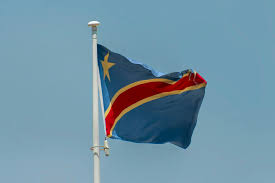
  • Genocost: The New Word for Congo’s Forgotten Genocide

    Genocost: The New Word for Congo’s Forgotten Genocide

    For decades, the world has struggled to name the catastrophe in eastern Democratic Republic of Congo. Millions dead, yet no single term captured the horror—until now. ‘Genocost’—a fusion of ‘genocide’ and ‘cost’—is more than a word; it’s a movement demanding recognition, reparations, and justice. This explainer unpacks what Genocost means, why it matters, and how it’s reshaping the global conversation about Congo’s long war.

    The Birth of a Word

    In the hills and cities of eastern Congo, a new word is taking root: Genocost. Coined by Congolese activists, scholars, and diaspora communities, it fuses ‘genocide’ with ‘cost’ to name a crime that has long gone unnamed. The term is deliberately provocative, aiming to capture both the human toll and the economic greed that drives the violence.

    Every year on August 2, Congolese communities worldwide observe Genocost Remembrance Day, marking the start of the Second Congo War in 1998. This day is not just about mourning; it’s about demanding that the world finally acknowledge what happened—and what continues to happen.

    A War Over Minerals

    The eastern DRC sits atop some of the world’s richest deposits of coltan, gold, tin, and cobalt—minerals essential to our smartphones, laptops, and electric vehicles. For over two decades, armed groups, foreign armies, and multinational corporations have fought to control these resources, often through brutal violence against civilians.

    Genocost argues that this violence is not a byproduct of conflict but its very purpose. The killings, rapes, and displacements are instrumental—a means to depopulate resource-rich areas and secure control. The ‘cost’ in Genocost is twofold: the cost in human lives and the cost of the minerals that fuel the killing.

    The Scale of Suffering

    Estimates of the death toll range from 3 to 6 million—mostly from disease and starvation caused by displacement. Hundreds of thousands have been directly killed, and sexual violence has been used systematically as a weapon of war. Yet, this suffering has largely been ignored by the international community.

    One reason for this silence is the lack of a name. The Holocaust, Rwanda, Srebrenica—these names evoke immediate recognition and moral outrage. Congo’s tragedy has no such name, and Genocost aims to fill that void. As one activist put it, ‘What is unnamed is unseen; what is unseen is unpunished.’

    The Legal Debate

    Under international law, ‘genocide’ has a strict definition: the intent to destroy, in whole or in part, a national, ethnic, racial, or religious group. Some legal scholars argue that the DRC’s violence may not meet this threshold for all victims, as the primary motive appears economic rather than ethnic.

    However, supporters of Genocost counter that economic motives do not preclude genocidal intent. They point to specific ethnic groups, such as the Banyamulenge, who have faced targeted attacks. Moreover, they argue that the term is morally and politically justified, even if legally contested. The goal is not to win a courtroom argument but to break the cycle of indifference.

    A Movement for Justice

    Genocost is more than a label; it’s a call to action. The movement demands:

    • Recognition: Official acknowledgment of the genocide by national and international bodies.
    • Reparations: Financial, ecological, and psychological reparations for survivors and communities.
    • Justice: Accountability for foreign actors and corporations implicated in the violence.

    These demands are echoed in memorial events, academic conferences, and advocacy campaigns held in DRC cities like Goma and Kinshasa, as well as in diaspora hubs like Brussels, Paris, and Washington D.C.

    Challenges and Controversies

    The Genocost movement faces significant pushback. Rwanda, a key regional actor, strongly rejects the genocide framing, insisting its military interventions were security operations, not economic exploitation. Western governments and mining companies have been reluctant to acknowledge complicity, despite UN reports documenting their role in the mineral trade.

    Even within the DRC, the government has at times embraced the narrative to rally national unity, while critics accuse it of using Genocost to deflect from its own governance failures. These tensions highlight the complex politics of memory and justice.

    Why It Matters

    Genocost matters because it gives voice to the voiceless. It challenges the world to see the Congo not as a place of endless chaos, but as a site of deliberate, resource-driven violence. By naming the crime, the movement hopes to force a reckoning—not just with the past, but with the ongoing exploitation that continues to fuel conflict today.

    As the world increasingly depends on Congo’s minerals for green technologies, the question of Genocost becomes even more urgent. Will we continue to turn a blind eye, or will we finally acknowledge the true cost of our convenience?

    Genocost is a powerful new lens through which to understand Congo’s tragedy. It names the unnameable, links the violence to our own consumption, and demands a response. Whether or not it gains official legal recognition, it has already succeeded in sparking a global conversation about remembrance, justice, and accountability. The word is out, and it will not be silenced.

    Summary

    • Genocost is a portmanteau of ‘genocide’ and ‘cost,’ coined to describe the genocide in eastern DRC driven by economic exploitation of minerals.
    • August 2 is the annual day of remembrance, marking the start of the Second Congo War (1998–2003).
    • The movement seeks recognition, reparations, and justice, including accountability for foreign actors and corporations.
    • The term challenges the international community’s silence and aims to create a memorial vocabulary akin to ‘Holocaust’ or ‘Rwanda.’
    • Legal debates persist over the strict definition of genocide, but supporters argue the term is morally and politically justified.

    FAQ

    Q: What does ‘Genocost’ mean?
    A: Genocost is a portmanteau of ‘genocide’ and ‘cost,’ referring to the genocide in eastern Democratic Republic of Congo driven by economic exploitation of mineral wealth.

    Q: When is Genocost Remembrance Day?
    A: It is observed annually on August 2, marking the start of the Second Congo War in 1998.

    Q: Why is the term ‘genocide’ controversial in this context?
    A: Under international law, genocide requires intent to destroy a specific group. Some argue the DRC’s violence is primarily economic, not ethnic, though supporters counter that economic motives can coexist with genocidal intent.

    Q: What are the main demands of the Genocost movement?
    A: The movement demands official recognition, reparations (financial, ecological, psychological), and justice, including accountability for foreign actors and corporations.

    Q: How can I learn more or get involved?
    A: Look for Genocost events in your city, follow Congolese activist organizations, and educate yourself about the mineral supply chain and its impact on Congo.