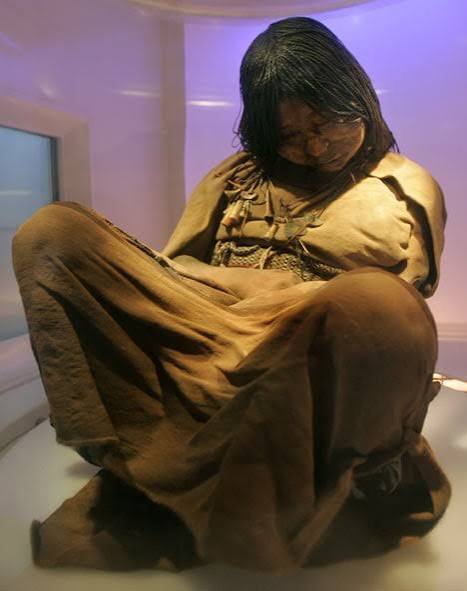
For centuries, the story of how smallpox ravaged the Americas has been told through the words of Spanish chroniclers and the silent testimony of population decline. But a groundbreaking 2024 study has finally provided the first physical proof: ancient DNA from two Inca mummies, buried around the time of European contact, contains the genetic signature of the smallpox virus. This discovery transforms our understanding of one of history’s greatest demographic catastrophes.
The mummies, discovered near Cusco, Peru, and in a cave in the Chilean Andes, date to the early 16th century—a period when Spanish conquistadors were just beginning their conquest. The presence of Variola virus in their tissues confirms that smallpox was already spreading through the Inca Empire before Francisco Pizarro’s arrival in 1532. This finding not only validates historical accounts but also underscores the immense human cost of the Columbian Exchange, where invisible pathogens were as powerful as any army.
The Discovery: Ancient DNA Tells a New Story
In 2024, researchers published a landmark study in the journal Nature that analyzed ancient DNA extracted from two 500-year-old Inca mummies. One was found in a cemetery near the former Inca capital of Cusco, Peru, and the other in a cave in the Chilean Andes. The analysis identified the presence of Variola virus, the pathogen that causes smallpox. This is the first confirmed molecular evidence of smallpox in the pre-Columbian Americas, providing a direct, physical link to a disease that historians have long believed devastated Indigenous populations.
The mummies date to approximately 1520–1530 CE, a period coinciding with the arrival of Spanish conquistadors and the early stages of European colonization. This timing is crucial: it places the virus in the Americas just as the Spanish were establishing their presence, supporting the theory that European colonists introduced the disease.
The Columbian Exchange: A Two-Way Transfer of Devastation
The arrival of Christopher Columbus in 1492 initiated the Columbian Exchange, a massive transfer of plants, animals, people, and pathogens between the Old World and the New World. Europeans brought with them diseases to which they had centuries of acquired immunity, but Indigenous Americans had no prior exposure. This made them immunologically “naïve” and devastatingly vulnerable.
Smallpox, caused by the Variola major virus, was one of the deadliest of these diseases. Symptoms included high fever, severe rash, and pustules that often left permanent scars. Mortality rates ranged from 30% to 60% in naïve populations. It is estimated that smallpox and other Old World diseases—such as measles, influenza, and typhus—killed 50–90% of Indigenous American populations within a century of contact. This demographic catastrophe contributed to the collapse of the Inca and Aztec empires.
The Inca Empire and Its Collapse
At its peak (c. 1438–1533 CE), the Inca Empire, known as Tawantinsuyu, was the largest empire in the pre-Columbian Americas. It spanned modern-day Peru, Ecuador, Bolivia, Chile, and Argentina—over 2 million square kilometers with an estimated 12 million subjects. When Francisco Pizarro arrived in 1532 with fewer than 200 men, the empire was already weakened by a civil war between brothers Atahualpa and Huáscar, and by a devastating smallpox epidemic that had killed the previous emperor, Huayna Capac, around 1524–1527.
The epidemic is widely believed to have been a decisive factor in the Spanish conquest. It decimated the Inca population and leadership, creating a power vacuum and chaos that Pizarro exploited. The new DNA evidence confirms that smallpox was indeed present in the Andes during this critical period, providing a tangible link between the disease and the empire’s downfall.
Prior Evidence: Written Accounts and Indirect Clues
Before this study, evidence for the introduction of smallpox was based primarily on written accounts and indirect clues. Spanish chroniclers like Bartolomé de las Casas and Bernabé Cobo described epidemics ravaging Indigenous communities. Indigenous records, such as the Quipu (knotted-string records) and oral histories, referenced mass death. Demographic estimates suggested catastrophic mortality, and the timing of the Inca civil war and the death of Huayna Capac strongly suggested an epidemic was already spreading before Pizarro’s arrival.
However, no physical, molecular evidence of the virus had ever been found in pre-Columbian remains. Some scholars even questioned whether smallpox arrived earlier than 1518 (the first documented outbreak in Hispaniola) or whether other diseases were responsible. This study resolves those debates by providing direct evidence of the virus in the Americas at the time of European contact.
The Significance: A Landmark in Paleomicrobiology
This discovery is a landmark in paleomicrobiology—the study of ancient pathogens. It demonstrates that ancient DNA (aDNA) techniques can recover viral genomes from mummified tissue, opening doors for future research on other historical diseases such as typhus, measles, and tuberculosis. The study also highlights the importance of museum collections; the mummies had been stored in museums for decades before being analyzed, showing that valuable scientific information can be gleaned from existing specimens.
A Stark Reminder of Colonial Impact
The finding is a stark reminder of the human cost of colonization. The “Great Dying” of Indigenous Americans is one of the largest demographic catastrophes in history, and this study provides a tangible, physical link to that tragedy. It reframes the narrative of European conquest: the Spanish did not simply “outfight” the Inca; they were aided by invisible biological allies. This perspective is crucial for understanding the full scope of colonial impact.
Ethical Considerations and Indigenous Perspectives
Some Indigenous communities and scholars have raised concerns about the study of human remains without consent from descendant communities. The mummies are ancestors, not just specimens. Researchers must navigate these ethical considerations carefully, balancing scientific inquiry with respect for cultural heritage. This study underscores the need for collaborative approaches that involve Indigenous communities in research decisions.
The discovery of smallpox DNA in 500-year-old Inca mummies is more than a scientific breakthrough; it is a poignant reminder of the devastating consequences of contact between worlds. It confirms what historians have long suspected and gives a face to the millions who perished. As we continue to uncover the secrets of the past, we must remember the human stories behind the data and the ethical responsibilities that come with studying them.
Summary
- First confirmed molecular evidence of smallpox in pre-Columbian Americas, found in 500-year-old Inca mummies.
- Mummies date to c. 1520–1530 CE, coinciding with Spanish arrival, supporting introduction by European colonists.
- Smallpox and other Old World diseases killed 50–90% of Indigenous populations, contributing to the collapse of the Inca Empire.
- Study is a landmark in paleomicrobiology, showing ancient DNA can recover viral genomes from mummified tissue.
- Raises ethical considerations about studying human remains without Indigenous community consent.
FAQ
Q: What exactly was found in the Inca mummies?
A: Researchers extracted ancient DNA from two mummies and identified the presence of Variola virus, the pathogen that causes smallpox. This is the first confirmed molecular evidence of smallpox in the pre-Columbian Americas.
Q: How old are the mummies, and where were they found?
A: The mummies date to approximately 1520–1530 CE. One was found in a cemetery near Cusco, Peru, and the other in a cave in the Chilean Andes.
Q: Why is this discovery significant?
A: It provides direct physical proof that smallpox was introduced to the Americas by European colonists, confirming historical theories that were previously based only on written accounts and indirect evidence.
Q: How did smallpox affect Indigenous populations?
A: Smallpox and other Old World diseases killed an estimated 50–90% of Indigenous American populations within a century of contact, contributing to the collapse of the Inca and Aztec empires.
Q: Are there ethical concerns about studying these mummies?
A: Yes, some Indigenous communities and scholars have raised concerns about studying human remains without consent from descendant communities. Researchers must balance scientific inquiry with respect for cultural heritage.