Tag: cognitive bias

  • Invert, Always Invert: The Ancient Mental Model That Solves Problems by Thinking Backwards

    Invert, Always Invert: The Ancient Mental Model That Solves Problems by Thinking Backwards

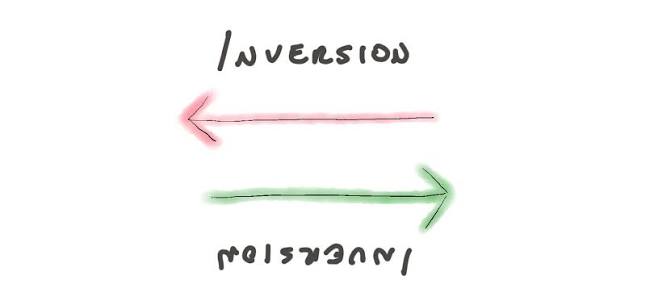
    When faced with a tough problem, most of us ask, “How can I make this work?” But a quieter, more powerful approach asks the opposite: “What would make this fail?” This is inversion — a mental model that flips the question to reveal hidden obstacles and smarter solutions.

    Practiced by Stoic philosophers, championed by investor Charlie Munger, and validated by cognitive science, inversion is a simple yet profound tool. It helps you avoid disaster before it strikes, make better decisions, and break free from mental ruts. Let’s explore how thinking backwards can move you forward.

    The Ancient Roots of Inversion

    Inversion isn’t new. The Stoics, who flourished in ancient Greece and Rome, built a whole philosophy around it. Seneca and Epictetus practiced premeditatio malorum — the premeditation of evils. They would imagine losing their wealth, status, or even loved ones, not to wallow in despair, but to build gratitude and resilience. By mentally rehearsing worst-case scenarios, they softened the blow of real misfortunes and sharpened their appreciation for what they had.

    Centuries later, the German mathematician Carl Gustav Jacob Jacobi (1804–1851) gave the technique its famous slogan. He advised his students to solve difficult problems by “man muss immer umkehren” — one must always invert. For Jacobi, this meant working backward from the desired conclusion to the given conditions, a method that often cracked proofs that seemed impenetrable from the front.

    The phrase “Invert, always invert” later became a cornerstone of Charlie Munger’s investment philosophy. The vice chairman of Berkshire Hathaway used it to avoid stupidity rather than seek brilliance. He knew that a few big mistakes could sink a portfolio, so he spent more time figuring out how to lose money than how to make it.

    Why Inversion Works: The Science Behind the Trick

    Inversion isn’t just a clever parlor game — it taps into fundamental quirks of the human brain.

    First, there’s functional fixedness. We tend to see objects and problems only in their conventional use. A brick is for building, a deadline is for meeting. Inversion breaks that mental lockstep by forcing you to consider the opposite: What if we used the brick as a paperweight? What if we deliberately missed the deadline? Suddenly, new possibilities appear.

    Second, loss aversion — the famous finding by psychologists Daniel Kahneman and Amos Tversky — shows that losses hurt about twice as much as equivalent gains please us. This asymmetry means we’re often more motivated to avoid pain than to seek pleasure. Inversion leverages this by turning “How do I succeed?” into “How do I avoid failing?” The latter question feels more urgent, and so it gets our full attention.

    Third, there’s the negativity bias. Our brains are wired to spot threats faster than opportunities — a survival trait from our hunter-gatherer days. Inversion works with this bias instead of fighting it. When you ask “What could go wrong?”, your brain lights up with answers.

    Finally, there’s the pre-mortem, a formalized version of inversion developed by cognitive psychologist Gary Klein. In a post-mortem, you analyze failure after it happens. In a pre-mortem, you imagine the project has already failed — and then work backward to find the causes. Klein’s research shows this technique dramatically improves risk identification because it overrides the optimism bias that makes us blind to potential problems.

    How to Apply Inversion in Five Steps

    Inversion is simple to practice. Here’s a framework you can use today:

    1. State your goal. Be specific. “Launch a successful product” is a start, but “Launch a mobile app that gets 10,000 downloads in the first month” is better.
    2. Invert the goal. Ask: “What would guarantee this fails?” or “What would make this an absolute disaster?”
    3. Brainstorm failure causes. Write down everything that could go wrong — poor pricing, ignoring customer feedback, bad timing, a buggy interface, weak marketing. Don’t censor yourself.
    4. Reverse the causes into actions. For each cause, flip it into a positive step. “Poor pricing” becomes “Test pricing with early users.” “Ignoring feedback” becomes “Build a feedback loop from day one.”
    5. Use the inverted list as a checklist. Review it before making key decisions to avoid known pitfalls.

    This five-step method turns a vague worry into a concrete action plan.

    Inversion in the Real World: From Amazon to the Military

    Inversion isn’t just for philosophers and mathematicians. It’s a workhorse in business, strategy, and innovation.

    Amazon reportedly uses a pre-mortem culture. Jeff Bezos would ask teams to imagine a product launch had failed — then work backward to figure out why. This practice helps the company catch problems before they cost millions.

    The military and cybersecurity worlds use Red Team exercises: deliberately attacking your own plan to find weaknesses. It’s inversion in action — instead of asking “How do we win?”, you ask “How could we lose?” and then shore up those vulnerabilities.

    Even SWOT analysis — that staple of business planning — leans on inversion. The “T” for threats is essentially a structured way to ask “What could go wrong?”

    In personal life, inversion can be just as powerful. Want to improve your health? Ask: “What would make me unhealthy?” Then avoid those things. Want to build a stronger relationship? Ask: “What would destroy it?” Then don’t do those things. The negative path is often clearer than the positive one.

    The Risks of Inversion: When Backward Thinking Backfires

    Inversion is a tool, not a cure-all. Done poorly, it can spiral into chronic pessimism or catastrophizing. If you spend too much time imagining worst-case scenarios, you might become paralyzed with fear, unable to take reasonable risks.

    The Stoics themselves were careful to balance negative visualization with gratitude. They imagined loss not to dread it, but to appreciate what they had. The goal was equanimity, not anxiety.

    Inversion also has limits in creative contexts. Sometimes you need to think forward, to imagine a bold new possibility without immediately asking “What could go wrong?” If you invert every idea, you might never launch anything. The key is to use inversion for risk management and problem-solving, but not as the only lens through which you view the world.

    Invert as a Habit

    Charlie Munger didn’t just use inversion occasionally — he made it a habit, a reflex. He famously said, “It is remarkable how much long-term advantage people like us have gotten by trying to be consistently not stupid, instead of trying to be very intelligent.”

    That’s the heart of inversion: it’s a humility hack. It acknowledges that the path to success is often paved with avoiding failure. By asking “What would make this fail?” you sidestep the arrogance of assuming you already know what will work.

    So the next time you’re stuck on a problem, try flipping it. Instead of “How can I make this succeed?”, ask “What would make this fail?” You might be surprised at how quickly the answer appears — and how much better your decisions become.

    Inversion is a deceptively simple mental model with deep roots and wide applications. Whether you’re an investor, a project manager, or just someone trying to make better life choices, asking “What could go wrong?” can be more illuminating than “What could go right?” By flipping the question, you tap into your brain’s natural threat-detection, overcome overconfidence, and build a practical checklist for avoiding disaster. The Stoics knew it, Jacobi knew it, and Munger knows it: sometimes the best way forward is to think backward. So go ahead — invert your next problem and see what you’ve been missing.

    Summary

    • Inversion flips your question from “How do I succeed?” to “What would make this fail?” — a shift that reveals hidden obstacles and practical actions.
    • The technique has ancient roots: Stoics practiced premeditatio malorum (imagining worst-case scenarios) to build resilience and gratitude.
    • Cognitive science backs it up: loss aversion, negativity bias, and functional fixedness all make inversion a natural fit for the human brain.
    • Formalized as the “pre-mortem” by Gary Klein, it’s used by companies like Amazon and in military Red Team exercises to identify risks before they happen.
    • The five-step method — state goal, invert, brainstorm causes, reverse into actions, use as a checklist — makes it easy to apply today.

    FAQ

    Q: What is the inversion technique?
    A: Inversion is a mental model where you approach a problem by asking the opposite of what you want. Instead of “How can I make this succeed?”, you ask “What would guarantee failure?” This helps you identify obstacles and avoid them.

    Q: Who invented inversion?
    A: The technique has no single inventor. It was practiced by ancient Stoic philosophers like Seneca and Epictetus, popularized in mathematics by Carl Jacobi, and championed in modern times by investor Charlie Munger.

    Q: How is inversion different from just being pessimistic?
    A: Inversion is a structured problem-solving tool, not a mindset. It involves a specific question-and-answer process to uncover risks, then flipping those risks into positive actions. Pessimism is a general negative outlook; inversion is a targeted exercise.

    Q: Can inversion be used in everyday life?
    A: Absolutely. For any goal — health, relationships, career — you can ask “What would destroy this?” and then avoid those behaviors. It’s often easier to identify negative actions than positive ones.

    Q: Are there any downsides to inversion?
    A: If overused, inversion can lead to excessive focus on negatives and anxiety. The Stoics balanced it with gratitude. Use it for risk assessment, but don’t let it stop you from taking calculated risks.
  • The Dunning-Kruger Effect: A Real Cognitive Bias or Just a Statistical Illusion?

    The Dunning-Kruger Effect: A Real Cognitive Bias or Just a Statistical Illusion?

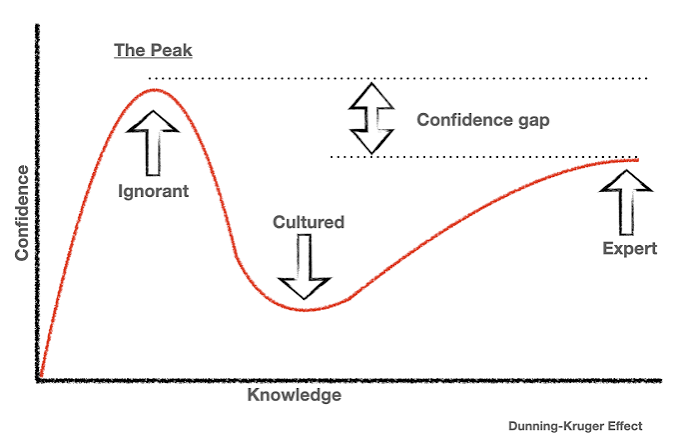
    You’ve probably heard of the Dunning-Kruger effect: the idea that incompetent people are too ignorant to know they’re incompetent, so they overestimate their abilities. It’s become a cultural touchstone, used to explain everything from bad drivers to political pundits. But what if this famous phenomenon is not a quirk of the human mind, but rather a quirk of statistics? A 2020 paper suggests just that, arguing that the Dunning-Kruger effect may be largely a data artefact—a mirage created by the way we analyze numbers, not a real psychological bias.

    This isn’t just academic squabbling. The Dunning-Kruger effect has been cited in countless articles, books, and management seminars. If it’s not real, we might need to rethink some of our assumptions about self-awareness and competence. But before we throw the concept out, let’s dive into the debate. We’ll explore the original research, the statistical critique, and what both sides have to say. By the end, you’ll have a clearer picture of whether the Dunning-Kruger effect is a genuine insight into human nature or a statistical illusion that has fooled us all.

    The Original Dunning-Kruger Effect: A Quick Recap

    In 1999, psychologists Justin Kruger and David Dunning published a landmark study titled “Unskilled and unaware of it.” They asked participants to take tests in logic, grammar, and humor, and then asked them to rate their own performance. The results were striking: those who scored in the bottom quartile (the lowest 25%) rated themselves as being in the 60th to 70th percentile—meaning they thought they were above average, when in fact they were well below. Conversely, those in the top quartile often underestimated their performance, rating themselves slightly below where they actually fell.

    The explanation Dunning and Kruger offered was that the same cognitive deficits that cause poor performance also prevent people from recognizing their incompetence. In other words, if you lack the skills to do something well, you also lack the skills to know you’re doing it badly. This “double burden” of ignorance became the core of the Dunning-Kruger effect, and it quickly entered popular culture as a meme, a management training talking point, and a way to explain everything from political polarization to vaccine hesitancy.

    The 2020 Critique: A Statistical Artefact?

    Fast forward to 2020, and a team of researchers from Carnegie Mellon University and the University of Toronto published a paper with a provocative title: “The Dunning-Kruger effect is probably not real.” Their argument was not that the original studies were fabricated, but that the pattern of results could be explained by statistical artefacts—specifically, regression to the mean and measurement error—without any need for a psychological bias.

    Let’s break down these concepts with an analogy. Imagine you’re a basketball coach trying to evaluate your players’ shooting ability. You have them take a series of shots, and you also ask them to rate how good they think they are. Both measures are imperfect: a player might have an off day (measurement error), and if you pick the worst performers from one day, they’re likely to do better the next time just by chance (regression to the mean).

    Now, suppose you compare the players’ self-ratings to their actual performance. The players who scored lowest on the shooting test might have had a particularly bad day, but their self-rating reflects their overall ability, which is probably higher than that one bad performance. So they appear to overestimate themselves. Conversely, the top performers might have had a lucky day, but their self-rating is based on their average ability, which is lower than that one great performance. So they appear to underestimate themselves. The result? A pattern that looks exactly like the Dunning-Kruger effect, but it’s purely a statistical illusion.

    The 2020 researchers ran simulations to show that random data with no true bias can produce the classic Dunning-Kruger “inverted U” pattern when analyzed the same way. They argued that when you control for these statistical artefacts, the effect size shrinks dramatically or disappears entirely.

    The Defense: Dunning and Kruger Respond

    David Dunning and Justin Kruger have not taken this critique lying down. They’ve defended their original findings on several fronts:

    First, they argue that the statistical critique is not new. In their original 1999 paper, they addressed concerns about regression to the mean and designed their studies to minimize its impact. For example, they used quartile splits and multiple measures to ensure that the effect wasn’t just a statistical fluke.

    Second, they point to subsequent research that has replicated the effect using different methodologies. For instance, studies using peer ratings (where others assess a person’s competence) have shown that poor performers are indeed unaware of their deficiencies. Longitudinal designs, which track people over time, have also found evidence consistent with the cognitive explanation.

    Third, they argue that the statistical critique explains some of the pattern but not all of it. Even after controlling for regression artefacts, a residual effect remains that suggests a real cognitive bias. In other words, the Dunning-Kruger effect is not just a mirage; there’s something real underneath.

    The Broader Context: The Replication Crisis

    The 2020 critique is part of a larger movement in psychology known as the “replication crisis.” Over the past decade, researchers have found that many famous psychological findings don’t hold up when re-tested with larger samples and more rigorous methods. The Dunning-Kruger effect is one of the most widely cited findings, so it’s no surprise that it has come under scrutiny.

    This debate highlights the importance of statistical literacy. When we hear about a study, we often assume the results are straightforward. But in reality, data can be messy, and the way we analyze it can create patterns that don’t reflect reality. The Dunning-Kruger controversy is a perfect example of why we need to be cautious about accepting psychological findings at face value.

    What Does This Mean for You?

    So, is the Dunning-Kruger effect real or not? The honest answer is: it’s complicated. The 2020 critique raises valid methodological concerns, but it doesn’t definitively prove that the effect is entirely a statistical artefact. Dunning and Kruger’s defense also has merit, and the weight of evidence from other studies suggests that there is at least some cognitive bias at play.

    However, the debate has a practical takeaway: we should be humble about our own abilities, but also humble about our confidence in psychological research. The Dunning-Kruger effect may not be as robust as we thought, but the underlying idea—that people often have poor insight into their own competence—still resonates with many real-world experiences. Whether it’s a statistical illusion or a genuine bias, the lesson remains: we could all benefit from seeking feedback and being open to the possibility that we might not be as good as we think.

    The Dunning-Kruger effect is a fascinating phenomenon, but its status as a real cognitive bias is now under question. The 2020 statistical critique shows that the pattern can emerge from data artefacts alone, but the original authors and subsequent research suggest there’s more to the story. As with many scientific debates, the truth likely lies somewhere in between. For now, the Dunning-Kruger effect remains a useful reminder of the limits of self-awareness—whether it’s a quirk of the mind or a quirk of numbers.

    Summary

    • The Dunning-Kruger effect, proposed in 1999, suggests that incompetent people overestimate their abilities, while competent people underestimate them.
    • A 2020 paper argued that this effect may be a statistical artefact, caused by regression to the mean and measurement error, not a real cognitive bias.
    • The original authors defend their findings, citing methodological precautions and subsequent replications.
    • The debate is part of the broader replication crisis in psychology, highlighting the need for rigorous statistical analysis.
    • The practical takeaway: be humble about your abilities and about the robustness of psychological research.

    FAQ

    Q: What is the Dunning-Kruger effect?
    A: The Dunning-Kruger effect is a cognitive bias where people with low ability at a task overestimate their ability, while people with high ability underestimate it. It was first described by Justin Kruger and David Dunning in 1999.

    Q: Why do some researchers think it’s a statistical artefact?
    A: A 2020 paper argued that the pattern can be explained by regression to the mean and measurement error. When you compare self-assessments to performance, extreme scores are likely to be partly due to chance, creating an apparent over/underestimation pattern without any real bias.

    Q: Did Dunning and Kruger respond to the critique?
    A: Yes, they defended their original findings, saying they had already addressed regression artefacts in their original study, and that subsequent research using different methods (like peer ratings) supports the cognitive explanation.

    Q: Is the Dunning-Kruger effect still considered real?
    A: The scientific community is divided. The 2020 critique raises valid concerns, but many researchers believe there is still evidence for a genuine effect. The debate is ongoing, and more research is needed to settle it.

    Q: What can we learn from this debate?
    A: It reminds us to be critical of psychological findings and to understand that statistical analysis can sometimes create illusions. It also reinforces the importance of seeking feedback and being open to learning about our own limitations.