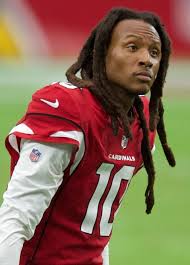
When DeAndre Hopkins walked off the field after Super Bowl LIX, few expected his next stop to be a college sideline in Atlanta. But Georgia Tech head coach Brent Key just made one of the most intriguing hires of the offseason: the three-time All-Pro wide receiver is joining the Yellow Jackets as an assistant wide receivers coach. It’s a move that blends nostalgia, strategy, and a dash of star power—and it could reshape how Georgia Tech develops its pass-catchers.
For a program that has quietly rebuilt under Key, this hire is more than a headline. Hopkins brings 12 seasons of NFL knowledge, a Clemson pedigree, and a reputation as one of the most technically refined receivers of his generation. But what does an assistant role really mean for a player who once torched defenses for 12,000+ yards? And what does it signal for the future of college coaching? Let’s break down the stakes, the fit, and the potential ripple effects.
The Hire: What It Really Means
Hopkins’ title—assistant wide receivers coach—is deliberately modest. He’s not replacing the primary WR coach; he’s a support piece, a mentor, a specialist. This is a low-pressure entry into coaching, a chance to learn the trade without the full weight of a position group. For Hopkins, it’s a smart first step. For Georgia Tech, it’s a calculated bet that his presence will elevate the room.
The timing is notable: Hopkins’ last NFL snap came in February 2025, just months before this announcement. He’s not a retired player looking for a hobby; he’s a freshly minted alum of the league’s most sophisticated passing offenses. That currency is real. College receivers today run concepts that mirror the NFL, and Hopkins can translate that language instantly.
Why Georgia Tech? The ACC and Clemson Connection
Hopkins played at Clemson from 2010 to 2012, dominating the ACC as a two-time All-ACC selection. He knows the conference’s defenses, its recruiting corridors, and its culture. That familiarity matters. Georgia Tech recruits heavily in the Southeast, and Hopkins’ name carries weight from Atlanta to Charlotte.
But this isn’t just about nostalgia. Georgia Tech is a program in transition. Under Brent Key, the Yellow Jackets have leaned into a physical, pro-style identity. They’re not a flashy playoff contender, but they’re building a foundation. Adding a future Hall of Famer to the staff is a credibility boost that money can’t buy—it signals to recruits, parents, and even donors that this program is serious about player development.
The Player Development Angle: More Than a Name
Hopkins’ game was built on nuance. His release packages, his ability to high-point the football, his contested-catch dominance—these are teachable skills. For a young receiver group, having a coach who has won those battles against All-Pro cornerbacks is invaluable.
Consider the practical impact: Hopkins can break down film of his own routes, showing exactly how he set up defenders. He can run drills that mimic NFL combine work. He can explain what scouts look for in a route tree. This is the kind of mentorship that can turn a raw sophomore into a draftable junior.
And there’s the NFL pipeline angle. Hopkins has relationships across the league. He can tell players what it’s like to prepare for a Thursday night game, how to handle a contract year, or what to expect at the combine. That insider knowledge is a recruiting tool in itself.
The Recruiting Ripple Effect
High school receivers want to play for coaches who’ve been there. Hopkins has been there—and then some. His presence alone could sway a four-star recruit who’s torn between Georgia Tech and a rival ACC school. The message is simple: “Come learn from a guy who did it at the highest level.”
This is part of a broader trend. Deion Sanders at Colorado, Michael Vick at Norfolk State, Ed Reed at Bethune-Cookman—recently retired stars are jumping into college coaching. Some succeed, some struggle. Hopkins’ role is lower-stakes, which might be the smartest approach. He can focus on development without the pressure of a coordinator title.
The Skeptic’s View: Publicity Stunt or Substance?
Critics will ask: Is this a real coaching job or a PR move? It’s a fair question. Assistant roles can be ceremonial, especially for big names. But Hopkins has shown a genuine interest in teaching. He’s spoken about mentoring younger players throughout his career. And Georgia Tech isn’t a program that needs a publicity stunt—they’re building something sustainable.
The real test will be spring practice. If Hopkins is on the field, running drills, breaking down film, and building relationships, this hire will pay dividends. If he’s a figurehead, it’ll fade quickly. Early signs suggest he’s serious. He’s reportedly already been in meetings, learning the playbook and the recruiting calendar.
The 2022 Suspension: A Complicated Footnote
No honest analysis can ignore Hopkins’ six-game suspension in 2022 for a PED violation. It’s a public record, and it’s part of his story. But it’s also not directly relevant to his coaching role. He served his time, returned to play at a high level, and helped the Chiefs reach the Super Bowl. In coaching, it’s a non-issue unless he makes it one. The focus should be on his football acumen, not a past mistake.
What This Means for Georgia Tech’s 2025 Season
The Yellow Jackets are coming off a bowl appearance and have momentum. Hopkins won’t call plays or recruit on his own, but his influence could be felt in the receiver room. If he helps develop even one or two players into consistent threats, the offense improves. And in a competitive ACC, that could be the difference between a seven-win season and a nine-win one.
There’s also the intangible: belief. When a player of Hopkins’ caliber walks into the building, everyone raises their game. Quarterbacks want to throw to receivers who are coached by a legend. Defensive backs want to practice against them. It’s a rising tide that lifts the whole program.
The Bigger Picture: Coaching’s New Frontier
Hopkins’ move is part of a larger shift in college football. The lines between professional and collegiate play are blurring. Players are more sophisticated, offenses are more complex, and coaching staffs are increasingly filled with recent NFL veterans. This isn’t a gimmick—it’s an evolution.
For Hopkins, this is a chance to build a second career. He’s not desperate for money or fame; he’s chasing a new challenge. And for Georgia Tech, it’s a chance to harness that ambition. If this works, it could become a model for other programs looking to bridge the gap between the NFL and college game.
DeAndre Hopkins’ arrival at Georgia Tech is more than a feel-good story. It’s a strategic hire that could pay off in player development, recruiting, and program prestige. The real work begins now, in the film room and on the practice field. If Hopkins brings the same intensity to coaching that he brought to catching passes, the Yellow Jackets just got a lot more interesting.
Summary
- DeAndre Hopkins joins Georgia Tech as assistant wide receivers coach, a support role under the primary WR coach.
- The hire leverages his Clemson/ACC ties and recent NFL experience to boost player development and recruiting.
- Hopkins can teach elite route-running, contested-catch techniques, and NFL preparation habits.
- The move fits a trend of recently retired NFL stars entering college coaching, with mixed results.
- Skeptics question if it’s a publicity stunt, but early signs suggest Hopkins is committed to the craft.
FAQ
Q: Is DeAndre Hopkins the head wide receivers coach at Georgia Tech?
A: No, he is the assistant wide receivers coach. The primary WR coach remains in place, and Hopkins will work under him in a mentorship and development role.
Q: Why did Hopkins choose Georgia Tech?
A: Hopkins played at Clemson in the ACC, giving him familiarity with the conference and regional recruiting. Georgia Tech’s pro-style offense and Brent Key’s program direction also align with his NFL experience.
Q: Has Hopkins officially retired from the NFL?
A: He has not filed retirement papers, but he is not on a roster and is transitioning to coaching. He last played in Super Bowl LIX with the Chiefs in February 2025.
Q: What impact will Hopkins have on recruiting?
A: His presence is a major recruiting tool, especially for high school receivers. He can offer firsthand NFL knowledge and mentorship, which may sway recruits considering Georgia Tech.
Q: How will Hopkins’ 2022 PED suspension affect his coaching role?
A: It’s a public record but not directly relevant to his coaching duties. He served his suspension and returned to play at a high level, and it’s unlikely to impact his ability to teach or mentor players.