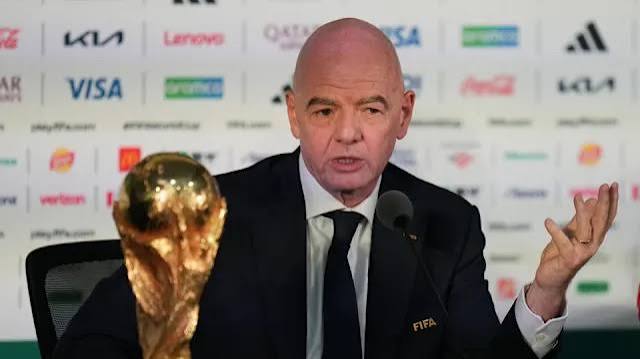
In 2022, FIFA President Gianni Infantino stood before the world and promised a new era of ‘solidarity’ a player welfare fund, equity-sharing mechanisms, and a ‘global benefits package’ for the athletes who fuel the sport’s endless revenue machine. Two years later, that promise remains a slide deck. No binding agreement has been signed, no fund has been funded, and the calendar has only grown more punishing.
Meanwhile, the game’s top players are breaking down. Manchester City’s Rodri tore his ACL in September 2024, directly blaming fixture overload. Real Madrid’s Jude Bellingham has spoken of exhaustion. FIFPRO reports that elite players now get fewer than 12 days of rest per season down from over 20 in the 1990s. This isn’t a scheduling quirk; it’s a structural crisis, and FIFA’s response has been to expand the Club World Cup to 32 teams and the World Cup to 48, with no welfare protections attached.
The Equity Plan: A Promise That Dissolved
When FIFA announced its equity plan in 2022–2023, it was a public-relations masterstroke. The sport was reeling from the Qatar 2022 World Cup migrant worker deaths, heat stress, and widespread condemnation. A ‘player welfare fund’ and ‘equity-sharing’ sounded like a genuine shift. Infantino’s rhetoric was grand: solidarity payments, a global benefits package, a share of revenues from the expanded Club World Cup and Women’s World Cup.
But by early 2025, the plan exists only as a talking point. There is no signed revenue-sharing agreement with FIFPRO or any domestic league. The ‘player welfare fund’ has no money in it. FIFA’s own documents describe it as ‘under development,’ which in practice means nothing has been built. The equity plan was never more than a headline a way to deflect criticism while the commercial calendar expands unchecked.
The Numbers Behind the Burnout
The physical toll on players is no longer anecdotal; it’s quantified. FIFPRO’s 2024–25 workload report found that top players average 60–70 matches per season, with some exceeding that. Rodri, the Ballon d’Or winner, played 63 matches in 2023–24 before his ACL injury. He said, ‘We are close to’ striking. Kevin De Bruyne and Virgil van Dijk have echoed similar sentiments, pointing to both physical exhaustion and mental fatigue.
The 2025 Club World Cup is the starkest example of the problem. Scheduled for June-July, immediately after a full domestic season, finalists could play up to seven extra matches. For players like Rodri who was injured before the tournament even began this is not hypothetical. The Champions League’s new ‘Swiss model’ adds two more matches per club. Domestic leagues are also expanding. Every stakeholder is adding fixtures, but no one is adding rest.
The Legal Backlash: FIFA’s Authority Under Siege
FIFA’s unilateral expansion has triggered a coordinated legal response. In October 2024, FIFPRO Europe and European Leagues filed a formal complaint with the European Commission, alleging that FIFA’s expansion of the Club World Cup violates EU competition law (Articles 101 and 102 TFEU). The core argument: FIFA is abusing its dual role as both regulator and commercial operator, using its rule-making power to force a competition that serves its own financial interests.
Two December 2024 rulings have weakened FIFA’s position. The European Court of Justice’s Super League ruling held that FIFA and UEFA’s prior approval powers over new competitions were unlawful. The Diarra ruling struck down FIFA’s transfer rules as contrary to EU free-movement law. Together, they signal that FIFA’s regulatory authority is not immune from judicial scrutiny. The European Commission case is ongoing, but the legal tide is turning.
FIFA’s Stance: Growth at Any Cost
FIFA’s defense is predictable: expansion grows the game, brings revenue to smaller federations, and players are ‘well compensated.’ The organization points to its ‘Football for All’ solidarity programs, which do funnel some money to grassroots projects. But these programs are discretionary, not contractual. FIFA claims the equity plan is still in consultation, but without a binding agreement, players and leagues have no enforceable rights.
There’s also a strategic subtext. FIFA frames European league resistance as protectionism—wealthy clubs worried about competition. That’s partly true. Real Madrid and Barcelona have their own history of trying to break away with the Super League. But the welfare crisis is not a European invention. Players everywhere feel it. The 2026 World Cup is projected to generate $11 billion in revenue, and FIFA’s broadcast deals for the Club World Cup have struggled—no major US network picked up the rights as of early 2025. The equity plan was supposed to sweeten the pot; instead, it’s a reminder of who benefits from the current structure.
A History of Broken Promises
This isn’t the first time football has sacrificed player welfare for commercial gain. The 1990s saw similar complaints during the creation of the Champions League. The 1995 Bosman ruling increased player mobility but also concentrated talent in fewer clubs, intensifying fixture density. The 2001 FIFA–FIFPRO agreement on international release was hailed as a breakthrough, but it was weak and under-enforced. The equity plan follows the same pattern: a grand announcement, followed by inaction.
The difference now is the scale of the crisis. Players are not just tired; they’re experiencing career-threatening injuries at alarming rates. Rodri’s ACL is not an isolated incident. FIFPRO data shows that injury rates among elite players have spiked in recent seasons. The sport’s governing bodies are running an experiment in human limits, and the subjects are the most talented athletes on Earth.
What Would Real Change Look Like?
A genuine equity plan would require three elements: enforceable workload caps, a funded welfare fund with clear governance, and a binding revenue-sharing agreement with player unions. None of these exist. FIFPRO has proposed a maximum of 55 matches per season for elite players, with mandatory rest periods. That’s a concrete, measurable standard—but FIFA has not engaged with it.
The European Commission case could force change. If FIFA is found to be abusing its dual role, it may be required to negotiate with player unions and leagues before expanding the calendar. The Super League and Diarra rulings create precedent for limiting FIFA’s power. But legal victories take time, and players are getting injured now.
There’s also the possibility of a player strike. Rodri’s comments were not a threat; they were a warning. If the workload continues to increase, a strike is not a question of if, but when. The last major strike in English football was in 2001, over television revenue distribution. It lasted a day, but it forced change. A strike over welfare would be more serious, and it would have public sympathy on its side.
The Commercial Arms Race: Who Really Pays?
FIFA’s revenue model depends on selling more matches to broadcasters and sponsors. The 2026 World Cup’s $11 billion projection is the prize. But the Club World Cup’s broadcast struggles suggest the market is reaching saturation. Fans are also pushing back against fixture congestion, with many arguing that the sport’s quality declines when players are exhausted.
The ‘equity’ framing was meant to co-opt the language of social justice to legitimize expansion. But calling a revenue-sharing scheme ‘equity’ doesn’t make it equitable. Real equity would mean players have a seat at the table—and a veto over their own bodies. Until that happens, the welfare crisis will only deepen.
Football is at a crossroads. It can continue down the path of limitless expansion, treating players as expendable resources. Or it can heed the warnings—from players, unions, and now the courts—and build a sustainable model that prioritizes the people who make the game possible. The equity plan was a test. FIFA failed it. The real question is whether the sport’s other stakeholders will force a different outcome.
The Role of Domestic Leagues and Clubs
It’s tempting to cast domestic leagues as heroes in this story, but they are complicit. The Premier League and La Liga have expanded their own schedules, and clubs like Real Madrid and Barcelona have pursued their own commercial interests with equal vigor. The difference is that European Leagues are at least willing to challenge FIFA in court, because they see FIFA’s expansion as a threat to their own revenue. Their motives are not altruistic, but their legal action could produce benefits for players as a side effect.
The clubs, meanwhile, are caught in a contradiction. They complain about fixture congestion but also demand more matches to generate revenue. Some clubs have rotated squads more aggressively, but that only goes so far. The real solution would be collective bargaining—a unified agreement between leagues, clubs, and players to cap the calendar. But collective bargaining is difficult in a sport as fragmented as football. FIFA’s failure to lead on this issue has made the crisis worse.
A Way Forward?
The path forward is not mysterious. It requires political will, not new ideas. Enforceable workload caps, a funded welfare fund, and binding revenue sharing are all within reach if stakeholders are willing to compromise. The legal pressure from the European Commission and the ECJ provides leverage. Player unions have never been more organized. The public is increasingly aware of the human cost of the sport’s greed.
Football’s governing bodies have a choice: they can continue to ignore the crisis and face the consequences—injuries, strikes, legal defeats—or they can embrace a truly equitable model that values players as partners, not assets. The equity plan was a missed opportunity. But it’s not too late to do the right thing. The players who have made the sport a multi-billion-dollar industry deserve more than a broken promise.
FIFA’s equity plan was never a plan—it was a placeholder. The welfare crisis it was meant to address has only worsened, and the legal and industrial pressure on FIFA is mounting. Players are running out of patience, and their bodies are running out of time. The next few years will determine whether football’s leaders can adapt, or whether the sport will face a reckoning it can no longer avoid.
Summary
- FIFA’s 2022–2023 ‘player welfare fund’ and equity-sharing plan remains unfunded and non-binding as of early 2025.
- Elite players now get fewer than 12 rest days per season, with injury rates spiking; Rodri publicly blamed his ACL tear on overload.
- FIFPRO Europe and European Leagues filed a competition law complaint with the European Commission in October 2024.
- The December 2024 ECJ rulings (Super League and Diarra) have weakened FIFA’s regulatory authority and legal defenses.
- A player strike is increasingly seen as a realistic outcome if workload caps are not enforced.
FAQ
Q: What exactly was FIFA’s equity plan?
A: Announced in 2022–2023, FIFA proposed a ‘player welfare fund’ and equity-sharing mechanism to redistribute revenue from expanded tournaments to players and clubs. It was framed as a response to burnout but never materialized into a binding agreement.
Q: Why are players so exhausted?
A: Elite players routinely play 60–70+ matches per season, with less than 12 days of rest annually—down from 20+ in the 1990s. The expanded Club World Cup and 48-team World Cup add more matches without welfare protections.
Q: What legal action is being taken against FIFA?
A: In October 2024, FIFPRO Europe and European Leagues filed a complaint with the European Commission, alleging FIFA’s Club World Cup expansion violates EU competition law. The ECJ’s Super League and Diarra rulings in December 2024 further weakened FIFA’s legal position.
Q: Could players actually go on strike?
A: Yes. Rodri and others have publicly said a strike is ‘close.’ The last major strike in English football was in 2001 over TV money; a strike over welfare would have broader public support.
Q: What would a real equity plan look like?
A: Enforceable workload caps (e.g., FIFPRO’s proposed 55-match limit), a funded welfare fund with clear governance, and binding revenue-sharing agreements with player unions. None of these exist today.