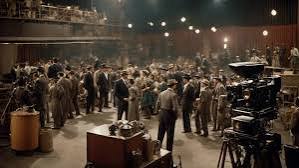
When you settle into a movie theater today, you’re experiencing a legacy shaped by an era when Hollywood operated like a dream factory—literally. From the late 1920s to 1960, a handful of studios controlled nearly every aspect of filmmaking, from the scripts to the stars to the theaters where audiences watched. This vertical integration, known as the studio system, produced an astonishing volume of films and defined genres, visual styles, and storytelling norms that still underpin modern cinema.
But the Golden Age wasn’t just about business efficiency. It was a cultural phenomenon that turned actors into icons, perfected genres like film noir and the musical, and created a visual language that became the global standard. Understanding this era isn’t just a history lesson—it’s a key to decoding why movies look and feel the way they do today. In this article, we’ll explore how the studio system’s innovations, constraints, and eventual collapse left an indelible mark on filmmaking, from the assembly-line production model to the rise of the blockbuster.
The Machinery of the Dream Factory
At its peak, the studio system operated like a well-oiled machine. The Big Five—MGM, Warner Bros., Paramount, 20th Century-Fox, and RKO—owned production studios, distribution networks, and theater chains. This vertical integration meant a film made in Hollywood was guaranteed a nationwide release, creating a captive audience. The Little Three—Universal, Columbia, and United Artists—operated on a smaller scale but still thrived within the system.
This assembly-line approach allowed studios to churn out 400–500 films per year combined. Weekly attendance hit 90 million Americans in 1946, roughly 65% of the population. To keep up with demand, studios employed in-house writers, directors, technicians, and actors under exclusive contracts. Stars like Judy Garland and Humphrey Bogart were groomed for specific roles, their public images meticulously managed by studio publicity departments. The system was efficient, but it also stifled creative freedom—actors often had little say in their projects, and directors worked within strict genre conventions.
Genre Codification: Templates That Endure
One of the most enduring legacies of the Golden Age is the codification of genres. Studios perfected the western, the musical, the screwball comedy, and film noir, establishing narrative formulas that remain templates today. For instance, the western’s classic structure—the lone hero, the frontier setting, the moral showdown—was refined in films like Stagecoach (1939) and The Searchers (1956). Musicals like Singin’ in the Rain (1952) set the standard for integrating song and dance into storytelling, a formula still used in modern hits like La La Land.
Film noir, with its shadowy visuals and cynical protagonists, emerged in the 1940s as a distinct genre, influenced by German Expressionism and hardboiled fiction. Its visual style—low-key lighting, skewed camera angles—was a direct result of studio constraints, where directors had to work with limited sets and artificial lighting. This aesthetic, born of necessity, has been revived countless times in neo-noir films like Chinatown (1974) and Blade Runner (1982).
The Invisible Style: How Classical Hollywood Shaped Storytelling
The Golden Age also established the “invisible style” of filmmaking—a set of conventions designed to make the audience forget they’re watching a movie. Continuity editing, which ensures smooth, logical transitions between shots, became the norm. Cause-and-effect plotting, motivated lighting, and seamless sound design all worked together to create a immersive, realistic experience. This classical Hollywood narrative became the global default, influencing filmmakers from Japan to Italy to India.
Directors like Orson Welles pushed the boundaries of this style with deep-focus cinematography in Citizen Kane (1941), allowing multiple planes of action to remain in sharp focus. This technique, along with innovative sound and editing, demonstrated that the studio system could foster artistic experimentation, even within its constraints.
The Hays Code: Censorship and Creativity
The Production Code, enforced from 1934 to 1968, imposed strict moral guidelines on content. No nudity, no “sympathetic” criminals, and a mandate for “compensating moral values” meant that films had to uphold a certain ethical standard. This censorship was a response to scandals like the Fatty Arbuckle trial and was designed to avoid government regulation.
While the Code restricted subject matter, it also forced filmmakers to be creative. Directors used innuendo, visual metaphor, and clever dialogue to suggest what couldn’t be shown. For example, the famous “cigarette scene” in Now, Voyager (1942) conveys a sexual relationship through a shared smoke. This indirect approach gave Golden Age films a sophistication that modern audiences still admire.
The Decline: What Broke the System?
The studio system began to unravel with the Paramount Decree of 1948, when the Supreme Court ruled that vertical integration violated antitrust laws. Studios were forced to sell their theater chains, breaking the guaranteed distribution model. This, combined with the rise of television—by 1955, over half of American homes had a TV—eroded the industry’s dominance.
Studios responded with spectacle: widescreen formats like CinemaScope, Technicolor, and epic productions like Ben-Hur (1959) to lure audiences away from the small screen. But the contract system was already crumbling. Stars and directors began forming independent production companies, seeking creative control and a share of profits. By 1960, the Golden Age was over, replaced by a more fragmented, risk-averse industry that would eventually give rise to the blockbuster era.
Lasting Legacy: From Golden Age to Modern Cinema
Despite its decline, the studio system’s influence is everywhere. The genres it codified—from the superhero movie (a modern-day western) to the romantic comedy (a descendant of the screwball)—still dominate box offices. The invisible style remains the default for mainstream filmmaking, even as auteurs like Christopher Nolan and Quentin Tarantino play with its conventions.
The star system, too, has evolved but persists. Today’s actors are brands, managed by PR teams and social media, much like the contract players of old. And the studio model, while no longer vertically integrated, has seen a resurgence in the form of conglomerates like Disney, which own production, distribution, and streaming platforms—a modern echo of the Big Five.
Conclusion
The Golden Age of Hollywood was more than a nostalgic era; it was a crucible that forged the language of cinema. The studio system’s assembly-line efficiency, genre codification, and visual innovations created a foundation that filmmakers still build upon. While the system’s constraints were often criticized, they also bred creativity, and its collapse paved the way for new voices and independent visions. Understanding this history helps us appreciate the movies we watch today—and the invisible hand of the dream factory that still shapes them.
The Golden Age of Hollywood wasn’t just a period of glitz and glamour—it was a transformative era that established the very grammar of filmmaking. From the assembly-line production model to the codification of genres and the invisible style, the studio system’s innovations continue to influence how stories are told on screen. As we watch modern blockbusters and indie gems alike, we’re seeing the echoes of a system that, despite its flaws, created an enduring legacy. The dream factory may have closed its doors, but its dreams still play on.
Summary
- The studio system (1927–1960) was a vertically integrated model where studios controlled production, distribution, and exhibition, enabling a high volume of films and a captive audience.
- Genres like film noir, the musical, and the screwball comedy were codified during this era, providing templates that modern films still follow.
- The “invisible style” of classical Hollywood—continuity editing, cause-and-effect plotting, and seamless sound—became the global standard for narrative filmmaking.
- The Hays Code imposed strict moral censorship, but it also forced filmmakers to use innuendo and metaphor, adding sophistication to Golden Age films.
- The Paramount Decree (1948) and the rise of television led to the system’s decline, but its legacy persists in modern studio conglomerates, star branding, and genre conventions.
FAQ
Q: What exactly was the studio system?
A: The studio system was a business model where a few major studios (MGM, Warner Bros., Paramount, 20th Century-Fox, RKO) controlled every stage of filmmaking—production, distribution, and exhibition—through vertical integration. This allowed them to produce films efficiently and guarantee their release in theaters they owned.
Q: How did the Hays Code affect filmmaking?
A: The Hays Code, enforced from 1934 to 1968, imposed strict moral guidelines, banning nudity, sympathetic criminals, and requiring “compensating moral values.” This censorship forced filmmakers to use innuendo and visual metaphor, which often added a layer of sophistication to films.
Q: Why did the Golden Age end?
A: The Golden Age ended due to a combination of factors: the Paramount Decree (1948) forced studios to sell their theater chains, breaking their monopoly; the rise of television in the 1950s reduced movie attendance; and the contract system collapsed as stars and directors sought independence.
Q: What are some enduring innovations from this era?
A: Key innovations include genre codification (westerns, musicals, noir), the invisible style of editing and narrative, Technicolor and widescreen formats, and the star system, which evolved into modern celebrity branding.
Q: How does the studio system influence today’s movies?
A: Modern studios like Disney use a similar model of vertical integration, owning production, distribution, and streaming platforms. Genres and storytelling conventions from the Golden Age remain the foundation of mainstream cinema, and the star system persists in the form of actor branding and franchise casting.