In 1833, Massachusetts became the last state to stop funding its official church. That decision, part of a broader disestablishment movement, could have crippled American religion. Instead, it sparked a financial revolution that made U.S. churches the envy of the world.
The End of Tax-Funded Religion
For most of American history, churches relied on taxes. In colonial Virginia, the Anglican Church was paid for by public funds. In Massachusetts, the Congregational Church held the same privilege. Dissenters Baptists, Quakers, Presbyterians were forced to support a church they didn’t belong to, facing fines and even imprisonment if they refused.
The First Amendment, ratified in 1791, only prohibited a national church. It left state establishments intact. But over the next four decades, one state after another cut ties. Connecticut did it in 1818, and Massachusetts followed in 1833.
Suddenly, churches had to survive on voluntary contributions. No more guaranteed income from taxes. No more captive congregations. They had to convince people to join and give.
This was the financial dilemma that could have destroyed American religion. Instead, it became its greatest asset.
The Voluntary System Takes Root
Lyman Beecher, a prominent Congregationalist minister, initially fought against disestablishment in Connecticut. He feared it would ruin the church. But a few years later, he called it a “great political and moral blessing.” Why the change of heart?
Because the voluntary system worked. Churches became more entrepreneurial. They introduced pew rents, where families paid for reserved seating. They launched subscription drives, asking members to pledge annual amounts. They created missionary societies and benevolent associations to pool resources for outreach and social causes.
The American Bible Society, founded in 1816, and the American Home Missionary Society, founded in 1826, were early examples. These organizations channeled donations from thousands of ordinary members to fund evangelists, print Bibles, and build churches on the frontier.
Competition Breeds Innovation
Without a government monopoly, denominations had to compete. This created what economists Roger Finke and Rodney Stark call a “religious free market.” Churches that adapted thrived; those that didn’t withered.
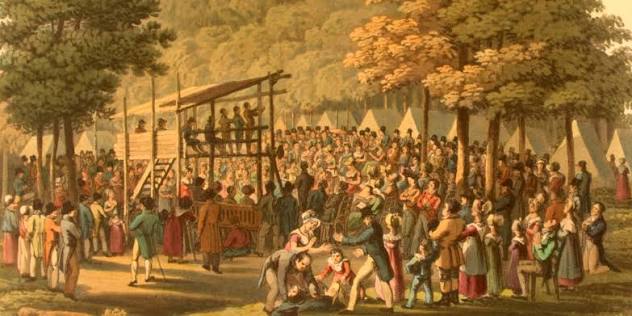
The results were dramatic. The Methodists and Baptists, which were small sects in the colonial era, exploded in numbers. They used circuit-riding preachers, revivals, and emotional worship to attract working-class Americans. By 1850, they were the largest Protestant denominations in the country.
This competition didn’t just grow churches. It diversified them. The U.S. now has hundreds of denominations, from Jehovah’s Witnesses to Pentecostals, each carving out a niche. That diversity is a direct product of the voluntary system.
Not Everyone Thrived
The voluntary system wasn’t a guaranteed success. Many rural and poor congregations struggled. Ministers often went unpaid. Church buildings fell into disrepair. Financial instability was common, especially on the frontier where cash was scarce.
Some churches relied on itinerant preachers because they couldn’t afford a full-time pastor. Others closed their doors entirely. The system was harsh, but it also filtered out ineffective churches and rewarded those that genuinely served their communities.
The Rise of Philanthropic Giants
As the 19th century progressed, wealthy donors began to shape the religious landscape. John D. Rockefeller funded urban missions and seminaries. Andrew Carnegie gave to churches that promoted social reform. In the 20th century, the Pew Charitable Trusts and the Lilly Endowment became major forces, steering millions toward particular theological programs.
This philanthropic influence has been criticized. It concentrates power in the hands of a few wealthy individuals who can decide which religious projects flourish. But it also allowed churches to undertake ambitious ventures—hospitals, universities, international missions—that would have been impossible with pew rents alone.
The Modern Contrast
Today, the U.S. stands out among wealthy nations. About 70% of Americans identify as Christian (Pew Research, 2021), and congregational giving remains high. In Europe, where state churches persist, attendance has plummeted. The Church of England, the Lutheran churches of Scandinavia, and others struggle to fill pews despite receiving tax support.
Why the difference? The voluntary system created a culture of participation. American churches don’t just receive passive funding; they engage members as stakeholders. Giving is a commitment, not a tax. This fosters a deeper connection to the institution.
A Theological Shift
Disestablishment also changed how Americans thought about religion. Many came to see it as providential. A church supported by the state becomes complacent, they argued. But a church that must earn its support stays vigorous.
This view became a cornerstone of American religious identity. It’s why the U.S. embraces religious pluralism rather than a single established faith. The separation of church and state, often seen as a secular victory, was also a religious one—it forced faith to compete, and in competing, it thrived.
The financial dilemma of disestablishment turned out to be a blessing in disguise. By losing state support, American churches gained independence, innovation, and a competitive spirit that fueled their growth. The voluntary system wasn’t easy, but it built a religious landscape that remains vibrant today, even as other wealthy nations see their churches empty.
Summary
- The First Amendment banned a national church, but states continued funding churches until Massachusetts ended the practice in 1833.
- After disestablishment, churches relied on voluntary contributions, leading to innovations like pew rents, subscription drives, and missionary societies.
- Competition among denominations in a “religious free market” drove growth, especially for Methodists and Baptists.
- The voluntary system was precarious for many congregations, but it favored those that effectively served their communities.
- The U.S. remains highly religious compared to Europe, with ~70% of Americans identifying as Christian (Pew Research, 2021).
FAQ
Q: Why did states disestablish their churches?
A: Coalitions of religious dissenters (like Baptists) and Enlightenment thinkers, including James Madison, argued that state support violated religious freedom and created inequality. Over time, states like Virginia, Connecticut, and Massachusetts ended their official churches.
Q: How did churches raise money without taxes?
A: They introduced pew rents, where families paid for seats, launched annual subscription drives, and created voluntary societies like the American Bible Society to fund missions and outreach.
Q: Did all churches thrive under the voluntary system?
A: No. Many rural and poor congregations struggled to pay ministers or maintain buildings. The system was competitive and harsh, but it rewarded churches that were responsive to their members.
Q: How does this compare to Europe?
A: In Europe, state churches often became complacent and saw declining attendance. In the U.S., the voluntary system created a vibrant “religious marketplace” where denominations competed for members, leading to higher overall religious participation.
Q: What role did wealthy donors play?
A: Philanthropists like John D. Rockefeller funded seminaries and urban missions, while later foundations like Pew and Lilly Endowments shaped religious projects. This gave donors significant influence over which religious initiatives received funding.