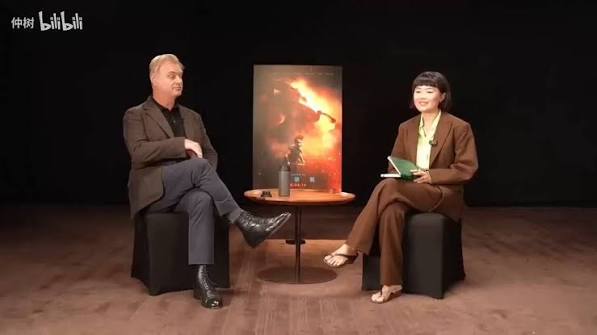
When Christopher Nolan sits down for a press junket, you usually get polished soundbites about IMAX cameras and practical effects. But during a recent promotional tour for his upcoming epic The Odyssey, Nolan did something unexpected: he sat for a two-hour, deeply philosophical conversation with Chinese podcaster Zhong Shu—and the internet hasn’t stopped talking about it since.
The interview, which quickly went viral on both Chinese and Western social media, featured Nolan offering frank critiques of modern film criticism, unpacking Christian themes in Homer’s ancient poem, and describing himself as a “bard for a civilization at dusk.” It’s a rare glimpse into the mind of a filmmaker who typically guards his interpretations closely. Here’s why this conversation struck such a nerve—and what it reveals about Nolan’s worldview.
The Interview That Broke the Mold
Most promotional interviews for a blockbuster like The Odyssey are tightly choreographed, ten-minute affairs where actors and directors cycle through hotel suites, repeating the same talking points. Nolan’s conversation with Zhong Shu was the opposite: a sprawling, long-form podcast-style discussion that reportedly ran over two hours. Zhong, a Chinese cultural commentator known for his intellectual, non-interruptive style, gave Nolan the space to speak in full paragraphs—and Nolan took full advantage.
Clips from the interview, subtitled in English, spread rapidly across X (formerly Twitter), YouTube, and film forums. On Chinese platforms like Bilibili and Weibo, the full interview trended before crossing over to Western audiences. The reason for the virality wasn’t just the length—it was the content. Nolan addressed topics he usually sidesteps, from the state of film criticism to the theological underpinnings of a 3,000-year-old epic.
Nolan’s Critique of Modern Film Criticism
One of the most talked-about segments was Nolan’s blunt assessment of contemporary film criticism. He argued that criticism has become reductive, obsessed with plot mechanics and “what it means” rather than the sensory, emotional, and experiential dimensions of cinema. He reportedly criticized the “algorithmic” nature of modern criticism, where reviews are increasingly conflated with consumer ratings and hot takes.
This isn’t the first time Nolan has expressed skepticism toward critics—he’s previously spoken about the reductive influence of Rotten Tomatoes—but he’s rarely gone into such depth. His central point: cinema is an experiential art form, and criticism that reduces it to a puzzle to be solved misses the point entirely.
Unsurprisingly, the backlash was swift. Film critics and journalists pushed back, arguing that Nolan—an Oscar-winning, privileged director—is attacking the few remaining independent voices in film discourse. Some noted that his films thrive on the very “discourse economy” he critiques, with endless YouTube essays and think pieces dissecting every frame. The debate has reignited a long-simmering tension between filmmakers and critics, with Nolan’s comments serving as a lightning rod.
Christian Themes in The Odyssey
Perhaps the most intellectually provocative part of the interview was Nolan’s framing of The Odyssey as a text that prefigures Christian theology. He reportedly highlighted themes of suffering, redemption, and homecoming as metaphors for salvation, suggesting his adaptation will foreground these resonances. He also touched on the tension between fate and free will—a theme that runs through both Homer’s epic and Christian thought.
This reading is not new. Classicists have long noted parallels between Odysseus’s trials and Christian pilgrimage narratives, and medieval writers like Dante explicitly Christianized Homer. However, some scholars caution against anachronistic interpretations: Homer’s world is pre-Christian, polytheistic, and rooted in honor and shame rather than sin and redemption. Nolan’s take is a legitimate, if contested, lens—and it has sparked lively debate among fans and academics alike.
For Nolan, though, this isn’t about academic correctness. It’s about finding universal, timeless resonance in an ancient story. By framing The Odyssey as a spiritual epic, he’s inviting audiences to see Odysseus’s journey as not just a physical voyage, but a moral and existential one—a theme that aligns with his previous explorations of obsession, sacrifice, and the human condition.
“A Bard for a Civilization at Dusk”
The phrase that generated the most discussion was Nolan’s self-description as a “bard for a civilization at dusk.” He reportedly used this to explain his role as a filmmaker, suggesting that cinema—and perhaps Western civilization itself—is entering a twilight phase, and that his work serves as an elegiac storytelling for that moment.
Interpretations vary. Some see it as cultural pessimism, an expression of anxiety about the decline of theatrical cinema, the rise of streaming, and the fragmentation of shared cultural narratives. Others view it as self-mythologizing, a grandiose framing that positions Nolan as a tragic artist in a dying medium. Still others find it deeply resonant, a poetic acknowledgment that the era of blockbuster cinema as a unifying cultural force may be ending.
Whatever the intent, the phrase has taken on a life of its own, becoming a meme and a talking point across social media. It’s a testament to Nolan’s ability to generate discourse—and to the public’s hunger for filmmakers who speak with ambition and philosophical weight.
The Context: The Odyssey and Nolan’s Career
The Odyssey is Nolan’s first mythological epic, and it’s a massive undertaking. With a reported budget exceeding $250 million, the film will use cutting-edge IMAX technology to adapt Homer’s poem, with parts shot in Sicily and other Mediterranean locations. The cast is a who’s who of Hollywood: Matt Damon, Tom Holland, Anne Hathaway, Zendaya, Robert Pattinson, Lupita Nyong’o, Charlize Theron, and more. The film is slated for release on July 17, 2026, via Universal Pictures.
This project marks a significant departure for Nolan, who has built his career on original sci-fi and thriller concepts. But it also continues his fascination with grand themes: time, memory, identity, and the nature of reality. The Odyssey offers a mythological canvas for these obsessions, and Nolan’s Christian framing suggests he’s aiming for something more than a straightforward adventure—he’s aiming for a spiritual epic.
Why This Interview Matters
Nolan has always been a filmmaker who invites interpretation, but he’s rarely offered his own so explicitly. This interview is a departure from his usual guarded persona, offering a rare window into his worldview. It also highlights the power of long-form interviews in an age of soundbites—Zhong Shu’s format allowed Nolan to think out loud, and the result was a conversation that resonated far beyond the usual promotional cycle.
Whether you agree with Nolan’s critique of critics, his Christian reading of Homer, or his self-description as a bard for a dying age, the interview has sparked a global conversation about art, faith, and the future of cinema. That’s no small feat for a press tour stop.
Christopher Nolan’s viral China interview is more than just a promotional curiosity—it’s a cultural moment. By speaking candidly about critics, Christianity, and the twilight of civilization, Nolan has given audiences a rare glimpse into the mind of one of cinema’s most ambitious filmmakers. Whether you see him as a visionary or a self-mythologizer, his words have ignited debates that will likely continue until The Odyssey hits theaters in 2026. And that, perhaps, is exactly what a bard for a civilization at dusk would want.
Summary
- Nolan’s two-hour interview with Chinese podcaster Zhong Shu went viral for its candid, philosophical content.
- He criticized modern film criticism as reductive and overly focused on plot mechanics.
- Nolan framed The Odyssey as prefiguring Christian themes of suffering, redemption, and homecoming.
- He described himself as a “bard for a civilization at dusk,” sparking debates about cultural pessimism and self-mythologizing.
- The interview highlights the power of long-form conversations in an era of soundbite-driven media.
FAQ
Q: What did Christopher Nolan say about film critics in the interview?
A: Nolan argued that modern criticism has become reductive, obsessed with plot mechanics and “what it means,” rather than the sensory and emotional experience of cinema. He criticized the algorithmic nature of contemporary criticism and its conflation with consumer ratings.
Q: How did Nolan explain Christian themes in The Odyssey?
A: Nolan suggested that Homer’s epic prefigures Christian theology, particularly themes of suffering, redemption, and homecoming as metaphors for salvation. He also highlighted the tension between fate and free will, which he plans to foreground in his adaptation.
Q: What does “bard for a civilization at dusk” mean?
A: Nolan used this phrase to describe his role as a filmmaker, suggesting that cinema and Western civilization are entering a twilight phase. His work, he implies, serves as elegiac storytelling for that moment—a view that has been interpreted as cultural pessimism or self-mythologizing.
Q: Why did this interview go viral?
A: The interview was unusually long (over two hours) and featured Nolan speaking candidly about topics he usually avoids, such as religion, criticism, and cultural decline. Clips with English subtitles spread rapidly on social media, sparking widespread debate.
Q: When is The Odyssey releasing?
A: The film is scheduled for release on July 17, 2026, via Universal Pictures. It stars Matt Damon, Tom Holland, Anne Hathaway, Zendaya, Robert Pattinson, Lupita Nyong’o, Charlize Theron, and others.