Tag: Christianity

  • The Kingdom of Aksum: Africa’s Forgotten Superpower That Rivaled Rome and Persia


    In the 3rd century CE, the Persian prophet Mani listed the world’s four great powers: Rome, Persia, China, and Aksum. Today, few outside the Horn of Africa have heard of Aksum, yet this kingdom in present-day northern Ethiopia and Eritrea was a formidable empire that controlled Red Sea trade, minted its own currency, and built towering granite stelae that still stand. It was also one of the first Christian states, converting decades before Rome officially embraced the faith.

    Aksum’s story is one of trade, military might, and cultural achievement. At its peak between the 3rd and 6th centuries CE, it stretched across parts of Sudan, Yemen, and the Red Sea coast. Its port of Adulis was a bustling hub connecting the Mediterranean to India. Yet, as Islam rose in the 7th century, Aksum’s trade networks collapsed, and the kingdom faded into obscurity. This article uncovers the rise and fall of Africa’s forgotten superpower—a civilization that rivaled the greatest empires of its time.

    The Roots of Aksum: A Trading State in the Highlands

    Aksum did not appear out of nowhere. It emerged from the earlier D’mt civilization, which thrived in the highlands of the Horn of Africa as early as the 1st millennium BCE. Influenced by South Arabian Sabaean culture, which brought the script that would evolve into Ge’ez, Aksum’s founders blended these outside influences with deep indigenous roots. Scholars now emphasize that Aksum was fundamentally an African civilization, not a colony of Arabia.

    The kingdom’s geography was its first asset. The fertile highlands produced wheat, barley, and teff, sustaining a large population. But the real engine of Aksum’s rise was trade. The Red Sea port of Adulis, near modern Massawa in Eritrea, connected Aksum to the Greco-Roman world and beyond. The 1st-century CE Greek text Periplus of the Erythraean Sea describes Adulis as a bustling emporium where ivory, gold, and spices were exchanged for textiles, glass, and wine from Rome and India. Aksum sat at the crossroads of three continents.

    Aksum’s Rise to Power: One of the Four Great Kingdoms

    By the 3rd century CE, Aksum had transformed from a regional state into an imperial power. The prophet Mani’s list of great powers—Rome, Persia, China, and Aksum—was no exaggeration. Aksum’s kings controlled the Red Sea coast and parts of the Arabian Peninsula, projecting power across the water.

    King Sembrouthes, who ruled around 250 CE, expanded the kingdom’s reach into Yemen. But it was King Ezana, reigning from roughly 320 to 360 CE, who brought Aksum to its apex. Ezana conquered the Nubian kingdom of Meroë to the west and campaigned in South Arabia. His reign marked a turning point not just in territory but in religion. Ezana converted to Christianity in the mid-4th century CE, making Aksum one of the first Christian states in the world—well before Rome officially adopted the faith in 380 CE. This conversion was not a top-down imposition; it followed a century of Christian presence in the region, beginning with the shipwrecked boys Frumentius and Aedesius, who were brought to the Aksumite court and eventually spread the faith.

    The Economy of an Ancient Superpower: Coins, Ivory, and the Red Sea

    Aksum’s wealth was built on a diverse export economy. It shipped ivory, gold, emeralds, obsidian, tortoiseshell, spices, and slaves to the Mediterranean world. It also exported frankincense and myrrh, resins prized for religious rituals. In return, it imported textiles, glass, wine, olive oil, and metal goods from Rome, Byzantium, Persia, and India.

    Aksum was the first African kingdom to mint its own coins, beginning under King Endubis in the late 3rd century CE. These coins, struck in gold, silver, and bronze, were inscribed in Greek and Ge’ez—a bilingual nod to Aksum’s role as a cosmopolitan trade hub. The coins were not just currency; they were symbols of sovereignty. When Rome and Persia issued coins, Aksum did too, declaring its equal status.

    Monuments of Stone: The Stelae of Aksum

    The most visible legacy of Aksum is its towering stelae, or obelisks, carved from single pieces of granite. These monuments marked royal tombs, with the largest standing at 24 meters tall. The Great Stele, which at 33 meters was the largest ever attempted, likely fell during erection and now lies broken on the ground. These stelae are engineering marvels, each carved with intricate false doors and windows, echoing earlier South Arabian styles but uniquely Aksumite.

    Scholars debate their purpose, but they clearly symbolized royal power and connected the kingdom to its ancestors. The stelae are so iconic that one was taken to Italy by Mussolini’s troops in 1937 and only returned to Ethiopia in 2005, a testament to their enduring significance.

    Religion and the Ark of the Covenant

    Aksum’s conversion to Christianity in the 4th century CE was a defining moment. King Ezana’s embrace of the faith made Aksum a Christian island in a sea of paganism and, later, Islam. The Ethiopian Orthodox Church, which traces its roots to this conversion, still uses Ge’ez as its liturgical language, preserving the language of the Aksumite court.

    Aksum also holds a unique claim: it is traditionally believed to be the resting place of the Ark of the Covenant. The Church of Our Lady Mary of Zion in Aksum is said to house the Ark, which according to Ethiopian tradition was brought to Aksum by Menelik I, the son of the Queen of Sheba and King Solomon. While this claim cannot be verified, it underscores Aksum’s profound religious significance to millions of Ethiopians.

    Aksum’s Role in the Byzantine-Persian Rivalry

    Aksum was not an isolated power. It maintained diplomatic relations with the Roman Empire and later Byzantium. The 4th-century historian Rufinus recorded that Frumentius, one of the shipwrecked boys, traveled to Alexandria and was ordained as the first bishop of Aksum by Athanasius, the Patriarch of Alexandria. This institutionalized Christianity in Aksum and tied it to the wider Christian world.

    By the 6th century, Aksum and Byzantium were allies against the Sasanian Persian Empire, which sought to control Red Sea trade routes. In 525 CE, at the request of Byzantium, King Kaleb launched an invasion of Yemen to overthrow the Jewish Himyarite king Dhu Nuwas, who had persecuted Christians. Kaleb succeeded, establishing Aksumite control over the region for several decades. Yet Aksum was never a client state; it maintained its independence, choosing alliances that served its interests.

    The Decline: Islam and the Changing Seas

    Aksum’s decline was gradual, tied to the rise of Islam in the 7th century. As Arab Muslim fleets gained control of the Red Sea sea lanes, Adulis lost its status as a major trading hub. The port was eventually abandoned, and the kingdom’s economy, so dependent on maritime trade, contracted. Aksum also lost its Red Sea access entirely, as Arab powers took over the coastal regions.

    The kingdom’s political power waned, but the city of Aksum remained a religious center. The Ethiopian Empire, which followed Aksum, claimed its legacy, and the Ethiopian Orthodox Church kept the faith alive. Aksum did not disappear; it transformed, its memory preserved in stone and scripture.

    The Forgotten Superpower: Why Aksum Matters Today

    Aksum’s story challenges the conventional narrative that ancient Africa was peripheral to world history. Here was a kingdom that minted its own gold coins, built engineering marvels, and converted to Christianity before Rome. It traded with India and Rome, allied with Byzantium, and was feared by Persia. It was, by all measures, a superpower of its age.

    Yet Aksum is rarely taught in world history courses. This erasure is a testament to how African civilizations have been marginalized in the historical record. Rediscovering Aksum is not just an act of historical correction; it is an invitation to appreciate the diversity of human achievement. The stelae still stand in Aksum, a silent reminder of a kingdom that once rivaled Rome and Persia—and that Africa was never a footnote to history.

    The Kingdom of Aksum was a true superpower, commanding trade networks, projecting military might, and shaping religious history. Its legacy endures in the Ethiopian Orthodox Church, in the stelae that dot the city, and in the Ge’ez language that still echoes in liturgy. Aksum may be forgotten by many, but its story is a vital chapter in the shared history of humanity. As we reassess the ancient world, we must give Aksum its place alongside Rome, Persia, and China—not as a footnote, but as a peer.

    Summary

    • Aksum was listed by the Persian prophet Mani as one of the world’s four great powers, alongside Rome, Persia, and China.
    • The kingdom flourished from the 1st to 7th centuries CE, controlling parts of Sudan, Yemen, and the Red Sea coast.
    • Aksum was the first African kingdom to mint its own coins, beginning in the late 3rd century CE.
    • King Ezana converted to Christianity in the mid-4th century CE, making Aksum one of the earliest Christian states.
    • The famous Aksumite stelae, some over 30 meters tall, were carved from single pieces of granite and marked royal tombs.

    FAQ

    Q: Where was the Kingdom of Aksum located?
    A: Aksum was located in present-day northern Ethiopia and Eritrea, with its capital at the city of Aksum. At its height, it controlled parts of Sudan, South Arabia (modern Yemen), and the Red Sea coast.

    Q: When did Aksum reach its peak?
    A: Aksum reached its peak between the 3rd and 6th centuries CE, particularly under King Ezana (c. 320–360 CE), who expanded the kingdom and converted to Christianity.

    Q: What was Aksum’s main port?
    A: Adulis, near modern Massawa in Eritrea, was Aksum’s primary port and a key hub in the Red Sea–Indian Ocean trade network.

    Q: Did Aksum have its own currency?
    A: Yes, Aksum was the first African kingdom to mint its own coins, beginning under King Endubis in the late 3rd century CE. Coins were issued in gold, silver, and bronze, inscribed in Greek and Ge’ez.

    Q: What is the significance of the Ark of the Covenant in Aksum?
    A: Aksum is traditionally believed to be the resting place of the Ark of the Covenant, which is said to be housed in the Church of Our Lady Mary of Zion. While unverified, this belief underscores Aksum’s religious importance.
  • Christopher Nolan’s Viral China Interview: On Critics, Christianity, and Being a ‘Bard for a Civilization at Dusk’

    Christopher Nolan’s Viral China Interview: On Critics, Christianity, and Being a ‘Bard for a Civilization at Dusk’

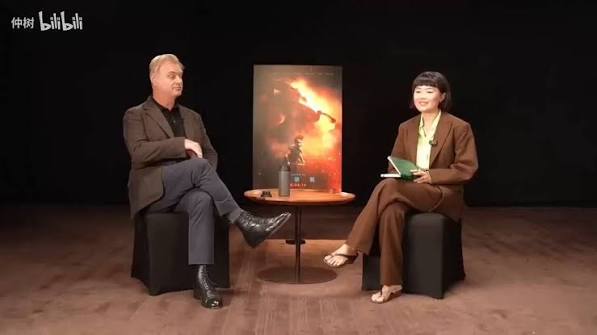
    When Christopher Nolan sits down for a press junket, you usually get polished soundbites about IMAX cameras and practical effects. But during a recent promotional tour for his upcoming epic The Odyssey, Nolan did something unexpected: he sat for a two-hour, deeply philosophical conversation with Chinese podcaster Zhong Shu—and the internet hasn’t stopped talking about it since.

    The interview, which quickly went viral on both Chinese and Western social media, featured Nolan offering frank critiques of modern film criticism, unpacking Christian themes in Homer’s ancient poem, and describing himself as a “bard for a civilization at dusk.” It’s a rare glimpse into the mind of a filmmaker who typically guards his interpretations closely. Here’s why this conversation struck such a nerve—and what it reveals about Nolan’s worldview.

    The Interview That Broke the Mold

    Most promotional interviews for a blockbuster like The Odyssey are tightly choreographed, ten-minute affairs where actors and directors cycle through hotel suites, repeating the same talking points. Nolan’s conversation with Zhong Shu was the opposite: a sprawling, long-form podcast-style discussion that reportedly ran over two hours. Zhong, a Chinese cultural commentator known for his intellectual, non-interruptive style, gave Nolan the space to speak in full paragraphs—and Nolan took full advantage.

    Clips from the interview, subtitled in English, spread rapidly across X (formerly Twitter), YouTube, and film forums. On Chinese platforms like Bilibili and Weibo, the full interview trended before crossing over to Western audiences. The reason for the virality wasn’t just the length—it was the content. Nolan addressed topics he usually sidesteps, from the state of film criticism to the theological underpinnings of a 3,000-year-old epic.

    Nolan’s Critique of Modern Film Criticism

    One of the most talked-about segments was Nolan’s blunt assessment of contemporary film criticism. He argued that criticism has become reductive, obsessed with plot mechanics and “what it means” rather than the sensory, emotional, and experiential dimensions of cinema. He reportedly criticized the “algorithmic” nature of modern criticism, where reviews are increasingly conflated with consumer ratings and hot takes.

    This isn’t the first time Nolan has expressed skepticism toward critics—he’s previously spoken about the reductive influence of Rotten Tomatoes—but he’s rarely gone into such depth. His central point: cinema is an experiential art form, and criticism that reduces it to a puzzle to be solved misses the point entirely.

    Unsurprisingly, the backlash was swift. Film critics and journalists pushed back, arguing that Nolan—an Oscar-winning, privileged director—is attacking the few remaining independent voices in film discourse. Some noted that his films thrive on the very “discourse economy” he critiques, with endless YouTube essays and think pieces dissecting every frame. The debate has reignited a long-simmering tension between filmmakers and critics, with Nolan’s comments serving as a lightning rod.

    Christian Themes in The Odyssey

    Perhaps the most intellectually provocative part of the interview was Nolan’s framing of The Odyssey as a text that prefigures Christian theology. He reportedly highlighted themes of suffering, redemption, and homecoming as metaphors for salvation, suggesting his adaptation will foreground these resonances. He also touched on the tension between fate and free will—a theme that runs through both Homer’s epic and Christian thought.

    This reading is not new. Classicists have long noted parallels between Odysseus’s trials and Christian pilgrimage narratives, and medieval writers like Dante explicitly Christianized Homer. However, some scholars caution against anachronistic interpretations: Homer’s world is pre-Christian, polytheistic, and rooted in honor and shame rather than sin and redemption. Nolan’s take is a legitimate, if contested, lens—and it has sparked lively debate among fans and academics alike.

    For Nolan, though, this isn’t about academic correctness. It’s about finding universal, timeless resonance in an ancient story. By framing The Odyssey as a spiritual epic, he’s inviting audiences to see Odysseus’s journey as not just a physical voyage, but a moral and existential one—a theme that aligns with his previous explorations of obsession, sacrifice, and the human condition.

    “A Bard for a Civilization at Dusk”

    The phrase that generated the most discussion was Nolan’s self-description as a “bard for a civilization at dusk.” He reportedly used this to explain his role as a filmmaker, suggesting that cinema—and perhaps Western civilization itself—is entering a twilight phase, and that his work serves as an elegiac storytelling for that moment.

    Interpretations vary. Some see it as cultural pessimism, an expression of anxiety about the decline of theatrical cinema, the rise of streaming, and the fragmentation of shared cultural narratives. Others view it as self-mythologizing, a grandiose framing that positions Nolan as a tragic artist in a dying medium. Still others find it deeply resonant, a poetic acknowledgment that the era of blockbuster cinema as a unifying cultural force may be ending.

    Whatever the intent, the phrase has taken on a life of its own, becoming a meme and a talking point across social media. It’s a testament to Nolan’s ability to generate discourse—and to the public’s hunger for filmmakers who speak with ambition and philosophical weight.

    The Context: The Odyssey and Nolan’s Career

    The Odyssey is Nolan’s first mythological epic, and it’s a massive undertaking. With a reported budget exceeding $250 million, the film will use cutting-edge IMAX technology to adapt Homer’s poem, with parts shot in Sicily and other Mediterranean locations. The cast is a who’s who of Hollywood: Matt Damon, Tom Holland, Anne Hathaway, Zendaya, Robert Pattinson, Lupita Nyong’o, Charlize Theron, and more. The film is slated for release on July 17, 2026, via Universal Pictures.

    This project marks a significant departure for Nolan, who has built his career on original sci-fi and thriller concepts. But it also continues his fascination with grand themes: time, memory, identity, and the nature of reality. The Odyssey offers a mythological canvas for these obsessions, and Nolan’s Christian framing suggests he’s aiming for something more than a straightforward adventure—he’s aiming for a spiritual epic.

    Why This Interview Matters

    Nolan has always been a filmmaker who invites interpretation, but he’s rarely offered his own so explicitly. This interview is a departure from his usual guarded persona, offering a rare window into his worldview. It also highlights the power of long-form interviews in an age of soundbites—Zhong Shu’s format allowed Nolan to think out loud, and the result was a conversation that resonated far beyond the usual promotional cycle.

    Whether you agree with Nolan’s critique of critics, his Christian reading of Homer, or his self-description as a bard for a dying age, the interview has sparked a global conversation about art, faith, and the future of cinema. That’s no small feat for a press tour stop.

    Christopher Nolan’s viral China interview is more than just a promotional curiosity—it’s a cultural moment. By speaking candidly about critics, Christianity, and the twilight of civilization, Nolan has given audiences a rare glimpse into the mind of one of cinema’s most ambitious filmmakers. Whether you see him as a visionary or a self-mythologizer, his words have ignited debates that will likely continue until The Odyssey hits theaters in 2026. And that, perhaps, is exactly what a bard for a civilization at dusk would want.

    Summary

    • Nolan’s two-hour interview with Chinese podcaster Zhong Shu went viral for its candid, philosophical content.
    • He criticized modern film criticism as reductive and overly focused on plot mechanics.
    • Nolan framed The Odyssey as prefiguring Christian themes of suffering, redemption, and homecoming.
    • He described himself as a “bard for a civilization at dusk,” sparking debates about cultural pessimism and self-mythologizing.
    • The interview highlights the power of long-form conversations in an era of soundbite-driven media.

    FAQ

    Q: What did Christopher Nolan say about film critics in the interview?
    A: Nolan argued that modern criticism has become reductive, obsessed with plot mechanics and “what it means,” rather than the sensory and emotional experience of cinema. He criticized the algorithmic nature of contemporary criticism and its conflation with consumer ratings.

    Q: How did Nolan explain Christian themes in The Odyssey?
    A: Nolan suggested that Homer’s epic prefigures Christian theology, particularly themes of suffering, redemption, and homecoming as metaphors for salvation. He also highlighted the tension between fate and free will, which he plans to foreground in his adaptation.

    Q: What does “bard for a civilization at dusk” mean?
    A: Nolan used this phrase to describe his role as a filmmaker, suggesting that cinema and Western civilization are entering a twilight phase. His work, he implies, serves as elegiac storytelling for that moment—a view that has been interpreted as cultural pessimism or self-mythologizing.

    Q: Why did this interview go viral?
    A: The interview was unusually long (over two hours) and featured Nolan speaking candidly about topics he usually avoids, such as religion, criticism, and cultural decline. Clips with English subtitles spread rapidly on social media, sparking widespread debate.

    Q: When is The Odyssey releasing?
    A: The film is scheduled for release on July 17, 2026, via Universal Pictures. It stars Matt Damon, Tom Holland, Anne Hathaway, Zendaya, Robert Pattinson, Lupita Nyong’o, Charlize Theron, and others.