Tag: children

  • Do Kids Overheat Faster Than Adults? The Surprising Science of Children and Extreme Heat


    On a sweltering July afternoon, a youth soccer coach blows the whistle for another drill. The temperature has hit 95°F, and the humidity is climbing. The kids are sweating, but noticeably less than the adults on the sideline. Is that a sign of resilience or a red flag? For decades, the standard answer has been that children are more vulnerable to heat because they sweat less. But recent research is complicating that picture, revealing that kids may not always be at greater risk—and that the real danger often lies elsewhere.

    The Sweat Gap: What’s Real and What’s Not

    It’s true that children sweat less than adults. Studies show that at the same exercise intensity in heat, kids produce about 40% less sweat. This is largely because their sweat glands are smaller and less efficient. For years, researchers like Oded Bar-Or in the 1970s and ’80s built a framework around this fact, concluding that children’s reduced evaporative cooling puts them at a disadvantage.

    But sweating isn’t the only cooling mechanism we have. Children also lose heat through radiation and convection—dry heat exchange. Because they have a higher surface-area-to-mass ratio than adults, they can dissipate heat through the skin more effectively in dry conditions. In a hot, arid environment, a child’s body may actually be better at cooling down without relying on sweat.

    The Surface Area Paradox

    That high surface-area-to-mass ratio cuts both ways. It means children absorb heat from the environment faster in extreme heat, but it also means they cool down faster when they move into shade or a cooler space. This is a key point that the traditional ‘greater risk’ narrative often overlooks.

    In laboratory tests, kids’ core temperatures do rise faster during exercise in heat—about 0.1–0.2°C higher than adults at equivalent workloads. But in real-world settings, children also reduce their activity level when they feel hot. They naturally slow down, take breaks, and seek cooler spots. This behavioral thermoregulation is something that adults often override—think of a coach pushing for one more sprint or a parent insisting on finishing the hike.

    The Real Danger: Not Physiology, But Policy

    Epidemiological data offers a sobering counterpoint to the idea that kids are the most heat-vulnerable group. During heat waves, heat-related illness rates spike in children, but their mortality risk from heat is actually lower than in adults over 65. The elderly are far more likely to die from heat. So why do public health guidelines treat children as a high-risk group?

    Partly, it’s because children are more likely to be outdoors during peak heat hours—recess, sports practice, summer camp. They also depend on adults to recognize symptoms and provide hydration and rest. Infants and toddlers are especially vulnerable because they can’t remove clothing, communicate thirst, or move to shade on their own.

    The emerging consensus among researchers is that risk depends on context. In humid heat, where sweat evaporation is already inefficient, children’s lower sweat output becomes a genuine disadvantage. In dry heat, they may cope comparably to adults. The biggest threat isn’t a child’s physiology—it’s institutional and behavioral failures: inadequate rest breaks, poor hydration practices, and adults who don’t let kids self-pace.

    What This Means for Parents and Coaches

    So, should we be less worried about kids in heat? Not necessarily. The evidence suggests that children are not universally ‘more at risk,’ but they are differently at risk. Their cooling systems work differently, and they rely on adults to make smart decisions.

    Practical implications: In humid conditions, be more cautious—kids’ sweat inefficiency will show. In dry heat, allow for dry heat exchange by encouraging airflow and shade. Most importantly, let children dictate their own pace. If a child says they’re hot or tired, listen. Build in mandatory rest and hydration breaks, and teach kids to recognize the early signs of heat stress.

    The Bottom Line

    Children are not simply ‘mini-adults’ when it comes to heat, but they’re also not inherently fragile. Their bodies have evolved with their own set of compensations—behavioral, physiological, and anatomical. The risk of heat illness in children is real, but it’s manageable with the right precautions. Understanding the science can help parents, coaches, and policymakers move beyond a one-size-fits-all warning and toward smarter, more effective heat safety.

    The next time you see kids sweating less than adults on a hot day, don’t assume they’re in danger. Their bodies are simply using a different playbook. The best thing we can do is respect that difference, stay alert to the signs of heat stress, and ensure that kids have the freedom to cool down when they need to. Heat safety for children isn’t about coddling—it’s about understanding the unique ways their bodies work.

    Summary

    • Children sweat about 40% less than adults, but they also rely more on dry heat exchange, which can be effective in arid conditions.
    • A higher surface-area-to-mass ratio means children heat up faster in extreme heat but also cool down faster in shade or cooler environments.
    • Core temperature rises slightly faster in children during exercise in heat, but they naturally reduce activity to compensate.
    • Epidemiological data shows children have lower heat mortality risk than adults over 65, yet they face higher exposure during outdoor activities.
    • The greatest risk comes from humid heat, institutional policies that ignore self-pacing, and inadequate hydration—not children’s physiology alone.

    FAQ

    Q: Are children always at greater risk from extreme heat than adults?
    A: No, not always. Risk depends on humidity, activity level, and whether children can self-pace. In dry heat, children may cope comparably to adults due to efficient dry heat exchange. In humid heat, their lower sweat output becomes a disadvantage.

    Q: Why do children sweat less than adults?
    A: Children have smaller and less efficient sweat glands. At the same exercise intensity in heat, they produce about 40% less sweat than adults.

    Q: Can children cool down as effectively as adults?
    A: Yes, but through different mechanisms. They rely more on radiation and convection (dry heat exchange) and behavioral adjustments like reducing activity. Their high surface-area-to-mass ratio helps them lose heat quickly in cooler conditions.

    Q: What is the biggest heat risk for children?
    A: The greatest risks are behavioral and environmental: being outdoors during peak heat hours, not taking enough breaks, poor hydration, and adults who override children’s natural cues to slow down. Infants and toddlers are especially vulnerable because they depend on adults entirely.

    Q: How can coaches and parents keep kids safe in the heat?
    A: Allow children to self-pace, provide frequent rest breaks in shade, ensure hydration before and during activity, and be extra cautious in humid conditions. Teach kids to recognize symptoms of heat stress and encourage them to speak up.
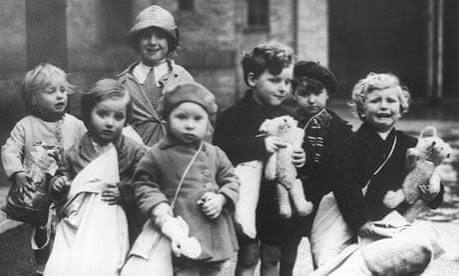

  • The Children of WWII: Evacuation, Survival, and the Long Shadow of Loss

    The Children of WWII: Evacuation, Survival, and the Long Shadow of Loss

    In the first week of September 1939, as the British government prepared for war, a railway network across the country moved a small army—not of soldiers, but of children. Over three days, 1.5 million young Londoners, Mancunians, and Glaswegians were sent to the countryside, clutching gas masks and name tags. They were part of Operation Pied Piper, the largest planned evacuation of children in history. The trains were packed with school groups, siblings, and bewildered toddlers, many of whom had never left their urban streets before.

    This was not a uniquely British story. From the bombed-out cities of Germany to the freezing steppes of the Soviet Union and the island villages of Japan, the Second World War uprooted tens of millions of children. Governments saw them as the future of the nation—both biologically and ideologically—and moved them in massive state-run operations. But the evacuation was not just a logistical feat; it was a profound rupture in the lives of children, many of whom would never return home, never see their parents again, or would carry the psychological scars for decades.

    These are the untold stories of those children: the trauma of separation, the clash of class and culture, the indoctrination camps, the famine trains, and the silence that followed the war. The scale of the displacement is staggering—over 3.5 million in Britain alone, up to 15 million in the Soviet Union—but the human cost is measured in the small, individual moments of confusion and loss that shaped a generation.

    The Great Uprooting: Why Governments Sent Children Away

    The fear of aerial bombing was the driving force behind the mass evacuations. Politicians and military strategists, remembering the predictions of Stanley Baldwin that “the bomber will always get through,” anticipated that cities would be flattened and civilians would suffer catastrophic casualties. Children, as the most vulnerable and the future of the nation, were the first to be moved.

    In Britain, the evacuation was organized by the government, with school groups billeted in rural homes. The operation was massive: 1.5 million children moved in the first days of September 1939, and by 1945, about 3.5 million had been evacuated at some point, including a second wave during the Blitz. The children were sent to live with host families, a practice that was supposed to be temporary but often lasted for years. The clash of class and culture was immediate: middle-class children found themselves in working-class homes, and vice versa. Some were treated with warmth; others were neglected, exploited, or abused. The government later acknowledged that vetting of host families was inadequate.

    Across the Channel, the German Kinderlandverschickung (KLV) program moved 2.5 to 3 million children from bomb-threatened cities to rural areas. But the KLV was not just about safety—it was an ideological project. Children were sent to camps run by the Hitler Youth, where they wore uniforms, participated in paramilitary training, and were indoctrinated with Nazi ideology. The camps were designed to remove children from the “weak” influence of their urban parents and turn them into loyal soldiers for the Reich. Many children later described the experience as a “second childhood”—both formative and deeply traumatic.

    The Soviet Union evacuated children on an even grander scale, though the records are incomplete. Estimates suggest 12 to 15 million children were displaced eastward, often traveling for weeks in cattle cars to Central Asia, Siberia, or the Urals. Many children were evacuated with their schools or orphanages, not with their families. The journey was brutal: starvation, disease, and cold killed many before they reached safety. During the siege of Leningrad, ~400,000 children were evacuated, but many perished on the way or in the evacuation zones due to famine.

    Japan, facing the threat of American bombing in 1944-45, evacuated over 400,000 children from major cities to rural temples and villages. The Sokai (group evacuation) program sent elementary school children in school cohorts, with teachers acting as surrogate parents. The children often faced malnutrition, disease, and harsh labor in the rural areas, where food was also scarce.

    The Trauma of Separation

    For many children, the departure was a moment of inexplicable loss. They were too young to understand why they were being sent away, and some never saw their parents again. The separation disrupted the primary attachment bonds that are crucial for healthy development. Psychologists later used these experiences to develop attachment theory, but at the time, the emotional toll was largely ignored.

    Letters were the only link, but postal systems were slow and unreliable. Some children did not hear from their parents for months, and the uncertainty compounded the anxiety. In Britain, the government tried to keep families informed, but the system was often overwhelmed. In the Soviet Union, the state’s control over communication meant that many children were simply lost in the system, with no way to trace their families.

    The class and culture clash in Britain was particularly jarring. Children who had never seen a cow were suddenly expected to help on farms; those from affluent homes were billeted with families who had no indoor plumbing. The experience could be enlightening or degrading, depending on the host family. Some children were treated as beloved guests; others were used as unpaid labor or subjected to neglect. The long-term psychological effects were profound: a generation of children grew up feeling abandoned, even if their parents had acted out of love.

    The Nazi KLV: Indoctrination and a “Second Childhood”

    The Kinderlandverschickung was the most ideologically driven evacuation program. The camps were run by the Hitler Youth and Nazi welfare organizations, and the children were subjected to constant propaganda. They learned Nazi racial theory, practiced military drills, and were taught to idolize Hitler. The goal was to create a generation of loyal Nazis, independent of family influence.

    Life in the camps was regimented but also offered a sense of community and adventure. Some children later recalled that the camps provided a rare escape from the bombing and the fear, a “second childhood” of sorts. However, the indoctrination left deep scars. After the war, many German evacuees did not speak about their experiences until the 1990s, partly out of shame for the Nazi ideology they had been taught and partly because the cultural focus was on adult suffering.

    The Soviet Orphan Trains: Starvation and State Control

    In the Soviet Union, evacuation was often a matter of survival, but it came at a terrible cost. Children were sent eastward in cattle cars, packed in with little food or water. Many died en route from disease or starvation. The state placed children in state-run institutions, where they were trained for labor and subjected to strict discipline. Family reunification was slow and often impossible; the state’s records were incomplete, and many children simply fell through the cracks.

    The siege of Leningrad was a particular tragedy. Around 400,000 children were evacuated from the city, but many perished in the evacuation zones due to famine. The survivors were often orphaned, as their parents had died in the siege or were never traced. The Soviet government did not prioritize family reunification; the state was the parent, and children were expected to contribute to the war effort.

    The Japanese Sokai: Group Survival and Post-War Silence

    In Japan, the evacuation was a group effort. Schools were moved wholesale to rural areas, with teachers acting as surrogate parents. The children lived in temple compounds or village homes, often in cramped and unsanitary conditions. Food was scarce, and many suffered from malnutrition and disease. They were also expected to work, helping with farm labor or other tasks.

    The Japanese evacuees rarely spoke about their experiences after the war. The narrative of victimhood was complicated by Japan’s role as an aggressor, and many felt ashamed or were told to forget. It was not until the 1980s and 1990s that some began to share their stories, revealing a similar pattern of trauma and loss as seen in Britain and Germany.

    The Invisible Casualties: Children Killed and Orphaned

    The evacuation was meant to protect children, but it could not shield them from the war’s violence. In Britain, ~7,700 children were killed in bombing raids, including the Blitz. In Germany, ~20,000–25,000 children died in bombing raids, including the firebombing of Hamburg and Dresden. The Holocaust claimed ~1.5 million Jewish children, most of whom were not evacuated but killed in ghettos and camps. In the Soviet Union, historians estimate that 1–2 million children died from war-related causes—starvation, bombing, disease, and violence.

    The evacuation itself could be deadly. In the Soviet Union, children died on the trains; in Japan, they died in the rural areas from malnutrition; in Britain, some were killed in bombing raids on the very areas they had been sent to for safety, as the Germans also targeted rural industrial sites. The loss was not just physical but psychological: many children who survived were orphaned, either by the bombing or by the chaos of displacement.

    The Long Shadow: Post-War Silence and Memory

    For decades after the war, the experiences of the evacuated children were largely ignored. In Britain, there was a cultural focus on the “Blitz spirit” and the heroism of adults; children’s stories were seen as secondary. In Germany, the focus was on the guilt of the Nazi era, and the children who had been indoctrinated were often silenced by shame. In the Soviet Union, the state controlled the narrative, and the suffering of children was subsumed into the broader story of Soviet victory. In Japan, the victimhood of children was complicated by the nation’s aggression.

    It was not until the 1990s that these stories began to be told. Oral history projects, memoirs, and academic studies have since revealed the long-term psychological impact: anxiety, depression, attachment disorders, and a persistent sense of loss. The children of WWII are now elderly, but their stories are a vital part of understanding the war’s full cost. They remind us that the most vulnerable are often the first to be uprooted and the last to be heard.

    The evacuation of children during World War II was a massive experiment in social engineering, driven by fear and ideology, but it was carried out on the backs of children who had no say in the matter. The stories of these children—of separation, survival, and loss—are not just historical footnotes; they are a testament to the resilience of the human spirit and a warning about the costs of war. As the generation of evacuees passes, their memories become even more precious, urging us to remember that the true price of conflict is written not in numbers, but in the quiet, enduring pain of children who were sent away and never fully returned.

    Summary

    • The scale was massive: Over 3.5 million children were evacuated in Britain, 2.5–3 million in Germany, 12–15 million in the Soviet Union, and 400,000+ in Japan.
    • The reasons were complex: Governments moved children to protect them from bombing, but also for ideological purposes (Nazi KLV) and due to state control (Soviet Union).
    • The experience was traumatic: Separation from parents, culture clash, abuse, starvation, and death were common.
    • Many children never recovered: The psychological scars lasted a lifetime, but were often silenced by shame or cultural focus on adult suffering.
    • The stories were hidden for decades: It was not until the 1990s that many evacuees began to speak about their experiences, revealing the long-term cost of the war’s disruption.

    FAQ

    Q: How many children were evacuated during WWII?
    A: In Britain, around 3.5 million children were evacuated; in Germany, 2.5–3 million via the KLV; in the Soviet Union, estimates range from 12–15 million displaced; and in Japan, over 400,000 children were sent to rural areas.

    Q: What was the Kinderlandverschickung (KLV)?
    A: The KLV was a German program that evacuated children from bomb-threatened cities to rural camps run by the Hitler Youth. It aimed not only to protect children but also to indoctrinate them in Nazi ideology, removing them from the influence of their parents.

    Q: Why did it take so long for these stories to be told?
    A: Many evacuees stayed silent due to shame (in Germany about Nazi ideology), cultural focus on adult suffering (in Britain), state control of memory (in the Soviet Union), and complicated narratives of victimhood (in Japan). It was only in the 1990s that oral histories began to emerge.

    Q: What were the long-term psychological effects on evacuated children?
    A: Many children experienced separation trauma, which disrupted attachment bonds. This led to anxiety, depression, and attachment disorders that persisted into adulthood. The effects were often unrecognized for decades.

    Q: Did any children die during the evacuation?
    A: Yes, many children died during evacuation, especially in the Soviet Union, where they traveled in cattle cars and faced starvation and disease. In Germany, children also died in bombing raids despite being evacuated; the firebombing of Hamburg and Dresden killed thousands of evacuees.

  • ICE Collected Nearly 1 Million DNA Samples Last Year—Including from Young Children

    ICE Collected Nearly 1 Million DNA Samples Last Year—Including from Young Children

    In the past year, U.S. Immigration and Customs Enforcement (ICE) collected DNA samples from nearly one million people, a staggering number that includes young children. These samples are not stored in a medical database; they are uploaded to the FBI’s Combined DNA Index System (CODIS), a national database designed for criminal justice. This practice, authorized by laws passed in 2005 and 2013, raises profound questions about privacy, civil liberties, and the treatment of immigrants and children.

    For many, the idea that a child’s DNA could be in a criminal database is unsettling. It blurs the line between civil immigration enforcement and criminal justice, and it happens without a conviction—or even a charge. Understanding how we got here, what the law allows, and what it means for individuals and families is essential for anyone concerned about privacy and government power.

    The Scale of DNA Collection

    In fiscal year 2024, ICE collected DNA from approximately 1 million people. This is a dramatic increase from previous years, driven by higher border encounters and more streamlined collection processes. The samples are taken via buccal swabs—a simple cheek swab—during booking or processing at detention facilities. This includes not only adults but also children, some as young as infants, who are detained or processed through immigration channels.

    The Legal Framework

    The collection is not a secret operation. It is authorized by two key laws:

    • The DNA Fingerprint Act of 2005: This law required federal agencies to collect DNA from all persons arrested, facing charges, or convicted. It was a response to the growing use of DNA in solving crimes.
    • The Violence Against Women Reauthorization Act of 2013: This extended DNA collection to individuals detained under immigration laws. This effectively made ICE a major collector of DNA, as it processes hundreds of thousands of detainees each year.

    These laws were designed to help law enforcement solve crimes and identify repeat offenders. However, they have been applied to civil immigration detainees—people who have not been charged with any crime, but are simply in the country without legal status or seeking asylum.

    What Is CODIS?

    The Combined DNA Index System (CODIS) is the FBI’s national DNA database. It was originally created to store DNA profiles of convicted offenders, arrestees, and forensic evidence from crime scenes. Law enforcement uses it to match DNA from crime scenes to individuals, a process called a “cold hit.” Once a profile is in CODIS, it remains there indefinitely, even if the person is never charged or is fully exonerated.

    For immigration detainees, having DNA in CODIS means that if their DNA matches evidence from a crime scene—even one they had nothing to do with—they could become a suspect. This is a significant privacy concern, as it treats non-criminals as potential criminals.

    The Inclusion of Children

    One of the most controversial aspects is the collection of DNA from children. In immigration detention, children are often processed with their families or as unaccompanied minors. They are swabbed just like adults. Children cannot consent to this, and their parents may not have a choice. The DNA is stored in CODIS, where it can be used for criminal investigations.

    This raises serious ethical questions. Children are not criminals, and they are not being charged with anything. Yet their genetic information is being added to a criminal database. This could have lifelong implications, as DNA is permanent and cannot be changed.

    Privacy and Civil Liberties Concerns

    Civil liberties advocates argue that collecting DNA from people who have not been convicted of a crime violates the Fourth Amendment, which protects against unreasonable searches and seizures. They also point out that the presumption of innocence is undermined when the government collects genetic data from people who are merely detained, not convicted.

    Immigrant rights groups see this as a form of surveillance that stigmatizes immigrant communities. It may deter people from seeking asylum or legal status, for fear that their DNA will be used against them.

    Legal scholars debate whether the “arrest” standard in the DNA Fingerprint Act applies to civil immigration detention. Some argue that the law’s language is being stretched beyond its original intent, which was to collect DNA from criminals, not from people in civil proceedings.

    The Tech and Data Ethics Angle

    The scale of data collection—1 million profiles per year—raises concerns about database security and potential misuse. Genetic data is highly sensitive and personal. If CODIS were breached, the information could be misused. Additionally, once a profile is in CODIS, it is very difficult to remove, even if the person is released or deported.

    There is also the question of informed consent. In many cases, detainees may not fully understand what is happening when they are swabbed. They may be told it is routine, but they may not realize that their DNA will be stored in a criminal database indefinitely.

    Common Misunderstandings

    • “DNA collection means you have a criminal record”: Not true. CODIS contains profiles of arrestees and detainees, not just convicts. A person can be fully exonerated or never charged, yet their DNA remains.
    • “ICE is doing this secretly”: The practice is authorized by law and has been reported on for years, but the scale (1 million) is new and may surprise people. It is not covert, but it is under-publicized.
    • “Children are being swabbed at school”: No. The collection happens in immigration detention and processing facilities, not in public settings. However, children in ICE custody are indeed subject to it.
    • “DNA is only used for identification”: CODIS profiles are used for forensic matching; they can link a person to a crime scene, even if they are innocent.

    The collection of nearly 1 million DNA samples by ICE, including from young children, is a significant expansion of government surveillance. While it is authorized by law, it raises serious privacy and civil liberties concerns. As genetic data becomes more central to law enforcement, it is crucial to have a public conversation about the balance between public safety and individual rights. For now, the DNA of immigrants and their children is being stored in a criminal database, with little oversight and few options for removal.

    Summary

    • ICE collected DNA from nearly 1 million people in the past year, including children, and uploaded it to the FBI’s CODIS database.
    • The collection is authorized by the DNA Fingerprint Act of 2005 and the Violence Against Women Reauthorization Act of 2013.
    • DNA is collected via buccal swabs from civil immigration detainees, not just criminals, raising privacy concerns.
    • Children in immigration custody are swabbed, and their DNA is stored indefinitely in a criminal database.
    • Critics argue this violates the Fourth Amendment and undermines the presumption of innocence, while supporters see it as a public safety tool.

    FAQ

    Q: Is it legal for ICE to collect DNA from children?
    A: Yes, under current law. The DNA Fingerprint Act of 2005 and the Violence Against Women Reauthorization Act of 2013 authorize DNA collection from all individuals detained by federal authorities, including immigration detainees and minors in custody.

    Q: Can parents refuse to have their child’s DNA collected?
    A: In practice, refusal is not an option. DNA collection is mandatory for all detainees, and refusal could lead to additional legal consequences or delays in processing.

    Q: What happens to the DNA after it is collected?
    A: The DNA profile is uploaded to CODIS, the FBI’s national DNA database. It is used for forensic matching in criminal investigations and remains in the database indefinitely, even if the person is released or deported.

    Q: Does having DNA in CODIS mean you are a criminal?
    A: No. CODIS contains profiles of arrestees and detainees, not just convicted criminals. Many people in CODIS have never been charged with a crime.

    Q: Can a person request to have their DNA removed from CODIS?
    A: It is very difficult. There is no standard process for removal, and once a profile is in CODIS, it is typically kept permanently. Some legal challenges have been made, but success is rare.