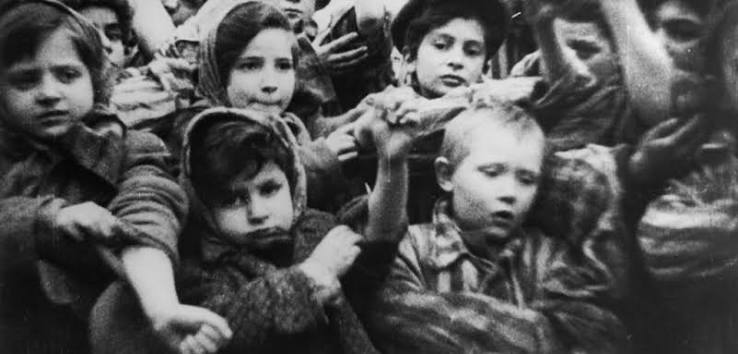
When the Second World War ended in 1945, the Allied forces discovered a devastated Europe. Among the ruins were thousands of children who had somehow survived the Holocaust. They were a small fraction of the 1.5 to 2 million Jewish children who had been alive in 1939. Only about 100,000 to 150,000 made it through. These children emerged from hiding places, forests, and concentration camps, often alone, malnourished, and traumatized. Their journey after liberation was not a simple return to normal life it was a new struggle for survival, identity, and a place to call home.
This article traces what happened to these children once the war was over. It looks at their initial care in displaced persons camps, the long and often painful process of reuniting with family or finding new ones, and the paths they took to new countries. It also explores the different experiences of those who went to Britain, France, Palestine, and elsewhere, and the lasting impact of those years on their lives.
The Liberation: A Bitter Sweet Beginning
When the camps were liberated, soldiers found children in horrifying conditions. At Auschwitz, for example, only a few hundred children were found alive, many of them twins who had been used for medical experiments. The survivors were often severely malnourished, suffering from tuberculosis and other diseases. Some had forgotten their names, their languages, and even how to play. They had spent years in conditions that stripped away their childhood.
The first priority was medical care and food. But the psychological scars were deep. Many children had witnessed the murder of their families. They had learned to hide, to lie, to trust no one. The process of recovery would take years, and for some, it never fully happened.
Displaced Persons Camps: A Temporary Home
Most surviving children were initially placed in Displaced Persons (DP) camps run by the Allies. These camps were often former concentration camps or military barracks. Bergen-Belsen, Feldafing, and Zeilsheim became temporary homes for thousands of orphans. The United Nations Relief and Rehabilitation Administration (UNRRA) and later the International Refugee Organization (IRO) managed these camps, with help from Jewish organizations like the American Jewish Joint Distribution Committee (JDC).
In these camps, the children received basic education, vocational training, and some psychological support. But life was hard. They lived in crowded barracks, faced shortages of food and clothing, and had to deal with the uncertainty of their future. The camps were meant to be temporary, but some children remained for years, waiting for emigration or for news of family.
The Search for Family
One of the most agonizing experiences for child survivors was the search for surviving relatives. The Central Tracing Bureau was set up to help locate family members. Lists of survivors were posted, and children were photographed and registered. Many children clung to the hope that a parent or sibling might have survived. For some, this hope was fulfilled. They were reunited with a mother, a father, or a sibling who had also survived. But for the vast majority, the search ended in despair. They were alone in the world.
Some children were too young to remember their families. They had been hidden as infants or toddlers and had no memory of their parents. Others had been given new names and identities. The task of rebuilding a family was often impossible. Adoption was one option, but many children were reluctant to leave the hope of finding a biological relative. Others were placed in group homes or orphanages, where they lived with other child survivors.
The Windermere Children: A British Story
One of the most famous rehabilitation programs was the Windermere Children scheme. In August 1945, 732 child survivors, mostly from the Theresienstadt ghetto and other camps, were flown to the Lake District in England. They were housed in a former RAF camp near the town of Windermere. Here, they received intensive care: good food, warm clothing, education, and psychological support. They were taught English, woodworking, and other trades. The goal was to help them recover and prepare them for a new life in Britain.
The children at Windermere formed a close bond, and many stayed in the UK, becoming British citizens. Their story was later told in a book and a 2020 film, The Windermere Children. For many, this program was a turning point. It gave them a chance to heal and to build a future.
The Buchenwald Boys: A Different Path
In April 1945, American troops liberated the Buchenwald concentration camp. Among the survivors were hundreds of boys, many of them teenagers. These boys, known as the Buchenwald Boys, were taken to France, where they were placed in homes and rehabilitation centers. One of them was Elie Wiesel, who would later become a Nobel Prize-winning author and a voice for Holocaust survivors.
The Buchenwald Boys were given education and support, and many went on to successful lives. But they, too, faced the challenge of rebuilding their identities. Some had been in the camp for years, and the outside world was foreign to them. They had to learn to live in society again, a process that was not always easy.
The Hidden Children: A Crisis of Identity
Not all child survivors were in camps. Many had been hidden—in convents, with Christian families, in attics, or in the countryside. These “hidden children” often survived by passing as non-Jewish. They took on Christian names, learned Christian prayers, and sometimes were baptized. When the war ended, they faced a unique problem: they had to decide whether to return to their Jewish roots or remain in the Christian world they had come to know.
Some hidden children chose to remain Christian, either because they had formed deep bonds with their rescuers or because their Jewish identity had become alien to them. Others struggled with guilt and confusion. They had to “relearn” their Jewish identity, sometimes for the first time. The Hidden Child Foundation, founded in 1991, has documented hundreds of these stories, showing the diversity of experiences and the long-term psychological impact.
The Kibbutz Experience: Building a New Nation
For many child survivors, the destination was British Mandate Palestine, soon to become Israel. Youth Aliyah, a Jewish organization, organized the transport and care of thousands of children. They were taken to agricultural settlements, or kibbutzim, where they lived communally. The idea was to rehabilitate them through work, education, and a new national identity. In the kibbutz, they learned Hebrew, worked the land, and became part of a collective.
For some, this was a positive experience. It gave them a sense of belonging and purpose. They were part of building a new nation. But others felt pressured to abandon their European past and adopt a new identity. They were expected to be strong, to not speak about their trauma, and to focus on the future. This could be a heavy burden. Some later wrote about the tension between their past and present, and the difficulty of integrating their Holocaust experiences into their new lives.
The United States and Other Destinations
A smaller number of child survivors emigrated to the United States. Under the Displaced Persons Act of 1948, amended in 1950, about 1,000 to 1,500 unaccompanied child survivors were admitted. They were sponsored by Jewish agencies and often placed in foster homes or group homes. Canada, Australia, and South Africa also accepted small numbers.
These children started new lives, but they often faced challenges. They had to learn new languages, adapt to new cultures, and cope with their past. Some succeeded remarkably, becoming doctors, lawyers, and artists. Others struggled with mental health issues, and some never spoke about their experiences until later in life.
The Lasting Legacy
The children who survived the Holocaust grew up, married, and had families. Many became advocates for Holocaust education, sharing their stories with the world. They founded organizations, wrote memoirs, and spoke at schools and museums. Their experiences shaped not only their own lives but also the way we understand the Holocaust.
However, the trauma never fully disappeared. Many survivors suffered from depression, anxiety, and post-traumatic stress disorder. They often had difficulty forming close relationships, and some passed on their trauma to their children. But they also showed remarkable resilience. They rebuilt their lives, often in new countries, and contributed to society in countless ways.
Today, as the number of survivors diminishes, their stories become even more precious. They remind us of the horrors of the Holocaust, but also of the strength of the human spirit. The children who survived were not just victims; they were survivors who built new lives. Their legacy is a testament to the power of hope and the will to live.
The children who survived the Holocaust faced a long and difficult road after liberation. They had to heal from profound trauma, find or create new families, and build new lives in unfamiliar lands. Their experiences varied—from the rehabilitation of the Windermere Children to the identity crises of the hidden children to the communal life of the kibbutzim. Yet, despite the challenges, many went on to lead productive lives, contributing to their new communities and preserving the memory of those who perished. Their story is one of both tragedy and resilience, a reminder of the humanity that endured even in the darkest of times.
Summary
- Only about 100,000–150,000 of the 1.5–2 million Jewish children in Europe in 1939 survived the Holocaust.
- Most child survivors were initially placed in DP camps, where they received basic care and education.
- Many were reunited with family, but the majority were orphaned and had to find new homes.
- Emigration destinations included Palestine/Israel, the UK, the US, and other countries, with programs like Youth Aliyah and the Windermere Children scheme.
- The hidden children faced identity crises, while all survivors dealt with long-term psychological effects.
FAQ
Q: How many children survived the Holocaust?
A: Estimates vary, but it is generally accepted that between 100,000 and 150,000 Jewish children survived out of the 1.5 to 2 million who were alive in 1939. This is a survival rate of less than 10 percent.
Q: What was the Windermere Children program?
A: The Windermere Children program was a rehabilitation scheme that brought 732 child survivors, mostly from the Theresienstadt ghetto, to the Lake District in England in August 1945. The children received education, vocational training, and psychological support to help them recover and integrate into British society.
Q: Where did surviving children go after the war?
A: Most child survivors were first placed in displaced persons camps in Germany, Austria, and Italy. Later, they emigrated to various countries, with the largest numbers going to British Mandate Palestine (later Israel), the United States, and the United Kingdom. Smaller numbers went to Canada, Australia, South Africa, and Latin America.
Q: What were the “hidden children”?
A: “Hidden children” were Jewish children who survived the Holocaust by hiding in convents, with Christian families, in attics, or in other concealed places. Often, they had to pass as non-Jewish, taking on Christian identities. After the war, they faced challenges in reconciling their Jewish heritage with their wartime experiences.
Q: How did the children cope with the trauma of the Holocaust?
A: Many survivors experienced long-term psychological effects, including depression, anxiety, and PTSD. However, rehabilitation programs, new families, and the support of organizations helped many to rebuild their lives. Some found solace in sharing their stories, while others remained silent for decades.