At 6:30 AM on April 22, 1915, near Ypres, a strange yellow-green cloud drifted toward French colonial troops. Within minutes, soldiers were choking, clawing at their throats, and fleeing in panic. It was the first large-scale gas attack in history. Eighteen months later, on September 15, 1916, at the Somme, another new horror emerged: a 28-ton steel box clanking across no man’s land, spitting fire. Both weapons were born of the same desperation to break the trench stalemate, but they terrified soldiers in profoundly different ways. Which was more terrifying? The answer depends on whether you’re talking about the fear of a sudden, agonizing death or the dread of a slow, lingering one.
The Tactical Problem That Spawned Both Weapons
By 1915, the Western Front had become a killing field of static horror. Barbed wire, machine guns, and rapid-fire artillery made any frontal assault a suicide mission. The generals needed a way to break the deadlock—something that could cross the wire, crush the trenches, or simply erase the enemy. The tank and the gas cloud were two very different answers to the same question.
The Tank: A Moving Fortress That Often Broke Down
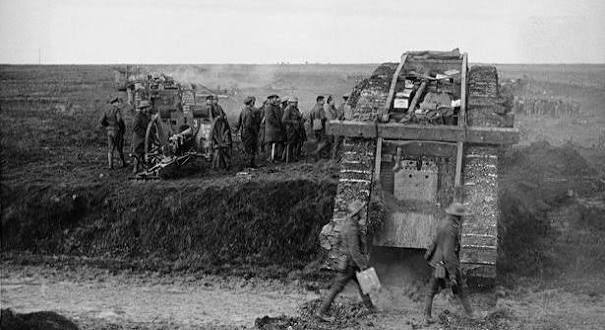
The British Mark I tank debuted at the Battle of the Somme on September 15, 1916. Of the 49 available, only 32 even reached the start line. Many broke down or ditched in the mud. The specifications were impressive on paper: 28 tons, a top speed of 3.7 mph, a crew of eight, and armor up to 12mm—enough to stop bullets, but not artillery. It was armed with two 6-pounder guns (in the ‘male’ version) or machine guns (in the ‘female’ version).
But the tank’s real power was psychological. German troops, who had never seen such a machine, often fled at the sight of it. They called it a ‘devil’ or a ‘monster’. For Allied infantry, the sight of a tank was a burst of hope—’our tanks are coming’ became a rallying cry. Yet for the crew inside, the tank was a death trap. Poor ventilation meant heat, fumes, and carbon monoxide poisoning. The noise was deafening, and the fear of burning alive was constant.
Despite its fearsome appearance, the tank killed relatively few soldiers directly. Its main value was breaking barbed wire, crossing trenches, suppressing machine-gun nests, and demoralizing the enemy. At Cambrai in November 1917, 476 tanks broke through the Hindenburg Line on day one, but the exploitation failed. By the end of the war, Britain had produced about 2,600 tanks, France about 3,900 (including the revolutionary Renault FT with a rotating turret), and Germany only about 20.
Gas: The Invisible Killer That Could Strike Anytime
Gas was different. It was invisible, silent, and could strike at any moment—even while soldiers slept. The first large-scale attack at Ypres on April 22, 1915, used chlorine gas released from 5,700 cylinders. The result: about 1,200 killed and 3,000 wounded, but the terror was far greater. French colonial troops broke in panic, creating a gap in the line.
Gas came in several forms. Chlorine caused choking, coughing, vomiting, and a greenish froth at the mouth. Phosgene, introduced later, was more deadly—it caused delayed pulmonary edema, and it was responsible for about 85% of gas deaths. Mustard gas, first used by Germany in July 1917, was the most terrifying of all. It caused massive blisters, temporary blindness, and agonizing pain. It also contaminated the ground for weeks, forcing troops to wear heavy protective gear that slowed them down and exhausted them.
Gas was more a disabler than a killer. Total gas casualties across all sides are estimated at 1.2 to 1.3 million, with about 90,000 to 100,000 deaths—only about 2-3% of total war deaths. But gas caused roughly 1 in 4 of all US casualties, and many survivors suffered chronic lung or eye damage for the rest of their lives.
The Terror of the Invisible vs. The Terror of the Inevitable
Soldiers feared gas because it was unpredictable and could strike without warning. You couldn’t see it coming, and the countermeasures—gas masks—were uncomfortable and often ineffective. A gas mask could save you from chlorine or phosgene, but mustard gas was designed to defeat masks by attacking the skin. The fear of gas was a constant, low-grade dread that wore on men’s nerves.
Tanks, on the other hand, were terrifying because they were visible, loud, and seemingly unstoppable. To face a tank was to face a mobile fortress that could crush you under its tracks or cut you down with machine-gun fire. But tanks were also unreliable and vulnerable to artillery. A well-placed shell could turn one into a burning coffin. The terror of a tank was immediate and visceral, but it was also brief—you either survived the encounter or you didn’t.
Which Was More Terrifying?
Both weapons were terrifying in their own ways, but for different reasons. Gas was a slow, lingering terror that could strike at any time, even in the safety of a dugout. It was a weapon that disabled more than it killed, leaving survivors with permanent scars. Tanks were a sudden, explosive terror that announced themselves with a roar and a cloud of smoke. They were deadly to face, but they were also a source of hope for the troops who had them on their side.
In the end, artillery remained the true ‘king of battle,’ causing 60-70% of all casualties. But among the new weapons of WWI, gas and tanks each carved out a unique niche of fear. Gas was the invisible enemy that made soldiers dread the air they breathed. Tanks were the mechanical monsters that made them dread the ground they stood on. Both were horrifying, and both changed the face of warfare forever.
The question of which weapon was more terrifying may never have a single answer. It depends on whether you fear the unknown or the inevitable. Gas was a weapon of psychological attrition, wearing down soldiers with the constant threat of a silent, painful death. Tanks were a weapon of shock and awe, crushing the enemy with raw mechanical power. Both were born of the same desperation, and both left an indelible mark on the soldiers who faced them. In the end, the true horror of WWI was not any single weapon, but the brutal reality that mankind had found new and inventive ways to kill each other on an industrial scale.
Summary
- Gas caused an estimated 1.2-1.3 million casualties, with about 90,000-100,000 deaths; it was more a disabler than a killer.
- Tanks killed relatively few soldiers directly but were a major psychological weapon, causing German troops to flee at the sight of them.
- Gas was invisible, silent, and could strike anytime, creating constant dread; mustard gas could defeat gas masks by attacking the skin.
- Tanks were loud, visible, and terrifying to face, but also unreliable and vulnerable to artillery; they inspired hope in Allied troops.
- Artillery remained the biggest killer, causing 60-70% of casualties, but both tanks and gas added new dimensions of terror to the battlefield.
FAQ
Q: How many tanks were used in WWI?
A: Britain produced about 2,600 tanks, France about 3,900, and Germany only about 20. The first use was at the Somme in 1916, with only 32 of 49 tanks reaching the start line.
Q: Why was mustard gas so terrifying?
A: Mustard gas caused severe blisters, temporary blindness, and agonizing pain. It also contaminated the ground for weeks, forcing troops to wear heavy protective gear, and it could penetrate gas masks by attacking the skin.
Q: Did gas kill more soldiers than tanks?
A: Yes, gas caused an estimated 90,000-100,000 deaths, while tanks killed relatively few directly. However, both were secondary to artillery, which caused 60-70% of all casualties.
Q: How did soldiers protect themselves from gas?
A: Gas masks, such as the box respirators introduced in 1916, were effective against chlorine and phosgene, but mustard gas could defeat them by causing skin burns.
Q: What was the main tactical role of tanks?
A: Tanks were used primarily to break barbed wire, cross trenches, suppress machine-gun nests, and demoralize enemy infantry. Their psychological impact was often greater than their physical destruction.