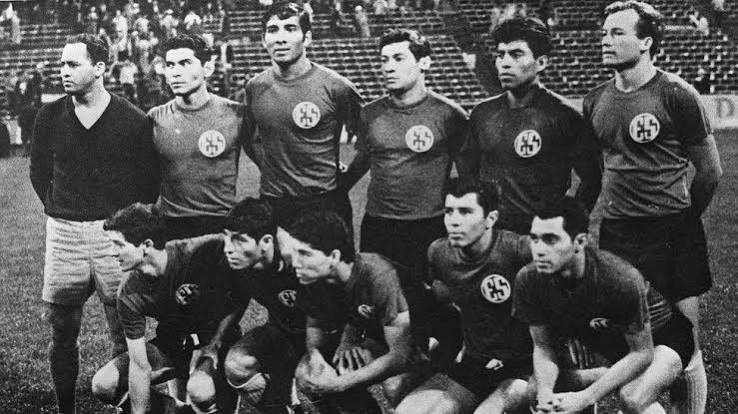
In June 1969, two neighboring countries went to war over a football match. But the real battle lines were drawn decades earlier, in the soil of land reform, migration, and economic desperation. On July 14, El Salvador launched a full-scale military invasion of Honduras, triggered by riots after a World Cup qualifying game. The conflict lasted just 100 hours, but it left thousands dead and over 100,000 Salvadorans displaced.
The ‘Soccer War’ is often remembered as an absurd footnote in sports history a moment when a game turned deadly. But that framing misses the deeper tragedy: the war was a violent eruption of long-simmering tensions over land, population, and power. What happened on the pitch was merely the spark that lit a powder keg built over decades.
The Spark: Three Matches That Shook Central America
The road to the 1970 FIFA World Cup in Mexico brought El Salvador and Honduras together in a three-match playoff. The stakes were high—a spot in the world’s biggest sporting event—but the atmosphere was already toxic.
The first match, played in Tegucigalpa on June 8, 1969, ended in a 1–0 win for Honduras. Reports of a Honduran fan being killed in San Salvador followed. The second match, in San Salvador on June 15, saw El Salvador win 3–0, but the victory was marred by violent riots. Two Honduran fans were reportedly killed, and the Salvadoran players had spent the night before the game harassed by noise outside their hotel—a tactic some accounts say was used against the Honduran team in Tegucigalpa as well.
By June 26, El Salvador had severed diplomatic relations with Honduras, citing attacks on its citizens. Border skirmishes escalated, and on July 14, the Salvadoran military invaded. The war lasted until July 18, when the Organization of American States (OAS) brokered a ceasefire. A third, decisive match—played in neutral Mexico City in October—saw El Salvador win 3–2 in extra time, qualifying for the World Cup. But by then, the damage was done.
The Real Battlefield: Land and Migration
The football matches were a catalyst, not a cause. The root of the conflict lay in a demographic and economic imbalance that had been building for decades.
El Salvador was the smallest and most densely populated country in Central America, with a tiny oligarchy controlling most of the arable land. Landless peasants, pushed out by poverty and inequality, migrated en masse to Honduras, which had a much lower population density. By the 1960s, an estimated 300,000 Salvadorans were living in Honduras, many as squatters on land they farmed.
Honduras, meanwhile, was implementing its own agrarian reform. The 1962 land reform laws threatened the land held by Salvadoran migrants, and in 1969, the Honduran government began enforcing them, expelling Salvadoran squatters and smallholders. This was a direct threat to the livelihoods of thousands of families, and it created a humanitarian crisis that El Salvador’s government could not ignore.
The economic disparity between the two nations also fueled resentment. El Salvador was more industrialized, and Hondurans feared economic domination. Salvadoran migrants, who were often more skilled or willing to work for lower wages, were scapegoated for economic woes. Honduran media amplified these grievances, while Salvadoran media highlighted abuses against its citizens abroad. Both governments used nationalist rhetoric to deflect domestic problems and rally public support.
The War Itself: 100 Hours of Chaos
El Salvador’s invasion was framed as a self-defense measure to protect its citizens, but the military campaign was far from a swift victory. The Salvadoran army advanced several kilometers into Honduran territory but quickly stalled due to supply line failures and determined Honduran resistance, including air attacks on Salvadoran oil facilities and the international airport at Ilopango.
El Salvador’s air force consisted of World War II-era P-51 Mustangs and even civilian aircraft rigged with bombs. Honduras, though less equipped, managed to hold its own. Neither side achieved a decisive military victory; the war ended in a stalemate, with estimates of 2,000 to 6,000 dead, mostly Honduran civilians and Salvadoran migrants caught in the crossfire.
The OAS played a crucial role in ending the conflict, brokering a ceasefire on July 18. El Salvador initially resisted, but the threat of economic sanctions and pressure from the United States—wary of instability in Central America during the Cold War—forced its troops to withdraw by August. The war also severely disrupted the Central American Common Market, a regional integration effort that had been a rare success story in the region.
The Aftermath: Displacement and a War’s Legacy
The most lasting consequence of the war was the mass expulsion of Salvadoran migrants from Honduras. Between 100,000 and 130,000 Salvadorans were forced to flee or were deported, often leaving behind everything they owned. This created a refugee crisis in El Salvador, which was already struggling with land scarcity and poverty.
The war also deepened the divide between the two nations, and relations remained tense for decades. The ‘Soccer War’ became a cautionary tale about how nationalism and economic desperation can turn a sporting event into a deadly conflict.
Beyond the Absurdity: Why the ‘Soccer War’ Still Matters
The popular narrative of the ‘Soccer War’ focuses on the absurdity of a football match sparking a war—and it is absurd, in the sense that it reveals how easily human lives can be sacrificed for nationalist pride. But the real lesson is more sobering: the war was a ‘war of the poor against the poor,’ as some historians have described it. Salvadoran peasants fleeing an oligarchic land monopoly clashed with Honduran peasants defending their own land reform, all while elites on both sides manipulated nationalist sentiment for political gain.
The conflict remains a powerful illustration of how migration, land inequality, and economic disparity can create tinderbox conditions, waiting for any spark to ignite. And the fact that the spark was a football match—a game meant to unite—is a bitter irony that still resonates today, in a world where sports and politics are increasingly intertwined.
The 1969 ‘Soccer War’ is not just a footnote in sports history; it is a stark reminder that wars are rarely about what they appear to be on the surface. The World Cup qualifying matches were the trigger, but the ammunition was decades of land inequality, forced migration, and nationalist manipulation. As we watch modern-day conflicts unfold, it’s worth remembering that the battlefields of the future may be ignited not by a football goal, but by any number of economic and social injustices that we fail to address.
Summary
- The ‘Soccer War’ (July 14–18, 1969) between El Salvador and Honduras was triggered by riots during a World Cup qualifying match, but the real causes were economic and demographic.
- The conflict lasted roughly 100 hours, left an estimated 2,000–6,000 dead, and led to the expulsion of 100,000–130,000 Salvadoran migrants from Honduras.
- Root causes included severe land inequality in El Salvador, Honduran agrarian reform that displaced Salvadoran squatters, and nationalist scapegoating by both governments.
- The war ended in a stalemate, with an OAS-brokered ceasefire; El Salvador withdrew after the threat of economic sanctions.
- The war serves as a case study in how migration, land disputes, and nationalist rhetoric can turn a sporting event into a deadly conflict.
FAQ
Q: Why is it called the ‘Soccer War’?
A: Because the immediate trigger was riots following a World Cup qualifying match between El Salvador and Honduras in June 1969. The war started less than a month later.
Q: How long did the war last?
A: The actual military conflict lasted about 100 hours, from July 14 to July 18, 1969. It is one of the shortest interstate wars in modern history.
Q: What were the real causes of the war?
A: The underlying causes were economic and demographic: land inequality in El Salvador, mass migration of Salvadorans to Honduras, and Honduran land reforms that threatened their livelihoods. Both governments used nationalism to deflect domestic issues.
Q: How many people died?
A: Estimates range from 2,000 to 6,000 deaths, mostly Honduran civilians and Salvadoran migrants. The exact number is still debated.
Q: Did El Salvador qualify for the 1970 World Cup?
A: Yes. After the war, a third match was played in Mexico City in October 1969, which El Salvador won 3–2 in extra time, earning a spot in the World Cup—though they did not advance past the group stage.