Tag: Catenaccio

  • The Tactical Evolution of Football: From Catenaccio to Tiki-Taka and Beyond

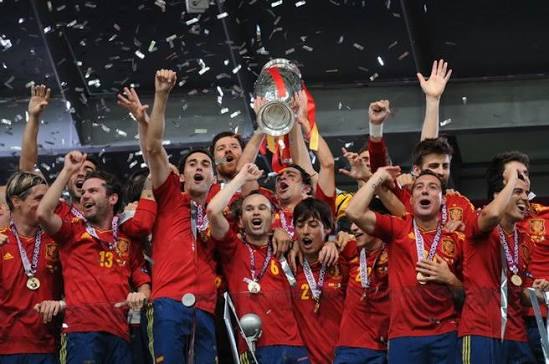
    Tiki-taka - Wikipedia

    Football tactics are not just formations on a chalkboard; they are the living expression of a team’s philosophy, shaped by rule changes, cultural identity, and the relentless pursuit of an edge. From the rigid defensive shell of Catenaccio to the fluid, possession-based dominance of Tiki-Taka, the game has undergone a profound transformation. Understanding this evolution is not merely an academic exercise—it reveals how the sport’s greatest minds have adapted to constraints and opportunities, and why the modern game looks the way it does.

    This article traces the arc of tactical history, examining the key systems, the matches that defined them, and the figures who dared to innovate. We’ll explore how each era’s dominant approach was a response to what came before, and how the cycle of adaptation continues today. For fans and analysts alike, this journey offers a deeper appreciation of the beautiful game’s strategic depth.

    The Birth of Structure: The WM Formation

    Before the 1920s, football was largely a chaotic affair, with the 2-3-5 Pyramid formation favoring relentless attack. But the 1925 offside rule change—reducing the number of defenders needed between an attacker and the goal from three to two—sent shockwaves through the sport. Suddenly, defenses were vulnerable, and a new structure was needed.

    Herbert Chapman, the visionary manager of Arsenal, answered with the WM formation. This 3-2-2-3 shape created a back three, with two wing-halves in front, and two inside forwards supporting a central striker. It was the first truly structured system, designed to provide defensive solidity while still allowing for attacking flair. Chapman’s Arsenal dominated English football in the 1930s, and the WM became the standard for decades.

    But the WM’s rigidity was its downfall. The ‘Match of the Century’ in 1953 exposed its limitations when Hungary’s Mighty Magyars, playing a fluid and mobile system, thrashed England 6-3 at Wembley. The English press was stunned; the era of static formations was over.

    The tactical evolution of football is a testament to human ingenuity and adaptability. From the rigid lines of the WM to the fluid interchanges of Total Football, from the defensive pragmatism of Catenaccio to the possession-based artistry of Tiki-Taka, each system has been a response to the challenges of its time. As the game continues to evolve, one thing remains certain: the cycle of innovation and counter-innovation will never stop. The next great tactical revolution is already brewing, waiting for the right visionary to unleash it.

    Summary

    • Tactical evolution is driven by rule changes, athleticism, technology, and counter-adaptation.
    • Key systems include the WM, Catenaccio, Total Football, Gegenpressing, and Tiki-Taka.
    • Iconic matches like the 1953 Hungary-England game and the 2011 Champions League final marked turning points.
    • Modern tactics are hybrid and matchup-specific, blending defensive solidity with rapid transitions.
    • The romantic vs. pragmatic debate continues, but winning remains the ultimate metric.

    FAQ

    Q: What is the difference between Catenaccio and Tiki-Taka?
    A: Catenaccio is an ultra-defensive system focused on man-marking and counter-attacks, while Tiki-Taka emphasizes high possession and short passing to control the game. They represent opposite philosophies: one prioritizes defensive solidity, the other offensive control.

    Q: Why did Tiki-Taka decline?
    A: Tiki-Taka’s decline was due to teams learning to defend deep and compact, limiting space for short passes. Additionally, the physical demands of high pressing and the need for a plan B made pure possession less effective against well-organized low blocks.

    Q: How did the back-pass rule change tactics?
    A: The 1992 rule preventing goalkeepers from handling back-passes forced teams to build from the back and press higher, accelerating the shift toward possession-based and pressing styles.

    Q: What is Gegenpressing?
    A: Gegenpressing, or counter-pressing, is the immediate attempt to win the ball back after losing it, rather than retreating. It was popularized by Jürgen Klopp and is a key component of modern high-intensity football.

    Q: Are tactics more important now than in the past?
    A: Tactics have always been important, but modern analytics and video analysis have made them more sophisticated and matchup-specific. The margin for error is smaller, and tactical flexibility is crucial at the highest level.
  • The Tactical Pendulum: How Football’s Greatest Systems Rose, Fell, and Reinvented Themselves

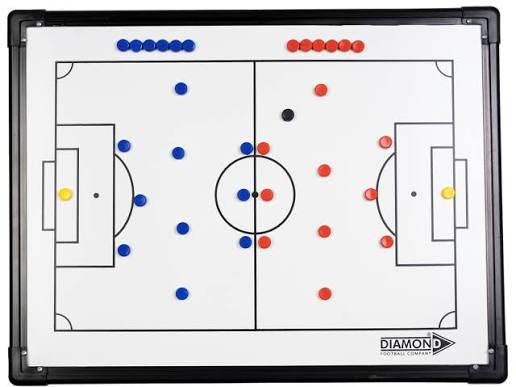
    Standard Tactic Board | Diamond Soccer Tactical Equipment

    Football tactics are not just about formations on a chalkboard; they are a living, breathing arms race where every dominant system eventually breeds its own antidote. From the iron curtain of Catenaccio to the hypnotic passing webs of Tiki-Taka, the sport’s tactical evolution is a story of genius, rebellion, and the relentless pursuit of an edge. Understanding this cycle isn’t just for coaches—it’s the key to appreciating why the beautiful game looks the way it does today.

    This isn’t a dry history lesson. It’s a journey through the minds of the game’s greatest innovators—Helenio Herrera, Rinus Michels, Johan Cruyff, and Pep Guardiola—and the counter-revolutionaries who dared to tear down their creations. We’ll explore not just what happened on the pitch, but why it happened, and how the tactical pendulum continues to swing today.

    The Door-Bolt: Catenaccio and the Art of Controlled Chaos

    In the 1960s, Italian football was a fortress. The brainchild of Austrian coach Karl Rappan in the 1940s and perfected by the Argentine-Italian Helenio Herrera at Inter Milan, Catenaccio—Italian for “door-bolt”—was a system built on defensive solidity and ruthless efficiency. The key innovation was the “libero,” or sweeper, a free defender positioned behind the back line who could mop up any ball that slipped through. This allowed the team to absorb pressure, man-mark opponents tightly, and then explode forward on the counter-attack.

    Inter’s success was staggering: two consecutive European Cups (1964, 1965) and three Serie A titles in the mid-1960s. The system was so effective that it became synonymous with Italian football for decades. Yet, it was also reviled as negative, boring, and anti-football. Critics argued it prioritized results over entertainment, but its defenders pointed to the tactical intelligence required to execute it perfectly. Catenaccio wasn’t just about defending; it was about waiting for the precise moment to strike, turning defense into attack in seconds.

    Total Football: The Beautiful Rebellion

    If Catenaccio was the lock, Total Football was the key. Developed by Rinus Michels at Ajax and the Netherlands national team in the early 1970s, it was a radical departure from everything that came before. The core principle was positional interchangeability: players were not tied to fixed roles but could swap positions fluidly, with defenders pushing forward and forwards dropping back. This created a dynamic, unpredictable style that overwhelmed opponents with constant movement and high pressing.

    Ajax won three consecutive European Cups (1971–1973), and the Dutch national team reached the 1974 World Cup final, playing some of the most breathtaking football ever seen. The system’s genius lay in its collective intelligence—every player understood the space and the movement of their teammates, creating a seamless whole. Johan Cruyff, the system’s on-field maestro, later took these principles to Barcelona as a coach, laying the foundation for the club’s future identity.

    The Barcelona Laboratory: From Cruyff to Guardiola

    Cruyff’s tenure at Barcelona (1988–1996) was a tactical revolution in itself. He instilled a philosophy based on possession, pressing, and positional play, turning the club into a laboratory for Total Football’s evolution. The “Dream Team” that won the 1992 European Cup was a testament to his vision, but the true flowering came later, under Pep Guardiola.

    Guardiola, a product of Cruyff’s school, refined the philosophy into what the world would come to know as Tiki-Taka. Between 2008 and 2012, his Barcelona team dominated world football with a style that seemed almost alien in its precision. Short, quick passes; relentless pressing after losing the ball; and a false nine (often Lionel Messi) created a system that suffocated opponents and controlled games with 60–70% possession. The results were historic: 14 trophies in four years, including two Champions League titles. Spain, under Vicente del Bosque, adopted the same principles and won Euro 2008, the 2010 World Cup, and Euro 2012—a feat never before achieved.

    The Backlash: When Possession Becomes Sterile

    But every system has its expiration date. Tiki-Taka’s dominance bred a counter-revolution. Critics began to label it “sterile possession”—passing for the sake of passing, without penetration. Teams like José Mourinho’s Inter Milan (2010) and Diego Simeone’s Atlético Madrid showed that a deep defensive block, combined with rapid transitions, could neutralize the possession game. The 2014 World Cup was a turning point: Spain’s tiki-taka was dismantled by the Netherlands’ direct, vertical style, and Germany won the title with a more pragmatic, hybrid approach.

    This counter-revolution wasn’t just about negativity. It was about intelligence—finding the spaces that possession-based systems leave behind. Klopp’s Liverpool (2018–2022) combined high pressing (gegenpressing) with lightning-fast transitions, creating a style that was both aggressive and efficient. The tactical pendulum had swung again, but it didn’t swing back to Catenaccio; it moved toward a synthesis of the best elements of past systems.

    The Modern Synthesis: Hybrids and the Future

    Today, top teams rarely adhere to a single, pure philosophy. Guardiola’s Manchester City, for example, uses positional play with elements of Total Football and Tiki-Taka, but also incorporates a high press and tactical flexibility. The three-at-the-back formation has made a resurgence, offering both defensive solidity and attacking width. The game has become a chess match where managers must adapt to their opponent’s strengths and weaknesses, often within a single match.

    The evolution of tactics is not a linear progression but a cycle. Each dominant system creates the conditions for its own downfall, and the next great innovation often comes from an unexpected source. The lesson for fans and analysts alike is that football’s tactical landscape is never static—it’s a living, breathing entity that reflects the cultural, economic, and athletic forces of its time.

    From the iron curtain of Catenaccio to the intricate passing webs of Tiki-Taka, football tactics have always been a reflection of the human desire to solve problems creatively. The tactical pendulum continues to swing, and the next great system is already being born in the minds of coaches and players around the world. As fans, we are privileged to witness this endless evolution—a game within the game that makes football the world’s most captivating sport.

    Summary

    • Catenaccio (1960s–70s) used a sweeper and man-marking to absorb pressure and counter-attack, winning Inter Milan two European Cups.
    • Total Football (1970s) introduced positional interchangeability and high pressing, leading Ajax to three consecutive European Cups and influencing Cruyff’s Barcelona.
    • Tiki-Taka (2008–2012) refined possession and pressing, yielding 14 trophies for Guardiola’s Barcelona and three consecutive major titles for Spain.
    • Counter-revolution (2010s–present) saw low-block counter-attacking (Simeone, Mourinho) and high-pressing transitions (Klopp) challenge tiki-taka’s dominance.
    • Modern tactics are hybrid, blending elements of past systems, as seen in Guardiola’s Manchester City and the resurgence of three-at-the-back formations.

    FAQ

    Q: What is the main difference between Catenaccio and Total Football?
    A: Catenaccio is a defensive system focused on absorbing pressure and counter-attacking, using a sweeper and man-marking. Total Football is an attacking system based on positional interchangeability and high pressing, where players fluidly swap roles.

    Q: Why did Tiki-Taka decline?
    A: Tiki-Taka declined because teams found ways to neutralize it, often by defending deep in a low block and hitting on the counter. Critics also argued that some teams used it without enough penetration, making possession sterile.

    Q: How did Johan Cruyff influence modern football?
    A: Cruyff brought Total Football principles to Barcelona as a coach, emphasizing possession, pressing, and positional play. This laid the foundation for the club’s identity and directly influenced Pep Guardiola’s Tiki-Taka.

    Q: What is gegenpressing?
    A: Gegenpressing is a tactic where a team immediately presses the opponent after losing the ball, aiming to win it back quickly in dangerous areas. It was popularized by Jürgen Klopp and is a key feature of modern high-intensity football.

    Q: Are defensive tactics like Catenaccio still relevant today?
    A: Yes, but in evolved forms. Teams like Atlético Madrid under Diego Simeone use a deep defensive block and rapid transitions, which is a modern adaptation of Catenaccio’s principles, proving that defensive solidity remains a viable path to success.