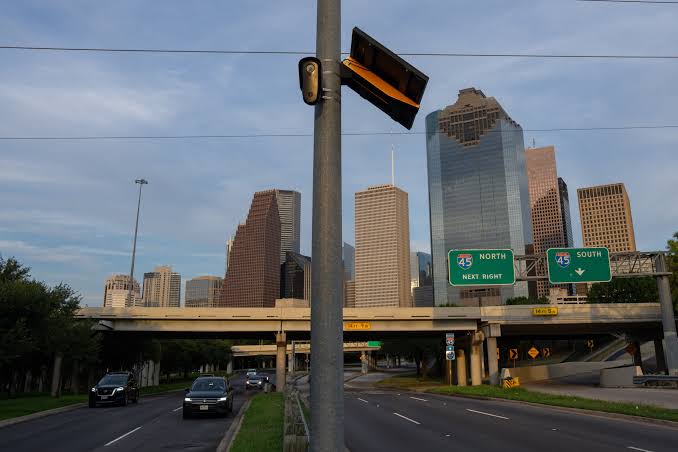
If you drive a car in Texas, you’re likely paying a hidden $1 fee on your auto insurance policy. That dollar doesn’t go to the insurance company it funds the Motor Vehicle Crime Prevention Authority (MVCPA), a state agency created in 2001 to combat auto theft. But in recent years, the MVCPA has been using that money to buy Flock Safety cameras, automated license plate readers that are popping up on poles across the state.
These cameras aren’t just watching for stolen cars. They’re part of a growing network of surveillance that records every vehicle that passes by whether it’s involved in a crime or not. And most drivers have no idea their insurance premiums are footing the bill. This article explains how that $1 fee works, how it got redirected from fighting auto theft to funding a private surveillance company, and what it means for your privacy.
How the $1 Fee Works
Back in 2001, the Texas Legislature created the MVCPA to tackle a specific problem: auto theft. To fund it, they added a $1 surcharge to every motor vehicle liability insurance policy written in the state. If you buy car insurance in Texas, you pay this fee—it’s listed as a line item on your policy, often bundled into the premium so you don’t notice it.
The MVCPA then distributes this money as grants to local law enforcement agencies. For years, those grants went to auto theft task forces, bait vehicles, and investigative units. The idea was straightforward: use a small fee on every driver to fund efforts to catch car thieves.
But over time, the agency’s mandate broadened. The Legislature expanded the definition of “motor vehicle crimes” to include things like hit-and-runs and theft from vehicles. That change opened the door for funding technology like license plate readers, which can help solve a wide range of crimes beyond just auto theft.
The $1 fee on your car insurance was meant to fight auto theft—and it still does, in part. But it’s also become a funding stream for a private surveillance company with cameras on thousands of poles across Texas. Whether that’s a good use of your dollar depends on how you weigh public safety against privacy. If you’re uncomfortable with the trade-off, ask your state representative why a fee for fighting auto theft is now paying for mass surveillance—and whether that’s what you signed up for when you bought your policy.
Summary
- A $1 fee on every car insurance policy in Texas funds the Motor Vehicle Crime Prevention Authority (MVCPA), a state agency created in 2001 to fight auto theft.
- The MVCPA now uses those funds to give grants to police departments to buy Flock Safety cameras—automated license plate readers that record every passing vehicle.
- Texas has become one of Flock’s largest markets, with hundreds of agencies using the cameras.
- Critics argue this is a form of warrantless mass surveillance, since the cameras capture everyone’s movements, not just suspects’.
- Supporters say the cameras help solve crimes like car theft and hit-and-runs, and that the fee is already in place, so it’s a natural evolution of the MVCPA’s mission.
FAQ
Q: How do I know if I’m paying the $1 fee?
A: Check your auto insurance policy document—it should list a $1 surcharge for “Motor Vehicle Crime Prevention Authority” or similar. It’s often bundled into your total premium, so you may not see it unless you read the fine print.
Q: What exactly do Flock cameras do?
A: Flock cameras are solar-powered, cellular-connected devices that capture license plates and vehicle characteristics (make, model, color, and sometimes roof racks or bumper stickers). They take photos of every vehicle that passes and store the data for 30 days by default.
Q: Can the police access my data without a warrant?
A: Flock cameras capture data on all vehicles, not just suspects. Law enforcement can search that data for specific plates or vehicle descriptions. In many cases, they do this without a warrant, raising privacy concerns.
Q: Why are these cameras controversial?
A: Privacy advocates argue that ALPRs create a searchable database of everyone’s movements, which could be used for purposes beyond crime-solving, such as tracking people at protests or reproductive health clinics. There’s also concern about equitable deployment—cameras often go in affluent suburbs where residents can afford the subscription.
Q: Is the $1 fee a new tax?
A: No, the fee has existed since the early 2000s. What’s changed is how the money is allocated. Instead of only funding auto theft task forces, the MVCPA now also funds ALPR networks, which is a significant departure from its original mission.