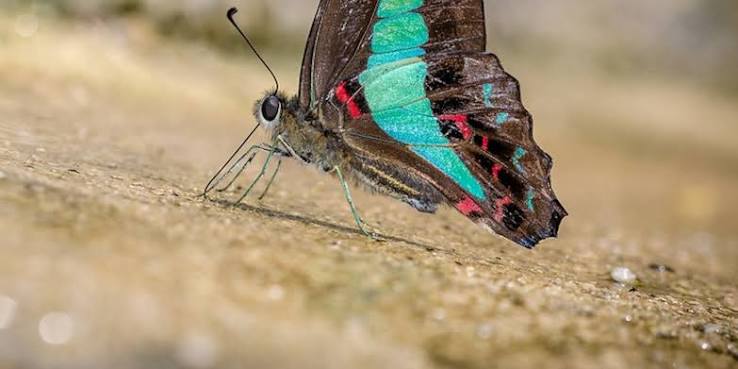
When the temperature climbs, butterflies don’t argue they pack up and leave. New research using decades of citizen-science data shows that dozens of butterfly species are shifting their ranges poleward and uphill at rates of 35–40 kilometers per decade. But not all butterflies are keeping pace, and the ones that lag behind are paying a price.
This isn’t just a curiosity of the insect world. Butterflies are among the most sensitive indicators of climate change, and their movements are reshaping ecosystems, challenging conservation strategies, and offering a window into what’s happening to biodiversity everywhere.
A Climate Race with Winners and Losers
In the UK, the brown argus and the comma butterfly have pushed their ranges northward by over 100 kilometers in recent decades. Across the Atlantic, the sachem skipper and giant swallowtail are now showing up in states where they were once unknown. In Europe, the map butterfly has crossed the English Channel into southern England.
These movements are not random. They follow temperature gradients. As the planet warms, the ‘thermal envelope’—the range of temperatures a species can tolerate—shifts toward the poles and up mountainsides. Butterflies, being cold-blooded, feel these changes acutely.
The average shift is about 35–40 km per decade, but the variation is enormous. Some species are sprinting; others are barely crawling. The difference often comes down to biology: how fast a species can fly, how many generations it produces per year, and how picky it is about its habitat. Fast movers like the comma butterfly are generalists that can breed quickly. Slow movers, often habitat specialists, get stuck when the landscape is fragmented by farms, roads, and cities.
This creates a stark divide between ‘winners’ and ‘losers’ in the climate race.
The Elevation Squeeze
In mountainous regions, the story is even more dramatic. Montane species like the Apollo butterfly in the Alps are moving upward at rates of 100–300 meters per decade. But there’s a limit to how high they can go.
When a butterfly reaches the summit, there’s nowhere left to climb. Populations get marooned on ‘islands in the sky,’ and as the climate continues to warm, these islands shrink. Scientists call this ‘mountaintop extinction,’ and it’s already happening to some high-elevation specialists.
The physics of temperature is unforgiving: a 1°C warming pushes the thermal envelope about 150 meters up a mountain, but the mountain doesn’t get taller. For species that are adapted to cold, the future is a shrinking ladder.
The Problem of Climate Debt
Here’s the uncomfortable truth: even the fastest-moving butterflies aren’t keeping up with the pace of climate change. In temperate regions, temperature zones are shifting at an estimated 40–50 km per decade. That’s faster than most butterflies can fly.
This gap between where a species is and where it should be is called ‘climate debt.’ Many butterfly populations are already living in conditions that are slightly too warm for them. They survive, but they’re stressed. Their reproduction drops, their immune systems weaken, and they become more vulnerable to extreme weather events like heatwaves and droughts.
A recent study in Global Change Biology found that in the UK, over a third of butterfly species have accumulated significant climate debt. These are species that are slowly being left behind in the race to cooler climes.
Why Butterflies Are the Perfect Canaries
Butterflies are ectothermic—their body temperature is largely determined by their surroundings. They can’t shiver or sweat. So when temperatures rise, they must either move, adapt, or die. Their short generation times mean they respond to climate change rapidly, making them early warning signals for other species.
But it’s not just their biology that makes them useful. Butterflies have been observed and recorded by amateur naturalists for over a century. The UK Butterfly Monitoring Scheme has over 50 years of continuous data, and the North American Butterfly Association counts draw on thousands of volunteer hours. This wealth of data allows scientists to track range shifts with remarkable precision.
Butterflies are the ‘canaries in the coal mine’ for biodiversity, and right now, they’re singing loudly.
Rethinking Conservation
Traditional conservation has been static: you identify a patch of habitat and protect it. But as butterflies move, they’re leaving protected areas behind. A reserve might protect a southern population that’s dying out, while the species’ future lies in unprotected land to the north.
This has sparked a paradigm shift toward ‘climate-smart conservation.’ The idea is to plan for movement, not just for current occupancy. That means creating connectivity corridors that allow species to traverse fragmented landscapes. It means identifying climate refugia—areas like north-facing slopes or shaded valleys that stay cool even as the planet warms—and protecting those as future sanctuaries.
It also means considering assisted migration: deliberately moving species to new habitats where they can survive. This is controversial, as it risks introducing species to ecosystems where they might become invasive, but for butterflies that are otherwise doomed, it may be the only option.
Policy is beginning to catch up. The Global Biodiversity Framework agreed in Montreal in 2022 includes targets for connectivity and climate resilience. The EU’s Biodiversity Strategy for 2030 calls for a Trans-European Nature Network that accounts for species movement. But implementation is lagging.
The Shuffling of Communities
As butterflies move at different rates, ecological communities are being torn apart and reassembled in novel ways. A butterfly that used to rely on a particular plant for food might arrive in a new area where that plant is absent. Or it might arrive before its food source does, creating a phenological mismatch.
These shifts ripple through ecosystems. Butterflies are pollinators, but they’re also prey for birds and other insects. When they move, the whole food web shifts with them. The result is a reshuffling of nature that we’re only beginning to understand.
Conclusion
Butterflies are telling us something urgent about the state of our planet. Their movements are a visible, measurable signal of climate change in action. Some species are adapting, but many are falling behind, and the ecosystems they inhabit are transforming in ways we can’t fully predict.
The good news is that we have the tools to act. By creating connected landscapes, protecting climate refugia, and rethinking our conservation strategies, we can give butterflies—and the countless other species they represent—a fighting chance in a warming world.
But the clock is ticking, and the butterflies are already on the move.
Summary
- Butterflies are shifting their ranges poleward at 35–40 km per decade and uphill at 100–300 meters per decade due to climate change.
- Some species are moving fast, others are not moving at all, creating winners and losers in the climate race.
- Many butterflies are accumulating ‘climate debt’ because they can’t keep up with the pace of warming.
- Butterflies are indicator species, and their movements signal broader ecological changes.
- Conservation must shift from static protected areas to ‘climate-smart’ strategies like connectivity corridors and climate refugia.
FAQ
Q: Why are butterflies moving north?
A: Butterflies are cold-blooded, so their body temperature depends on their environment. As global temperatures rise, they seek out cooler conditions by moving toward the poles or to higher elevations.
Q: How fast are butterflies moving?
A: On average, butterfly ranges are shifting poleward at about 35–40 km per decade, though some species move much faster or slower. Mountain species are also moving upward at 100–300 meters per decade.
Q: What is ‘climate debt’?
A: Climate debt is the gap between where a species currently lives and where it needs to be to stay within its preferred temperature range. Many butterflies are accumulating this debt because they can’t move fast enough.
Q: What is ‘mountaintop extinction’?
A: It’s when high-elevation species like the Apollo butterfly are pushed to the top of mountains by warming and run out of habitat. They have nowhere else to go, leading to local or even global extinction.
Q: How can conservation help butterflies adapt?
A: Conservation can help by creating corridors that connect habitats, protecting climate refugia (cool, stable areas), and in some cases, assisted migration—moving species to new suitable areas. These strategies are part of ‘climate-smart conservation.’