
Tag: business

  • Trump Made $2.2 Billion While President. No Other Modern President Comes Close.

    Trump Made $2.2 Billion While President. No Other Modern President Comes Close.

    Donald Trump has reportedly made $2.2 billion since returning to the White House in January 2025. That’s not a net worth estimate it’s income accumulated during his second term, according to financial disclosures and watchdog estimates. No other modern U.S. president has come anywhere near that figure while in office, and the gap isn’t close.

    Most presidents leave office wealthier than they entered, thanks to book deals and speaking fees. But those earnings typically come after the presidency, and they’re measured in millions, not billions. Trump’s situation is unprecedented: he’s actively profiting from a sprawling business empire while sitting in the Oval Office. Here’s how his earnings stack up against history and why it matters.

    The $2.2 Billion Breakdown

    The $2.2 billion figure comes from financial disclosures, business filings, and estimates from watchdog groups like Citizens for Responsibility and Ethics in Washington (CREW) and financial journalists tracking the Trump Organization. The money flows from several sources:

    • Real estate revenue: Trump Tower, Doral resort, Turnberry golf course, and other properties continue to generate income.
    • Licensing deals: Trump-branded towers in the Middle East and Asia pay licensing fees.
    • Digital assets: NFT sales, the $TRUMP meme coin, and fees from World Liberty Financial crypto platform.
    • Book royalties: “Save America” and other titles.
    • Media ventures: Trump Media & Technology Group (DJT stock) has seen wild swings, boosting Trump’s paper wealth.

    Not all of this is liquid cash. Some is tied up in stock valuations or speculative crypto. But the scale is real: no president has ever reported personal income gains of this magnitude while in office.

    How Presidents Traditionally Earn Money

    The presidential salary is $400,000 per year—that’s been the rate since 2001. Most presidents have treated that as their only direct compensation. To avoid conflicts of interest, they place assets in blind trusts or divest from businesses.

    Jimmy Carter put his peanut farm in a blind trust. George W. Bush sold his stake in the Texas Rangers. Barack Obama and Bill Clinton had no active businesses while in office. They all waited until after leaving the White House to cash in.

    And even then, the sums are modest compared to Trump’s in-term haul. Obama and Clinton have each earned an estimated $100–150 million from post-presidency book deals and speaking fees—over a decade or more. Trump made $2.2 billion in about a year.

    Historical Precedents: There Aren’t Any

    George Washington owned vast landholdings and speculated in land during his presidency, but records are incomplete and compensation was minimal. Herbert Hoover was a wealthy mining engineer, but he didn’t grow his fortune in office. No 19th or 20th century president actively ran a business while serving.

    Trump is the first modern president to retain direct ownership of a sprawling private business empire. He didn’t divest; he handed day-to-day management to his sons, Don Jr. and Eric, but kept ownership. That’s a fundamental break from every president since Watergate.

    The only comparable world leaders are autocrats like Vladimir Putin or Gulf monarchs, but the U.S. has disclosure laws and democratic accountability that make Trump’s case unique.

    The Legal and Ethical Firestorm

    The Emoluments Clause—which bars presidents from receiving foreign gifts or payments without congressional approval—has been a repeated legal battleground. Trump’s foreign licensing deals, particularly in Saudi Arabia and the UAE, drew lawsuits alleging unconstitutional receipt of foreign payments. Courts didn’t fully resolve those cases before his first term ended, and they’ve resumed during his second.

    Profiting while in office isn’t automatically illegal. It becomes illegal if tied to bribery or emoluments violations. But it breaks long-standing ethical norms, and watchdogs argue the $2.2 billion figure reflects a systemic failure of oversight. CREW and other groups have called for stronger ethics enforcement, but so far, no mechanism has stopped the flow.

    Why the Money Keeps Flowing

    Some of Trump’s wealth increase is tied to Trump Media & Technology Group (DJT stock), which has been driven by retail investor enthusiasm rather than fundamentals. The stock’s volatility can swing Trump’s net worth by billions in a single day.

    Crypto ventures have also been lucrative. The $TRUMP meme coin generated substantial trading fees at launch, and World Liberty Financial has taken in fees from users. These are speculative assets, but the income is real.

    Real estate has been mixed. Some Trump properties struggled post-COVID, but others, like Doral, have benefited from government and foreign bookings. The Trump Organization has also signed new licensing deals abroad, adding to the revenue stream.

    Supporters vs. Critics

    Supporters argue Trump’s wealth is a sign of business acumen and that being “too rich to be bribed” insulates him from corruption. They point out that he took a $1 salary as president, though he’s never donated it.

    Critics see it differently. They argue that a president profiting from his office—especially from foreign governments—creates conflicts of interest that undermine U.S. policy. The sheer scale, they say, makes it impossible to ignore.

    The Bottom Line

    Trump’s $2.2 billion in-term earnings are without precedent. No other president has come close, and the gap reflects a fundamental change in how the presidency handles money. Whether that’s a triumph of business or a failure of ethics depends on where you sit. But the numbers are clear: this is a historic first.

    Trump’s second-term earnings represent a dramatic departure from presidential norms. He’s not just the richest president in history; he’s the first to actively grow his fortune while in office. That reality is unlikely to change without new ethics laws, and it will shape how future presidents handle their finances. For now, the $2.2 billion stands as a stark marker of how much the presidency has changed.

    Summary

    • Trump has made approximately $2.2 billion during his second term (2025–present), according to financial disclosures and watchdog estimates.
    • No other modern president has reported personal income gains of this magnitude while in office; most earn $400,000/year salary and avoid business conflicts.
    • Income sources include real estate, licensing, NFTs, crypto, book royalties, and Trump Media stock.
    • Historical precedents are nonexistent; presidents like Carter, Bush, Obama, and Clinton either divested or waited until after office to earn money.
    • The Emoluments Clause and ethics norms are central to criticism, but profiting isn’t illegal unless tied to bribery or foreign payments.

    FAQ

    Q: How much do presidents typically earn while in office?
    A: The presidential salary is $400,000 per year. Most presidents also have investment income, but they place assets in blind trusts or divest to avoid conflicts. No president has actively run a business while serving.

    Q: Is it illegal for a president to profit from business while in office?
    A: Not automatically. It can violate the Emoluments Clause if it involves foreign payments without congressional approval, or bribery laws. But there’s no law against a president owning a business outright.

    Q: How does Trump’s $2.2 billion compare to post-presidency earnings?
    A: Obama and Clinton each earned an estimated $100–150 million from books and speaking fees after leaving office. Trump earned $2.2 billion during his term, which is more than their combined lifetime post-presidential earnings.

    Q: What are the main sources of Trump’s income?
    A: Trump-branded real estate, licensing deals (especially in the Middle East and Asia), NFTs, crypto ventures like World Liberty Financial and $TRUMP meme coin, book royalties, and Trump Media & Technology Group stock.

    Q: Did any previous president come close to this?
    A: No. George Washington and Herbert Hoover were wealthy, but they didn’t grow their fortunes in office. Trump is the first president to retain and profit from a business empire while serving.
  • The Freelancer’s Guide to Free Invoice Templates: What to Look For and How to Use Them

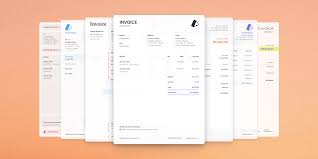
    The Freelancer’s Guide to Free Invoice Templates: What to Look For and How to Use Them

    As a freelancer, your invoice is more than just a request for payment—it’s a legal record, a tax document, and a reflection of your professionalism. Yet many freelancers rely on hastily thrown-together invoices that miss critical details, leading to delayed payments, tax headaches, and even disputes.

    The good news? You don’t need expensive software to create polished, compliant invoices. Free templates are abundant, but not all are created equal. In this guide, we’ll break down what makes a great invoice, where to find free templates, and how to customize them to protect your income and your brand.

    Why Invoices Matter More Than You Think

    Invoices are the backbone of your freelance business. They serve as formal requests for payment, but they also double as legal documents that track your income for tax purposes. Without a proper invoice, you risk underreporting earnings, failing to enforce payment terms, or even invalidating a tax deduction.

    Moreover, a clear, itemized invoice speeds up payment. Clients appreciate invoices that are easy to process through their own accounting systems—frictionless billing means faster cash flow for you.

    Anatomy of a Professional Invoice

    A professional invoice should include the following elements:

    • Invoice number: A unique, sequential identifier (e.g., INV-001, INV-002). This helps you track payments and satisfies tax authorities.
    • Invoice date and due date: Clearly state when the invoice was issued and when payment is expected (e.g., Net 15, Net 30, or due on receipt).
    • Your details: Full name, business name (if applicable), contact information, and tax ID (VAT, GST, or sales tax ID as required).
    • Client details: Name and billing address.
    • Itemized line items: Description of each service or product, quantity/hours, rate, and subtotal.
    • Taxes and discounts: Any applicable taxes (e.g., VAT, sales tax) or discounts, clearly calculated.
    • Total amount due: The grand total, prominently displayed.
    • Payment terms: Accepted payment methods (bank transfer, PayPal, etc.) and any late payment policy.
    • A thank-you note: A small touch that reinforces professionalism and goodwill.

    Where to Find Free Templates

    You don’t need to pay for invoicing software to get started. Here are some reliable sources for free templates:

    • Microsoft Office: Offers a range of invoice templates for Word and Excel. These are customizable and familiar to most users.
    • Google Docs/Sheets: The template gallery includes simple invoice templates that are easy to edit and share online.
    • Canva: Provides visually appealing invoice templates that you can brand with your logo and colors.
    • Adobe Express: Similar to Canva, with a focus on design flexibility.
    • Freelancer platforms: Tools like Wave, Zoho Invoice, and FreshBooks offer free templates even if their full software is paid. These often come with built-in calculators and tax fields.

    Choosing the Right Template for Your Needs

    Consider your workflow and branding:

    • The minimalist freelancer: If you want speed and simplicity, a clean one-page template with no frills is ideal. Focus on clarity and ease of use.
    • The brand-conscious freelancer: Use invoices as a marketing touchpoint. Add your logo, brand colors, and a professional tone to reinforce credibility.
    • The tax-compliant freelancer: Prioritize templates that include all required tax fields for your country. For example, EU freelancers need VAT numbers, while US freelancers may need sales tax IDs.
    • The tech-savvy freelancer: Look for templates that integrate with accounting software (e.g., QuickBooks, Xero) or that can be generated via apps like Wave for automation.
    • The international freelancer: Ensure the template handles multiple currencies, VAT/GST variations, and multilingual client communication.

    Common Pitfalls to Avoid

    • Assuming ‘free’ means ‘compliant’: A generic template may not include country-specific tax fields. Always customize for local regulations.
    • Confusing invoices with receipts or quotes: A quote is a pre-work estimate; an invoice is a request for payment; a receipt is proof of payment. Mixing them up causes confusion.
    • Inconsistent invoice numbering: Skipping numbers or using non-sequential numbering can raise red flags with tax authorities.
    • Vague payment terms: Terms like ‘payment due soon’ are unenforceable. Specify exact due dates and late fees.
    • Missing tax IDs: Omitting a tax ID or business registration number can invalidate an invoice for tax purposes.
    • Manual calculation errors: Spreadsheet templates with formulas are safer than static PDFs to avoid arithmetic mistakes.
    • Not saving a copy: Always keep a copy for your records. Some templates prompt you to save or auto-archive.

    How to Customize Your Template

    Once you’ve chosen a template, customize it to fit your business:

    1. Add your branding: Insert your logo and use your brand colors.
    2. Set up your payment terms: Clearly state due dates, late fees, and accepted payment methods.
    3. Include your tax information: Add your tax ID and any required legal disclaimers.
    4. Test the calculations: If using a spreadsheet, double-check formulas to ensure totals are correct.
    5. Save a master copy: Keep a blank master template for future use, and save each invoice as a separate file with a clear naming convention (e.g., ClientName_InvoiceNumber_Date).

    Real-World Example: A Simple Invoice in Action

    Imagine you’re a freelance graphic designer. You’ve just completed a logo design for a client. Your invoice might look like this:

    • Invoice #: INV-2025-014
    • Date: March 1, 2025
    • Due: March 15, 2025 (Net 14)
    • From: Jane Doe, Jane Doe Design, jane@janedoedesign.com
    • To: Acme Corp, 123 Business Rd.
    • Line items:
    • Logo design (1 project) – $500.00
    • Revisions (2 hours) – $50.00/hour – $100.00
    • Subtotal: $600.00
    • Sales tax (8%): $48.00
    • Total: $648.00
    • Payment: Bank transfer to account #…, or PayPal: jane@janedoedesign.com
    • Late fee: 1.5% per month after due date

    This invoice is clear, itemized, and leaves no room for ambiguity.

    A well-crafted invoice is a cornerstone of your freelance business. By using a free template and customizing it to meet your needs, you can ensure timely payments, stay tax-compliant, and present a professional image to your clients. Take the time to set up a template that works for you—it’s an investment that pays off with every invoice you send.

    Summary

    • Invoices are legal records for tax filing and payment tracking, not just payment requests.
    • A professional invoice includes invoice number, dates, contact details, itemized services, taxes, and payment terms.
    • Free templates are available from Microsoft Office, Google Docs, Canva, Adobe Express, and platforms like Wave and Zoho.
    • Choose a template that fits your branding, tax requirements, and workflow—whether minimalist, brand-conscious, or tech-savvy.
    • Avoid common pitfalls like vague payment terms, missing tax IDs, and manual calculation errors.

    FAQ

    Q: What is the difference between an invoice, a receipt, and a quote?
    A: A quote is a pre-work estimate of costs; an invoice is a formal request for payment after work is done; a receipt is proof of payment. They serve different purposes and should not be confused.

    Q: Do I need to include a tax ID on my invoice?
    A: In many jurisdictions, yes. For example, EU freelancers must include a VAT number, and US freelancers may need a sales tax ID. Check your local tax authority requirements.

    Q: Can I use a free template for international clients?
    A: Yes, but ensure the template supports multiple currencies and includes fields for VAT/GST if applicable. You may need to customize it for each client’s country.

    Q: How do I avoid late payments?
    A: Clearly state your payment terms, including the due date and any late fees. Send invoices promptly and follow up politely if payment is overdue.

    Q: Should I use a spreadsheet or a PDF template?
    A: Spreadsheets with formulas reduce calculation errors and are easier to update. PDFs are more polished for sending but require manual calculations unless generated by software.