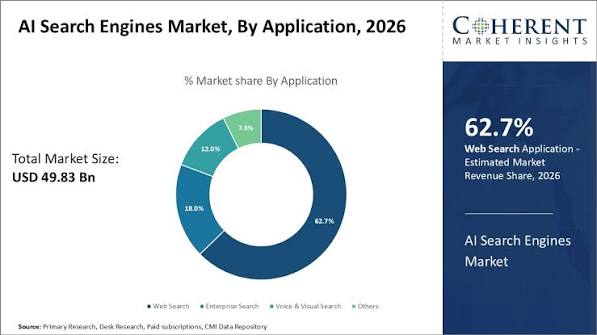
The search landscape is shifting under the feet of every business. Traditional link-list search the familiar ’10 blue links’ is being supplemented, and in some cases replaced, by AI-powered answer engines that synthesize information directly. For business intelligence (BI) teams, this isn’t just a tech trend; it’s a fundamental change in how customers find information, how advertising works, and how brand authority is measured.
As of early 2025, Google still commands roughly 90% of the global search market, but AI-native search engines like Perplexity and ChatGPT Search are carving out a small but rapidly growing niche. More importantly, AI is being embedded into the incumbent’s product itself: Google AI Overviews now appear on a significant share of search results. This article breaks down the current market share data, the strategic positions of key players, and the practical implications for businesses that rely on search for growth and intelligence.
Defining AI Search: More Than Just a New Engine
AI search refers to search experiences that leverage large language models (LLMs), generative AI, and retrieval-augmented generation (RAG) to answer queries directly, synthesize information from multiple sources, and provide conversational results. This is distinct from traditional search engines like Google, Bing, or DuckDuckGo, which primarily deliver a list of links ranked by relevance.
Key players in the AI search space include:
- ChatGPT Search (OpenAI), launched in October 2024, which integrates real-time web access into the ChatGPT interface.
- Perplexity, a purpose-built ‘answer engine’ that provides cited, conversational responses.
- Google AI Overviews and Gemini, which embed AI-generated answers directly into Google’s search results.
- Microsoft Bing Copilot, which uses GPT-4 to power conversational search on Bing.
- You.com, Brave Search AI, and emerging entrants like Meta AI search and Amazon Rufus for shopping.
Market Share: The Numbers Behind the Hype
Despite the buzz, AI-native search engines still hold a tiny slice of the overall search pie. Perplexity, ChatGPT Search, and You.com collectively account for less than 1–2% of global search queries. Google remains the dominant force at ~90%, with Bing at 3–4%, and a long tail of others making up the remainder.
Yet that small percentage masks significant momentum in specific segments. Perplexity, the leading standalone AI search engine, has grown to an estimated 15–20 million monthly active users, with reported annualized revenue of ~$50 million in late 2024. ChatGPT Search, leveraging OpenAI’s existing base of over 200 million weekly active users, has seen rapid adoption, though OpenAI does not disclose search-specific usage figures.
Perhaps the most impactful shift is within Google itself. AI Overviews are now estimated to appear on 30–80% of Google search results pages, depending on geography and query type. This means AI is not just a separate market—it’s becoming the default experience for many users on the world’s most-used search engine.
Why Business Intelligence Teams Should Care
The rise of AI search has profound implications for how businesses track, attribute, and optimize their online presence.
1. Ad Spend and the Zero-Click Problem
If AI search answers a query directly, users may never click through to a website. This ‘zero-click’ behavior breaks traditional pay-per-click (PPC) economics, where advertisers pay for each visit. Marketers need to understand where these zero-click answers dominate and adjust their strategies accordingly. For example, if a user asks ‘best CRM for small business’ and gets a synthesized answer from ChatGPT Search, the opportunity for a traditional ad impression may vanish.
2. Data and Attribution Shifts
AI search engines cite sources differently than traditional link lists, and referral traffic patterns are changing. BI teams must develop new tracking methods—such as AI-specific UTM parameters and server-side tracking—to accurately measure the impact of AI search on their web traffic. Monitoring which AI engines surface a brand (or a competitor) first is becoming a key performance indicator.
3. Competitive Intelligence
Tracking your brand’s visibility in AI search results—and your competitors’—is a new frontier for competitive intelligence. Are you cited as a source in Perplexity’s answers? Does ChatGPT Search mention your product in a comparison? These metrics can serve as leading indicators of brand authority in the AI era.
4. Enterprise Search as a Related Market
Internal AI search tools like Glean and Microsoft Copilot for M365 are a separate but related market, growing at over 30% CAGR. Businesses are deploying these tools to help employees find information faster, and BI teams may need to integrate data from these platforms into their analytics.
The Incumbent’s View: Google’s Defense
Google argues that AI Overviews are an enhancement, not a replacement, and points to high user satisfaction metrics. The company’s counter-strategy includes deep integration of its Gemini model, an AI Mode for search, and maintaining default search deals (like the one with Apple) that keep its market share locked in.
However, Google faces a real risk: AI Overviews reduce click-through rates to publishers, potentially undermining the open web ecosystem that feeds its index. If publishers see less traffic, they may produce less content, which could degrade the quality of Google’s search results over time. Antitrust remedies from the U.S. DOJ case could also force changes to Google’s default search deals, opening distribution windows for competitors.
The Challenger’s View: Perplexity and OpenAI
Perplexity positions itself as an ‘answer engine’ with citation transparency, appealing to researchers and business professionals who need verifiable sources. It was the first to launch a standalone AI search product and has built a loyal following among tech-savvy users.
OpenAI, on the other hand, sees search as a feature within a broader assistant ecosystem, not a standalone product. Its distribution advantage is enormous: over 200 million people already use ChatGPT. The company is also exploring advertising, which would directly compete with Google’s core ad business.
Both challengers face high compute costs, and their monetization models—subscriptions and nascent ads—are unproven at scale. Perplexity launched ads in 2024, and OpenAI is testing advertising in ChatGPT, but it’s unclear how much revenue these can generate.
The Publisher’s Dilemma: To Block or to License
AI search reduces referral traffic to publishers, prompting many to block AI crawlers (e.g., The New York Times, Reuters) or negotiate licensing deals. However, there’s a counter-narrative: AI search can drive high-intent traffic if a brand is cited as a source. In this new paradigm, ‘being the answer’ is the new SEO. For BI teams, tracking AI-citation share can be a leading indicator of brand authority and future organic traffic.
What This Means for Your BI Strategy
- Monitor AI search visibility: Set up tracking to see how often your brand appears in AI search results and from which engines.
- Adjust attribution models: Incorporate AI search referrals into your analytics, using custom parameters and server-side tracking to capture data accurately.
- Re-evaluate SEO: Traditional keyword optimization is still relevant, but focus on creating content that AI engines are likely to cite as authoritative sources.
- Track ad performance: Understand where zero-click answers dominate and adjust your PPC campaigns accordingly.
- Stay agile: The market is evolving rapidly—what’s true today may change next quarter. Keep an eye on new entrants and shifts in user behavior.
AI search is not a distant future—it’s happening now. While AI-native engines still hold a small market share, the integration of AI into Google’s core product means that AI-generated answers are already a significant part of the search experience. For business intelligence teams, the imperative is clear: adapt your tracking, re-evaluate your strategies, and start treating AI search visibility as a critical metric. The search landscape is changing, and those who understand the shift will be better positioned to thrive in it.
Summary
- AI-native search engines (Perplexity, ChatGPT Search, You.com) hold <1–2% of global search queries, but Google AI Overviews appear on 30–80% of search results pages.
- Perplexity leads standalone AI search with 15–20 million monthly active users and ~$50M annualized revenue.
- ChatGPT Search leverages OpenAI’s 200M+ weekly users, but search-specific usage is undisclosed.
- AI search disrupts traditional PPC models due to zero-click answers, requiring new tracking and attribution methods.
- Businesses should monitor AI-citation share as a leading indicator of brand authority.
FAQ
Q: What is AI search?
A: AI search uses large language models and generative AI to answer queries directly with synthesized, conversational results, rather than just providing a list of links.
Q: How big is the AI search market?
A: AI-native search engines currently hold less than 1–2% of global search queries, but Google AI Overviews—which are AI-generated—appear on a significant share of Google’s results pages.
Q: Who are the main players in AI search?
A: Key players include Perplexity, ChatGPT Search (OpenAI), Google AI Overviews/Gemini, Microsoft Bing Copilot, and You.com.
Q: How does AI search affect advertising?
A: AI search can lead to zero-click answers, where users don’t click through to websites, which disrupts traditional pay-per-click advertising models.
Q: How can businesses track their performance in AI search?
A: Businesses can use AI-specific UTM parameters, server-side tracking, and monitor AI-citation share to measure visibility and referral traffic from AI search engines.