Tag: borders

  • The Remaking of the Middle East: How Two World Wars Redrew a Region

    The Remaking of the Middle East: How Two World Wars Redrew a Region

    In 1916, two diplomats Sir Mark Sykes of Britain and François Georges-Picot of France sat over a map of the Ottoman Empire and drew a line. With a pencil, they divided the Arab provinces into zones of future control: the British would take what became Iraq and Jordan, the French would take Syria and Lebanon. The line was arbitrary, cutting through tribal lands and ethnic enclaves, but it would become the border of four modern states.

    That single stroke, and the wars that followed, transformed the Middle East from a multi-ethnic empire into a mosaic of nation-states. World War I destroyed the Ottoman Empire; World War II destroyed the European empires that replaced it. Each war left an indelible mark on the region’s borders, politics, and conflicts that still shape headlines today.

    The Fall of the Ottomans: A World Drawn by Pencils

    For 400 years, the Ottoman Empire ruled the Middle East from Istanbul. Its collapse in 1918 was not sudden—it had been crumbling for decades—but the war delivered the final blow. When the empire dissolved, the Allies, led by Britain and France, were left to decide the region’s fate.

    The Sykes-Picot Agreement of 1916 was the blueprint. It was a secret pact, revealed to the world only when the Bolsheviks published it after the Russian Revolution. The agreement divided the Ottoman Arab provinces into British and French zones, with a nod to Russian interests in the north. The borders it drew ignored the region’s ethnic and religious mosaic. Kurds found themselves split among Turkey, Iraq, Syria, and Iran. Shiite and Sunni Arab communities were merged into new states that had never existed before.

    The League of Nations formalized this division in 1920 with the mandate system, a euphemism for colonial rule. Britain took mandates for Iraq, Palestine, and Transjordan; France took Syria and Lebanon. The mandates were supposed to prepare these territories for self-governance, but in practice, they were colonies with a veneer of international oversight.

    One declaration from 1917 cast a long shadow: the Balfour Declaration, in which Britain expressed support for a “national home for the Jewish people” in Palestine. At the time, Palestine was 90 percent Arab and 10 percent Jewish. The declaration, which contradicted British promises to Arab leaders during the war, sowed the seeds of a conflict that would erupt decades later.

    The Birth of New States and the Rise of Turkey

    Out of the Ottoman wreckage, new states emerged, often with rulers chosen by the colonial powers. The Hashemite dynasty, which had led the Arab Revolt against the Ottomans, was rewarded with thrones in Iraq and Transjordan. The French, meanwhile, carved Syria and Lebanon out of the Levant, favoring the Maronite Christians in Lebanon and the Alawite minority in Syria—a policy of divide and rule that would have lasting consequences.

    The borders were artificial, and the populations were not consulted. As the British diplomat T.E. Lawrence famously said, the lines were “drawn by the pencil of a diplomat, not by the sword of a soldier.” The result was a legacy of instability: nations whose borders did not align with ethnic or tribal loyalties.

    Not all of the Middle East fell under mandate rule. The Turkish War of Independence (1919–1923), led by Mustafa Kemal Atatürk, expelled Greek and Allied forces from Anatolia and established the Republic of Turkey. Atatürk abolished the Caliphate in 1924, ending a 1,300-year institution that had symbolized Muslim unity. Turkey emerged as a secular, nationalist state—a model that would inspire other Middle Eastern leaders.

    World War II: The End of Empire

    World War II devastated Europe, leaving Britain and France financially exhausted and militarily weakened. The war also brought the Middle East into sharper focus as a strategic prize. Oil, discovered in the region in the early 20th century, had become essential for modern warfare. The Suez Canal, controlled by Britain, was the lifeline to India and the East.

    The war accelerated Jewish immigration to Palestine, driven by the Holocaust. Between 1939 and 1948, the Jewish population of Palestine doubled, intensifying Arab-Jewish tensions. In 1947, the United Nations proposed a partition plan, dividing Palestine into Arab and Jewish states. The Arab leadership rejected it; the Jewish leadership accepted it. On May 14, 1948, Israel declared independence, and the first Arab-Israeli War began the next day.

    The war was a catastrophe for Palestinian Arabs, who called it the Nakba, or “catastrophe.” Around 700,000 Palestinians were displaced or fled from their homes, becoming refugees in neighboring countries. The state of Israel survived, but the conflict became a defining issue of Middle Eastern politics for decades.

    The Cold War and the Rise of Nationalism

    As the European empires withdrew, the United States and the Soviet Union moved in, turning the Middle East into a Cold War battleground. Each superpower sought allies, offering military aid, economic support, and diplomatic protection in exchange for influence. The region’s oil reserves made it a prize worth competing for.

    Arab nationalism, already a potent force, surged in the decades after World War II. Leaders like Gamal Abdel Nasser of Egypt, who came to power in a 1952 coup, championed secular pan-Arabism—the idea that all Arabs should unite in a single state or bloc, free of colonial influence. Nasser’s rhetoric inspired millions, but his dreams of unity were thwarted by the very borders the Sykes-Picot Agreement had drawn.

    Oil became the lever for economic sovereignty. Iran nationalized its oil industry in 1951, taking control from the Anglo-Iranian Oil Company. The move was a direct challenge to British power, and it was met with Western retaliation—a CIA-backed coup in 1953 restored the Shah and reversed the nationalization. But the genie was out of the bottle: other oil-producing states began to demand a greater share of profits and control.

    The Suez Crisis of 1956 was the final nail in the coffin of Anglo-French dominance. When Nasser nationalized the Suez Canal, Britain, France, and Israel invaded Egypt. The United States and the Soviet Union, both opposed to the invasion, pressured the three powers to withdraw. The humiliating retreat marked the definitive end of Britain’s and France’s imperial era in the Middle East.

    A Region Redrawn: From Empires to Nation-States

    By the 1960s, the Middle East was unrecognizable from the Ottoman era. The multi-ethnic empires that had ruled the region for centuries were replaced by a system of sovereign nation-states with fixed borders. The colonial powers were gone, replaced by new actors: the United States, the Soviet Union, and a new generation of Arab leaders.

    The legacy of the two world wars is a double-edged sword. On one hand, the nation-states that emerged brought a new form of political identity—nationalism—that gave people a sense of belonging and self-determination. On the other hand, the borders drawn by colonial powers and the conflicts that followed have left a volatile legacy. The Israeli-Palestinian conflict, the Kurdish question, and the sectarian tensions in Iraq and Syria all trace their roots to the decisions made in the aftermath of the wars.

    The Middle East today is a product of the 20th century’s wars, but it is not a passive product. The people of the region have reshaped the structures imposed on them, sometimes violently, sometimes peacefully. The remaking of the Middle East is not a finished story; it continues to unfold in every border dispute, every movement for change, every negotiation over oil and identity.

    The two world wars dismantled the Ottoman Empire and then the European empires that succeeded it, leaving behind a new Middle East. The borders drawn by diplomats in the 1910s and 1920s still define the region, but they are not eternal. The forces of nationalism, religion, and geopolitics continue to strain against those boundaries, a reminder that the remaking of the Middle East is an ongoing process, shaped by the choices of its people.

    Summary

    • World War I dissolved the Ottoman Empire, leading to the Sykes-Picot Agreement and the mandate system, which created artificial borders.
    • The Balfour Declaration of 1917 set the stage for the Israeli-Palestinian conflict.
    • World War II weakened Britain and France, accelerating decolonization and the rise of independent states.
    • The establishment of Israel in 1948 and the Nakba displaced ~700,000 Palestinians, fueling regional conflict.
    • The Cold War made the Middle East a superpower battleground, while Arab nationalism and oil nationalization reshaped politics.

    FAQ

    Q: What was the Sykes-Picot Agreement?
    A: It was a 1916 secret treaty between Britain and France that divided the Ottoman Empire’s Arab provinces into zones of control, forming the basis for modern Middle Eastern borders.

    Q: Why are Middle Eastern borders considered artificial?
    A: Because they were drawn by European diplomats without regard for ethnic, tribal, or religious boundaries, often splitting communities across different states.

    Q: How did World War II affect the Middle East?
    A: It weakened Britain and France, leading to decolonization, intensified Jewish immigration to Palestine, and set the stage for the Cold War rivalry between the US and USSR.

    Q: What is the Nakba?
    A: The Nakba, meaning “catastrophe,” refers to the displacement of ~700,000 Palestinian Arabs during the 1948 Arab-Israeli War.

    Q: How did the Suez Crisis change the region?
    A: The 1956 crisis, in which Britain, France, and Israel invaded Egypt after the Suez Canal was nationalized, ended with a US-Soviet forced withdrawal, marking the end of European colonial dominance in the Middle East.
  • Lines on a Map: How the Mandate System Redrew the Middle East

    Lines on a Map: How the Mandate System Redrew the Middle East

    In 1916, two men one British, one French sat down with a map of the Middle East and drew a series of straight lines across it. They were not cartographers, but diplomats: Sir Mark Sykes and François Georges-Picot. Their agreement, signed in secret, carved up the Ottoman Empire’s Arab provinces into zones of control for their respective countries. At the time, the lines were hypothetical. Within a few years, they would become the borders of nations that still exist today.

    The mandate system, established under the League of Nations after World War I, was the legal vehicle that turned those lines into reality. It was a framework that promised to guide ‘provisionally independent’ peoples toward self-governance, yet in practice, it maintained European imperial control for decades. The consequences of that system—the borders drawn, the promises broken, the populations displaced—continue to shape the politics, conflicts, and identities of the modern Middle East.

    The Collapse of an Empire

    The Ottoman Empire had ruled the Arab provinces for four centuries. But its defeat in World War I left it in ruins, and its territories were suddenly up for grabs. The Allies, particularly Britain and France, had their own designs on the region. The Sykes-Picot Agreement of 1916 was the first step: it divided the Arab provinces into British and French spheres of influence. But the agreement was secret, and it contradicted other promises made during the war.

    The British had also promised the Arabs independence. In the McMahon-Hussein Correspondence (1915–1916), Britain’s High Commissioner in Egypt, Sir Henry McMahon, wrote to Hussein bin Ali, the Sharif of Mecca, offering to support an independent Arab state in exchange for an Arab revolt against the Ottomans. The Arabs, led by Hussein’s son Faisal, launched the Arab Revolt in 1916, fighting alongside British forces. But the British had made a third promise: the Balfour Declaration of 1917, which stated that Britain viewed ‘with favour the establishment in Palestine of a national home for the Jewish people.’

    These three promises—to the Arabs, to the French, and to the Zionists—were mutually incompatible. The mandate system was created, in part, to resolve this contradiction, but it did so by prioritizing European interests over local aspirations.

    The ‘Sacred Trust of Civilization’

    Article 22 of the Covenant of the League of Nations, drafted in 1919, established the mandate system. It was a paternalistic framework: certain territories, it said, were ‘inhabited by peoples not yet able to stand by themselves under the strenuous conditions of the modern world.’ These peoples should be entrusted to ‘advanced nations’ who would act as ‘a sacred trust of civilization.’

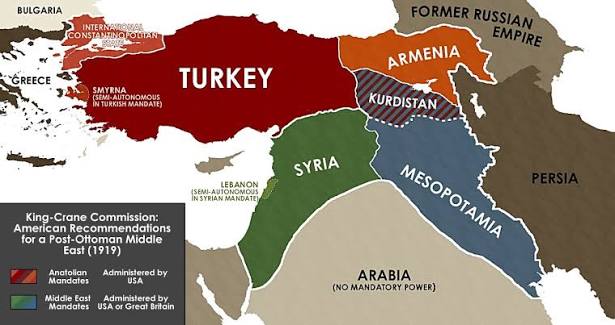
    The mandates were divided into three classes based on their ‘stage of development.’ The Class A mandates, which included the former Ottoman provinces, were considered ‘provisionally independent’ but still in need of ‘administrative guidance’ until they could ‘stand alone.’ Britain received the mandates for Iraq, Palestine, and Transjordan; France received Syria and Lebanon.

    The language was noble, but the practice was imperial. The mandates gave Britain and France control over the foreign relations, defense, and internal administration of these territories. They could shape borders, install rulers, and manage resources as they saw fit, with only the League of Nations—which was dominated by the same powers—to answer to.

    Drawing the Lines

    One of the most enduring legacies of the mandate system is the borders it created. British and French officials drew these lines with little regard for the ethnic, tribal, or religious demographics of the region. In some cases, they used straight lines that cut across communities, dividing families and trade routes. In others, they grouped together groups that had little in common, or separated those who had lived together for centuries.

    Take Iraq, for example. The British combined three former Ottoman provinces—Basra, Baghdad, and Mosul—into a single state. These provinces had distinct populations: the Shia Arab majority in the south, the Sunni Arab minority in the center, and the Kurds in the north. The British placed Faisal, the Hashemite prince from the Hejaz, on the throne, despite his having no prior connection to Iraq. The result was a fragile state that faced constant internal tensions.

    Similarly, the French divided their mandate into Syria and Lebanon, with Lebanon created as a separate entity to give the Maronite Christian community a political advantage. The borders of Lebanon were drawn to include areas that were predominantly Muslim, setting the stage for sectarian conflict that continues to this day.

    Palestine was arguably the most fraught case. The mandate incorporated the Balfour Declaration, making Britain responsible for facilitating Jewish immigration while also protecting the rights of the existing Arab population. This dual obligation was impossible to fulfill, and the mandate period was marked by escalating violence between Jewish and Arab communities.

    The Betrayal of Promises

    For Arab nationalists, the mandate system was a betrayal. They had fought alongside the British in World War I, expecting independence in return. Instead, they found themselves under new colonial masters. The 1920 Iraqi revolt was a direct response to this betrayal, with Iraqis rising up against British occupation. The British suppressed the revolt with brutal force, using aerial bombardment against villages.

    The Great Syrian Revolt of 1925–1927 was similarly violent. Syrian nationalists, led by Sultan al-Atrash, fought against French rule. The French responded with heavy-handed tactics, including the bombardment of Damascus. The revolt was eventually crushed, but it demonstrated the depth of opposition to the mandate system.

    In Palestine, the conflict took on a different character. Jewish immigration, driven by the Balfour Declaration and the rise of European anti-Semitism, increased steadily throughout the 1920s and 1930s. The Arab population, who made up the vast majority, saw this as a threat to their existence. The 1936–1939 Arab Revolt was a major uprising against both British rule and Jewish immigration, and it was met with brutal repression by the British.

    The mandates were supposed to be temporary, leading to eventual independence. But the path to independence was uneven. Iraq became formally independent in 1932, although British influence remained strong. Syria and Lebanon achieved independence in 1946, after French withdrawal. Transjordan became independent in 1946, and was renamed Jordan in 1949.

    Palestine proved the most intractable. The British, unable to manage the growing conflict between Jews and Arabs, announced in 1947 that they would withdraw. The United Nations proposed a partition plan, which was accepted by the Jewish leadership but rejected by the Arab states and Palestinian Arabs. In 1948, the British mandate ended, and the State of Israel was declared. The ensuing war led to the displacement of hundreds of thousands of Palestinian Arabs, an event known as the Nakba, or ‘catastrophe.’

    A Legacy of Fragility

    The mandate system ended, but its legacy endures. The borders it created have been largely maintained, despite the fact that they were drawn with little understanding of local realities. These borders have been a source of conflict, as groups that were separated or combined now contest their identities within artificial states.

    The mandate system also established a pattern of external intervention in the region. Britain and France may have left, but their strategic interests—particularly in oil—led to continued involvement. The Cold War brought new powers into the region, but the post-mandate states remained fragile, subject to coups, revolutions, and foreign interference.

    In the post-colonial critique, the mandate system is seen as a legal fiction that legitimized imperialism. The ‘sacred trust of civilization’ was a cover for economic exploitation and strategic manipulation. The promises of self-determination were empty, as the mandatory powers were never genuinely committed to preparing these territories for independence. They were more interested in maintaining control over resources and trade routes.

    The result is a Middle East defined by the lines on a map—lines that were drawn by outsiders, with little regard for the people who lived within them. The mandate system was an experiment in international governance, but it was also a colonial project that continues to shape the region’s politics and conflicts today.

    The Human Cost

    The human cost of the mandate system is immeasurable. The borders it created have been the source of countless wars, uprisings, and displacements. The Palestinian refugee crisis, which began in 1948, remains unresolved. The sectarian tensions in Syria and Iraq, which have fueled civil wars and the rise of extremist groups, can be traced back to the arbitrary divisions of the mandate period.

    The mandate system also left a legacy of political instability. The states it created were often artificial, formed without a sense of shared national identity. This has made them vulnerable to fragmentation and external interference. From the 1958 Iraqi revolution to the 2011 Syrian uprising, the post-mandate states have struggled to achieve stability and legitimacy.

    For the peoples of the Middle East, the mandate system was a promise that was never kept. It promised freedom, but delivered colonial rule. It promised self-determination, but delivered foreign control. Its legacy is a region still grappling with the consequences of decisions made a century ago by diplomats who saw the Middle East as a blank slate on which to draw their own ambitions.

    The mandate system remade the Middle East, but it did so without the consent of the people who lived there. The borders, governments, and conflicts that define the region today are the product of decisions made in European capitals, not in the cities and villages of the Arab world. As the region continues to struggle with these legacies, it is worth remembering that the lines on the map are not natural boundaries, but the hard-won—or lost—consequences of an imperial past that is not yet over.

    Summary

    • The mandate system was established under Article 22 of the League of Nations Covenant to administer former Ottoman territories, with Class A mandates covering Iraq, Palestine, Transjordan, Syria, and Lebanon.
    • The borders drawn by British and French officials often ignored ethnic, tribal, and religious demographics, creating artificial states that remain fragile today.
    • Conflicting wartime promises (McMahon-Hussein, Sykes-Picot, Balfour Declaration) created a ‘triple promise’ problem that the mandate system failed to resolve.
    • Arab nationalists saw the mandates as a betrayal and a continuation of colonialism, leading to major revolts in Iraq, Syria, and Palestine.
    • The mandate period ended with independence for Iraq, Syria, Lebanon, and Transjordan, but Palestine’s mandate ended in 1948 with the creation of Israel and the Palestinian Nakba.

    FAQ

    Q: What was the mandate system?
    A: The mandate system was a legal framework under the League of Nations that assigned administration of former Ottoman and German territories to Allied powers, with the stated goal of preparing them for independence.

    Q: Why were the borders of the Middle East drawn so arbitrarily?
    A: British and French officials drew borders with limited knowledge of local demographics, often using straight lines for strategic convenience, which led to the creation of states that did not reflect ethnic or sectarian realities.

    Q: How did the mandate system affect the Palestinian-Israeli conflict?
    A: The Palestine mandate incorporated the Balfour Declaration, which supported Jewish immigration while protecting Arab rights. This dual obligation proved impossible to fulfill, leading to escalating violence and the conflict that continues today.

    Q: Did any mandates lead to successful independence?
    A: Iraq, Syria, Lebanon, and Transjordan gained independence between 1932 and 1946, but they retained significant foreign influence and have faced ongoing instability.

    Q: What is the legacy of the mandate system?
    A: The mandate system’s legacy includes artificial borders, sectarian tensions, and a pattern of external intervention, all of which contribute to the region’s ongoing conflicts.