Tag: Bolsheviks

  • The Execution of the Romanovs: The Tsar’s Tragic End

    The Execution of the Romanovs: The Tsar’s Tragic End

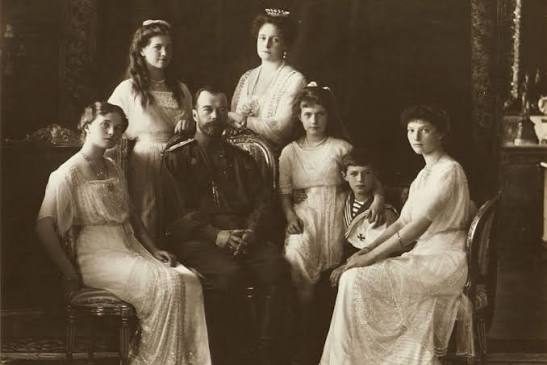
    In the early hours of July 17, 1918, a basement room in a requisitioned merchant’s house in Yekaterinburg became the stage for one of the 20th century’s most brutal political killings. Tsar Nicholas II, his wife Alexandra, their five children, and four loyal servants—eleven people in all—were herded into a cramped space barely 30 square meters, told they were being moved to safety, and then shot at close range. The first volley was a chaotic, ricocheting mess. Bullets bounced off jewels sewn into the daughters’ corsets. The executioners had to finish the job with pistols and bayonets.

    This was not a courtroom verdict or a swift military action. It was a premeditated slaughter ordered by Bolshevik authorities who feared the imperial family could become a rallying point for the White Army. The event marked the violent end of the 300-year Romanov dynasty and set a chilling precedent for revolutionary terror. The story of how the family came to that basement, and what happened after, reveals the desperation and ruthlessness of a regime fighting for survival.

    The Road to a Bloody Basement

    Nicholas II abdicated the throne on March 15, 1917, after mass strikes, food shortages, and military mutinies swept Petrograd. The February Revolution forced him to step down, but he did so in favor of his brother, Grand Duke Michael, who promptly declined the crown. The 300-year-old Romanov dynasty ended not with a bang, but with a whimper—and a legal formality.

    The imperial family was placed under house arrest at the Alexander Palace in Tsarskoye Selo. In August 1917, the Provisional Government shipped them to Tobolsk in Siberia, hoping to distance them from the revolutionary capital. But after the Bolsheviks seized power in October, the family’s fate grew darker. In April 1918, they were moved again, this time to Yekaterinburg, a city firmly under Bolshevik control and far from any potential rescue.

    By mid-1918, the Russian Civil War was escalating. The Czechoslovak Legion, allied with the White forces, was advancing on Yekaterinburg. The city was about to fall. The Bolshevik leadership in Moscow—specifically Lenin and Sverdlov, according to most accounts—authorized the execution to prevent the Romanovs from becoming a “living banner” for counter-revolution. There was no trial, no formal judicial process. Just a decision made in fear.

    Inside the Ipatiev House

    The family was held in the Ipatiev House, a two-story stone mansion requisitioned from a wealthy merchant. The Bolsheviks dubbed it the “House of Special Purpose.” A high wooden fence surrounded it, and the windows were whitewashed, sealing the family off from the outside world. The guards were instructed to treat them with hostility. The family endured confiscation of valuables, taunting graffiti, and humiliating restrictions. Nicholas noted in his diary that the guards “have become quite rude.”

    The commandant was Yakov Yurovsky, a devoted Bolshevik and former watchmaker. He orchestrated the daily routine with cold precision. The family was allowed limited exercise in the yard, but the tension was palpable. Yurovsky later wrote that he believed the execution was necessary to prevent the Whites from “using the tsar as a standard around which to rally the counter-revolution.”

    The Night of July 17, 1918

    At around 1:30 AM, Yurovsky woke the family. He told them that the White Army was approaching and that they must be moved to the basement for their own safety. Nicholas carried his son Alexei, who was 13 and suffered from hemophilia. The girls, dressed in corsets that concealed diamonds and other jewels sewn into the fabric, followed. The family physician, Dr. Eugene Botkin, the cook, the valet, and the maid came too—eleven people in all.

    The basement room was about 6 meters by 5 meters, with a single door. The family was arranged in rows, as if for a photograph. Then Yurovsky read the execution order. Nicholas reportedly turned and said, “What? What?” before the firing squad raised their rifles.

    The first volley was chaos. The executioners fired at close range, but the jewels in the daughters’ corsets deflected bullets, causing them to ricochet around the room. Only the tsar, the tsarina, and a few others fell immediately. The daughters were still alive, whimpering and clutching their skirts. The executioners had to finish the job with pistols and bayonets. One of the daughters, likely Anastasia or Maria, was stabbed repeatedly. The room filled with smoke and the smell of gunpowder. It took several minutes to kill everyone.

    The bodies were loaded onto a truck and driven to the Ganina Yama mine shaft, about 15 kilometers away. There, they were stripped, disfigured with acid and bayonets to prevent identification, and initially dumped in the mine. The next day, the bodies were retrieved and reburied in a shallow grave on the Pig’s Meadow road, known as Porosenkov Log. The burial site was discovered in 1979 by amateur sleuths but kept secret until the Soviet Union collapsed. Official exhumation took place in 1991.

    The Aftermath: Lies and Investigation

    The Bolsheviks didn’t admit the full truth for days. On July 20, 1918, the official announcement claimed that only Nicholas had been executed, and that his family had been “evacuated” to a safe location. This was a lie. The truth about the entire family’s death emerged gradually, but it wasn’t officially confirmed until later.

    The White Army captured Yekaterinburg just eight days later, on July 25. They launched an investigation led by Nikolai Sokolov, a jurist who painstakingly pieced together the evidence. His findings, published in 1924, established the basic facts: the family was murdered, the bodies were destroyed. But Sokolov could not find all the remains, and the mystery of the missing children lingered for decades.

    The Romanovs’ Legacy: Martyrs or Tyrants?

    For the Bolsheviks, the execution was a necessary revolutionary act. They argued it prevented a monarchist restoration and protected the revolution from counter-revolutionary forces. Soviet historiography for decades either denied the details or justified the killing as a military necessity during wartime chaos.

    For the Russian Orthodox Church and many monarchists, the Romanovs are venerated as “passion-bearers”—martyrs who died with Christian humility. In 2000, the Church canonized Nicholas, Alexandra, and their five children. The servants were also recognized, though inconsistently. The execution is seen as a symbol of Bolshevik brutality and the destruction of Holy Russia.

    The forensic evidence, however, is unambiguous. DNA analysis in 1991 and again in 2007 confirmed the identities of the remains found at Porosenkov Log. The 2007 discovery of two additional partial skeletons—identified as Alexei and one of the daughters, likely Maria or Anastasia—completed the grim picture. All eleven victims were accounted for.

    The Ipatiev House was demolished in 1977 by order of Boris Yeltsin, then a local party official, to prevent it from becoming a pilgrimage site. Ironically, Yeltsin later became the first president of post-Soviet Russia. Today, the site is home to the Church on the Blood, built in 2003, a place of pilgrimage for those who mourn the tsar’s death.

    The execution of the Romanovs remains one of the most controversial acts of the Russian Revolution. It was a cold-blooded killing that ended a dynasty and set a precedent for state terror. The facts are clear, but the interpretations remain deeply divided.

    The basement of the Ipatiev House saw the end of an empire. The Romanovs were not tried, not convicted, but simply shot in the night—a calculated act of political violence. Their deaths did not save the Bolsheviks from the chaos of civil war, nor did they prevent the Whites from using the tragedy as a rallying cry. In the end, the execution became a symbol of the revolution’s brutality and a warning of what happens when fear overrides humanity. The bones, recovered and identified, tell the story. The rest is history—and memory.

    Summary

    • On the night of July 17, 1918, Tsar Nicholas II, his wife Alexandra, their five children, and four servants were executed by Bolshevik forces in Yekaterinburg.
    • The order was sanctioned by the Ural Soviet and, according to most accounts, approved by Lenin and Sverdlov in Moscow.
    • The execution was chaotic; jewels sewn into the daughters’ corsets deflected bullets, forcing a second round of shooting and bayonets.
    • The bodies were initially dumped in a mine, then reburied in a shallow grave, where they were found in 1979 and officially exhumed in 1991.
    • DNA analysis confirmed the identities of all victims, including the 2007 discovery of Alexei and one daughter’s remains.

    FAQ

    Q: Why was the execution kept secret initially?
    A: The Bolsheviks feared that admitting the entire family was dead would spark outrage and rally support for the Whites. They first announced that only Nicholas had been executed, claiming the family was “evacuated” to safety.

    Q: Did Lenin personally order the execution?
    A: Most historians believe Lenin and Yakov Sverdlov approved the execution in advance, but no written order has ever been found. The exact chain of command remains a matter of debate.

    Q: What happened to the jewels sewn into the daughters’ corsets?
    A: The daughters had diamonds and precious stones sewn into their clothing, which deflected bullets and prolonged their agony. The jewels were later found and recovered by the executioners.

    Q: Are all the Romanov remains accounted for?
    A: Yes. DNA analysis has confirmed the remains of both parents and all five children. The last two skeletons, Alexei and one daughter, were discovered in 2007.

    Q: Why are the Romanovs considered saints by the Russian Orthodox Church?
    A: The Church canonized them in 2000 as “passion-bearers,” honoring them for facing death with Christian humility rather than for their political rule.
  • Bread, Bullets, and the Fall of the Romanovs: How World War I Toppled the Tsar

    Bread, Bullets, and the Fall of the Romanovs: How World War I Toppled the Tsar

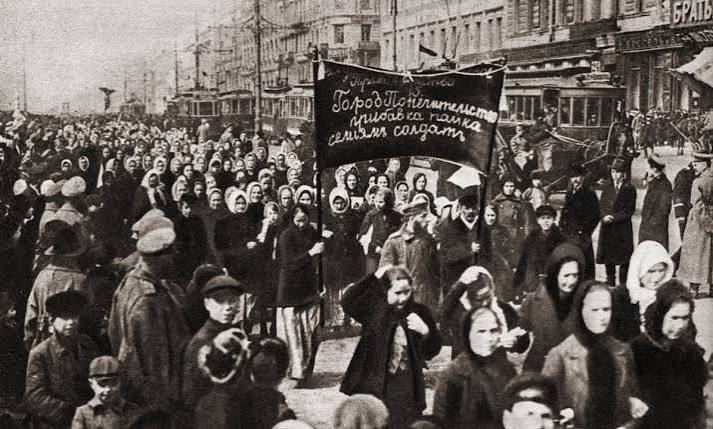
    In the winter of 1917, Petrograd’s streets filled with women demanding bread. Within days, the Romanov dynasty, which had ruled Russia for 300 years, collapsed like a house of cards. The trigger was not a conspiracy but a simple shortage of food, amplified by the catastrophic strains of World War I.

    World War I did not just weaken the Tsarist regime; it broke it. The war’s demands on Russia’s fragile economy, its incompetent military leadership, and the Tsar’s own political blunders created the conditions for revolution. This article traces the chain of events from the battlefields of Tannenberg to the Winter Palace, showing how the war toppled the Tsar and set the stage for the Bolshevik seizure of power.

    The War That Exposed the Autocracy

    When Russia entered World War I in August 1914, patriotic fervor swept the nation. Crowds gathered in Palace Square, singing the anthem and blessing the troops. The Tsar, Nicholas II, seemed more popular than ever. But the euphoria masked a fragile state. Russia’s economy was industrializing rapidly, but its railways and agriculture were ill-equipped for a modern war. The military had recovered from the humiliation of the 1905 Russo-Japanese War, but it still lacked the industrial base to sustain a prolonged conflict.

    The first major test came in August 1914 at the Battle of Tannenberg. The Russian Second Army, commanded by General Alexander Samsonov, invaded East Prussia with over 150,000 men. German forces, under Paul von Hindenburg and Erich Ludendorff, encircled and annihilated the Russian army. Samsonov shot himself. The defeat was catastrophic: over 90,000 Russians were captured or killed. Tannenberg set the pattern for the Eastern Front—Russian armies consistently suffered massive casualties due to poor logistics, outdated equipment, and incompetent leadership.

    By 1915, the strain was evident. The army had lost nearly 2 million men, and desertions were rampant. Soldiers went to the front without rifles, instructed to pick up weapons from fallen comrades. The war economy was collapsing: factories churned out shells but not enough food; the railways, overloaded with military supplies, could not deliver grain to the cities. Inflation soared, and by 1916, bread queues in Petrograd stretched for hours.

    The Tsar’s Fatal Mistake

    In September 1915, Nicholas II made a decision that sealed his fate: he took personal command of the army. He moved to the front at Mogilev, leaving the government in the hands of his wife, Alexandra, and her advisor, Grigori Rasputin. Rasputin, a self-proclaimed holy man, had gained the Tsarina’s trust by seemingly alleviating the hemophilia of their son, Alexei. His influence over court appointments and even military strategy bred scandal and distrust among the elite. The murder of Rasputin in December 1916 by a group of nobles did not restore confidence; it merely highlighted the regime’s decay.

    The Tsar’s absence from the capital meant that when crisis hit, there was no one to make decisions. The Duma, the parliament created after the 1905 revolution, had been dissolved and reconvened multiple times, but Nicholas had never allowed it real power. By 1917, even conservative monarchists were plotting to replace him. General Mikhail Alekseev, the Chief of Staff, was aware of plans for a palace coup. The elite had lost faith in the Tsar, but the revolution would come from below, not from a palace intrigue.

    February’s Spontaneous Uprising

    The February Revolution began not with a plan but with a shortage. On March 8, 1917 (February 23 in the old Russian calendar), International Women’s Day, thousands of women took to the streets of Petrograd demanding bread. They were workers from textile factories, many of them soldiers’ wives, and their protests struck a chord. Within days, the demonstrations grew to include industrial workers, students, and professionals. The city’s factories shut down. On March 10, a general strike paralyzed Petrograd.

    The Tsar, from his headquarters at Mogilev, ordered the garrison to restore order. But the soldiers, many of them raw recruits and reservists fed up with the war, refused to fire on the crowds. Mutiny spread through the Petrograd garrison. By March 12, the city was in the hands of the revolutionaries. The Duma, defying the Tsar’s order to dissolve, established a Provisional Government under Prince Georgy Lvov. Simultaneously, workers and soldiers formed the Petrograd Soviet, a council that claimed to represent the people. This ‘dual power’ arrangement—a liberal government and a socialist soviet—created an unstable political structure that mirrored the contradictions of the revolution itself.

    On March 15, Nicholas II abdicated. He first tried to pass the throne to his son, then to his brother, Grand Duke Michael. But Michael, seeing the writing on the wall, declined the crown the next day. The Romanov dynasty, which had ruled since 1613, was over. The abdication was not the result of a Bolshevik plot; it was the product of a spontaneous uprising driven by hunger, war weariness, and the collapse of authority.

    The Provisional Government’s Struggles

    The Provisional Government, led first by Lvov and then by Alexander Kerensky, faced an impossible task. It was committed to continuing the war, honoring Russia’s alliance with Britain and France. But the Russian people, exhausted by three years of slaughter, wanted peace. The Soviet, meanwhile, issued Order No. 1, which stripped officers of their authority and placed them under the control of elected soldier committees. This destroyed military discipline and made the army increasingly unreliable.

    The government also delayed land reform, fearing that confiscating estates would alienate the propertied classes. But for peasants, who made up 80% of the population, land was the central issue. The government’s failure to address it eroded its legitimacy. By the summer of 1917, Kerensky’s government was losing support on all sides. The June Offensive, an ill-fated military campaign, ended in disaster, further discrediting the government. In July, a Bolshevik-inspired uprising in Petrograd was suppressed, and Lenin fled to Finland. But the government’s weakness was evident.

    Lenin and the Bolshevik Seizure of Power

    Vladimir Lenin had been in exile in Switzerland when the February Revolution broke out. With the help of the German government, which saw him as a tool to destabilize Russia, Lenin traveled in a sealed train across Germany and arrived in Petrograd in April 1917. His ‘April Theses’ demanded an immediate end to the war, the redistribution of land to peasants, and all power to the Soviets. He rejected any cooperation with the Provisional Government, calling for a socialist revolution.

    The Bolsheviks, a minority party within the soviets, gained popularity by offering simple solutions to overwhelming problems: ‘Peace, Land, and Bread.’ Their slogans resonated with soldiers tired of war, peasants wanting land, and workers facing shortages. By October, the Bolsheviks had won majorities in the Petrograd and Moscow soviets.

    On the night of November 7, 1917, Bolshevik Red Guards seized key government buildings, the telegraph, and the railway stations. The cruiser Aurora fired a blank shot at the Winter Palace, where the Provisional Government was meeting. After a brief skirmish, the ministers were arrested. The takeover was almost bloodless. Lenin announced the establishment of a new government, the Council of People’s Commissars, with himself as chairman. The October Revolution had begun.

    The Bolsheviks did not have a majority in the country, but they had control of the capital and a clear program. Over the following months, they consolidated power, disbanded the Constituent Assembly, and signed the Treaty of Brest-Litovsk in March 1918, taking Russia out of the war. The revolution, which had begun with women demanding bread, ended with a communist dictatorship that would shape the 20th century.

    The War’s Role: The Sine Qua Non

    The Russian Revolution cannot be understood without World War I. The war was not just a catalyst; it was the essential condition that made the revolution possible. It exposed the Tsarist regime’s incompetence, devastated the economy, and created a massive, armed, and disgruntled population. Without the war, the Tsar might have survived for years, perhaps decades, as an autocrat. The war turned a chronic crisis into an acute one.

    The revolution also had profound international consequences. It took Russia out of the war, allowing Germany to transfer troops to the Western Front. It inspired socialist and anti-colonial movements worldwide, and it set the stage for the Cold War that would dominate the second half of the 20th century. The Russian Revolution was a world-historical event, but its roots were deeply Russian and deeply tied to the catastrophe of World War I.

    The Russian Revolution was not a single event but two distinct upheavals, each with its own logic. The February Revolution was a spontaneous uprising against war and hunger, a collapse of the old order that no one had planned. The October Revolution was a deliberate seizure of power by a determined minority, the Bolsheviks, who exploited the chaos. Both were products of World War I, which had broken the Tsarist regime and created the conditions for radical change. The empire that had once stretched across Eurasia fell not to foreign conquest but to the weight of its own contradictions, sharpened by the greatest war the world had ever seen.

    Summary

    • The February Revolution (March 1917) was a spontaneous uprising triggered by food shortages and war weariness, not a Bolshevik plot.
    • World War I was the essential cause: it exposed the Tsar’s incompetence, strained the economy, and created a massive, armed, disgruntled population.
    • The Tsar’s decision to take personal command of the army and leave the government to the Tsarina and Rasputin fatally weakened the regime.
    • The Provisional Government’s failure to end the war and address land reform eroded its legitimacy, paving the way for the Bolsheviks.
    • Lenin’s ‘Peace, Land, and Bread’ slogan resonated with a war-weary population, enabling the almost bloodless October Revolution of November 1917.

    FAQ

    Q: Was the February Revolution planned by the Bolsheviks?
    A: No. The February Revolution was a spontaneous uprising of workers, soldiers, and women demanding bread and an end to the war. Most Bolshevik leaders were in exile or prison, and the party was caught by surprise.

    Q: Did Rasputin cause the Russian Revolution?
    A: Rasputin was a symptom, not a cause. His influence discredited the Tsarist court, but the deeper causes were the war, economic collapse, and the Tsar’s political failures. His murder in December 1916 did not save the monarchy.

    Q: Why was the Provisional Government so weak?
    A: It was trapped in a ‘dual power’ arrangement with the Petrograd Soviet, continued the unpopular war, and delayed land reform. This eroded its support among soldiers, workers, and peasants.

    Q: How did Germany help Lenin return to Russia?
    A: Germany transported Lenin in a sealed train from Switzerland to Russia in April 1917, hoping he would destabilize Russia’s war effort. The funding was opportunistic; Lenin’s goals were his own.

    Q: What was the ‘dual power’ arrangement?
    A: After the February Revolution, the liberal Provisional Government and the socialist Petrograd Soviet shared power. This created confusion and conflict over key issues like the war and land, undermining effective governance.