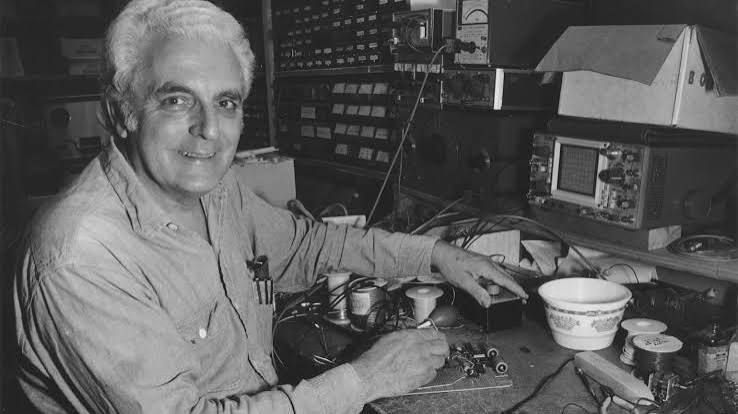
In 1964, at an audio engineering conference in New York, a soft-spoken engineer named Bob Moog unveiled a machine that looked more like a telephone switchboard than a musical instrument. It was a wall of modules, knobs, and patch cables, and it could produce sounds nobody had heard before—from a deep, fat bass to eerie, sci-fi sweeps. This was the Moog modular synthesizer, and it didn’t just add a new instrument to the band; it changed the very fabric of popular music.
Before the Moog, electronic music was mostly an academic curiosity, locked away in studios with room-sized computers and tape loops. Moog, trained as an electrical engineer but with a musician’s soul, designed his synthesizer to be played, not programmed. He added a piano-style keyboard, made the controls intuitive, and focused on expressiveness. The result was an instrument that invited experimentation, and musicians from the Beatles to Stevie Wonder to Donna Summer took the bait, transforming pop, rock, soul, and dance music in the process.
The Birth of the Moog: From Theremin to Voltage Control
Bob Moog’s journey to the synthesizer began with the theremin, one of the earliest electronic instruments. As a teenager in the 1940s, he built theremins and sold them by mail order, eventually founding R.A. Moog Co. in 1954. The theremin is played without touch, using hand movements to control pitch and volume, and it taught Moog about the quirks of analog electronics. But the theremin was a niche instrument, and Moog wanted something more.
In the early 1960s, he met composer Herb Deutsch, who was experimenting with electronic sounds for a composition. Deutsch needed a device that could generate a wide range of tones and shapes, and Moog realized that voltage control—using electrical signals to control pitch, filter, and amplitude—could be the key. By 1964, he had built the first voltage-controlled oscillator (VCO), filter (VCF), and amplifier (VCA), and he connected them with patch cables to create the first modular system.
The Moog wasn’t the first synthesizer. The RCA Mark II, built in 1957, was a massive machine that required punch-card programming and filled an entire room. Don Buchla’s synthesizer, developed around the same time as Moog’s, used touch plates and sequencers instead of a keyboard. But Moog’s design was different: it was compact enough for a studio, intuitive enough for a musician, and, crucially, it had a keyboard. Moog believed that musicians needed a familiar starting point, and that piano-style keys would make the synthesizer approachable. That decision proved revolutionary.
The Moog Sound: Knobs, Cables, and Personality
A modular Moog system, like the one demonstrated in 1964, is a collection of separate modules—oscillators that generate raw waveforms, filters that shape the tone, amplifiers that control volume, and envelope generators that shape how sounds attack and decay. To make a sound, you patch cables from one module to another, creating a signal path. There are no presets; every sound is built from scratch, and the possibilities are nearly endless.
This hands-on approach gave the Moog a distinct personality. The analog circuitry is notoriously unstable—it drifts with temperature and humidity, and tuning can be a constant battle. But that instability is also what makes it expressive. The filter, with its 24 dB/octave low-pass design, produces a fat, warm, almost liquid sound that became the signature ‘Moog bass.’ Musicians describe playing a Moog as a conversation, not a command; the instrument responds to touch and twist in ways that later digital synths couldn’t replicate.
In 1970, Moog and engineer Bill Hemsath shrunk the modular system into a portable keyboard instrument called the Minimoog. With three oscillators, a built-in filter, and the iconic pitch and modulation wheels on the left, the Minimoog was a self-contained synthesizer that didn’t require patch cables. Around 13,000 units were sold between 1970 and 1981, making it the first synthesizer that working musicians could actually afford and tour with. The Minimoog brought the Moog sound out of the studio and onto the stage.
Switched-On Bach and the Beatles: The Moog Goes Mainstream
The Moog’s first big cultural moment came in 1968 with Wendy Carlos’s Switched-On Bach. Carlos, a composer and engineer, used a Moog modular system to record a full album of Bach compositions, played entirely on synthesizer. The album was a sensation: it won three Grammy Awards, sold over a million copies, and proved that a synthesizer could make music that was not just novel, but beautiful and musically legitimate. Suddenly, the Moog was on everyone’s radar.
The Beatles were among the first rock bands to embrace it. On Abbey Road (1969), they used a Moog on ‘Because’ and ‘Here Comes the Sun,’ adding subtle electronic textures that signaled a new direction. George Harrison even released an album called Electronic Sound (1969) that was almost entirely Moog. The Beatles’ stamp of approval introduced the synthesizer to mainstream rock audiences, and soon, other musicians started experimenting.
Stevie Wonder was a trailblazer in soul and R&B. On Music of My Mind (1972) and Talking Book (1972), he used the Moog to create rich, layered textures that pushed black music into futuristic territory. His use of the synthesizer influenced the development of funk and, later, electronic pop. In Germany, Kraftwerk took a different approach. On Autobahn (1974), they used Moogs and other synthesizers to create a completely synthesized pop aesthetic—no guitars, no drums, just machines. That album laid the groundwork for techno, synth-pop, and countless electronic genres.
From ‘I Feel Love’ to the Dance Floor
The Moog’s most direct impact on dance music came in 1977, when Giorgio Moroder used a Moog modular system to create the pulsing bassline for Donna Summer’s ‘I Feel Love.’ The track was a revelation: a disco song driven entirely by a synthesized, hypnotic groove. It’s widely cited as the birth of electronic dance music (EDM). The bassline was simple—just a repeating pattern—but it was relentless, and it changed how producers thought about rhythm. Suddenly, the synthesizer wasn’t just for textures; it could be the foundation of a hit.
This moment marked a shift. The Moog had started as an experimental instrument for avant-garde composers, but by the late 1970s, it was a staple in pop, rock, and soul. Its sound became synonymous with the future, and its influence echoed through the 1980s synth-pop explosion, the acid house of the 1990s, and the electronic music that dominates today.
The Fall and Rise of Analog
The Moog’s dominance didn’t last. By the early 1980s, digital synthesizers with presets—like the Yamaha DX7 and Roland Jupiter-8—were cheaper, more reliable, and easier to use. They could store sounds and recall them instantly, which was a huge advantage in live performance and studio work. Analog modulars like the Moog were seen as bulky, temperamental, and expensive. Moog Music filed for bankruptcy in 1986, and Bob Moog had left the company in 1977.
But the analog sound never disappeared. In the 1990s, dance music producers rediscovered the warmth and character of analog synths, and a boutique market emerged for vintage Moogs. Moog Music was relaunched in 1993, and the company has been thriving ever since, making new versions of the Minimoog and modular systems. The analog revival restored Moog’s reputation as a pioneer, and today, the Moog name is still synonymous with quality and craftsmanship.
Bob Moog himself remained active until his death in 2005, teaching, designing, and advocating for electronic music. His legacy is not just a collection of instruments, but a philosophy: that technology should serve musical expression, not replace it. The Moog synthesizer, with its wires, knobs, and quirks, was a machine that made people want to play, and that’s why its sound still resonates.
Why the Moog Matters Today
The Moog synthesizer changed popular music in three fundamental ways. First, it made electronic music accessible. Before the Moog, synthesis was an academic pursuit, locked in studios with punch cards and tape loops. Moog’s keyboard interface and commercial vision brought it to the masses. Second, it created a new sonic palette. The Moog’s fat bass, sweeping filters, and otherworldly textures gave musicians a vocabulary that didn’t exist before, and those sounds became the building blocks of entire genres. Third, it influenced the culture. The Moog arrived at a moment of musical experimentation—psychedelic rock, the counterculture, the studio as an instrument—and it fed that energy, pushing artists to explore new territories.
Today, you can buy a synthesizer app for your phone that emulates the Moog sound, and many modern hardware synths are modeled on its design. But there’s still nothing quite like the real thing. The Moog’s analog circuitry, its instability, its tactile interface—these are features, not bugs. They make each instrument unique and each performance a live negotiation between player and machine. That’s why, more than fifty years after its debut, the Moog remains a beloved tool for musicians who want to make music that feels alive.
The Moog synthesizer wasn’t just a machine; it was a door. Bob Moog opened it, and musicians from Wendy Carlos to Donna Summer walked through, bringing us a world of sound that didn’t exist before. The Moog’s legacy is everywhere—in the bass of a dance track, the texture of a pop song, the experimental spirit of a composer. And it all started with a wall of modules and a belief that anyone could play electronic music. That belief still holds true today.
Summary
- Bob Moog’s modular synthesizer, first shown in 1964, made electronic music commercially viable and accessible to musicians, unlike earlier room-sized machines.
- The Minimoog (1970) made synthesis portable and affordable, selling about 13,000 units and becoming a standard in rock and pop.
- Key recordings like Wendy Carlos’s Switched-On Bach (1968), the Beatles’ Abbey Road (1969), Stevie Wonder’s early ’70s albums, and Donna Summer’s ‘I Feel Love’ (1977) showcased the Moog’s versatility and pioneered new genres.
- The Moog’s analog sound—fat bass, expressive filters, and instability—became iconic and remains influential, even after digital synths dominated in the 1980s.
- Moog Music’s bankruptcy in 1986 was followed by an analog revival in the 1990s, and the company still thrives today, ensuring the Moog’s legacy endures.
FAQ
Q: What was the first Moog synthesizer?
A: The first Moog modular synthesizer was demonstrated publicly in 1964 at the Audio Engineering Society convention in New York. It was a modular system with separate components like oscillators and filters, connected by patch cables.
Q: How is the Moog different from earlier synthesizers?
A: Earlier synthesizers like the RCA Mark II were huge, required punch-card programming, and were not performable. The Moog was compact, used a piano-style keyboard, and was designed for musicians to play in real time.
Q: What makes the Moog sound unique?
A: The Moog’s analog circuitry, especially its low-pass filter, produces a warm, fat, and slightly unstable sound that many find more expressive than later digital synths. The instability means it responds to temperature and touch, giving each performance a unique character.
Q: Which famous songs use the Moog synthesizer?
A: Some famous examples include Wendy Carlos’s Switched-On Bach, the Beatles’ ‘Because’ and ‘Here Comes the Sun,’ Stevie Wonder’s albums Music of My Mind and Talking Book, Kraftwerk’s Autobahn, and Donna Summer’s ‘I Feel Love.’
Q: Is the Moog still used today?
A: Yes, Moog Music still makes synthesizers, including new versions of the Minimoog and modular systems. The analog sound is highly sought after in genres like electronic dance music, and many modern producers use Moogs or emulations of them.