Tag: Blockade

  • The Anatomy of Defeat: Why Germany Lost the First World War

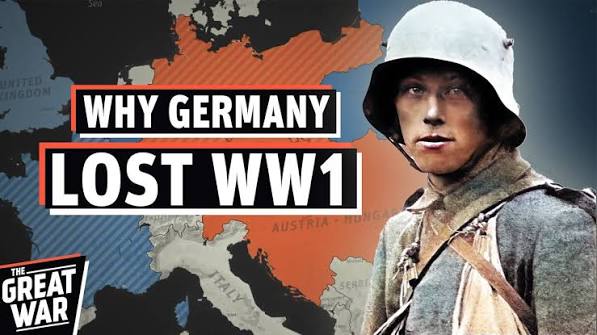
    The Anatomy of Defeat: Why Germany Lost the First World War

    In the autumn of 1918, the German Empire was not defeated on a single battlefield. It collapsed like a house of cards—militarily exhausted, economically starved, and politically fractured. The end came swiftly: the Hundred Days Offensive broke the Western Front, the British blockade had already crippled the home front, and Germany’s allies deserted one by one. Within weeks, the Kaiser fled, the military sued for peace, and a revolution erupted in Berlin. This article traces the multifaceted reasons behind Germany’s defeat, from strategic blunders to the devastating effects of total war.

    The Last Gamble: The Spring Offensives of 1918

    By early 1918, Germany’s situation was dire. The British blockade had been strangling the country for over three years, and the entry of the United States into the war in April 1917 threatened to tip the balance permanently against the Central Powers. General Erich Ludendorff, the de facto military dictator of Germany, knew that time was not on his side. He launched a series of five massive offensives—collectively known as the Kaiserschlacht—between March and July 1918, aiming to knock out the Allies before American troops arrived in overwhelming numbers.

    The first offensive, Operation Michael, began on March 21, 1918, with a devastating artillery bombardment. German stormtroopers, specially trained in infiltration tactics, broke through the British lines and advanced up to 60 kilometers in some places. It was the deepest penetration of Allied lines since the trench warfare began in 1914. For a few weeks, it seemed possible that Germany might win the war.

    But the offensive stalled. The German army had advanced too far from its supply lines, and its soldiers were exhausted and hungry. The Allies, under the unified command of Marshal Ferdinand Foch, held key defensive positions and counterattacked relentlessly. By July, the last German offensive, Friedensturm, had failed. The German army had suffered over 800,000 casualties in these spring offensives—losses that could not be replaced. In contrast, the Allies were reinforced by fresh American troops at a rate of over a million per month by mid-1918.

    The Black Day of the German Army

    August 8, 1918, marked the turning point. At Amiens, Allied forces—including British, French, Canadian, and Australian troops—launched a counteroffensive supported by over 400 tanks. They broke through the German lines with astonishing ease, capturing 15,000 prisoners and 400 guns in a single day. Ludendorff called it “the black day of the German army,” not because of the territorial losses, but because of the morale collapse: German soldiers surrendered in droves, and many units refused to fight.

    The Hundred Days Offensive that followed was a continuous series of Allied attacks that pushed the Germans back relentlessly. The Allies had learned to combine infantry, artillery, tanks, and aircraft in coordinated assaults—tactics that the Germans could not match with their dwindling resources. By September, the German army was in full retreat, but it was not a rout. It was a disciplined withdrawal, yet one marked by growing mutiny and desertion. The German high command knew the war was lost, but they continued to fight, hoping to secure a negotiated peace.

    The Hunger Blockade

    While the German army was being defeated in the field, the home front was collapsing. The British Royal Navy had imposed a naval blockade on Germany from the start of the war, cutting off imports of food, fuel, and raw materials. The blockade was not absolute—some goods trickled through via neutral countries—but it was devastating enough. By 1918, the German civilian population was suffering from severe malnutrition. The infamous “turnip winter” of 1916–17, when the potato crop failed and the population was forced to subsist on turnips, had already caused widespread suffering. Estimates suggest that between 500,000 and 800,000 German civilians died from starvation and disease caused by the blockade.

    The blockade also crippled Germany’s war economy. Without access to overseas resources, Germany had to rely on Ersatz (substitute) materials—synthetic rubber, ersatz coffee, and even bread made with sawdust. But these substitutes were inferior and never enough. By 1918, German factories were producing fewer shells, guns, and aircraft than the Allies. The German war machine was slowly starving to death.

    The Collapse of Germany’s Allies

    Germany’s strategic position was further weakened by the rapid collapse of its allies in the autumn of 1918. On September 29, Bulgaria signed an armistice with the Allies, opening the road to the Danube and threatening Germany from the south. On October 30, the Ottoman Empire capitulated, followed by Austria-Hungary on November 3. These defections left Germany isolated, fighting alone on multiple fronts. The German army had to divert troops to shore up its faltering allies, further weakening its already exhausted forces in the West.

    The collapse of Austria-Hungary was particularly significant. The Austro-Hungarian Empire, Germany’s primary ally, had been a liability for years. Its multi-ethnic armies were riddled with dissent and desertion. By October 1918, the empire was disintegrating into independent national states, and its army dissolved. Germany could no longer rely on any ally to tie down Allied forces.

    The Home Front Revolts

    The final blow came from within. In late October 1918, the German High Seas Fleet was ordered to sail out for a final, suicidal battle against the British Royal Navy. The sailors at Kiel mutinied, refusing to throw away their lives in a hopeless gesture. The mutiny quickly spread to other ports and then to industrial cities across Germany. Workers and soldiers formed councils, following the example of the Russian Revolution. By November 9, revolution had reached Berlin, and Kaiser Wilhelm II was forced to abdicate and flee to the Netherlands.

    The new government, led by the Social Democrat Friedrich Ebert, had no choice but to sue for peace. On November 11, 1918, the Armistice was signed in a railway carriage at Compiègne, France. The guns fell silent, but the German army was not decisively beaten in a single battle. It was exhausted, demoralized, and starved, but it was still on foreign soil—inside France and Belgium. This gave rise to the dangerous myth of the “stab in the back.”

    The Myth of the Stab in the Back

    Even before the war ended, Ludendorff and other right-wing figures began to spread the false claim that the German army was “undefeated in the field” and had been betrayed by civilians at home—socialists, democrats, and Jews. This “stab-in-the-back” myth was a deliberate attempt to shift blame away from the military leadership and to undermine the new democratic government. It was a lie, but it was a powerful one. It poisoned German politics for the next two decades and was later weaponized by the Nazis to justify their rise to power.

    The truth was that Germany lost the war because it was militarily, economically, and politically overwhelmed. The failure of the Schlieffen Plan in 1914 condemned Germany to a two-front war of attrition that it could not win. The British blockade strangled its economy. The entry of the United States tipped the numerical balance irrevocably against it. The failure of the 1918 offensives exhausted its army. And the collapse of its allies left it isolated. By November 1918, Germany was not stabbed in the back; it was simply beaten.

    Germany’s defeat in the First World War was not the result of a single catastrophic mistake, but a combination of strategic errors, economic strangulation, military exhaustion, and political collapse. The war ended not because the German army was routed, but because it was no longer able to fight. The armistice of November 11, 1918, was a military surrender, but the myth of the stab in the back would live on to haunt the peace and sow the seeds of an even greater conflict.

    Summary

    • Germany’s last military gamble, the Spring Offensives of 1918, failed to achieve a strategic breakthrough and exhausted irreplaceable reserves.
    • The Allied Hundred Days Offensive, starting with the ‘Black Day’ at Amiens on August 8, 1918, broke the German army’s morale and led to continuous retreat.
    • The British naval blockade starved Germany of food and resources, causing hundreds of thousands of civilian deaths and crippling war production.
    • The rapid collapse of Bulgaria, the Ottoman Empire, and Austria-Hungary in autumn 1918 left Germany isolated and fighting alone.
    • The Kiel Mutiny and subsequent revolution forced the Kaiser to abdicate and led to the armistice, while the ‘stab-in-the-back’ myth falsely blamed civilians for the defeat.

    FAQ

    Q: What was the immediate cause of Germany’s defeat?
    A: The immediate cause was the collapse of the German army during the Hundred Days Offensive, combined with the revolution at home that forced the Kaiser to abdicate and the new government to sign the Armistice on November 11, 1918.

    Q: How did the British blockade contribute to Germany’s defeat?
    A: The blockade cut off Germany’s access to overseas food and raw materials, causing widespread malnutrition and starvation that killed an estimated 500,000–800,000 civilians. It also severely hampered German war production, making it impossible to match Allied output.

    Q: Why did the Spring Offensives of 1918 fail?
    A: The offensives achieved initial territorial gains but outran their supply lines and were halted by Allied counterattacks. German casualties were irreplaceable, while Allied forces were continuously reinforced by fresh American troops.

    Q: What was the ‘stab-in-the-back’ myth?
    A: It was a false claim promoted by Ludendorff and other right-wing figures that the German army was undefeated in the field and had been betrayed by civilians—socialists, democrats, and Jews—who undermined the war effort and forced a surrender. This myth was later used by the Nazis to attack the Weimar Republic.

    Q: How did the collapse of Germany’s allies affect the outcome?
    A: The rapid defeats of Bulgaria, the Ottoman Empire, and Austria-Hungary in the autumn of 1918 isolated Germany, leaving it to fight alone on multiple fronts and reducing its ability to concentrate forces in the West.
  • The Silent Siege: How Naval Blockades Strangled Nations and Reshaped History

    The Silent Siege: How Naval Blockades Strangled Nations and Reshaped History

    In the winter of 1918, a young German boy named Erich Kästner watched his mother cry over a bowl of turnip soup. The soup was all they had, and it was thin. Across the North Sea, British warships had been sitting in the gray waters for nearly four years, their steel hulls a constant reminder that no food, no medicine, and no hope could reach Germany’s ports. Kästner later wrote, ‘The blockade was a siege, and we were the besieged.’ He was not a soldier. He was a child, and he was starving.

    Naval blockades are the quiet engines of war. They do not explode or charge across fields. They simply wait. And in that waiting, they can kill more people than any battle. From Napoleon’s Continental System to the U.S. quarantine of Cuba, blockades have strangled economies, toppled governments, and pushed the world to the brink of annihilation—all without a single shot fired at the enemy’s main forces.

    The Weapon That Waits

    A naval blockade is a military act: the isolation of a port or coastline by enemy ships to cut off all maritime traffic. It is not an embargo, which is a political or economic tool. A blockade is enforced by cannon and steel, and it has a legal backbone. Under the 1856 Declaration of Paris and the 1909 Declaration of London, a blockade must be publicly declared, effectively enforced—not a mere “paper blockade”—and applied equally to all nations. But the law has rarely cushioned the suffering it causes.

    Blockades became strategically vital only when nations grew dependent on the sea for survival. In the 19th century, industrial warfare meant that a country’s ability to fight rested on imported food, coal, rubber, and oil. Cut those imports, and the war machine sputters. The concept of a “fleet in being” emerged: a fleet doesn’t have to win a battle; its mere presence deters enemy shipping, creating a psychological and economic stranglehold.

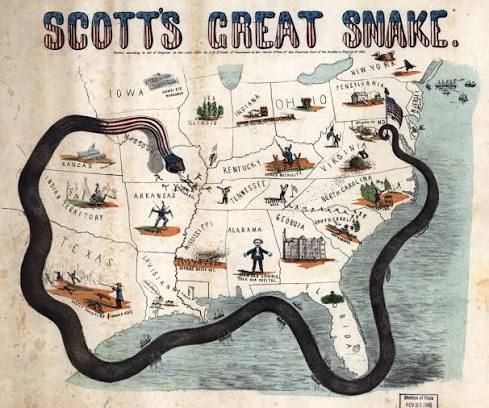
    The American Civil War’s Anaconda Plan is a textbook example. In 1861, the Union navy began a blockade of Confederate ports, stretching from Virginia to Texas. The plan was slow, but it worked. Southern cotton exports plummeted, and weapons imports dried up. By 1865, the Confederacy’s economy was in ruins, and its armies were short on rifles and gunpowder. The blockade didn’t win the war alone, but it squeezed the life out of the South’s ability to fight.

    The Hunger Blockade of World War I

    World War I elevated the blockade to an industrial-scale instrument of mass suffering. Britain, with its overwhelming naval superiority, blockaded Germany from the war’s first days. The British aimed to starve Germany into submission. They intercepted neutral ships, confiscated cargoes, and mined the North Sea. By 1918, Germany was importing almost nothing. The result was catastrophic: an estimated 400,000 to 800,000 German civilians died from starvation and disease—people who never wore a uniform.

    The German government exploited the blockade for propaganda, but the suffering was real. Children, the elderly, and the sick were the first to fall. Turnip soup became a symbol of desperation. The blockade didn’t break the German army, but it broke the home front. The German Revolution of 1918–1919, which toppled the Kaiser, was fueled in part by hunger. The blockade was not lifted until July 1919, months after the armistice, a decision that historians still debate as a deliberate act of cruelty.

    Germany’s response to the British blockade was to invert the concept. Since Germany couldn’t match British surface power, it turned to submarines. The U-boat campaign was a counter-blockade: Germany declared the waters around Britain a war zone and sank merchant ships, including those of neutral nations. The sinking of the Lusitania in 1915, which killed 1,198 civilians, showed how blockades could blur the line between combatant and civilian. The U-boats nearly brought Britain to its knees in 1917, but the introduction of convoys and the entry of the United States turned the tide. Both blockades caused immense suffering, but the Allied blockade was the more effective and the more deadly.

    The Battle of the Atlantic and the Axis Stranglehold

    World War II saw blockades on a global scale. Germany again tried to starve Britain, this time with U-boats in the Battle of the Atlantic. The goal was to sink enough merchant ships to cut Britain’s lifeline. In 1942, German submarines were sinking ships faster than the Allies could build them. The turning point came with improved radar, code-breaking, and air cover. By 1943, the Allies were winning the battle, and the blockade of Germany’s sea routes was nearly complete. The Allies also blockaded Japan, which was heavily dependent on imported oil, rice, and other essentials. The U.S. Navy’s submarine campaign sank Japanese merchant shipping, and by 1945, Japan’s industrial production had collapsed. The blockade contributed to widespread malnutrition and an estimated 1 million civilian deaths, though the atomic bombs and the Soviet invasion ultimately forced Japan’s surrender.

    The blockades of WWII were part of a broader strategy of total war, where the distinction between soldier and civilian dissolved. The Allied blockade of Europe, while designed to weaken the Axis, also caused suffering among occupied populations. The Dutch famine of 1944–1945, which killed tens of thousands, was exacerbated by the German blockade of the Netherlands, a reverse blockade. Blockades were not just between nations; they were also tools of occupation.

    The Brink of Nuclear War: The Cuban Quarantine

    The most dangerous blockade in history came in 1962, during the Cuban Missile Crisis. The United States discovered Soviet nuclear missiles in Cuba, just 90 miles from Florida. President John F. Kennedy chose a “quarantine”—a blockade—rather than an air strike or invasion. U.S. warships formed a ring around Cuba, and Kennedy announced that any Soviet ship carrying offensive weapons would be stopped. The world held its breath. For 13 days, American and Soviet forces teetered on the edge of nuclear conflict. The blockade worked as a tool of coercive diplomacy: Soviet ships turned back, and the crisis ended with a secret deal to remove missiles from both Cuba and Turkey.

    The Cuban quarantine was different from the hunger blockades of the world wars. It was brief, targeted, and did not aim to starve civilians. But it showed that the blockade was still a potent weapon in the nuclear age—a way to apply pressure without escalating to full-scale war. It also highlighted the legal and moral complexities of blockades. Was it legal to stop and search Soviet ships on the high seas? The United States argued it was a quarantine, not a blockade, to avoid the formal declaration required under international law. The crisis passed, but the precedent remains controversial.

    The Ethics of Starvation

    Blockades raise profound ethical questions. Is it legitimate to starve a civilian population to force a military surrender? The international community has tried to answer with law. The Geneva Conventions and modern international humanitarian law place limits on blockades, requiring that food and medicine be allowed through for civilian populations. But these rules are often ignored in practice. The debate over the WWI blockade—whether it was a legitimate military strategy or a war crime—has never been fully resolved. Historians remain divided. Some argue that the blockade was a lawful means of warfare, aimed at breaking Germany’s war-making capacity. Others see it as a deliberate policy of mass starvation, a war crime.

    Modern conflicts have seen blockades in Yemen, Gaza, and elsewhere, where humanitarian organizations decry the civilian toll. The same logic that drove the Anaconda Plan still operates: cut off supplies, and the enemy will eventually capitulate. But the cost in human life is staggering. Children are the most vulnerable. The blockade of Germany in WWI led to a generation of undernourished children, who grew up with lasting health problems. The blockade of Japan in WWII led to food shortages that killed civilians even before the atomic bombs fell.

    The political and psychological effects of a blockade are also profound. A siege mentality can unite a population against the enemy, as it did in Britain during the U-boat campaigns. But it can also breed despair and revolution, as it did in Germany in 1918. Blockades are slow, grinding instruments of war. They test national resolve, create political instability, and can reshape the balance of power long after the war ends.

    Conclusion

    Naval blockades are a paradox of war: they are invisible, silent, and slow, yet they can be more devastating than any battle. From the Continental System to the Cuban quarantine, they have changed the course of history by strangling economies, breaking morale, and killing millions. They are a testament to the brutal calculus of total war, where the line between soldier and civilian is erased. And they remain a haunting reminder that in war, the most powerful weapon is often not the one that explodes, but the one that waits.

    Blockades are a weapon of attrition, and their history is a grim ledger of human suffering. They have been used by empires, republics, and dictatorships alike, and they have always been justified by necessity. But the cost is always borne by the most vulnerable. As long as nations depend on the sea for survival, the blockade will remain a tool of war—and a moral challenge that we have yet to answer.

    Summary

    • A naval blockade is a military isolation of a coast, enforced by warships, distinct from a political embargo.
    • The WWI British blockade of Germany caused an estimated 400,000–800,000 civilian deaths from starvation and disease.
    • The WWII Allied blockade of Japan contributed to approximately 1 million civilian deaths and widespread malnutrition.
    • The Cuban Missile Crisis of 1962 saw a U.S. “quarantine” of Cuba that brought the world to the brink of nuclear war.
    • Modern international law tries to limit blockades by requiring food and medicine to reach civilians, but enforcement remains weak.

    FAQ

    Q: What is the difference between a blockade and an embargo?
    A: A blockade is a military measure enforced by naval forces, while an embargo is a political or economic measure that restricts trade. A blockade physically prevents ships from reaching a port.

    Q: How did the WWI British blockade affect Germany?
    A: The blockade cut off food and raw material imports, leading to an estimated 400,000–800,000 civilian deaths from starvation and disease, and contributed to the German Revolution of 1918–1919.

    Q: Was the Cuban Missile Crisis a blockade?
    A: The United States called it a “quarantine,” but it was a naval blockade of Cuba to prevent Soviet missiles from being delivered. It was a short, targeted action that avoided a direct invasion.

    Q: Are blockades legal under international law?
    A: Yes, but they must be declared, effective, and impartial. Modern humanitarian law also requires allowing food and medicine for civilians, but this is often violated in practice.

    Q: What is the “fleet in being” concept?
    A: It is the idea that a fleet can have strategic effect without fighting a battle, simply by its presence. In a blockade, the mere threat of interception deters enemy shipping, creating economic pressure.