Tag: behind the scenes

  • The Unsung Heroes of Cinema: How Stunt Performers Shaped Action Films


    When you watch a hero leap from a collapsing building or a car flip mid-chase, your heart races but do you know whose body actually made that leap? Behind every death-defying moment is a stunt performer, a professional who risks life and limb so actors can look heroic. Yet, these daredevils rarely get the spotlight. They aren’t nominated for Oscars, their names are often buried in credits, and the public frequently mistakes their work for CGI or actor bravery.

    But stunt performers have been the backbone of action cinema since its earliest days. From Buster Keaton’s silent-era falls to Tom Cruise’s modern-day plane hangs, these unsung heroes have not only performed the stunts—they’ve invented the techniques, set the safety standards, and pushed the boundaries of what’s possible on screen. This article pulls back the curtain on their vital role, tracing their history, celebrating their innovations, and examining why they remain largely invisible in an industry they’ve built.

    The Silent Era: When Actors Were Their Own Stunt Doubles

    In the early 1900s, there was no such thing as a “stunt double.” Actors like Buster Keaton and Harold Lloyd performed their own death-defying feats, partly because cameras were too heavy to hide a double’s face, and partly because audiences flocked to see real danger. Keaton’s famous house facade collapse in Steamboat Bill Jr. (1928) nearly killed him—he survived only because he stood in the exact spot where a window frame fell. Harold Lloyd’s iconic clock-hanging scene in Safety Last! (1923) was shot without a safety net, and he lost two fingers in an earlier stunt.

    The serials of the 1910s, like The Perils of Pauline, featured Pearl White performing her own falls and fights, setting a precedent for female stunt performers. But as filmmaking grew more complex, the need for specialized professionals became clear. These early daredevils were the first to realize that falling from a building is a craft—one that requires training, precision, and a willingness to get hurt.

    Stunt performers are the invisible architects of action cinema. They’ve turned falls into art, crashes into science, and danger into entertainment. While awards and recognition lag behind, their influence is undeniable—from the techniques they invent to the safety standards they uphold. The next time you watch a heart-stopping chase, remember the unsung heroes who made it possible, and perhaps champion for the recognition they rightfully deserve.

    Summary

    • Stunt performers have been central to cinema since the silent era, with pioneers like Buster Keaton and Pearl White performing their own dangerous feats.
    • Innovations like Yakima Canutt’s horse fall and Dar Robinson’s deceleration device have shaped how stunts are performed safely.
    • Hong Kong action cinema, led by Jackie Chan, elevated choreography and risk, influencing Hollywood’s approach to action.
    • Despite their contributions, stunt performers lack dedicated awards like the Oscars and often go uncredited.
    • Modern safety regulations and CGI have not diminished the need for practical stunts, as seen in films like Mission: Impossible and John Wick.

    FAQ

    Q: Why don’t stunt performers have an Oscar category?
    A: The Academy has never created a competitive award for stunt work, despite decades of campaigning. In 2012, Hal Needham received an honorary Oscar, but no regular category exists. The Screen Actors Guild has awarded Outstanding Action Performance by a Stunt Ensemble since 2007, but the Oscars remain elusive.

    Q: Do actors really do their own stunts?
    A: Some do, like Tom Cruise and Jackie Chan, but most actors rely on doubles for dangerous stunts. Insurance companies often prohibit actors from performing high-risk maneuvers. Even when actors train extensively, as Keanu Reeves did for John Wick, a double is still present for the most dangerous falls or crashes.

    Q: What is the most dangerous stunt ever performed?
    A: Dar Robinson’s 220-foot fall in Highpoint (1982) is often cited as one of the most dangerous, as he invented a deceleration device to survive it. Jackie Chan’s stunts, like the mall pole slide in Police Story (1985), are legendary for their risk—he suffered severe injuries, including a dislocated pelvis.

    Q: How has CGI affected stunt work?
    A: CGI can enhance or clean up stunts, but it hasn’t replaced practical performers. Directors like Christopher Nolan and Tom Cruise champion practical effects for realism. Motion capture, as used in Avatar or The Matrix, still requires stunt performers to provide the physical movements that are then animated.

    Q: Who was the first female stunt performer?
    A: Helen Gibson is often credited as the first American woman stunt performer, starting in the 1910s. She performed horse stunts and falls in silent serials, paving the way for future generations of women in the field.
  • The Furious Filming of ‘Apocalypse Now’: Typhoons, Heart Attacks, and a Stolen Print

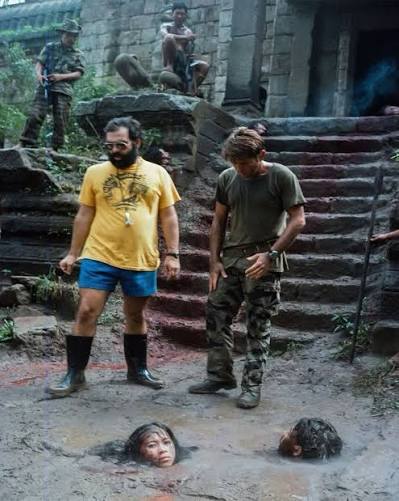
    The Furious Filming of ‘Apocalypse Now’: Typhoons, Heart Attacks, and a Stolen Print

    Francis Ford Coppola's Apocalypse Now filming challenges

    In May 1976, Typhoon Olga slammed into the Philippines, shredding the jungle sets of Francis Ford Coppola’s Vietnam War epic. Dozens of crew members were left sick with dysentery, helicopters were being recalled to fight a real insurgency, and the director was threatening to kill himself. That was just the first year. Over the next three, a heart attack would nearly kill the lead actor, a stolen workprint would test Coppola’s nerve, and the film would stagger to a Cannes premiere as an unfinished workprint. The result: a Palme d’Or, eight Oscar nominations, and one of cinema’s most legendary production nightmares.

    A Budget That Melted in the Jungle

    Coppola had conquered Hollywood with The Godfather and its sequel. For his next act, he wanted to turn Joseph Conrad’s Heart of Darkness into a hallucinatory journey up a Vietnamese river. He co-wrote the script with John Milius and Michael Herr, but the real story began when cameras rolled in March 1976. The initial budget was around $12 million. By the time the film limped into theaters in August 1979, the tab had ballooned past $30 million. Coppola, who had mortgaged his house to keep production alive, was betting everything on a film that seemed to be actively fighting him.

    The Typhoon That Erased a War Zone

    The Philippines stood in for Vietnam—jungle terrain, U.S. military hardware on loan, and a government willing to provide helicopters and troops. But the monsoon season brought Typhoon Olga (local name: Didang). The storm destroyed the main jungle sets, including the Do Lung Bridge and the Kurtz compound. Production shut down for weeks while crews rebuilt from scratch. Coppola’s wife, Eleanor, who was documenting the production, captured the director’s despair: he reportedly broke down, saying, “My film is ruined.”

    A Heart Attack Caught on Camera

    Martin Sheen, playing Captain Willard, was not the first choice for the role. Harvey Keitel had been fired early on, and Sheen stepped in. But in March 1977, while filming the opening hotel room scene, Sheen suffered a near-fatal heart attack. He was given last rites by a priest. The footage of his breakdown—real, raw, and terrifying—was so compelling that Coppola used it in the final film. Sheen survived, returned to set weeks later, and the film kept going.

    Brando, Hopper, and the Helicopters

    Marlon Brando arrived overweight and unprepared. Coppola had to shoot him in shadow to conceal his size. Dennis Hopper was, by all accounts, a whirlwind of erratic energy. The Philippine government’s helicopters were sometimes recalled for actual military missions against insurgents, leaving the crew grounded. Dysentery swept through the cast and crew. Coppola, pushed to the brink, reportedly threatened suicide on set—an episode captured in the making-of documentary Hearts of Darkness.

    The Stolen Print

    At some point during production or post-production, a copy of the film—a workprint, at least—was stolen from a screening room. Accounts differ: some place it in the Philippines, others in Los Angeles. The thieves demanded ransom. Coppola refused to pay. The copy was eventually recovered or destroyed, but the incident added another layer of paranoia to an already fraught production. The exact details remain murky, but the story has become part of the film’s mythology.

    The Never-Ending Ending

    Coppola had no clear ending for the film. He shot multiple versions, including one with a giant statue and one with the crew returning to the boat. In the editing room, he and his team pieced together the final “Colonel Kurtz dies” sequence from hours of footage, largely improvising the structure. The score, a mix of Carmine Coppola’s music and The Doors’ “The End,” was assembled over many months. The film screened at Cannes in 1979 as a workprint—still unfinished—and shared the Palme d’Or with The Tin Drum. It went on to earn eight Academy Award nominations and won two, for Cinematography and Sound.

    The Chaos That Made a Masterpiece

    Could the film have been made without the chaos? Perhaps, but the chaos is part of its DNA. The real exhaustion, the genuine danger, and the improvisation seeped into the performances and the atmosphere. Eleanor Coppola’s behind-the-scenes footage and audio diaries, later compiled into Hearts of Darkness: A Filmmaker’s Apocalypse (1991), turned the production itself into a gripping documentary. The film endures as a landmark of New Hollywood cinema, but its production story has become as legendary as the movie itself. Typhoons, heart attacks, stolen prints, and a director on the edge—Apocalypse Now is a testament to what can happen when art and disaster collide.

    The production of Apocalypse Now was a four-year nightmare that nearly destroyed its creator. Yet the film that emerged from the wreckage is a haunting, visceral masterpiece. It stands as proof that sometimes, the most chaotic paths lead to the most enduring art—and that the story behind the film can be as unforgettable as the film itself.

    Summary

    • Apocalypse Now took over three years to make and cost over $30 million, far exceeding its initial $12 million budget.
    • A typhoon destroyed the main sets in the Philippines, halting production for weeks.
    • Martin Sheen suffered a near-fatal heart attack during filming; Coppola used the real footage in the movie.
    • A workprint of the film was stolen and held for ransom; Coppola refused to pay.
    • Despite the chaos, the film won the Palme d’Or and two Oscars, and is now considered a classic.

    FAQ

    Q: Was Apocalypse Now based on a book?
    A: Yes, it was loosely adapted from Joseph Conrad’s novella Heart of Darkness, transposed from the Congo to the Vietnam War.

    Q: How long did principal photography last?
    A: Principal photography began in March 1976 and lasted over a year, but the film wasn’t released until August 1979 due to lengthy post-production and re-editing.

    Q: Did the typhoon really destroy the sets?
    A: Yes, Typhoon Olga (known locally as Didang) struck the Philippines in May 1976 and destroyed the main jungle sets, including the Kurtz compound and the Do Lung Bridge.

    Q: Is the story about Martin Sheen’s heart attack true?
    A: Yes, Sheen suffered a near-fatal heart attack in March 1977. He was given last rites but recovered and returned to filming. Some of the footage from his breakdown was used in the opening scene.

    Q: Was the stolen print ever recovered?
    A: Accounts vary, but most say the copy was eventually recovered or destroyed. Coppola refused to pay the ransom, and the incident remains a murky part of the film’s legend.

  • Inside the Hidden World of Cartoon Voice Actors

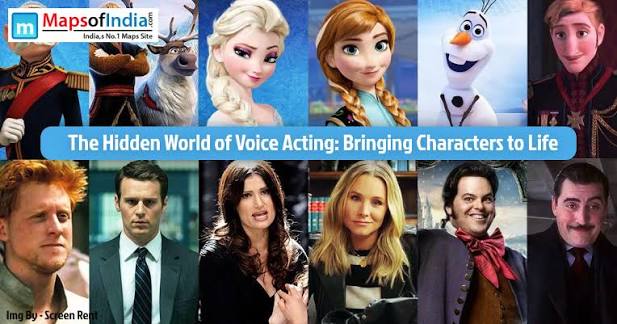
    Inside the Hidden World of Cartoon Voice Actors

    When you watch your favorite cartoon, you hear the characters come to life—but do you ever wonder who’s behind those voices? Voice actors are the invisible stars of animation, their faces unknown but their voices instantly recognizable. From the iconic tones of Tom Kenny (SpongeBob) to the versatile range of Tara Strong, these performers shape the characters we love, yet they often remain hidden in plain sight.

    Voice acting is a multi-billion-dollar industry that powers animation worldwide, but the people at its core face a unique set of challenges and rewards. The job demands incredible vocal skill, emotional depth, and the ability to create entire personalities from just a script and a microphone. While some actors become household names, many dedicated voice actors work steadily without public recognition.

    This article pulls back the curtain on the hidden world of voice actors—how they work, what they earn, and why their craft matters more than ever in an era of streaming and AI.

    The Craft: More Than Just a Pretty Voice

    Voice acting isn’t just reading lines—it’s a full physical performance. Actors often move, gesture, and contort their faces to match the emotions they’re projecting, even when no one can see them. This physicality helps deliver authentic, energetic performances.

    Take Dee Bradley Baker, who voices all the clone troopers in Star Wars: The Clone Wars. He creates distinct personalities for each clone using subtle vocal shifts—pitch, pace, and attitude—all while recording solo in a booth. That kind of range requires deep understanding of character and relentless practice.

    Sessions are short and intense. A typical recording session runs 1–4 hours, and a single episode might need 1–3 sessions. Actors often record alone, which means they must imagine the entire scene and react to characters who aren’t there. This isolation is a challenge, but it also allows for creative freedom.

    The Economics: From $100 to Six Figures

    The pay for voice work varies wildly. Union roles under SAG-AFTRA pay decently: a principal role in a half-hour animated TV show can earn $900–$1,200 per session. Non-union gigs pay far less—often $100–$300 per session—and may not include residuals.

    Top-tier actors in major studio films can command six-figure paychecks per project, and franchise leads may earn residuals that add up over time. But for every star, there are dozens of working actors piecing together a living from multiple gigs. The income is inconsistent, and the audition pipeline is brutal: a single role might attract 500–1,000 auditions. Callbacks are rare, and most roles are cast from the first round.

    The Gatekeepers: Casting Directors and Agents

    Getting into the industry isn’t just about talent. Casting directors are the primary gatekeepers—they decide who gets an audition and who gets cast. Agents are essential for union work; most SAG-AFTRA roles require agency representation. This creates a barrier for newcomers, who often need to build a demo reel and hustle to get noticed.

    Studios like Disney, Pixar, DreamWorks, and Netflix Animation rely on a mix of professional voice actors and celebrity names. Celebrities bring marketing buzz, but professionals bring reliability and consistency. The balance is delicate: studios want star power, but they also need actors who can deliver quickly and adapt to direction.

    The Hidden Nature: Anonymity as a Double-Edged Sword

    Voice actors are rarely recognized in public. Their faces aren’t associated with their characters, which allows them to play many roles without typecasting. But this anonymity also means lower public profile and sometimes lower pay compared to on-camera actors.

    This hidden nature fuels fan curiosity. Conventions like Comic-Con have helped raise profiles, letting fans put faces to voices. Still, many actors remain invisible to the general public, even as their voices are beloved.

    The Evolution: From Radio to Streaming

    Voice acting has come a long way since the 1920s, when radio actors lent their voices to early animation. Walt Disney initially resisted crediting voice actors, fearing they’d demand higher pay. By the 1950s–80s, TV animation boomed, but voice work was often seen as a side gig with low pay and no residuals.

    The Simpsons changed everything in the 1990s. The cast negotiated significant pay raises and residuals, proving that animation voice work could be lucrative and career-defining. This paved the way for modern stars like Tara Strong and Tom Kenny, who have built entire careers on voice work.

    The 2000s–2010s saw a rise in celebrity casting, with stars like Mike Myers and Eddie Murphy voicing major film roles. This trend used star power for marketing, sometimes at the expense of professional VAs. But streaming platforms in the 2020s have increased demand for content, creating more opportunities—while also complicating residual structures.

    The Threat of AI: An Existential Challenge

    AI voice synthesis is now a real concern. Studios can generate voices without actors, potentially reducing demand. While AI can’t replicate the emotional nuance of a human performance, it’s a threat that’s driving unions to negotiate protections. Voice actors are advocating for consent and fair compensation for any AI use of their voices.

    The Joy and the Grind

    Despite the challenges, voice actors love their work. The creative freedom is unmatched—they can play a hero, a villain, a talking sponge, or a dragon. Voices age well, so careers can last decades. And with home studios, actors can work from anywhere.

    But the grind is real: constant auditioning, rejection, and inconsistent income. Vocal strain is a hazard, and typecasting can limit opportunities. The isolation of solo recording can be lonely, but many actors find community in the booth and at conventions.

    Voice actors are the unsung heroes of animation, their faces hidden but their voices embedded in our childhoods. They navigate a competitive industry, fight for fair pay, and adapt to technological shifts. Next time you watch a cartoon, remember the invisible performers behind the mic—they’re the reason your favorite characters feel alive.

    Summary

    • Voice actors perform in studios or home setups, with sessions typically 1–4 hours.
    • Union roles pay $900–$1,200 per session, while non-union pays $100–$300.
    • Casting directors and agents are gatekeepers; roles often get 500–1,000 auditions.
    • Anonymity allows versatility but limits public recognition and sometimes pay.
    • AI voice synthesis is an emerging threat, driving calls for actor protections.

    FAQ

    Q: How much do voice actors get paid?
    A: Union rates for a half-hour animated show are about $900–$1,200 per session. Non-union work pays $100–$300 per session, and top film roles can earn six figures.

    Q: Do voice actors need an agent?
    A: For SAG-AFTRA work, yes—most union roles require agency representation. Casting directors often only see auditions from agents.

    Q: Can one actor voice multiple characters?
    A: Yes, many actors do. Dee Bradley Baker voices all clone troopers in Star Wars: The Clone Wars by creating distinct vocal personalities.

    Q: Is AI a big threat to voice actors?
    A: It’s a growing concern. AI can generate voices, but it lacks emotional nuance. Unions are negotiating for consent and compensation if AI is used.

    Q: How do voice actors audition?
    A: They submit self-taped auditions from home studios or attend in-person sessions. The competition is intense—a role may get over 1,000 auditions.