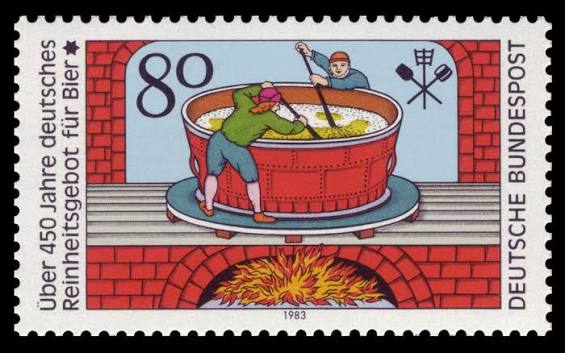
On April 23, 1516, in the Bavarian town of Ingolstadt, Duke Wilhelm IV issued a decree that would outlive his dynasty by centuries. The Reinheitsgebot, or Beer Purity Law, limited beer ingredients to water, barley, and hops. It was a practical measure to prevent price gouging and protect bread grain, but it became a cornerstone of brewing identity.
Today, that 500-year-old regulation still influences what you drink—from the crisp lagers of Munich to the hazy IPAs in a Brooklyn taproom. It sparked legal battles, inspired craft brewers, and even earned a spot on Germany’s cultural heritage list. Understanding its origins and legacy helps explain why beer tastes the way it does and why some styles are harder to find in Germany than elsewhere.
A Law Born of Chaos and Famine
In the early 1500s, brewing was a messy business. Without refrigeration or microbiology, beer spoiled quickly, and brewers often resorted to questionable additives to mask off-flavors: soot, henbane, mushrooms, even animal byproducts. Some of these could cause hallucinations or worse. Meanwhile, bad harvests meant wheat and rye were precious for bread. The dukes wanted to ensure that barley—which made poor bread but good beer—was used for brewing, leaving wheat and rye for bakers.
The 1516 law set maximum prices too: one to two Pfennigs per Maß (about a liter), depending on the season and quality. Brewers caught selling impure beer faced confiscation and fines. Repeat offenders could lose their livelihood. It was a consumer-protection measure, but also a power grab: brewing was a major tax source, and the dukes wanted strict control.
Why Hops? Why Not Yeast?
Hops were a newfangled addition, arriving in Bavaria from Bohemia in the 14th–15th centuries. They provided natural preservation and bitterness, replacing gruit—a blend of herbs like yarrow and juniper, often controlled by the Church. By mandating hops, the law inadvertently killed the gruit trade and clipped the Church’s economic wings.
The law’s silence on yeast is often misunderstood. Fermentation was a mystery—Louis Pasteur wouldn’t identify yeast’s role until the 19th century. Brewers relied on wild yeast or back-sloping (adding sediment from a previous batch). So yeast was omitted because it was unknown, not because it was unimportant.
From Bavarian Rule to German Law
The Reinheitsgebot initially applied only to Bavaria. When the German Empire formed in 1871, it remained a Bavarian peculiarity. In 1906, it was extended to the whole empire, with allowances for bottom-fermented beers. Wheat beer, long a royal monopoly, wasn’t formally permitted until 1918.
The law began to crack under European pressure. In 1987, the European Court of Justice ruled that the Reinheitsgebot violated EU free-trade principles, forcing Germany to allow foreign beers with additives. Germany responded in 1993 with the Provisional Beer Law, which kept the purity rules for domestic brewers but allowed imports to use other ingredients.
Today, the Reinheitsgebot is voluntary for German brewers. They can brew with fruit, spices, or lactose, but they can’t call the result “Bier”—it must be labeled a “mixed beer beverage” or similar. Bavaria enforces this more strictly than other states. In 2016, UNESCO recognized the law as part of Germany’s intangible cultural heritage.
The Traditionalist Case
The Reinheitsgebot is the world’s oldest food-safety law still in effect. German brewers, especially Bavarians, wear it as a badge of honor. They argue that it guarantees quality, protects consumers, and preserves a heritage that dates back five centuries. The German Brewers’ Federation maintains that the law is a mark of purity that no other beer can claim.
Many German brewers follow it voluntarily even when exporting, because international drinkers associate “German beer” with this purity. It’s a marketing advantage as much as a legal one.
The Critics’ Rebuttal
Detractors see the law as protectionist and stifling. It blocks innovation and excludes modern ingredients like lactose, fruit, and alternative grains. The 1987 EU ruling exposed this: foreign beers with additives were kept out for decades, not because they were unsafe, but because they competed with domestic products.
Historically, the law was never about quality—it was about price control and grain allocation. And in the craft beer era, its limits are glaring. Styles like milkshake IPAs, fruit sours, and pastry stouts can’t legally be called “beer” in Germany. That’s why many German craft brewers choose to label their experimental products as “mixed beverages,” which feels like a semantic workaround rather than a badge of honor.
Some argue this legal straitjacket has slowed Germany’s craft beer scene compared to the US, UK, or Scandinavia, where brewers freely experiment with adjuncts and flavors.
Global Echoes
Despite its critics, the Reinheitsgebot has shaped brewing standards worldwide. It influenced purity laws in other countries, including the US Reinheitsgebot-inspired campaigns by some brewers who tout all-malt recipes. The law’s legacy is visible in the global dominance of lager—a style that relies on the barley, water, and hops that the law enshrined.
Even in countries without such laws, the Reinheitsgebot frames debates about beer ingredients and authenticity. Craft brewers often invoke it ironically, celebrating their freedom to add vanilla or coffee while acknowledging the Bavarian rule that made beer what it is.
A Living Anachronism
The Reinheitsgebot survives because it’s more than a regulation—it’s a cultural symbol. For Bavarians, it represents pride in their brewing tradition. For critics, it’s a reminder that laws can outlive their original purpose. And for brewers everywhere, it’s a benchmark: a simple rule that defined beer for centuries, and against which every new style must measure.
As you sip a crisp German pilsner or a bold American IPA, consider the 500-year-old edict that still shapes your glass. The law may have been born of famine and fraud, but it became the foundation of a global industry—and a testament to how a single decree can echo through history.
The Beer Purity Law of 1516 was a pragmatic response to its time, but its influence reached far beyond Bavarian borders. It shaped the ingredients, styles, and regulations of beer worldwide, and it continues to provoke debate about purity, innovation, and tradition. Whether you view it as a guardian of quality or a barrier to creativity, there’s no denying its lasting impact on the world’s favorite fermented beverage.
Summary
- The Reinheitsgebot, issued in 1516, restricted beer to water, barley, and hops.
- It was a public health, food security, and price control measure, not a quality standard.
- Yeast was omitted because it was unknown, not because it was unimportant.
- The law became German-wide in 1906, but the EU forced changes in 1987, making it voluntary for German brewers.
- Today, it still influences German brewing, but critics say it stifles craft innovation.
FAQ
Q: What exactly does the Reinheitsgebot allow?
A: It allows only water, barley, and hops in beer. Yeast was not included because it wasn’t discovered as a fermentation agent until the 19th century.
Q: Is the Reinheitsgebot still in force?
A: Yes, but it’s now voluntary for German brewers. They can use other ingredients, but they must label such products as “mixed beer beverages” rather than “beer.” Bavaria enforces it more strictly than other states.
Q: Why was the law issued?
A: To prevent brewers from using harmful additives like soot or henbane, to preserve wheat and rye for bread, and to regulate prices. It also gave the dukes more control over brewing, a major economic activity.
Q: How did the law affect craft beer?
A: It restricts styles like fruit sours or milkshake IPAs that use additional ingredients. German craft brewers often label these as “mixed beverages” to comply, which some see as a hindrance to innovation.
Q: Did the law apply to all of Germany?
A: No, it was Bavarian-only until 1906, when it was extended to the German Empire. Bavaria still enforces it more strictly than other states.