Tag: Barcelona

  • Jesse Bisiwu: Barcelona’s €8.5m Bet on a Belgian Wonderkid – Smart Recruitment or Another Gamble?

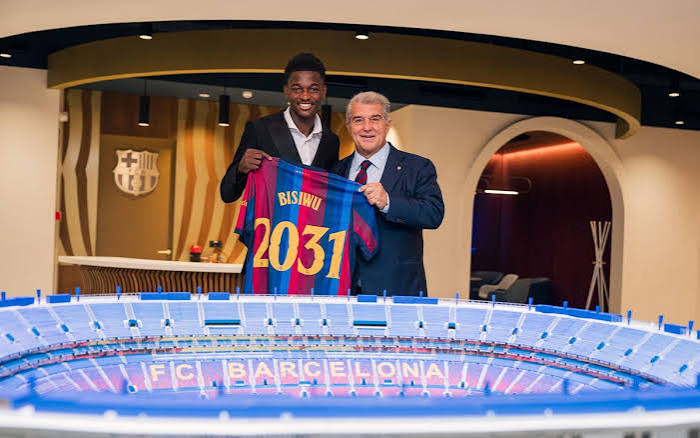
    Jesse Bisiwu, presented as an FC Barcelona player

    In the midst of financial constraints and a shifting transfer strategy, Barcelona have agreed a deal to sign 18-year-old Club Brugge attacking midfielder Jesse Bisiwu for €8.5 million. The move, which will see the youngster initially join Barcelona Atlètic, signals the club’s continued pivot towards acquiring high-potential talents at relatively low fees. But is this a calculated investment in a future star, or another risky gamble in a crowded market?

    Bisiwu, a left-footed playmaker capable of operating on either flank or centrally, has been touted as one of Belgium’s most exciting prospects. His move to Catalonia comes at a time when Barcelona are rebuilding their squad under financial duress, and the club’s scouting network is under scrutiny. This article breaks down the context, the stakes, and what this signing means for all parties involved.

    Barcelona’s New Transfer Playbook

    Barcelona’s recent transfer activity has been defined by necessity. With La Liga salary cap restrictions and a mountain of debt, the club can no longer splash out on established stars. Instead, they’ve adopted a ‘buy low, develop, sell high’ model, targeting young players with high ceilings who can either break into the first team or be sold for profit. The signing of Jesse Bisiwu fits this template perfectly.

    The €8.5m fee for an 18-year-old from the Belgian Pro League is a modest outlay by modern standards, especially when compared to the €30m+ fees often paid for similar prospects from top leagues. Barcelona are betting that Bisiwu’s technical ability—his dribbling, close control, and vision—will translate well to their style of play. He’s not a La Masia product, which is notable, but the club has shown they’re willing to supplement their academy with external talent when the scouting department sees exceptional potential.

    Club Brugge: A Proven Talent Factory

    Club Brugge have earned a reputation as one of Europe’s best selling clubs. Their academy has produced a steady stream of talent that has moved on to bigger leagues for significant fees. Recent examples include Charles De Ketelaere (to AC Milan for ~€32m) and Antonio Nusa (to RB Leipzig for ~€20m+). Bisiwu is the latest in this lineage, and while €8.5m may seem low for a ‘wonderkid’, Brugge are masters at negotiating sell-on clauses. It’s highly likely they’ve secured a percentage of any future transfer fee, which could make this deal far more lucrative in the long run.

    For Brugge, selling at the right time is key. They’ve seen players’ values fluctuate, and they know that an 18-year-old with limited first-team experience is a risk. By cashing in now, they mitigate that risk while maintaining a stake in his future success.

    The Optimistic View: A Future Star in the Making

    From a Barcelona fan’s perspective, this is an exciting move. Bisiwu is a raw talent with the kind of technical flair that Barcelona have historically prized. If he develops as expected, his value could skyrocket to €50m or more within a few years. The club’s recent success with young signings like Pedri and Gavi—though they came through different paths—shows that the pathway to the first team exists.

    Bisiwu will likely start in Barcelona Atlètic, which plays in the third tier of Spanish football. While that’s a step down from the Belgian Pro League, it offers him the chance to adapt to Spanish football in a less pressured environment. The club’s coaching staff will work on his physical development and tactical understanding, with the goal of integrating him into the senior squad within a couple of seasons.

    The Skeptical View: Financial and Sporting Risks

    However, not everyone is convinced. Barcelona’s financial situation means every euro counts, and spending €8.5m on a player who may never play for the first team is a gamble. Many ‘wonderkids’ from smaller leagues fail to adapt to the intensity of Spanish football or the immense pressure at Barcelona. The club has seen this before with players like Vitor Roque, who arrived with high expectations but struggled to make an impact.

    There’s also the question of whether buying externally is the right approach when La Masia continues to produce talent. Some argue that Barcelona should focus on promoting from within rather than splashing out on unproven prospects. The risk is that Bisiwu becomes another loaned-out player, stalling his development and ultimately being sold at a loss.

    The Player’s Perspective: A Dream Move with High Stakes

    For Bisiwu, this is a dream come true. Moving to Barcelona at 18 is the kind of opportunity that few players get. But it also comes with immense pressure. He’ll be expected to justify his fee and live up to the ‘wonderkid’ label. The step down to the B team could be a double-edged sword: it offers a gentler introduction, but it also means he’s no longer playing at the top level of Belgian football.

    Could he have been better off staying at Brugge for regular first-team minutes? Possibly. But the allure of Barcelona, with its world-class facilities and coaching, is hard to resist. The club’s track record of developing young players into global stars is a powerful draw.

    What This Says About Barcelona’s Scouting Network

    This signing is a statement about Barcelona’s scouting network. They’re casting a wider net, looking beyond the traditional talent pools in Spain and South America. Belgium has become a hotbed for young talent, and Barcelona are tapping into that market. The move also reflects a broader trend in European football, where clubs are increasingly looking to smaller leagues for undervalued gems.

    Whether Bisiwu becomes a success story or a cautionary tale remains to be seen. But one thing is clear: Barcelona are committed to this strategy, and the football world will be watching closely.

    Jesse Bisiwu’s move to Barcelona is a calculated risk that reflects the club’s current financial reality and long-term vision. For €8.5m, they’re acquiring a player with immense potential who could either become a first-team regular or a profitable asset. The coming seasons will reveal whether this bet pays off, but for now, it’s a fascinating addition to Barcelona’s rebuilding project.

    Summary

    • Barcelona have agreed a €8.5m deal for 18-year-old Club Brugge attacking midfielder Jesse Bisiwu.
    • Bisiwu is expected to join Barcelona Atlètic initially, not the first team.
    • The signing fits Barcelona’s strategy of buying young, high-potential players at low fees.
    • Club Brugge have a strong track record of selling talent with sell-on clauses.
    • The move carries both promise and risk, with questions about adaptation and development.

    FAQ

    Q: Is Jesse Bisiwu joining Barcelona’s first team?
    A: No, he is expected to join Barcelona Atlètic (the B team) initially, with a view to progressing to the senior squad.

    Q: How much did Barcelona pay for Bisiwu?
    A: The reported fee is €8.5 million, with potential add-ons, though the structure is unconfirmed.

    Q: What position does Bisiwu play?
    A: He is an attacking midfielder or winger, left-footed, capable of playing on either flank or centrally.

    Q: Why did Barcelona sign an external youth player instead of promoting from La Masia?
    A: Barcelona’s scouting network identified Bisiwu as an exceptional talent, and the club is willing to supplement La Masia with external signings when the potential is clear.

    Q: What is Club Brugge’s history with selling young players?
    A: Club Brugge have sold players like Charles De Ketelaere and Antonio Nusa for significant fees, often including sell-on clauses for future transfers.

  • Rodri to Real Madrid: The Transfer Saga That Defines Modern Football’s Power Dynamics

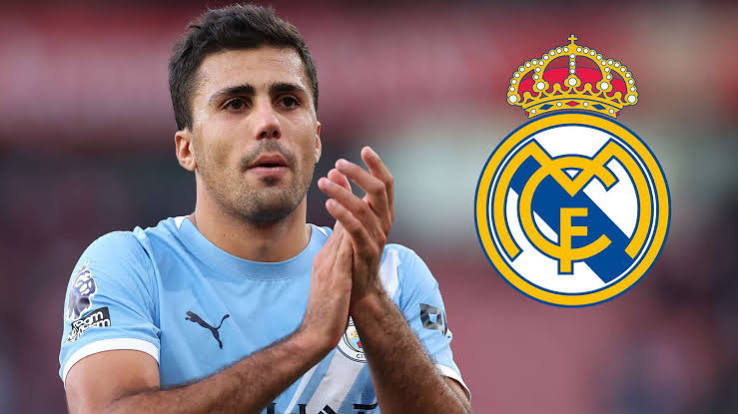
    Real Madrid return for Rodri! Los Blancos readying eye-watering €150m transfer offer amid determination to prise Ballon d'Or winner away from Man City | Goal.com India

    When the reigning Ballon d’Or winner, a defensive midfielder who redefined the position, becomes the subject of a transfer tug-of-war between Europe’s giants, it’s more than a rumor—it’s a seismic event. Rodri’s name has been whispered in the corridors of the Santiago Bernabéu, and Barcelona’s president has publicly swooned, but Manchester City’s stance is as unyielding as a Guardiola press conference. This is the story of a player who holds the keys to three of football’s most powerful institutions, and the intricate dance of ambition, finances, and loyalty that surrounds him.

    At 30, with an ACL injury behind him and a contract running until 2027, Rodri stands at a crossroads. Real Madrid sees him as the missing piece to replace the legendary Toni Kroos and the aging Luka Modrić. Barcelona dreams of a homecoming, but their financial reality is a cold shower. Meanwhile, City, the club that made him the world’s best, refuses to even entertain the idea. The stakes are immense: a potential transfer fee exceeding €100 million, the balance of power in La Liga and the Premier League, and the legacy of a player who has already achieved everything.

    The Context: A Midfield Maestro’s Journey

    Rodri’s rise from Villarreal’s youth academy to the summit of world football is a testament to his unique talent. After a brief but impactful stint at Atlético Madrid, he joined Manchester City in 2019 for a €70 million release clause—a fee that now looks like a bargain. Under Pep Guardiola, he evolved into the quintessential modern defensive midfielder: a metronome who dictates tempo, a shield who snuffs out attacks, and a goal threat from distance. His crowning moment came in 2024 when he won the Ballon d’Or, the first defensive midfielder to do so since Fabio Cannavaro in 2006. He was also the Player of the Tournament in Spain’s Euro 2024 triumph, cementing his status as the best in the world at his position.

    But football is a cruel mistress. In September 2024, Rodri suffered an ACL injury that sidelined him for most of the 2024–25 season. His absence exposed City’s fragility—they struggled without their anchor, proving his irreplaceable value. He returned to action in the 2025 Club World Cup, but the question lingers: is he the same player post-injury? And at 30, how many peak years remain?

    Real Madrid’s Midfield Puzzle

    Real Madrid’s interest in Rodri is not a fleeting whim; it’s a calculated solution to a looming crisis. Toni Kroos retired in 2024, leaving a void in midfield creativity and control. Luka Modrić, at 39, is a living legend but a diminishing asset. The current options—Aurélien Tchouaméni, Eduardo Camavinga, Federico Valverde, and Jude Bellingham—are talented but lack the metronomic consistency Rodri offers. Tchouaméni, in particular, has been inconsistent, and Camavinga is more of a dynamic box-to-box presence than a deep-lying playmaker.

    Real Madrid’s transfer policy under Florentino Pérez has been to acquire elite players in their prime or young stars with immense potential. Rodri fits the ‘Galáctico’ mold: a proven world-class talent who could immediately anchor the midfield for the next three to four years. The club has reportedly made him a priority target for 2026, but the financial and practical hurdles are formidable. Would they pay over €100 million for a 30-year-old with a recent ACL injury? It’s a gamble that even the most ambitious clubs might hesitate to take.

    Manchester City’s Unshakeable Stance

    Manchester City’s position is unequivocal: Rodri is not for sale at any price. He is the tactical cornerstone of Guardiola’s system, the player who makes everything tick. City’s struggles during his injury absence were a stark reminder of his value. The club has no financial need to sell—City Football Group’s resources are vast—and they have historically resisted selling key starters, especially to European rivals. While they’ve sold players like Gabriel Jesus, Raheem Sterling, and Riyad Mahrez, those were not core starters at the time of their departures. Rodri is different; he’s the fulcrum.

    City’s counter-move could be a new contract with improved terms, removing any doubt about his future. Rodri’s current deal runs until 2027, and he has repeatedly expressed happiness at City. He has not publicly requested a transfer, and there’s no indication he’s agitating for a move. But in football, loyalty is often a bargaining chip, and the allure of a return to his native Madrid could be potent.

    The Player’s Perspective: A Madrid Boy’s Dilemma

    Rodri was born in Madrid and reportedly grew up supporting Real Madrid. The prospect of playing for the club he idolized as a child is a powerful emotional draw. At 30, this could be his last major contract, and a move to Real Madrid would offer a new challenge and the chance to play in La Liga, where he hasn’t competed since leaving Atlético in 2019. However, leaving City means leaving a system where he is the undisputed starter, a guaranteed trophy contender, and adored by fans. The grass isn’t always greener, especially when you’re already on the best pitch in the world.

    Rodri’s camp is reportedly aware of the interest from both Spanish giants, and some speculate they might use this as leverage in contract negotiations with City. But Rodri himself has been diplomatic, focusing on his recovery and his performances. He’s a professional’s professional, unlikely to rock the boat publicly.

    Barcelona’s Interest: Realistic or Rhetorical?

    Barcelona’s interest in Rodri is more about aspiration than actuality. President Joan Laporta has expressed admiration, but the club’s financial fair play issues and La Liga’s salary cap restrictions make a transfer nearly impossible. Barcelona’s midfield is already crowded with young talents like Pedri, Gavi, Frenkie de Jong, and Marc Casadó. Adding Rodri would be a luxury they can’t afford, both financially and in terms of squad balance.

    Some reports suggest Barcelona’s interest is being used by Rodri’s camp as leverage in negotiations with City—a classic football tactic. Laporta has a history of making public overtures to marquee players that never materialize, often for political reasons or to appease the fanbase. In this case, it’s likely more rhetoric than reality.

    The Injury Factor: A Wildcard

    Rodri’s ACL injury is the elephant in the room. At 30, a major knee injury can be career-altering. While he’s returned to training and made a comeback appearance, the question of whether he can regain his pre-injury form remains. Real Madrid, known for their meticulous medical assessments, would be taking a significant risk. City, on the other hand, have the advantage of knowing his recovery process firsthand and might be more confident in his long-term fitness.

    The injury also affects his transfer value. A club would be paying a premium for a player who might not be the same force he was. This could be a bargaining chip for City—they can argue that any offer should reflect the risk, or they can simply refuse to sell, citing his importance regardless of injury.

    The Broader Implications

    This transfer saga is more than just a player moving between clubs; it’s a reflection of modern football’s power dynamics. Real Madrid’s pursuit of Rodri signals their intent to maintain dominance in Europe, while City’s refusal underscores their financial muscle and ambition. Barcelona’s interest, however unrealistic, highlights the gap between their historical prestige and current financial reality.

    For Rodri, the decision is about legacy, loyalty, and the next chapter of his career. He’s already won everything at City—Premier League titles, a Champions League, a Ballon d’Or. A move to Real Madrid could be the ultimate validation, but it comes with risks. At 30, he might have only a few peak years left, and he must choose the environment that best suits his style and ambitions.

    As the 2026 transfer window approaches, the speculation will only intensify. But one thing is certain: Rodri’s future will be one of the most closely watched stories in football, with implications that extend far beyond the pitch.

    Rodri’s potential move to Real Madrid is a story of ambition, loyalty, and the unyielding nature of modern football’s elite. While City’s stance is firm and Barcelona’s interest is fleeting, the saga is far from over. For Rodri, the choice is personal and professional—a decision that will shape his legacy and the balance of power in European football for years to come. Whether he stays in Manchester or returns to Madrid, his impact on the game is already indelible.

    Summary

    • Real Madrid sees Rodri as the ideal replacement for Kroos and Modrić, but his age and injury history make a €100M+ transfer risky.
    • Manchester City considers Rodri unsellable, viewing him as the tactical anchor of Guardiola’s system and vital to their success.
    • Rodri, a Madrid native, faces a personal dilemma between loyalty to City and the allure of a return to his childhood club.
    • Barcelona’s interest is largely rhetorical, given their financial constraints and crowded midfield.
    • The ACL injury adds uncertainty, affecting both his transfer value and long-term performance potential.

    FAQ

    Q: Is Rodri actually leaving Manchester City?
    A: As of now, no. Manchester City has stated he is not for sale, and Rodri has not requested a transfer. The links to Real Madrid are speculative, though they persist due to his profile and Real’s need.

    Q: How much would Rodri cost?
    A: Reports suggest a fee in excess of €100 million, but City’s refusal to sell makes any valuation moot. His contract runs until 2027, giving City significant leverage.

    Q: Why is Real Madrid interested in Rodri?
    A: Real Madrid needs a world-class defensive midfielder to replace Toni Kroos and eventually Luka Modrić. Rodri is the best in the world at that position, making him an ideal target.

    Q: Can Barcelona afford Rodri?
    A: No. Barcelona’s financial fair play issues and La Liga salary cap restrictions make a transfer nearly impossible. Their interest is likely aspirational or political.

    Q: How has Rodri’s injury affected his transfer prospects?
    A: The ACL injury adds risk, potentially lowering his transfer value and making clubs hesitant. However, his return to form could mitigate those concerns.

  • Keep Rashford: Why Selling After Barcelona Would Be Man Utd’s Biggest Mistake This Summer

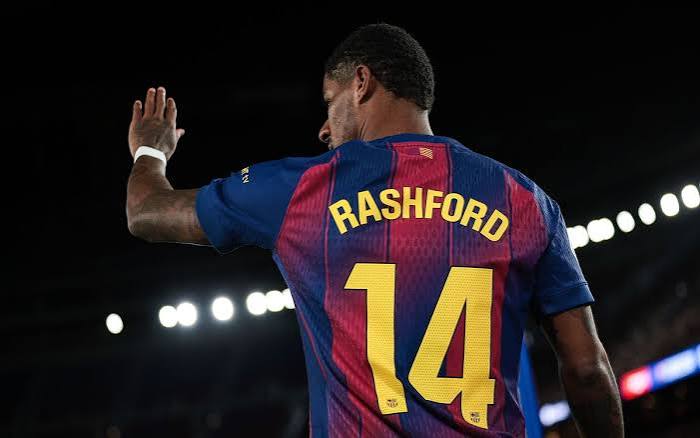
    Marcus Rashford: Goal-getter

    The summer transfer window is a time of high drama and high stakes, and for Manchester United, the 2025 edition is shaping up to be a defining one. With the club navigating the treacherous waters of Profit and Sustainability Rules (PSR) and a new manager’s first full season on the horizon, the rumor mill has been churning with one name above all: Marcus Rashford. Reports from The Athletic, Sky Sports, and Mundo Deportivo suggest that Barcelona, a club perennially linked with marquee signings, is circling the United No. 10. And United, desperate for funds, might just be tempted to listen.

    But selling Rashford would be a catastrophic mistake, one that could set the club back years. This isn’t just about a player’s form or a balance sheet; it’s about identity, about the soul of a club that has lost its way. Rashford is not just any player—he’s an academy graduate, a local lad who has bled for the badge since 2016. To sell him now, especially to a Barcelona side that can barely register its own players, would be to admit that United has become a selling club, a shadow of its former self. The stakes are enormous, and the decision made this summer will reverberate for a decade.

    The Financial Trap: Why PSR Is Pushing United to Sell

    Let’s be clear about the bind United finds itself in. The club posted losses of £113.2m for 2023-24, pushing its three-year total dangerously close to the Premier League’s £105m limit. The ‘sell-to-buy’ model is no longer a choice; it’s a necessity. And here’s the rub: selling an academy graduate like Rashford would be recorded as 100% pure profit on the books, a massive boost to the PSR calculation. It’s the kind of accounting magic that makes bean counters salivate.

    But this is a short-term fix with long-term consequences. Yes, United needs to raise funds, but it can do so by selling fringe players, trimming the wage bill, and being smarter in the market. The club has already made two signings this summer, and more are expected, but the core of the squad should be preserved. Rashford’s sale might bring in £60-80m, but what does it say about ambition? What message does it send to the fans, to the other players, to the world? That United is now a club that sells its best assets to balance the books? That’s not the United way.

    Barcelona’s Financial Reality: A Deal That Makes No Sense for United

    Now, let’s talk about Barcelona. The Catalan giants are in a financial mess of their own. La Liga’s spending cap for them was slashed from €650m in 2019-20 to just €204m for 2024-25. They’ve had to activate ‘economic levers’—selling off future assets—just to register players. They struggled to register Dani Olmo in January 2025. And yet, they’re being linked with Rashford, a player who would command a significant fee and wages.

    Barcelona’s interest is real, but their ability to pay is dubious. They would likely demand a loan with an obligation to buy, or a heavily structured deal, to manage their cash flow. For United, this would mean delaying the financial benefit, taking on risk, and potentially getting less than market value. It’s a deal that makes no sense for United, unless they’re desperate. And desperation is never a good negotiating position.

    Rashford’s Revival Under Amorim: A Sign of Things to Come

    Let’s not forget the football. Rashford had a poor 2023-24 season, no doubt. Eight goals in 43 appearances, off-field issues, a loss of form. But under Ruben Amorim, who took over in November 2024, there have been signs of a revival. Amorim’s 3-4-3 system has required Rashford to adapt, but he’s shown improved pressing and a return to double-digit goal contributions. He’s not back to his 2022-23 peak, when he scored 30 goals and was named in the PFA Team of the Year, but the trajectory is upward.

    Selling him now would be selling low. His value is depressed after two inconsistent seasons. If he has a strong 2025-26 under Amorim, his value could skyrocket. United would be wise to hold onto him, let him rebuild his form, and then reassess. The club has a history of selling players too early—look at the likes of Jaap Stam, David Beckham, or more recently, Romelu Lukaku. The regret is always palpable.

    The Identity Factor: Rashford Is More Than a Player

    Rashford is not just a footballer; he’s a symbol. He came through the academy, he’s a local lad, he’s been at the club since he was a kid. He’s the kind of player that fans identify with, the kind that embodies the club’s values. Selling him to Barcelona, a club that has its own financial troubles, would be a betrayal of that identity. It would say that United is no longer a club that nurtures talent, but a business that trades in it.

    Moreover, Rashford’s off-field work—his campaign against child food poverty, his advocacy for social causes—has made him a beloved figure beyond football. He’s a role model, a leader. To lose him would be to lose a part of the club’s soul. And in an era where clubs are increasingly faceless corporate entities, that soul is more important than ever.

    The Counter-Argument: Why Some Say Sell

    Of course, there are those who argue for selling. They point to his inconsistency, his high wages (£325k per week), and the tactical fit. Amorim’s system might not suit Rashford’s preferred left-wing role, and he’s been played as a striker or right-sided forward with mixed results. They argue that United needs to rebuild, and that means moving on from underperforming stars.

    But this is a false dichotomy. United can rebuild without selling Rashford. They can sell other players, they can be smarter in the market, they can develop young talent. The idea that Rashford is a liability is short-sighted. He’s 27, in his prime, and has shown he can be world-class. The problem isn’t Rashford; it’s the club’s inability to build a coherent squad around him. Selling him would be an admission of failure, not a step forward.

    The Verdict: Keep Him, Build Around Him

    The decision this summer is a test of United’s ambition. Selling Rashford to Barcelona would be the biggest mistake this summer, a move that would weaken the squad, undermine the manager, and alienate the fans. Instead, United should keep him, build around him, and give Amorim the tools to succeed. The financial pressure is real, but it can be managed without sacrificing the club’s best assets. United is not a selling club. It never has been, and it never should be.

    Manchester United stands at a crossroads. The easy path is to sell Rashford, to balance the books, to appease the accountants. But the right path is to keep him, to show faith in a player who has given so much to the club, and to build a team that can challenge for titles again. Selling Rashford to Barcelona would be a mistake that United would regret for years. The club must hold firm, keep its star, and trust in the process. The future depends on it.

    Summary

    • Selling Rashford would provide a PSR boost (100% profit) but would be a short-term fix with long-term consequences.
    • Barcelona’s financial instability means any deal would likely be a loan or heavily structured, offering little immediate benefit to United.
    • Rashford has shown signs of revival under Amorim, and selling now would mean selling low.
    • Rashford is a symbol of the club’s identity; selling him would undermine United’s values and alienate fans.
    • United can manage its finances without selling its best players; the club must show ambition, not desperation.

    FAQ

    Q: Why is Manchester United considering selling Marcus Rashford?
    A: United is under pressure to comply with the Premier League’s Profit and Sustainability Rules (PSR) after posting significant losses. Selling Rashford, an academy graduate, would be recorded as pure profit, providing a major boost to their financial position.

    Q: Can Barcelona afford to sign Rashford?
    A: Barcelona is in financial distress, with a reduced spending cap and struggles to register players. They would likely need to structure a deal as a loan with an obligation to buy, which offers limited immediate benefit to United.

    Q: Has Rashford’s form been good enough to justify keeping him?
    A: Rashford had a poor 2023-24 season but has shown improvement under Ruben Amorim, with a return to double-digit goal contributions. His 2022-23 peak, where he scored 30 goals, shows his potential.

    Q: What would selling Rashford mean for Manchester United’s identity?
    A: Rashford is an academy graduate and a symbol of the club’s values. Selling him would signal that United is a selling club, undermining its identity and alienating fans.

    Q: What should Manchester United do instead?
    A: United should keep Rashford, build around him, and manage its finances by selling fringe players and being smarter in the market. Selling the club’s best assets is not the solution.

  • El Clásico: The Enduring Rivalry That Defines Football’s Soul

    El Clásico: The Enduring Rivalry That Defines Football’s Soul

    What El Clasico really means: 'You love something so much, and hate it in equal measure' - The Athletic

    Every few months, the football world stops. Not for a World Cup final or a Champions League night, but for a league match between two clubs separated by 600 kilometers and a chasm of identity. Barcelona vs. Real Madrid—El Clásico—is more than a game; it’s a cultural referendum, a political flashpoint, and a showcase of football’s highest artistry. With hundreds of millions tuning in from Lagos to Los Angeles, this rivalry transcends sport, embedding itself in the global consciousness.

    But what makes this fixture so magnetic? It’s not just the galaxy of stars—from Di Stéfano to Messi, from Cruyff to Bellingham—or the trophy cabinets that bulge with European Cups. It’s the collision of philosophies: Catalonia’s defiant ‘Més que un club’ against Madrid’s regal assertion of Spanish unity. As the 2024-25 season unfolds, with a new generation of protagonists, El Clásico remains a living, breathing drama that shapes careers and defines eras.

    The Roots of a Rivalry: Politics, Identity, and Football

    To understand El Clásico, you must look beyond the pitch. Barcelona is the capital of Catalonia, a region with its own language, culture, and a centuries-old yearning for autonomy. Real Madrid, the capital’s club, has historically been seen as the establishment’s team—especially during Francisco Franco’s dictatorship (1939-1975), when the regime used football as a tool for national unity. While historians debate the extent of Franco’s favoritism toward Madrid, the perception stuck: Barça became a symbol of Catalan resistance, a peaceful rebellion played out in stadiums.

    This political undercurrent gives every Clásico a weight that transcends sport. When Barcelona players wear the Catalan flag on their kits, or when Camp Nou erupts in a sea of ‘senyeras’ during the national anthem, it’s a reminder that this is more than a game. For many Catalans, Barça is a proxy for their identity; for Madridistas, their club represents the idea of a unified Spain. The rivalry is a microcosm of the country’s tensions, but it’s also a unifying force—for 90 minutes, the world watches a shared passion.

    The Tactical Chess Match: Tiki-Taka vs. Galácticos

    On the pitch, El Clásico has often been a clash of footballing ideologies. Barcelona, nurtured by Johan Cruyff’s philosophy and La Masia’s conveyor belt of talent, became synonymous with ‘tiki-taka’—a possession-based, short-passing style that suffocates opponents. Think of Xavi and Iniesta’s metronomic midfield, or Messi’s telepathic understanding with his teammates. It’s football as art, a collective symphony.

    Real Madrid, by contrast, has historically favored a more direct, explosive approach. The ‘Galácticos’ era—Zidane, Figo, Ronaldo, Beckham—was about individual brilliance, moments of magic that decide games. Madrid’s counter-attacking prowess under Carlo Ancelotti, with Vinícius Jr. and Jude Bellingham, is a modern evolution: lethal in transition, clinical in front of goal. The contrast is stark: Barça’s patient build-up vs. Madrid’s lightning strikes. Yet, both styles have evolved. Xavi’s Barça now mixes possession with verticality, while Ancelotti’s Madrid can dominate possession when needed. The tactical battle is a living laboratory, where coaches adapt and innovate.

    The Icons: From Di Stéfano to Yamal

    El Clásico has been defined by its icons. In the 1950s, Alfredo Di Stéfano led Madrid to five consecutive European Cups, setting a standard of dominance. Johan Cruyff, in the 1970s, brought ‘Total Football’ to Barcelona and sparked a revolution. Diego Maradona’s brief but dazzling stint at Barça added to the lore. Then came the era that redefined the rivalry: Lionel Messi vs. Cristiano Ronaldo. From 2009 to 2018, these two titans pushed each other to unprecedented heights, with Messi scoring a record 26 Clásico goals. Their duels were not just matches; they were global events, with every touch dissected.

    Now, a new generation is writing its own chapters. Jude Bellingham, with his knack for late goals, has become Madrid’s Clásico hero. On the other side, Lamine Yamal, born in 2007, represents Barça’s future—a prodigy from La Masia who embodies the club’s attacking DNA. The torch has passed, but the intensity remains. Each Clásico is a chance for a new star to etch their name into history.

    The Numbers Game: Trophies, Records, and Bragging Rights

    As of early 2025, Real Madrid leads the all-time head-to-head with roughly 105 wins to Barcelona’s 100, with about 52 draws. Madrid also boasts a record 15 European Cups, while Barça has 5. In La Liga, Madrid leads with ~35 titles to Barça’s ~27. But Barcelona holds the edge in Copa del Rey, with a record ~31 trophies. These numbers are not just statistics; they fuel the narrative of superiority. Every Clásico is a chance to shift the balance, to claim bragging rights for the next few months.

    The financial stakes are equally high. Both clubs are among the world’s richest, with revenues exceeding €800 million annually. They are global brands, with massive social media followings and merchandise sales. Their rivalry extends to the boardroom, where they’ve even collaborated—controversially—on the European Super League project, showing that off-pitch interests can align despite on-pitch animosity.

    The Modern Era: A Rivalry Reborn

    Post-Messi and post-Ronaldo, El Clásico has evolved. Barcelona won La Liga in 2023, while Madrid claimed the title in 2022 and 2024, along with Champions League triumphs in those years. The 2024-25 season has already delivered a thrilling 3-2 Madrid win at the Bernabéu, with Bellingham scoring a stoppage-time winner. The rivalry remains as fierce as ever, but the context has shifted. Both clubs are navigating financial constraints and rebuilding squads, yet the hunger for victory is undiminished.

    Off the pitch, the political dimension persists, but it’s more nuanced. Many fans insist the rivalry is purely sporting, and the political narrative is oversimplified. Yet, when the teams meet, the symbolism is inescapable. The atmosphere at Camp Nou and the Bernabéu is electric, a cauldron of noise and color. Ultra groups, though heavily policed, add an edge. For neutrals, it’s a spectacle; for fans, it’s a matter of identity.

    Why It Matters: The Global Phenomenon

    El Clásico is broadcast in over 180 countries, with an estimated audience of hundreds of millions. It’s a cultural export, a brand that transcends football. The rivalry drives tourism, with fans traveling from around the world to witness the spectacle. It influences political discourse in Spain, with politicians using the match to score points. It’s a stage where heroes are made and legacies are forged.

    For the players, a Clásico is the ultimate test. For the fans, it’s a rollercoaster of emotion. For the neutral, it’s a masterclass in football. El Clásico is not just a match; it’s a phenomenon that encapsulates the beauty, drama, and complexity of the beautiful game.

    El Clásico is more than a football match; it’s a living history of Spain, a canvas for footballing genius, and a global spectacle that unites and divides in equal measure. As long as Barcelona and Real Madrid exist, this rivalry will endure, evolving with the times but never losing its intensity. Whether you’re a fan of tiki-taka or Galácticos, of Catalonia or Castile, El Clásico is a reminder of why we love this sport: for the passion, the drama, and the sheer unpredictability of it all.

    Summary

    • El Clásico is the most-watched club football match globally, with an estimated audience of hundreds of millions.
    • The rivalry is rooted in political and cultural tensions between Catalonia and the Spanish state, with Barcelona symbolizing resistance and Madrid representing unity.
    • Tactically, it’s a clash of styles: Barcelona’s possession-based tiki-taka vs. Real Madrid’s direct, counter-attacking approach.
    • The Messi-Ronaldo era (2009-2018) defined a generation, with Messi scoring a record 26 Clásico goals.
    • As of early 2025, Real Madrid leads the head-to-head with ~105 wins to Barcelona’s ~100, and both clubs remain among the world’s richest and most successful.

    FAQ

    Q: Why is it called ‘El Clásico’?
    A: The term ‘El Clásico’ (The Classic) was popularized in the early 20th century to describe the historic rivalry between Spain’s two most successful clubs, FC Barcelona and Real Madrid. It’s now used globally to refer to any match between them.

    Q: How often do Barcelona and Real Madrid play each other?
    A: They meet at least twice a year in La Liga, and can face off in other competitions like the Copa del Rey, Supercopa de España, and UEFA Champions League. In some seasons, they’ve played as many as five times.

    Q: Who has won more El Clásico matches?
    A: As of early 2025, Real Madrid leads with roughly 105 wins to Barcelona’s 100, with about 52 draws. However, the record is constantly changing with each match.

    Q: What is the political significance of El Clásico?
    A: The rivalry has political undertones: Barcelona represents Catalonia’s quest for autonomy, while Real Madrid is often seen as the establishment’s club. This was especially pronounced during Franco’s dictatorship, when Barça became a symbol of resistance.

    Q: Who are the all-time top scorers in El Clásico?
    A: Lionel Messi holds the record with 26 goals in El Clásico, followed by Cristiano Ronaldo with 18. Alfredo Di Stéfano and Karim Benzema are also among the top scorers.