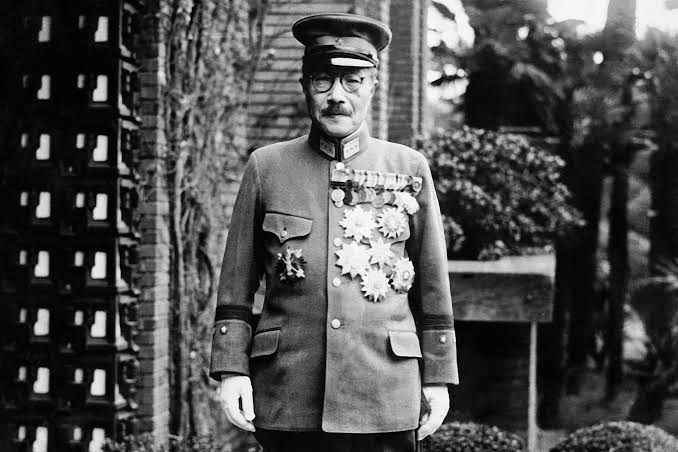
On December 7, 1941, Japanese carrier aircraft devastated the U.S. Pacific Fleet at Pearl Harbor, killing over 2,400 Americans and dragging the United States into World War II. The man who authorized that attack was Hideki Tojo, Japan’s Prime Minister and a general whose name became synonymous with wartime atrocities. But Tojo was not simply a cartoon villain; he was a product of a militarized state, a dogged bureaucrat who rose through the ranks by embracing expansionism, and a leader whose legacy remains fiercely contested in Japan today.
Tojo’s story is not just about one man’s ambition. It’s about how a nation’s political system can be hijacked by military hardliners, how a single decision can reshape the global order, and how the aftermath of war forces us to confront questions of guilt, responsibility, and justice. From his samurai lineage to his execution by hanging in 1948, Tojo’s life offers a stark lens into the darkest chapters of the 20th century.
From Samurai Son to Military Hardliner
Hideki Tojo was born on December 30, 1884, in Tokyo’s Kōjimachi district, into a family with deep military roots. His father, Hidenori Tojo, was a lieutenant general in the Imperial Japanese Army, and young Hideki was groomed for a martial career from the start. He graduated from the Imperial Japanese Army Academy in 1915 and later the Army War College, quickly distinguishing himself as a disciplined, no-nonsense officer.
Tojo’s early career included a stint in the Siberian Intervention (1918–1922), where Japanese forces joined an international effort to topple the Bolsheviks. But it was his time as a military attaché in Germany in the early 1920s that left a lasting impression. He observed firsthand the rise of Nazi militarism its discipline, its aggression, and its ideological fervor. These lessons would later shape his own worldview.
Back in Japan, Tojo aligned himself with the Kōdōha, or Imperial Way faction, a group of ultranationalist officers who believed in aggressive expansionism and spiritual discipline over the more cautious, pragmatic approach of the rival Tōseiha (Control) faction. The Imperial Way saw Japan as destined to lead Asia, by force if necessary. Tojo’s rise was steady: he became Chief of the Kempeitai (military police) in Manchuria in 1935, where he ruthlessly suppressed dissent and oversaw harsh occupation policies. By 1938, he was Vice-Minister of War, and in 1940, he became Army Minister under Prime Minister Fumimaro Konoe.
The Road to Pearl Harbor
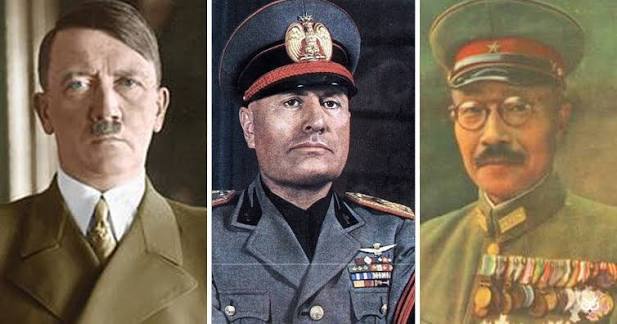
As Army Minister, Tojo was a driving force behind Japan’s aggressive foreign policy. He pushed for the Tripartite Pact with Nazi Germany and Fascist Italy in September 1940, formally aligning Japan with the Axis powers. He also championed the “Greater East Asia Co-Prosperity Sphere,” a propaganda slogan that masked Japanese imperial domination over Southeast Asia and the Pacific.
But the critical issue was China. Japan had been bogged down in a brutal war there since 1937, and the United States, alarmed by Japanese expansion, imposed oil and steel embargoes in 1941. Tojo saw these embargoes as a threat to Japan’s very survival. Negotiations with Washington stalled, and the Japanese military leadership including Tojo concluded that war with the West was inevitable.
In October 1941, Tojo replaced Konoe as Prime Minister, largely because he was seen as the strongest advocate for war. He also held the portfolios of Army Minister and Home Minister, accumulating unprecedented power. On December 7, 1941, he authorized the attack on Pearl Harbor, along with simultaneous strikes on Malaya, Singapore, Hong Kong, and the Philippines. The goal was to cripple the U.S. Pacific Fleet and give Japan a free hand to conquer resource-rich territories.
Wartime Dictator and Brutal Policies
In the first six months after Pearl Harbor, Japanese forces swept across the Pacific, achieving a string of stunning victories. Tojo wielded more power than any civilian leader in modern Japanese history, effectively becoming a dictator. He also authorized some of the most brutal policies of the war.
The Bataan Death March in the Philippines, where thousands of American and Filipino POWs died from abuse and starvation, happened under his watch. He implemented the sankō sakusen, or “kill-all, burn-all, loot-all” policy in China, which caused the deaths of countless civilians. He also oversaw the forced labor of POWs and Asian civilians on projects like the Burma Railway, and he failed to apply the Geneva Conventions to POWs, leading to widespread mistreatment.
But Tojo’s military fortunes turned after the Battle of Midway in June 1942, when the U.S. Navy dealt a devastating blow to Japanese carrier forces. The subsequent Allied island-hopping campaign, culminating in the fall of Saipan in July 1944, made Japan’s defeat inevitable. Tojo resigned on July 22, 1944, taking responsibility for the war’s failures, but he remained a powerful figure until Japan’s surrender in August 1945.
The Attempted Suicide and the Tokyo Trials
After Japan surrendered, Tojo knew his fate was sealed. On September 11, 1945, as U.S. military police approached his home, he shot himself in the chest with a pistol. The bullet missed his heart, and he survived—only to be arrested, tried, and convicted.
The International Military Tribunal for the Far East, known as the Tokyo Trials, began in 1946. Tojo was charged with war crimes, crimes against peace, and crimes against humanity. He accepted responsibility for Japan’s wartime actions but argued that he was following orders from Emperor Hirohito and acting in Japan’s self-defense. The court rejected his defense, and he was convicted on seven of 55 counts, including waging aggressive war.
On December 23, 1948, Tojo was hanged at Sugamo Prison in Tokyo. His ashes were scattered at sea, though some remains were reportedly taken by supporters and enshrined at Yasukuni Shrine, Japan’s controversial war memorial.
Three Perspectives on Tojo’s Legacy
Tojo’s legacy is not monolithic. In the West, he is almost universally condemned as the architect of the Pacific War—a militaristic, expansionist leader who personally ordered Pearl Harbor and authorized atrocities. This perspective sees his execution as justice.
Some historians, however, offer a more structuralist view. They argue that Tojo was not a lone madman but a product of a militarized state. The decision for war was collective—the Emperor, the Privy Council, and the military leadership all shared responsibility. Tojo was more of an administrator than a strategic genius, and he inherited a war machine already in motion. This perspective doesn’t excuse his actions but complicates the simple villain narrative.
In Japan, a vocal minority of nationalists and revisionists, associated with groups like Nippon Kaigi, portray Tojo as a tragic patriot who defended Japan against Western imperialism. They argue that his actions, while misguided, were motivated by a desire to protect Japan’s interests. This view is deeply contested, and many Japanese and international observers reject it as a whitewash of war crimes.
Why Tojo Still Matters
The story of Hideki Tojo is a reminder of how quickly a nation can descend into militarism and how individual leaders can bear immense responsibility for catastrophic decisions. It also highlights the ongoing struggle over historical memory—how we remember wartime leaders and their actions shapes national identity and international relations.
Today, visits by Japanese politicians to Yasukuni Shrine, where Tojo is enshrined, continue to provoke diplomatic tensions with China and South Korea. The question of whether Tojo was a criminal or a patriot remains unresolved in some quarters, but the historical record is clear: his decisions led to the deaths of millions and the suffering of countless others. That is not a matter of interpretation; it is a fact.
Hideki Tojo was neither a genius nor a madman—he was a product of a militarized system that he helped to strengthen, and he made choices that had devastating consequences. His execution in 1948 marked the end of an era, but his legacy continues to shape debates about war, responsibility, and justice. As we reflect on Tojo’s life, we are reminded that leadership carries a heavy weight, and that the decisions made in times of crisis can echo for generations.
Summary
- Hideki Tojo was Prime Minister of Japan from 1941 to 1944 and ordered the attack on Pearl Harbor.
- He held multiple portfolios simultaneously, effectively becoming a dictator during wartime.
- Tojo authorized brutal policies, including the Bataan Death March and the ‘kill-all, burn-all, loot-all’ strategy in China.
- After Japan’s surrender, he attempted suicide but survived and was tried by the International Military Tribunal for the Far East.
- He was convicted of war crimes and executed on December 23, 1948.
- His legacy remains contested: condemned internationally, but viewed by some Japanese nationalists as a tragic patriot.
FAQ
Q: What was Hideki Tojo’s role in the attack on Pearl Harbor?
A: As Prime Minister of Japan, Tojo authorized the attack on Pearl Harbor on December 7, 1941, which brought the United States into World War II.
Q: Why did Tojo attempt suicide after the war?
A: Tojo attempted suicide on September 11, 1945, to avoid capture and trial by the Allied forces. He shot himself in the chest but survived and was later arrested.
Q: What crimes was Tojo convicted of?
A: Tojo was convicted on seven of 55 counts at the Tokyo Trials, including waging aggressive war and crimes against humanity, and was sentenced to death.
Q: How is Tojo viewed in Japan today?
A: In Japan, Tojo’s legacy is contested. Some nationalists view him as a patriot who defended Japan against Western imperialism, while others and the international community condemn him as a war criminal.
Q: Why is Tojo enshrined at Yasukuni Shrine?
A: Tojo’s remains were reportedly taken by supporters and enshrined at Yasukuni Shrine, a war memorial that has become a source of diplomatic tension because it honors convicted war criminals.