Tag: Australia

  • Australia Expands Rooftop Solar Discounts to Larger Businesses: What You Need to Know

    Australia Expands Rooftop Solar Discounts to Larger Businesses: What You Need to Know

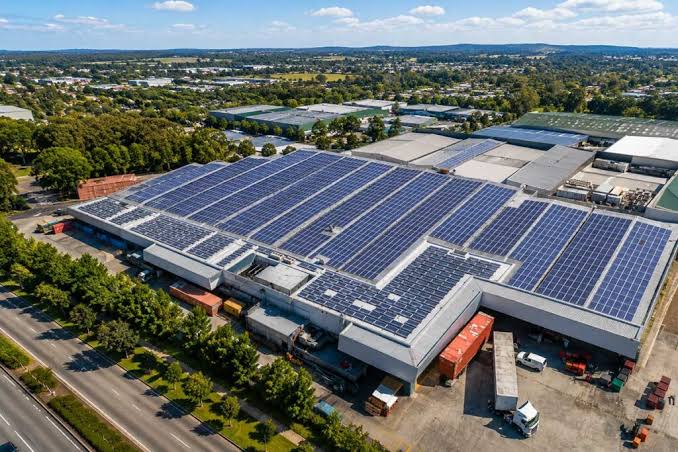
    The Albanese government is widening its rooftop solar incentive scheme to include larger commercial and industrial businesses, a move that could reshape how mid-sized manufacturers and warehouses power their operations. Previously, the scheme built on Small-scale Technology Certificates (STCs) was capped at systems up to 100kW, effectively leaving bigger installations without the same upfront financial support. Now, the eligibility threshold is being raised or removed, opening the door for businesses with higher energy needs to access discounts on solar installation.

    This expansion comes at a time when Australia leads the world in household solar uptake, with roughly one in three homes generating their own power. Yet commercial rooftop solar has lagged, hampered by higher upfront costs and more complex financing. The policy shift aims to close that gap, but it also raises questions about grid stability, industry capacity, and whether the incentive will reach the businesses that need it most.

    How the Scheme Works

    The core mechanism is the Small-scale Renewable Energy Scheme (SRES), which has long subsidised rooftop solar for homes and small businesses. Under the SRES, eligible systems generate Small-scale Technology Certificates (STCs) based on their expected electricity output over a set period. These certificates are traded or sold upfront, effectively lowering the point-of-sale cost of a solar installation.

    Previously, only systems up to 100kW could participate. Larger systems fell under the Large-scale Renewable Energy Target (LRET), which lacks the same upfront discount mechanism. That meant a small factory or a large retail warehouse often needing 200kW or more had to finance the full installation cost without this subsidy, even though their potential savings were substantial.

    The expansion changes this by raising or removing the capacity cap, allowing mid-to-large businesses to generate STCs and receive the corresponding discount. The exact new thresholds and any phase-in periods are expected to be detailed in the official announcement, but the direction is clear: the government wants more commercial rooftops covered.

    Why the Expansion Matters

    Australia’s household solar penetration is among the highest in the world, but commercial uptake has been a weak spot. A 2023 report from the Clean Energy Council found that commercial solar installations accounted for only a fraction of the total capacity added each year. The reasons are familiar: high upfront costs, complex financing, and a lack of equivalent incentives compared to residential systems.

    At the same time, electricity prices for businesses have been climbing. The Australian Energy Regulator’s 2024-25 default market offer saw a typical small business facing a 7% to 9% increase in bills. For energy-intensive operations, those costs can be a major drag on competitiveness. By cutting the upfront cost, the expanded scheme could make solar viable for a wider range of businesses, from logistics centres to food processors.

    This also aligns with the government’s broader climate goals. The 82% renewable electricity target by 2030 requires significant growth in distributed generation, and commercial rooftops represent a largely untapped resource. Analysts estimate that Australia’s commercial and industrial rooftops could host more than 50GW of solar capacity—enough to power millions of homes.

    Industry and Business Response

    Solar industry bodies have welcomed the move. The Clean Energy Council called it “a pragmatic step” that would drive growth in the commercial market, create jobs in installation and supply chains, and help businesses manage energy costs. The Smart Energy Council echoed that sentiment, noting that expanded eligibility would open a “significant pipeline” of projects.

    Business groups, including the Business Council of Australia, have framed the expansion as a cost-relief measure. For mid-sized manufacturers and commercial property owners, the discount could be the difference between investing in solar now or deferring it for years. climate advocates see it as a way to decarbonise a sector that has been hard to reach.

    However, not everyone is unreservedly enthusiastic. Energy market analysts point out that more behind-the-meter generation reduces demand for grid electricity, which could affect network revenues. If network costs are fixed, this could shift expenses onto consumers without solar—a cross-subsidy concern that regulators will need to watch.

    Fiscal conservatives have also raised questions about cost-effectiveness. Some businesses might install solar anyway, meaning the discount could be a windfall rather than a driver of new uptake. The government will need to design the eligibility criteria carefully to target businesses that are genuinely on the fence.

    Technical and Practical Challenges

    Expanding the scheme is not just about writing bigger cheques. Larger installations come with technical challenges. Network operators are concerned about voltage management and export limits when many commercial sites start generating power. Smart inverters and, in some cases, battery storage may be needed to ensure grid stability.

    There is also the question of installation capacity. Australia already faces a shortage of qualified electricians and engineers. A surge in commercial projects could strain the industry, leading to longer wait times and higher labour costs. The Clean Energy Council has called for more training and streamlined accreditation processes to meet demand.

    Finally, there is a communication challenge. The scheme is often described loosely as a “rebate” or “subsidy,” but it is really an upfront discount based on certificate trading. Businesses need to understand the cash-flow implications: unlike a rebate paid after installation, the STC discount is applied at the point of sale, reducing the initial capital outlay. This is a crucial distinction for financial planning.

    What Businesses Should Watch For

    The expansion is not a blanket invitation. Eligibility will still depend on system size, energy usage, and possibly business type. Businesses should monitor the official guidelines from the Department of Climate Change, Energy, the Environment and Water (DCCEEW) to see if they qualify.

    Also note that the scheme is not a subsidy for electricity bills. It reduces the capital cost of solar, not the cost of grid power. And with installation prices already falling, the discount could make payback periods significantly shorter. For a mid-sized business with a high energy load, that could mean a return on investment in four to five years rather than seven or eight.

    The announcement is part of a broader push that includes the Rewiring the Nation program and the Capacity Investment Scheme. Together, these policies are designed to accelerate the transition away from fossil fuels, but the success of the expanded solar discount will depend on execution. Clear rules, adequate industry capacity, and grid integration plans will be just as important as the funding itself.

    The expansion of the rooftop solar discount scheme marks a significant step toward unlocking the commercial solar market in Australia. By extending STC incentives to larger businesses, the government is addressing a long-standing gap that has kept many factories and warehouses off the solar map. But the success of the policy will hinge on careful implementation—managing grid stability, ensuring industry capacity, and targeting the discount to businesses that truly need it. For now, the message is clear: if you run a mid-sized business with a sizable roof, the economics of going solar just got a lot more attractive.

    Summary

    • The Albanese government is expanding the rooftop solar discount scheme to include larger commercial and industrial businesses, previously capped at 100kW.
    • The scheme uses Small-scale Technology Certificates (STCs) to provide an upfront discount on installation costs, not a rebate or loan.
    • Commercial solar uptake has lagged behind household adoption due to high upfront costs and complex financing; this move aims to close that gap.
    • Industry and business groups welcome the expansion as a cost-relief and growth driver, but analysts raise concerns about grid stability and potential cross-subsidies.
    • Businesses should watch for detailed eligibility criteria and prepare for possible installation capacity constraints.

    FAQ

    Q: What exactly is changing with the solar discount scheme?
    A: The scheme, which previously offered STC discounts only for systems up to 100kW, is being expanded to include larger commercial and industrial installations. The exact new capacity limits and eligibility criteria will be published by the DCCEEW.

    Q: Is the discount a rebate I get after installation?
    A: No. The STC discount is applied at the point of sale, reducing the upfront cost of the solar system. It is not a cash rebate paid later. This means you need to factor the discount into your initial budget, but you also don’t have to wait for a payout.

    Q: Will my business qualify?
    A: It depends on your system size, energy usage, and possibly other factors. The government has not yet released the full details, but the expansion is aimed at mid-to-large businesses that were previously excluded due to the 100kW cap. Check the DCCEEW website for updates.

    Q: How does this affect my electricity bills?
    A: The discount reduces the cost of installing solar, which in turn can lower your electricity bills over time by generating your own power. However, it is not a direct subsidy on your bills. Your savings depend on your energy consumption and the size of the system.

    Q: Are there any downsides to the expansion?
    A: There are concerns that more commercial solar could strain the electricity grid if not managed properly, and that network costs might shift to non-solar consumers. Industry capacity is also a potential bottleneck. These are issues regulators and the government will need to address as the scheme rolls out.

  • Sydney vs Melbourne: Which Australian City Is More Livable?

    Living in Melbourne vs Sydney: Costs, Jobs & Lifestyle

    Australia’s two largest cities, Sydney and Melbourne, have a rivalry that goes back over a century. It’s not just about sports or accents—it’s about which city offers a better life. But ‘livable’ is a slippery term. The Economist Intelligence Unit ranked Melbourne the world’s most livable city in 2024, while Sydney came in at #7. Yet Monocle’s list flips the order. So who’s right?

    This isn’t a question with a single answer. Livability depends on what you value: career opportunities, housing costs, culture, climate, or the daily commute. Let’s break down the facts and see how each city stacks up.

    The Rivalry: A Century in the Making

    Sydney and Melbourne have been competing since the 19th century, when both vied to become the national capital. The compromise was Canberra, but the rivalry never cooled. Melbourne served as the temporary seat of government from 1901 to 1927, and ever since, the two cities have been framed as opposites: Sydney for business, Melbourne for culture.

    That framing holds some truth. Sydney is Australia’s financial powerhouse, home to the ASX, the Reserve Bank, and the headquarters of most major banks. Melbourne, meanwhile, has built its reputation on arts, food, sport, and a café culture that’s the envy of the world. But the reality is more nuanced—both cities offer a mix of opportunities and lifestyle perks.

    Population and Size: Melbourne Is Catching Up

    Greater Sydney is home to about 5.3 million people, while Greater Melbourne has around 5.2 million. But Melbourne is growing faster. Projections from the Australian Bureau of Statistics suggest Melbourne will overtake Sydney as the country’s largest city by 2030–2032. That growth brings energy and diversity, but also pressure on housing and infrastructure.

    Geographically, Sydney is larger (12,368 km² vs 9,993 km²) but also more constrained by its harbour and national parks. Melbourne’s flatter terrain has allowed for more outward sprawl, which comes with its own trade-offs: longer commutes for some, but more affordable housing on the fringe.

    Climate: Sun, Surf, or Four Seasons in a Day

    Sydney’s climate is a major draw. Coastal, temperate, with mild winters and warm summers—average highs of 26°C in summer and 17°C in winter. The harbour, the beaches like Bondi and Manly, and the sandstone cliffs define the outdoor lifestyle. Melbourne’s weather is more of a wildcard. It’s famously unpredictable, with the phrase ‘four seasons in one day’ coined for a reason. Summer highs average 26°C, but winter dips to around 14°C, and it’s cooler and drier overall.

    If you love predictable sunshine and beach days, Sydney has the edge. If you don’t mind layers and a bit of drizzle, Melbourne’s climate is manageable—and its cooler weather might even be a relief during heatwaves.

    Economy and Jobs: Different Strengths

    Sydney is the corporate titan. It’s the centre for finance, technology, and professional services. If you’re an investment banker, a software engineer, or a corporate lawyer, Sydney likely has more opportunities—and higher salaries to match. Melbourne has a more diversified economy, with strong sectors in healthcare, education, and manufacturing, plus a growing tech scene. It’s also home to major universities like Melbourne, Monash, and RMIT, making it a hub for research and innovation.

    Both cities have robust job markets, but the type of work matters. Sydney may pay more, but Melbourne offers a better work-life balance for many, with shorter commutes if you live near the CBD.

    Cost of Living: Sydney’s Steep Price Tag

    Sydney’s housing market is the most expensive in Australia. The median house price hovers around $1.4–1.6 million, and rents are correspondingly high. Melbourne is more affordable, with a median house price around $1.0–1.1 million and rents 15–20% lower. That difference can mean tens of thousands of dollars a year in savings.

    But Melbourne’s property market has been slower to recover from the COVID-19 pandemic, and vacancy rates have fluctuated. While Sydney’s prices are daunting, they also reflect strong demand and a robust economy. For first-home buyers or those on a budget, Melbourne is the clearer choice.

    Transport and Infrastructure: Trams vs. Trains

    Sydney has a sprawling network of trains, ferries, and buses, and it’s investing heavily in the future: the Sydney Metro is expanding, WestConnex is reducing travel times, and a new airport at Western Sydney is set to open in 2026. But traffic congestion is a notorious problem, and commute times can be brutal.

    Melbourne is famous for its tram network—the largest in the world—and its extensive suburban rail. The Metro Tunnel is due to open in 2025, and the Suburban Rail Loop is a long-term project. The CBD is highly walkable, and many inner suburbs are well-connected. Both cities face congestion, but Melbourne’s grid layout and tram coverage make it easier to navigate without a car.

    Culture and Lifestyle: Beach vs. Laneways

    Sydney’s lifestyle is all about the outdoors. The harbour, the beaches, the national parks—it’s a city where you can surf before work and hike on the weekend. The dining and nightlife are strong, with Vivid Sydney, the Sydney Festival, and Mardi Gras drawing crowds. But Melbourne is often called Australia’s cultural capital, and for good reason. Its laneway bars, street art, and coffee culture are legendary. It hosts the Australian Open, the Formula 1 Grand Prix, and the Melbourne International Comedy Festival. Sports fans are spoiled: AFL rules, but there’s also cricket, rugby, and soccer.

    If you want to live in board shorts and flip-flops, Sydney wins. If you prefer a cosmopolitan buzz with world-class food and art, Melbourne takes the crown.

    Liveability Rankings: What Do They Actually Measure?

    The EIU Global Liveability Index 2024 put Melbourne at #1 and Sydney at #7. That index weighs stability, healthcare, culture and environment, education, and infrastructure. Melbourne’s high score is partly due to its relative affordability and strong public services. Monocle’s list, which gives more weight to design, urbanism, and quality of life, often ranks Sydney higher.

    These rankings are useful but subjective. They don’t capture everything—like the stress of a long commute or the joy of a perfect beach day. And both cities face serious challenges, including housing affordability, climate risks, and the strain of rapid population growth.

    The Bottom Line: Which City Is More Livable?

    There’s no definitive answer. Sydney offers better career prospects in finance and tech, a stunning natural setting, and a warmer climate—but at a steep cost. Melbourne delivers more affordable housing, a vibrant cultural scene, and a more relaxed pace of life, at the price of unpredictable weather and a less booming economy.

    For a young professional in banking, Sydney might be the smarter move. For an artist or a family on a budget, Melbourne could be the better fit. The ‘most livable’ city is the one that aligns with your priorities. And as both cities continue to grow and evolve, the rivalry will only deepen—which is great news for anyone lucky enough to choose between them.

    Ultimately, the Sydney vs Melbourne debate comes down to what you value most. Both cities are world-class in their own right, and both have their drawbacks. The best advice is to visit both, spend time in different neighborhoods, and see which one feels like home. After all, liveability is a personal measure—and the only ranking that truly matters is your own.

    Summary

    • Sydney is Australia’s financial and corporate hub, with higher salaries but also higher housing costs (median house price ~$1.4–1.6M).
    • Melbourne is more affordable (median house price ~$1.0–1.1M) and is ranked #1 on the EIU Global Liveability Index 2024, while Sydney is #7.
    • Climate: Sydney offers a milder, sunnier climate; Melbourne is cooler and famously unpredictable.
    • Culture: Melbourne is known as Australia’s cultural capital with laneways, coffee, and major sports events; Sydney emphasizes outdoor lifestyle and beaches.
    • Transport: Melbourne has the world’s largest tram network and a walkable CBD; Sydney has an expanding metro but severe traffic congestion.

    FAQ

    Q: Which city has a better job market?
    A: Sydney leads in finance, tech, and corporate roles, with higher average salaries. Melbourne is strong in healthcare, education, research, and has a growing tech scene, but salaries may be slightly lower on average.

    Q: Is it cheaper to live in Melbourne or Sydney?
    A: Melbourne is more affordable, with median house prices around $1.0–1.1 million compared to Sydney’s $1.4–1.6 million, and rents are typically 15–20% lower.

    Q: What is the weather like in each city?
    A: Sydney has a temperate coastal climate with mild winters (average 17°C) and warm summers (26°C). Melbourne is cooler and drier, with highly variable weather—’four seasons in one day’—and winter averages around 14°C.

    Q: Which city is better for families?
    A: Both are family-friendly, but Melbourne offers more affordable housing and a strong education system, while Sydney provides more outdoor activities and a warmer climate. The choice depends on budget and lifestyle preferences.

    Q: How do the cities rank on global liveability indexes?
    A: In the EIU Global Liveability Index 2024, Melbourne ranked #1 and Sydney #7. Other indexes like Monocle’s often rank Sydney higher, reflecting different criteria and priorities.

  • Australia’s Wildlife Faces an Unprecedented Bird Flu Threat: What You Need to Know

    Australia’s Wildlife Faces an Unprecedented Bird Flu Threat: What You Need to Know


    For decades, Australia’s geographic isolation shielded it from the devastating bird flu outbreaks that have ravaged wildlife across the globe. But that protection has now eroded. In late 2024, the country confirmed its first sustained transmission of highly pathogenic avian influenza (HPAI) in wild birds—a wake-up call that the warning signs are over.

    While the current strain, H7N8, is not the infamous H5N1 that has killed millions of birds worldwide, its arrival in Australian wildlife signals a new era of vulnerability. Experts warn that H5N1’s eventual arrival is ‘inevitable,’ and the nation’s unique and endemic species could face catastrophic losses. This article unpacks the current outbreak, the looming threat, and what it means for Australia’s environment, economy, and public health.

    The Current Outbreak: H7N8 in Australia

    In mid-2024, Australian authorities detected highly pathogenic avian influenza (HPAI) H7N8 in poultry farms across Victoria, New South Wales, and the Australian Capital Territory. The virus, which likely originated from low-pathogenic strains carried by wild waterfowl, mutated into a deadly form once it entered high-density poultry operations. By late 2024, the virus had spilled back into wild birds, with confirmed deaths in waterfowl and raptors—a worrying development that marks a shift from poultry-only outbreaks to sustained wildlife transmission.

    Over 1.5 million birds have been culled in Victoria alone, causing significant economic losses and egg shortages. But the wildlife impact, while smaller in scale than the global H5N1 crisis, is a red flag. Wild birds, especially those with no prior immunity, are highly susceptible to HPAI, and the virus can spread rapidly through wetlands and along migratory routes.

    Why Australia Was Historically Protected

    Australia’s unique position—geographically isolated and with migratory bird flyways that don’t directly connect to Asia’s major routes—has long shielded it from the worst avian influenza outbreaks. Previous H7 outbreaks (1976, 1985, 1992, 1994, 1997, 2012, 2020) were all contained to poultry and quickly eradicated. The current H7N8 outbreak, however, has broken that pattern by establishing a foothold in wildlife.

    The Looming H5N1 Threat

    While H7N8 is concerning, the bigger fear is H5N1 clade 2.3.4.4b, which has caused the worst avian influenza outbreak in recorded history. Since 2021, this strain has killed hundreds of millions of birds and tens of thousands of mammals worldwide, including seals, sea lions, and even dairy cattle. It has reached Antarctica via migratory birds and is now on Australia’s doorstep. The primary pathway is through migratory shorebirds from Siberia and Alaska that visit Australia’s northern coasts each summer.

    Experts consider H5N1’s arrival in Australia ‘inevitable.’ When it comes, the impact on wildlife could be devastating. Australia’s endemic and threatened species—such as the orange-bellied parrot, swift parrot, and black-faced cormorant—have no prior exposure to HPAI and could suffer catastrophic losses. Offshore islands like Macquarie Island and Lord Howe Island, which host globally significant seabird colonies, are particularly vulnerable.

    The Ripple Effects: Agriculture, Economy, and Public Health

    Agriculture and Economy

    Australia produces around 650 million chickens annually, and the poultry industry is a major economic driver. The 2024 outbreak led to export bans, culling costs in the hundreds of millions, and national egg shortages. Free-range producers face higher risks, sparking debate over whether mandatory indoor housing should be introduced during migration seasons. The supply chain fragility exposed by the outbreak has prompted calls for more resilient farming practices.

    Public Health

    The current risk to humans from H7N8 is low—there’s no evidence of human-to-human transmission. However, H5N1 has infected humans globally, mostly poultry workers, with a case fatality rate of around 50%. Australia has a national stockpile of H5N1 vaccines and antiviral drugs, but distribution logistics and prioritization remain untested. Surveillance gaps, particularly in wastewater and wildlife testing, could delay early detection of a human case.

    Government Response and Criticisms

    Australia’s current strategy is ‘detect, cull, and contain,’ focused primarily on poultry farms. Wildlife surveillance is reactive rather than proactive, meaning outbreaks in wild birds are often detected only after significant mortality. Critics argue that this approach is insufficient, given the scale of the threat. They call for increased investment in wildlife surveillance, better biosecurity measures on farms, and contingency planning for H5N1’s arrival.

    What Can Be Done?

    While the situation is dire, there are steps that can mitigate the impact:

    • Enhanced surveillance: Monitoring wild bird populations, especially at key wetland sites and along migratory routes, can provide early warning of HPAI presence.
    • Biosecurity on farms: Strengthening measures to prevent contact between domestic poultry and wild birds, particularly during migration seasons.
    • Public awareness: Educating the public to report dead or sick birds, and to avoid handling them.
    • Research and preparedness: Investing in vaccines for wildlife, if feasible, and ensuring human pandemic preparedness plans are robust.

    Australia stands at a crossroads. The current H7N8 outbreak is a warning—a dress rehearsal for the potentially far more devastating H5N1. The choices made now will determine whether Australia’s unique wildlife can weather the coming storm.

    Australia’s long-held immunity to major bird flu outbreaks has ended. The H7N8 outbreak in wildlife is a clear signal that the nation must shift from a reactive to a proactive stance. The arrival of H5N1 is not a matter of if, but when. By investing in surveillance, biosecurity, and preparedness, Australia can reduce the impact on its irreplaceable wildlife and its people. The time to act is now.

    Summary

    • Australia is facing its first sustained outbreak of highly pathogenic avian influenza (H7N8) in wild birds, detected in late 2024.
    • The current strain is not the global H5N1, but experts say H5N1’s arrival in Australia is ‘inevitable’ and could be far more devastating.
    • Australia’s unique wildlife, including threatened species like the orange-bellied parrot, has no immunity to HPAI and is highly vulnerable.
    • The outbreak has already caused significant economic losses, including culling of over 1.5 million poultry and national egg shortages.
    • Government response has been criticized as reactive; experts call for enhanced wildlife surveillance and proactive biosecurity measures.

    FAQ

    Q: What is the difference between H7N8 and H5N1?
    A: H7N8 is a low-pathogenic strain that mutated to high pathogenicity in poultry and has now spread to wild birds in Australia. H5N1 clade 2.3.4.4b is a highly pathogenic strain that has caused mass die-offs globally. H5N1 has not yet reached Australia, but its arrival is considered inevitable.

    Q: Can humans get bird flu from wild birds?
    A: The risk is low. H7N8 has not shown human-to-human transmission. H5N1 has infected humans, mostly poultry workers, with a high case fatality rate, but it does not spread easily between people.

    Q: How can I help protect wildlife?
    A: Report dead or sick birds to local authorities, avoid handling them, and practice good biosecurity if you have poultry. Supporting conservation organizations that monitor wildlife health is also beneficial.

    Q: Is it safe to eat poultry and eggs?
    A: Yes. Properly cooked poultry and eggs are safe to eat. The virus is killed by heat, and infected flocks are culled and do not enter the food supply.

    Q: What is the government doing about the outbreak?
    A: The current strategy is ‘detect, cull, and contain,’ focused on poultry farms. Wildlife surveillance is reactive, but there are calls for more proactive measures, including increased monitoring of wild bird populations.