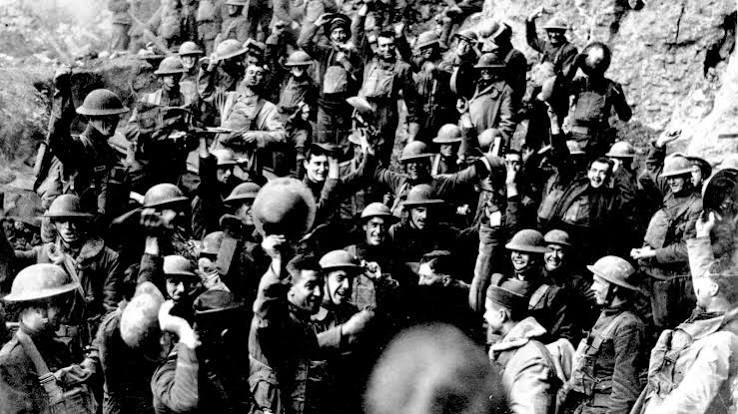
At 10:59 AM on November 11, 1918, the guns along the Western Front were still firing. Soldiers who knew the Armistice had been signed hours earlier crouched in muddy trenches, waiting. At 11:00, the shelling stopped. In the sudden quiet, men who had spent four years under constant bombardment heard birdsong for the first time in years. Some wept. Others simply stood, stunned by the silence.
That silence has echoed through the past century. Every November 11th, millions of people pause for two minutes to recreate it. But the day we now call Remembrance Day, Veterans Day, or Armistice Day is more than a historical anniversary. It marks a moment that ended 20 million deaths and began a century of uneasy peace. Understanding why that specific hour—the eleventh hour of the eleventh day of the eleventh month—still matters requires looking at both what happened in 1918 and what we’ve chosen to remember since.
The Long Road to Compiègne
The Armistice didn’t happen because the war simply ran out of steam. It happened because Germany’s military position collapsed with stunning speed in the autumn of 1918. After the failed Spring Offensive (March–July 1918), the Allies launched the Hundred Days Offensive in August, pushing German forces back relentlessly. By October, Germany’s allies were falling away one by one: Bulgaria signed an armistice on September 29, the Ottoman Empire on October 30, Austria-Hungary on November 3. Germany stood alone.
On the home front, the British naval blockade was strangling the country. Food shortages caused widespread suffering, and when the German naval command ordered a final suicide mission against the British fleet in late October, sailors at Kiel mutinied. The revolt spread, forcing Kaiser Wilhelm II to abdicate on November 9. A new civilian government, led by moderate Social Democrats, immediately sought an armistice.
The German delegation, headed by Matthias Erzberger, arrived at a railway siding in the Forest of Compiègne, France, on November 8. They were brought to a private dining car that belonged to Marshal Ferdinand Foch, the Supreme Allied Commander. Foch’s terms were harsh: Germany must withdraw from all occupied territories, including Alsace-Lorraine, within 14 days. It must surrender 5,000 artillery pieces, 25,000 machine guns, 1,700 aircraft, and 5,000 locomotives. All Allied prisoners of war were to be released immediately. The naval blockade would remain in place until a formal peace treaty was signed.
The Germans were given 72 hours to accept. They protested that the terms were impossible to fulfill, but Foch was unmoved. At 5:00 AM on November 11, the Armistice was signed. It would take effect at 11:00 AM—six hours later.
The Deadliest Morning
Those six hours became one of the war’s most tragic footnotes. Word of the signing spread quickly among Allied commanders, but many units continued fighting until the exact minute of the ceasefire. Some officers, eager to secure strategic positions before the peace took hold, ordered attacks on the final morning. Others, unaware of the news, simply kept fighting.
The result was an estimated 2,700 to 3,000 casualties on November 11 itself, including 863 British and Commonwealth troops. The last British soldier killed was Private George Edwin Ellison, shot at 9:30 AM near Mons, Belgium. The last Canadian casualty was Private George Lawrence Price, killed at 10:58 AM, just two minutes before the ceasefire. The last French soldier, Augustin Trébuchon, was killed at 10:45 AM, carrying a message to his comrades that soup would be served after the ceasefire.
In the decades since, the deaths of that final morning have become a powerful symbol of war’s absurdity. They underscore that the Armistice was not a clean, neat ending but a messy, human one—a reminder that even the most decisive historical moments are experienced as chaos by those living through them.
Not a Surrender
The Armistice was a ceasefire, not a surrender. The German army was not formally defeated on the battlefield; it was exhausted and withdrawing, but still intact. The terms were deliberately designed to be reversible—the ceasefire was initially signed for 36 days and had to be renewed several times before the Treaty of Versailles was signed on June 28, 1919.
This distinction would have enormous consequences. In Germany, the belief that the army had been “stabbed in the back” by civilian politicians—the so-called “November Criminals”—took root. The new democratic government, not the military, signed the Armistice, and many Germans refused to accept that their country had lost. This myth would be exploited by Adolf Hitler and the Nazis, contributing directly to the rise of World War II.
The Armistice’s terms also sowed seeds of resentment. Germany was required to accept full responsibility for the war under Article 231 of the Versailles Treaty, and to pay massive reparations. The economic hardship that followed fueled political extremism. The “war to end all wars” had ended, but its aftermath created the conditions for an even deadlier conflict just 21 years later.
The Birth of a Tradition
In the immediate aftermath, November 11 was celebrated with joy and relief. In London, Paris, and New York, crowds poured into the streets. But as the scale of the loss became clear—an estimated 9 to 10 million military deaths and 8 to 10 million civilian deaths—the mood shifted from celebration to mourning.
The first two-minute silence was held in Cape Town, South Africa, on November 11, 1918, at noon local time. The idea spread, and in 1919, King George V issued a proclamation formalizing the tradition in Britain. At 11:00 AM on November 11, 1919, the entire British Empire paused for two minutes—one minute for the dead, one for the living.
That same year, the British government conceived the idea of burying an unknown soldier in Westminster Abbey. The Unknown Warrior was buried on November 11, 1920, in soil brought from the battlefields of France. The United States followed with the Tomb of the Unknown Soldier at Arlington National Cemetery, dedicated on November 11, 1921. These burials gave the abstract concept of “the fallen” a physical, sacred focus—a single grave representing millions of individual sacrifices.
In the United States, November 11 was originally called Armistice Day, declared a federal holiday in 1938. After World War II and the Korean War, veterans’ organizations lobbied to expand the day’s meaning. In 1954, President Dwight D. Eisenhower signed legislation renaming it Veterans Day, to honor all American veterans, not just those who served in World War I. The UK, Canada, Australia, and other Commonwealth nations continue to call it Remembrance Day, while France and Belgium still use Armistice Day.
The Silence That Speaks
The two-minute silence has proven remarkably durable. It is observed at war memorials, schools, and workplaces across the Commonwealth and beyond. In the UK, the Royal British Legion distributes millions of red paper poppies each year, inspired by the poem “In Flanders Fields” by John McCrae. The poppy has become an international symbol of remembrance.
Why does this particular ritual endure? Perhaps because the silence is the most honest way to honor those who died. It doesn’t glorify war or celebrate victory—it simply acknowledges loss. In that silence, the scale of what happened on November 11, 1918, becomes tangible. The guns fell silent, and in that silence, millions of people began the long process of counting their dead.
That process is never truly complete. Every year, the silence is observed by people who never knew a World War I veteran. They observe it because the war’s impact is still present—in the borders of the Middle East, in the shape of European politics, in the laws of international conflict. The Armistice didn’t just end a war; it created a world.
The Tragic Irony
The phrase “the war to end all wars” was used with hope in 1918. It became a bitter joke by 1939. The Armistice’s failure to secure a lasting peace is not a reason to dismiss its significance—it’s a reason to study it more carefully. The day marks not just an ending but a promise that was broken. The silence we observe on November 11 is partly for the 20 million who died in World War I, and partly for the tens of millions who died in wars since, because that promise was not kept.
Yet the day endures because it also represents something positive: the possibility of peace. The Armistice proved that even the most devastating conflict can be brought to a halt, that human beings can choose to stop killing each other. The fact that the choice was only temporary makes it no less important. Every November 11, we remember that the choice exists.
The Armistice of November 11, 1918, was a moment of profound silence after four years of unprecedented noise. That silence has become a ritual, a way of remembering not just the dead but the fragile nature of peace. Whether we call it Remembrance Day, Veterans Day, or Armistice Day, the eleventh hour of the eleventh day of the eleventh month remains a day to pause, reflect, and honor those who served. It matters because the choices made in that railway carriage in Compiègne—and the choices made in the years that followed—still shape our world. And it matters because the silence reminds us that peace is not a given; it is something we must actively choose, every day.
Summary
- The Armistice that ended World War I was signed at 5:00 AM on November 11, 1918, and took effect at 11:00 AM, after six hours of continued fighting that caused thousands of needless casualties.
- It was a ceasefire, not a surrender; the formal peace came with the Treaty of Versailles in June 1919.
- November 11 is observed as Remembrance Day, Veterans Day, or Armistice Day worldwide, with traditions including the two-minute silence and the burial of unknown soldiers.
- The Armistice’s terms and the “stab in the back” myth contributed to the rise of World War II, adding tragic irony to the “war to end all wars.”
- The day endures as a symbol of both the horror of war and the possibility of peace.
FAQ
Q: Why does the Armistice take effect at the “eleventh hour of the eleventh day of the eleventh month”?
A: The Armistice was signed at 5:00 AM on November 11, 1918, but the ceasefire was deliberately set for 11:00 AM to give commanders time to communicate the news to all units. The symbolic timing—11/11 at 11:00—has become central to how we remember the event.
Q: Was the Armistice a surrender?
A: No. It was a cessation of hostilities with terms designed to be reversible if Germany resumed fighting. The formal peace was established by the Treaty of Versailles, signed on June 28, 1919.
Q: Why do some countries call it Remembrance Day and others Veterans Day?
A: The day was originally called Armistice Day everywhere. In 1954, the United States renamed it Veterans Day to honor veterans of all wars, not just World War I. Commonwealth nations retained Remembrance Day, which has a broader focus on commemorating the war dead.
Q: What is the significance of the two-minute silence?
A: The tradition began in South Africa in 1918 and was formalized in the UK in 1919. It consists of one minute for the dead and one minute for the living, creating a shared moment of reflection and respect.
Q: How many people died in World War I?
A: An estimated 20 million people died, including roughly 9–10 million military personnel and 8–10 million civilians. Millions more were wounded or missing.