Tag: archaeology

  • 500-Year-Old Inca Mummies Reveal the Devastating Arrival of Smallpox in the Americas

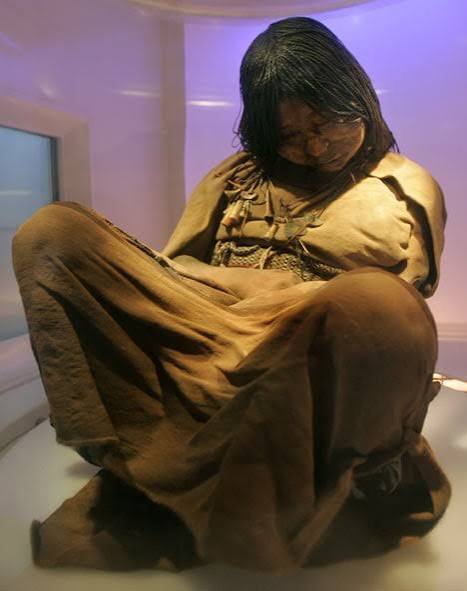
    A close-up of a 500-year-old Inca mummy’s face, showing skin lesions, displayed in a museum or archaeological context.

    For centuries, the story of how smallpox ravaged the Americas has been told through the words of Spanish chroniclers and the silent testimony of population decline. But a groundbreaking 2024 study has finally provided the first physical proof: ancient DNA from two Inca mummies, buried around the time of European contact, contains the genetic signature of the smallpox virus. This discovery transforms our understanding of one of history’s greatest demographic catastrophes.

    The mummies, discovered near Cusco, Peru, and in a cave in the Chilean Andes, date to the early 16th century—a period when Spanish conquistadors were just beginning their conquest. The presence of Variola virus in their tissues confirms that smallpox was already spreading through the Inca Empire before Francisco Pizarro’s arrival in 1532. This finding not only validates historical accounts but also underscores the immense human cost of the Columbian Exchange, where invisible pathogens were as powerful as any army.

    The Discovery: Ancient DNA Tells a New Story

    In 2024, researchers published a landmark study in the journal Nature that analyzed ancient DNA extracted from two 500-year-old Inca mummies. One was found in a cemetery near the former Inca capital of Cusco, Peru, and the other in a cave in the Chilean Andes. The analysis identified the presence of Variola virus, the pathogen that causes smallpox. This is the first confirmed molecular evidence of smallpox in the pre-Columbian Americas, providing a direct, physical link to a disease that historians have long believed devastated Indigenous populations.

    The mummies date to approximately 1520–1530 CE, a period coinciding with the arrival of Spanish conquistadors and the early stages of European colonization. This timing is crucial: it places the virus in the Americas just as the Spanish were establishing their presence, supporting the theory that European colonists introduced the disease.

    The Columbian Exchange: A Two-Way Transfer of Devastation

    The arrival of Christopher Columbus in 1492 initiated the Columbian Exchange, a massive transfer of plants, animals, people, and pathogens between the Old World and the New World. Europeans brought with them diseases to which they had centuries of acquired immunity, but Indigenous Americans had no prior exposure. This made them immunologically “naïve” and devastatingly vulnerable.

    Smallpox, caused by the Variola major virus, was one of the deadliest of these diseases. Symptoms included high fever, severe rash, and pustules that often left permanent scars. Mortality rates ranged from 30% to 60% in naïve populations. It is estimated that smallpox and other Old World diseases—such as measles, influenza, and typhus—killed 50–90% of Indigenous American populations within a century of contact. This demographic catastrophe contributed to the collapse of the Inca and Aztec empires.

    The Inca Empire and Its Collapse

    At its peak (c. 1438–1533 CE), the Inca Empire, known as Tawantinsuyu, was the largest empire in the pre-Columbian Americas. It spanned modern-day Peru, Ecuador, Bolivia, Chile, and Argentina—over 2 million square kilometers with an estimated 12 million subjects. When Francisco Pizarro arrived in 1532 with fewer than 200 men, the empire was already weakened by a civil war between brothers Atahualpa and Huáscar, and by a devastating smallpox epidemic that had killed the previous emperor, Huayna Capac, around 1524–1527.

    The epidemic is widely believed to have been a decisive factor in the Spanish conquest. It decimated the Inca population and leadership, creating a power vacuum and chaos that Pizarro exploited. The new DNA evidence confirms that smallpox was indeed present in the Andes during this critical period, providing a tangible link between the disease and the empire’s downfall.

    Prior Evidence: Written Accounts and Indirect Clues

    Before this study, evidence for the introduction of smallpox was based primarily on written accounts and indirect clues. Spanish chroniclers like Bartolomé de las Casas and Bernabé Cobo described epidemics ravaging Indigenous communities. Indigenous records, such as the Quipu (knotted-string records) and oral histories, referenced mass death. Demographic estimates suggested catastrophic mortality, and the timing of the Inca civil war and the death of Huayna Capac strongly suggested an epidemic was already spreading before Pizarro’s arrival.

    However, no physical, molecular evidence of the virus had ever been found in pre-Columbian remains. Some scholars even questioned whether smallpox arrived earlier than 1518 (the first documented outbreak in Hispaniola) or whether other diseases were responsible. This study resolves those debates by providing direct evidence of the virus in the Americas at the time of European contact.

    The Significance: A Landmark in Paleomicrobiology

    This discovery is a landmark in paleomicrobiology—the study of ancient pathogens. It demonstrates that ancient DNA (aDNA) techniques can recover viral genomes from mummified tissue, opening doors for future research on other historical diseases such as typhus, measles, and tuberculosis. The study also highlights the importance of museum collections; the mummies had been stored in museums for decades before being analyzed, showing that valuable scientific information can be gleaned from existing specimens.

    A Stark Reminder of Colonial Impact

    The finding is a stark reminder of the human cost of colonization. The “Great Dying” of Indigenous Americans is one of the largest demographic catastrophes in history, and this study provides a tangible, physical link to that tragedy. It reframes the narrative of European conquest: the Spanish did not simply “outfight” the Inca; they were aided by invisible biological allies. This perspective is crucial for understanding the full scope of colonial impact.

    Ethical Considerations and Indigenous Perspectives

    Some Indigenous communities and scholars have raised concerns about the study of human remains without consent from descendant communities. The mummies are ancestors, not just specimens. Researchers must navigate these ethical considerations carefully, balancing scientific inquiry with respect for cultural heritage. This study underscores the need for collaborative approaches that involve Indigenous communities in research decisions.

    The discovery of smallpox DNA in 500-year-old Inca mummies is more than a scientific breakthrough; it is a poignant reminder of the devastating consequences of contact between worlds. It confirms what historians have long suspected and gives a face to the millions who perished. As we continue to uncover the secrets of the past, we must remember the human stories behind the data and the ethical responsibilities that come with studying them.

    Summary

    • First confirmed molecular evidence of smallpox in pre-Columbian Americas, found in 500-year-old Inca mummies.
    • Mummies date to c. 1520–1530 CE, coinciding with Spanish arrival, supporting introduction by European colonists.
    • Smallpox and other Old World diseases killed 50–90% of Indigenous populations, contributing to the collapse of the Inca Empire.
    • Study is a landmark in paleomicrobiology, showing ancient DNA can recover viral genomes from mummified tissue.
    • Raises ethical considerations about studying human remains without Indigenous community consent.

    FAQ

    Q: What exactly was found in the Inca mummies?
    A: Researchers extracted ancient DNA from two mummies and identified the presence of Variola virus, the pathogen that causes smallpox. This is the first confirmed molecular evidence of smallpox in the pre-Columbian Americas.

    Q: How old are the mummies, and where were they found?
    A: The mummies date to approximately 1520–1530 CE. One was found in a cemetery near Cusco, Peru, and the other in a cave in the Chilean Andes.

    Q: Why is this discovery significant?
    A: It provides direct physical proof that smallpox was introduced to the Americas by European colonists, confirming historical theories that were previously based only on written accounts and indirect evidence.

    Q: How did smallpox affect Indigenous populations?
    A: Smallpox and other Old World diseases killed an estimated 50–90% of Indigenous American populations within a century of contact, contributing to the collapse of the Inca and Aztec empires.

    Q: Are there ethical concerns about studying these mummies?
    A: Yes, some Indigenous communities and scholars have raised concerns about studying human remains without consent from descendant communities. Researchers must balance scientific inquiry with respect for cultural heritage.

  • Tiny 40,000-Year-Old Bird Figurines: The World’s Oldest Sculptures?

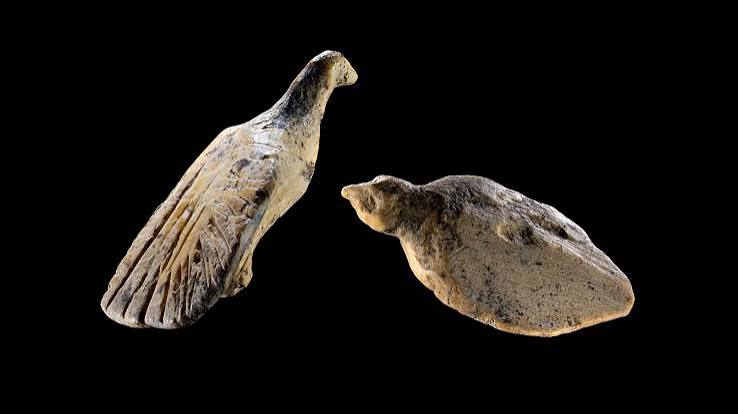
    A close-up photograph of the two tiny 40,000-year-old bird figurines carved from mammoth ivory, displayed in a museum case.

    In a dark cave in southwestern Germany, archaeologists uncovered something extraordinary: two miniature bird figurines carved from mammoth ivory, each no larger than a thumbnail. At roughly 40,000 years old, these tiny masterpieces are among the oldest known examples of figurative art—art that depicts recognizable animals—ever found. They offer a rare, intimate glimpse into the minds of early Homo sapiens, who were not just surviving but creating symbolic objects that connected them to the natural world.

    These figurines were discovered in Vogelherd Cave, part of the Swabian Jura, a region often called the ‘cradle of art.’ Here, Ice Age humans left behind a treasure trove of carvings, including the famous Lion-Man and the Venus of Hohle Fels. But the bird figurines stand out for their size, their subject, and their astonishing craftsmanship. They challenge our assumptions about prehistoric life and force us to reconsider when—and why—humans began making art.

    A Remarkable Discovery in a German Cave

    Vogelherd Cave, located in the Swabian Jura of Baden-Württemberg, has been a site of archaeological wonder since its first excavation in 1931. Over the decades, researchers have unearthed a rich collection of Ice Age artifacts, but it wasn’t until modern excavations between 2005 and 2012 that the two bird figurines came to light. Led by Nicholas Conard of the University of Tübingen, the team used fine-sieving techniques to recover tiny fragments that earlier digs had missed. Among the debris, they found the two bird carvings—each about 2 to 3 centimeters long, small enough to fit on a thumbnail.

    The figurines are carved from mammoth ivory, a material that is notoriously difficult to work with. Ivory is hard and prone to splitting, so the artist would have used flint burins and scrapers, possibly softening the ivory by soaking it in water or acidic solutions. The result is astonishing: the birds show clear anatomical details—wings, tail, and beak—and may have been worn as pendants, as some have perforations or notches for suspension.

    The Aurignacian Context: A Creative Explosion

    The figurines date to the Aurignacian period, around 40,000 years ago, when anatomically modern humans were spreading across Europe. This era is marked by a burst of symbolic behavior: art, music, and personal ornamentation. The Aurignacian is often associated with the arrival of Homo sapiens and their overlap with Neanderthals, and the art they left behind is considered a hallmark of cognitive modernity.

    What makes these bird figurines so significant is that they are not abstract marks or simple patterns—they are recognizable, three-dimensional representations of living creatures. This places them among the oldest known figurative art in the world, predating the famous cave paintings of Chauvet in France by several thousand years. The fact that they are portable, miniature carvings suggests a level of abstract thinking: the ability to reduce a real animal to a small, symbolic object that could be carried and shared.

    Why Birds? A Window into the Ice Age Mind

    Most Aurignacian carvings depict mammals—horses, mammoths, cave lions, bison. Birds are rare, which makes these figurines particularly intriguing. The species has been tentatively identified as a waterfowl, possibly a diving duck or cormorant-like bird, based on body proportions and beak shape. But why would early humans choose to carve a bird?

    Some researchers speculate that birds may have held spiritual or mythological significance. In later Paleolithic art, birds appear in contexts that suggest they were seen as mediators between earth and sky, or as omens. The famous ‘bird-headed man’ in the Lascaux cave shaft scene is one example. While we can’t know for certain what these figurines meant to their creators, their existence hints at a rich symbolic world—one where animals were not just food sources but carried deeper meanings.

    The Swabian Jura: A Cradle of Art

    The Swabian Jura region has yielded an extraordinary cluster of early art, leading UNESCO to designate six caves as a World Heritage site in 2017 under the name ‘Caves and Ice Age Art of the Swabian Jura.’ Vogelherd is one of these. The region has produced the Lion-Man of Hohlenstein-Stadel, a half-human, half-lion figure; the Venus of Hohle Fels, a female figurine; and numerous animal carvings. Together, these finds suggest that the Swabian Jura was a center of artistic innovation during the Ice Age.

    The Vogelherd Cave itself was likely used as a seasonal camp by hunter-gatherers, not a permanent dwelling. The presence of such finely crafted objects suggests that art was an integral part of daily life, not a separate activity reserved for special occasions. The skill required to carve these figurines raises questions about specialization: were there dedicated artists in Paleolithic society, or did everyone have the skills? The craftsmanship suggests at least part-time specialists, individuals who devoted significant time to perfecting their art.

    The Birth of Sculpture

    From an art-historical perspective, these figurines are often cited as the birth of sculpture—the earliest known three-dimensional representations of living creatures. They demonstrate that the impulse to create art is deeply human, and that even in the harsh conditions of the Ice Age, people found time to create beauty. The miniaturization of the carvings is particularly striking: it shows an ability to work on a tiny scale, with precision and patience, that is rarely associated with prehistoric people.

    The discovery also contributes to a broader debate about the origins of art. Did art arise independently in different parts of the world, or did it diffuse from a single origin? Similar-aged art exists in Africa, such as the engraved ochre pieces from Blombos Cave, but figurative art is rarer there. The European figurines, including these birds, are among the earliest known examples of representational art, suggesting that the capacity for symbolic thought was a defining trait of early Homo sapiens—possibly giving them a cognitive advantage over Neanderthals.

    A Tiny Masterpiece with a Big Impact

    The two bird figurines from Vogelherd Cave are more than just ancient artifacts; they are a testament to the creativity and cognitive sophistication of our ancestors. They remind us that art is not a luxury but a fundamental human need, one that has been with us for tens of thousands of years. As we hold these tiny carvings in our minds, we are connected to a person who lived 40,000 years ago, who saw a bird and felt compelled to recreate it in ivory. That impulse—to capture the essence of a living thing in a small, portable object—is something we can still recognize today.

    The thumbnail-sized bird figurines from Vogelherd Cave are not just archaeological curiosities; they are profound evidence of the human capacity for symbolic thought and artistic expression. At 40,000 years old, they push back the timeline of figurative art and offer a tangible link to our Ice Age ancestors. As we continue to study these tiny masterpieces, they remind us that the urge to create art is as old as humanity itself—and that even the smallest objects can carry immense meaning.

    Summary

    • Two miniature bird figurines, each about the size of a thumbnail, were discovered in Vogelherd Cave in southwestern Germany.
    • Carved from mammoth ivory, they date back approximately 40,000 years to the Aurignacian period, making them among the oldest known figurative art.
    • The figurines are notable for their craftsmanship and their subject—birds are rare in Ice Age art, suggesting possible spiritual or symbolic significance.
    • The Swabian Jura region, where the cave is located, is a UNESCO World Heritage site known as the ‘Cradle of Art’ for its rich collection of early human artifacts.
    • The discovery highlights the cognitive sophistication of early Homo sapiens and their capacity for abstract thinking and artistic expression.

    FAQ

    Q: How were the bird figurines discovered?
    A: The figurines were found during modern excavations at Vogelherd Cave between 2005 and 2012, led by Nicholas Conard of the University of Tübingen. The team used fine-sieving techniques to recover tiny fragments that earlier digs had missed.

    Q: What material are the figurines made of?
    A: They are carved from mammoth ivory, which is a hard and difficult material to work with. The artists likely used flint tools and may have softened the ivory by soaking it in water or acidic solutions.

    Q: Why are these figurines significant?
    A: They are among the oldest known examples of figurative art—art that depicts recognizable animals. They predate the famous cave paintings of Chauvet and provide evidence of symbolic behavior in early Homo sapiens.

    Q: What kind of birds do they represent?
    A: The species has been tentatively identified as a waterfowl, possibly a diving duck or cormorant-like bird, based on body proportions and beak shape.

    Q: Where is Vogelherd Cave located?
    A: It is in the Swabian Jura, a karst region in the state of Baden-Württemberg, southwestern Germany. The cave is part of the UNESCO World Heritage site ‘Caves and Ice Age Art of the Swabian Jura.’