Tag: anxiety

  • Why Telling Parents ‘Don’t Worry’ Isn’t Enough: A Pediatrician’s Approach to Childhood Illness

    Understanding Pediatric Diseases - Kids Central Pediatrics

    When a child spikes a fever at 2 a.m., even the most well-read parent can feel their heart race. They’ve read the articles, saved the charts, and know that most fevers are harmless. Yet the anxiety doesn’t listen to facts. Dr. Masahiko Sakamoto, a pediatrician in Saku, Japan, has built his career around this disconnect.

    His core observation: knowledge and emotion operate on separate tracks. A parent can intellectually understand that a febrile seizure is usually benign, but still panic when their child’s body stiffens and shakes. Dr. Sakamoto argues that effective parent education must address the emotional reality, not just the medical facts. His work offers a roadmap for pediatricians and parents alike, moving beyond simple reassurance toward a more honest, effective model of care.

    The Limits of Knowledge

    Parents today have more medical information at their fingertips than any generation in history. Apps, websites, and social media offer instant answers. Yet studies show that information overload can actually increase anxiety, especially when sources conflict or overstate risks.

    Dr. Sakamoto sees this daily. A parent might come to his clinic having already Googled their child’s symptoms. They know the statistics, the warning signs, the worst-case scenarios. But knowing doesn’t translate to calm. In fact, it often makes things worse.

    “Even when knowledge improves, emotional anxiety does not easily disappear,” he says. This is not a failure of intelligence or effort. It’s how human brains work. Fear triggers a physiological response that bypasses rational thought. No amount of data can override a parent’s instinct to protect their child.

    The problem is that traditional pediatric practice often treats anxiety as a misunderstanding. Doctors tell parents “don’t worry, it’s normal” and expect the fear to dissipate. But this approach dismisses the parent’s emotional experience, leaving them feeling unheard and judged. The anxiety persists, often driving them to seek unnecessary emergency care or to overmedicate their child.

    A Different Model: Recognition Over Reassurance

    Dr. Sakamoto proposes a “recognition model” of parent education. Instead of brushing aside anxiety, pediatricians should acknowledge it head-on. The first step is validation: “It’s completely natural to feel scared when your child has a seizure, even if you know it’s usually harmless.”

    This doesn’t mean feeding the fear. It means creating a space where parents feel safe to express their worries without shame. Only then can real education happen.

    Once the anxiety is acknowledged, the pediatrician can explain the illness in clear, concrete terms. What is happening in the child’s body? What should the parent expect in the next few hours? What specific signs would indicate a real problem? This is where the facts matter, but they matter as part of a larger conversation, not as a lecture.

    Crucially, Dr. Sakamoto emphasizes that education is a process, not a one-time event. A single consultation cannot undo months of accumulated worry. Repeated, consistent messaging is needed. Parents need to hear the same reassuring information multiple times, in different contexts, before it begins to stick.

    Why Japan’s Pediatric Landscape Makes This Hard

    Japan’s universal health insurance system makes pediatric visits affordable and accessible. That’s a blessing, but it has a downside. Parents can easily bring their child to the doctor for every sniffle, driven by anxiety rather than medical need. Pediatricians face high patient volumes and limited consultation time, making thorough education difficult.

    There’s also a cultural dimension. In most Japanese households, mothers are still the primary caregivers, and they often carry a heavy burden of self-blame. If a child gets sick, a mother might feel she failed somehow — she didn’t dress the child warmly enough, didn’t feed them the right food, didn’t notice the symptoms early enough. This guilt intensifies anxiety and can make parents more likely to seek help for reassurance rather than because it’s medically necessary.

    Dr. Sakamoto’s approach directly addresses this. By acknowledging anxiety without judgment, he helps parents separate their feelings from their actions. The goal is not to eliminate fear — that may be impossible — but to help parents act calmly and rationally despite it.

    The Risks of Over-Education

    Not everyone is comfortable with Dr. Sakamoto’s model. Some critics worry that excessive parent education could backfire. If parents are taught to wait out minor illnesses, might they delay seeking care for something serious, like bacterial meningitis?

    It’s a valid concern. But Dr. Sakamoto’s approach isn’t about telling parents to stay home. It’s about teaching them to recognize the difference between a benign fever and a red-flag symptom. The goal is informed vigilance, not complacency.

    There’s also the question of whether all parents want to be “educated.” In an acute emergency, most parents don’t want a shared decision-making process. They want the doctor to take charge and tell them exactly what to do. Dr. Sakamoto’s model acknowledges this too. It’s not about forcing education on every parent in every situation. It’s about being attuned to what each parent needs and that might be authoritative guidance, not a lesson.

    How Parents Can Apply This at Home

    Dr. Sakamoto’s insights aren’t just for pediatricians. Parents can use them too. The next time your child spikes a fever and your heart starts pounding, try this:

    1. Name the anxiety. Say it out loud: “I’m scared because my child is sick.” Acknowledging the fear takes away some of its power.
    2. Separate facts from feelings. You can feel terrified and still know that a fever under 104°F is usually harmless. Both things can be true at once.
    3. Write down what you know. Jot down the warning signs that would actually warrant a call to the doctor. When anxiety surges, look at the list.
    4. Remember that education is repetition. You won’t memorize everything in one reading. That’s okay. Talk to your pediatrician, ask the same questions again, and gradually the knowledge will sink in.

    Saku’s Legacy of Community Health

    Dr. Sakamoto practices in Saku, a city in Nagano Prefecture with a remarkable history of public health innovation. Saku Central Hospital is famous for its rural outreach programs, which have improved healthcare access for farming communities for decades. Dr. Sakamoto’s work fits squarely in this tradition it’s community-centered, practical, and focused on empowering ordinary people with knowledge.

    But unlike the public health campaigns of the past, which focused on sanitation and vaccination, Dr. Sakamoto’s work targets a subtler challenge: the emotional hurdles that prevent parents from using the knowledge they already have. It’s a modern problem, born of the internet age, and it requires a modern solution.

    What Pediatricians Can Learn

    For pediatricians reading this, Dr. Sakamoto’s message is simple: stop dismissing parental anxiety. Start by acknowledging it. When a parent says, “I’m worried about my child’s fever,” don’t just say “it’s fine.” Say, “I understand why you’re worried. Let’s talk about what’s happening and what to watch for.”

    This doesn’t take more time  it takes more intention. And it builds trust, which is the foundation of effective pediatric care. When parents trust their doctor, they’re more likely to follow advice, less likely to make unnecessary emergency visits, and better equipped to handle minor illnesses at home.

    In the end, Dr. Sakamoto’s approach is about more than reducing emergency room crowding or cutting healthcare costs. It’s about respecting parents as intelligent, capable people who happen to be scared. And that respect, more than any medical fact, is what helps anxiety finally begin to fade.

    Dr. Sakamoto’s work reminds us that parenting a sick child is an emotional experience, not just an intellectual one. The next time a parent is told “don’t worry,” those words rarely land as intended. What lands is feeling heard, understood, and guided. That’s the true art of pediatric care and it’s a lesson that extends far beyond the clinic walls.

    Summary

    • Knowledge about childhood illnesses does not automatically reduce parental anxiety; the two operate independently.
    • Dr. Sakamoto advocates a “recognition model” that validates parental fear instead of dismissing it with simple reassurance.
    • Japan’s universal healthcare and cultural norms around maternal self-blame make this issue particularly acute.
    • Education is a gradual process, not a one-time event; repeated, consistent messaging is key.
    • Parents can apply these principles at home by naming their anxiety and separating facts from feelings.

    FAQ

    Q: What is the main takeaway from Dr. Sakamoto’s approach?
    A: That pediatricians should acknowledge parental anxiety rather than dismiss it, and that education is a process that addresses both facts and emotions.

    Q: How can parents reduce their own anxiety when their child is sick?
    A: By naming the fear, separating facts from feelings, writing down warning signs, and remembering that learning takes repetition.

    Q: Does Dr. Sakamoto’s model apply to all situations?
    A: Not always. In acute emergencies, parents may prefer authoritative guidance. The model is flexible and tailored to the parent’s needs.

    Q: Why is this particularly relevant in Japan?
    A: Japan’s universal healthcare makes visits easy, but cultural expectations on mothers can intensify anxiety, and limited consultation time makes education challenging.

    Q: Could educating parents lead to delayed care for serious illnesses?
    A: The goal is informed vigilance, not complacency. Parents are taught to recognize red flags, not to ignore symptoms.

  • What Ancient Civilizations Knew About Anxiety That We’ve Forgotten

    What Ancient Civilizations Knew About Anxiety That We’ve Forgotten

    Anxiety is not a modern invention. Four thousand years ago, a Mesopotamian scribe inscribed a clay tablet describing a racing heart and sleepless nights. Hippocrates blamed black bile. Medieval monks called it acedia. Across eras and cultures, humans have grappled with the same restless dread we now label an anxiety disorder. But here’s what’s striking: for most of human history, there were no pills. No benzodiazepines, no SSRIs. Our ancestors managed anxiety with herbs, rituals, movement, and community—and some of those methods have surprising modern scientific support.

    The Humoral Framework: Balancing the Body

    Hippocrates and later Galen saw anxiety as a physical imbalance, not a character flaw. Too much black bile, they argued, produced fear and melancholy. The fix? Rebalance the body through diet, exercise, and herbal remedies. Galen prescribed moderate living: regular meals, daily walks, and avoiding extremes. His advice echoes in today’s lifestyle psychiatry, where exercise and nutrition are increasingly recognized as foundational for mental health.

    Herbal Allies That Science Now Backs

    Ancient Egyptians brewed chamomile tea for calm. Medieval Europeans turned to lemon balm. Native Americans used passionflower. Modern clinical trials have tested these herbs—and many show real effects. Valerian root, used since ancient Greece, has modest anxiolytic properties through GABAergic activity. Chamomile reduces mild to moderate anxiety in trials. Passionflower has shown comparable efficacy to benzodiazepines for generalized anxiety, with fewer side effects. Even kava, used in Pacific cultures for centuries, has strong evidence for anxiety relief, though liver toxicity concerns limit its use. These aren’t placebos; they’re pharmacologically active plants.

    The Role of Music, Baths, and Travel

    Ancient Greeks and Romans used music therapy and warm baths to soothe the spirit. Avicenna, the Persian polymath, recommended music, psychological counseling, and changes of scenery in his Canon of Medicine. In the 18th century, physicians prescribed travel and mineral waters for ‘nervous complaints.’ These interventions share a common thread: they engage the senses and shift attention away from rumination, a core feature of anxiety.

    Community and Ritual as Anxiety Buffers

    Our ancestors lived embedded in tight-knit communities. Religious calendars provided predictable rhythms; harvest festivals and communal mourning gave shared meaning to joy and grief. Multigenerational households distributed caregiving. Physical labor and outdoor time were woven into daily life. The pace of information was slow—threats were local and immediate, not global and abstract. These structures buffered anxiety in ways we now miss, as modern life often brings isolation, sedentary routines, and a 24/7 news cycle.

    The Rest Cure: A Cautionary Tale

    Not all historical treatments were wise. Silas Weir Mitchell’s 19th-century ‘rest cure’—isolation, bed rest, and overfeeding—was meant for nervous exhaustion but became a form of imprisonment, as Charlotte Perkins Gilman vividly dramatized in The Yellow Wallpaper. This reminds us that historical methods must be evaluated critically, not romanticized wholesale.

    What We Can Learn Without Abandoning Modern Medicine

    The takeaway isn’t that we should toss our antidepressants. It’s that many non-drug approaches—herbs, exercise, community, nature, music—have deep roots and growing evidence. They can complement medication or serve as first-line strategies for mild anxiety. And they address what pills often don’t: the social and environmental factors that fuel anxiety. As we face a global anxiety epidemic, revisiting ancestral wisdom isn’t nostalgia; it’s practical.

    Our ancestors didn’t have a magic bullet for anxiety, but they had a toolkit—herbs, movement, music, community, and a worldview that made sense of suffering. Modern research is validating many of these approaches. The next time anxiety tightens your chest, consider a chamomile tea, a walk in the park, or a call to a friend. Sometimes the oldest remedies are the most forward-thinking.

    Summary

    • Anxiety is ancient; descriptions appear in texts from Mesopotamia, Egypt, Greece, and China over 3,000 years ago.
    • Hippocrates and Galen saw anxiety as a humoral imbalance, treated with diet, exercise, and herbs.
    • Herbal remedies like valerian, chamomile, lemon balm, and passionflower have modern evidence for anxiety relief.
    • Music therapy, baths, and travel were historically prescribed to calm the mind.
    • Strong community ties, ritual, and physical labor served as protective factors against anxiety.
    • The 19th-century rest cure highlights the dangers of uncritical adoption of historical methods.

    FAQ

    Q: Did ancient cultures have a concept of anxiety disorder?
    A: No. They framed anxiety as spiritual (demonic oppression, divine testing), humoral (imbalance of bile), or existential (acedia). The medicalization of anxiety as a treatable condition emerged in the 18th–19th centuries.

    Q: Are herbal remedies for anxiety effective?
    A: Some are. Valerian, chamomile, lemon balm, and passionflower have shown modest to moderate anxiolytic effects in clinical trials. Kava has strong evidence but safety concerns. Always consult a healthcare provider before using herbs, especially with other medications.

    Q: How did community and ritual help reduce anxiety?
    A: Predictable rhythms, shared meaning, and social support buffered stress. Extended families distributed caregiving, and physical labor embedded movement and outdoor time into daily life.

    Q: What was the rest cure?
    A: A 19th-century treatment for nervous disorders involving isolation, bed rest, and overfeeding. It was later criticized as harmful, notably by Charlotte Perkins Gilman in ‘The Yellow Wallpaper’.

    Q: Can historical methods replace modern medication?
    A: For mild anxiety, lifestyle and herbal approaches may suffice. For moderate to severe anxiety, they can complement—but not replace—medication and therapy. Always work with a mental health professional.

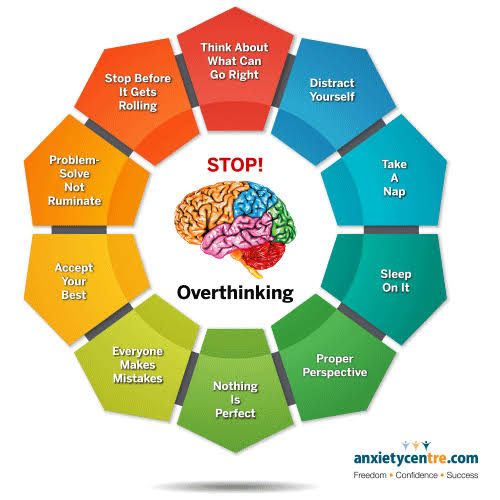
  • 7 Psychological Tricks to Stop Overthinking Instantly

    7 Psychological Tricks to Stop Overthinking Instantly

    Overthinking feels like a treadmill for the mind: you’re running hard, but you’re not getting anywhere. Whether you’re replaying an awkward conversation, worrying about a decision, or spiraling into worst-case scenarios, the mental loop can be exhausting. It’s not just an annoyance—research shows that up to 73% of adults aged 25–35 report overthinking regularly, and chronic rumination is linked to anxiety, depression, and poor sleep.

    The good news? You can interrupt the loop. These seven techniques are drawn from established psychological therapies like Acceptance and Commitment Therapy (ACT), cognitive-behavioral therapy (CBT), and mindfulness. They’re not magic cures—they’re interruption tools that give your brain a moment of relief, which is often enough to break the cycle. Here’s what actually works, according to research and clinical practice.

    1. The 5-4-3-2-1 Grounding Technique

    When your thoughts are spinning, your brain is stuck in the default mode network (DMN)—the network active when your mind wanders. Grounding techniques pull your attention back to the present moment by engaging your senses. The 5-4-3-2-1 method is a classic: name 5 things you can see, 4 you can touch, 3 you can hear, 2 you can smell, and 1 you can taste. This forces your brain to process sensory input, which reduces DMN activity and helps you step out of the thought loop.

    Try it next time you’re lying in bed at 2 a.m. replaying a mistake. You might not fall asleep instantly, but you’ll stop the spiral.

    2. Thought Labeling

    Thought labeling comes from ACT. The idea is to change your relationship with your thoughts by naming them for what they are: mental events, not facts. When you catch yourself overthinking, say (silently or aloud): “I am having the thought that I’m going to fail.” This simple act of labeling engages the prefrontal cortex, which helps regulate the amygdala—the brain’s fear center. It creates distance between you and the thought, making it less overwhelming.

    Research shows that labeling emotions reduces their intensity. The same applies to thoughts: when you name the pattern (“Here’s that worry about the meeting again”), you’re less likely to get swept away by it.

    3. Scheduled Worry Time

    Paradoxically, trying to suppress thoughts often makes them stronger—a phenomenon called ironic process theory. Instead of fighting your worries, schedule a specific time to think about them. For example, set aside 15 minutes each evening to worry. When a worry pops up during the day, write it down and tell yourself, “I’ll deal with this at 6 p.m.” This technique, used in CBT, gives your brain permission to let go of the thought until the designated time.

    A study published in the Journal of Anxiety Disorders found that scheduled worry time reduced anxiety and depressive symptoms in participants. It works because it transforms vague, intrusive worry into a bounded activity.

    4. The STOP Technique

    STOP stands for Stop, Take a breath, Observe, Proceed. It’s a mindfulness-based interruption tool. When you notice you’re overthinking, say “Stop” to yourself (or visualize a stop sign). Then take a deep breath. Observe your thoughts and emotions without judgment—just notice them. Finally, proceed with one small action, even if it’s just standing up or drinking water.

    This technique is effective because it breaks the automatic loop. The deep breath activates the parasympathetic nervous system, which calms your body’s stress response. The observation step creates distance, and the “proceed” step shifts your focus to the present.

    5. Distract Your Cognitive Resources

    Overthinking requires working memory. If you occupy your brain with a demanding cognitive task, there’s less room for rumination. Try counting backward from 100 by 7s, solving a puzzle, or memorizing a list. This isn’t avoidance—it’s a deliberate interruption that gives you a break from the loop.

    Research on attention-shifting shows that activities requiring focused attention reduce DMN activity. The key is to choose something challenging enough to hold your attention but not so frustrating that it adds stress.

    6. Write It Down

    Externalizing your thoughts on paper can help you see them more objectively. When you’re stuck in a loop, open a notebook and write down everything that’s running through your mind—without editing. This process, sometimes called “brain dumping,” helps you identify recurring themes and often reveals that your worries are less concrete than they feel.

    A study from the University of Chicago found that students who wrote about their worries before an exam performed better. Writing helps you process emotions and creates a sense of closure, making it easier to move on.

    7. The “Friend” Reframe

    Ask yourself: “What would I tell my best friend if they were having this same thought?” This reframe is a classic CBT technique. It challenges the harsh, self-critical tone of overthinking by forcing you to apply the same compassion you’d offer someone else.

    For example, if you’re thinking, “I’m going to mess up this presentation,” you’d probably tell a friend, “You’ve prepared well, and even if it’s not perfect, you’ll handle it.” This shift in perspective can reduce the intensity of the thought and help you think more realistically.

    These seven tricks aren’t a one-size-fits-all cure. Overthinking is a habit, and habits take time to change. But each technique offers a practical way to interrupt the loop—whether it’s grounding your senses, labeling your thoughts, or giving yourself permission to worry later. The goal isn’t to never overthink again; it’s to catch yourself sooner and step off the treadmill. And if rumination feels chronic or overwhelming, consider talking to a professional. These tools work best when paired with deeper support.

    Summary

    • Overthinking is not deep thinking—it’s repetitive, passive, and often unproductive.
    • Grounding techniques like 5-4-3-2-1 pull you out of the default mode network.
    • Thought labeling creates distance from your thoughts and reduces their power.
    • Scheduled worry time lets you postpone worry, avoiding the trap of suppression.
    • Cognitive distraction (puzzles, counting) gives your brain a break from the loop.
    • Writing down thoughts helps you externalize and process them.
    • Asking “What would I tell a friend?” adds self-compassion and perspective.
    • These are interruption tools, not cures—long-term change requires practice and sometimes therapy.

    FAQ

    Q: Can these tricks really stop overthinking instantly?nA: Not always, and not permanently. They’re designed to interrupt the loop quickly, but the effect is temporary. For lasting change, you need to practice these techniques regularly and address underlying triggers.

    Q: Is it bad to try to suppress thoughts?nA: Yes, research shows that thought suppression often backfires—it makes the thoughts more frequent. Techniques like scheduled worry time work better because they give your brain permission to worry at a specific time.

    Q: What if none of these tricks work for me?nA: Different techniques work for different people. If one doesn’t work, try another. If overthinking is severely impacting your life, consider talking to a therapist who can help you develop a personalized approach.

    Q: Are these tricks based on science?nA: Yes, most are drawn from evidence-based therapies like CBT, ACT, and mindfulness. However, the “instant” framing is a simplification—they’re best understood as interruption tools.

    Q: Is all overthinking bad?nA: No. Constructive reflection and planning are healthy. The problem is when thinking becomes repetitive and uncontrollable—that’s rumination. The goal is to shift from rumination to productive problem-solving.