Tag: antitrust

  • Google’s Ad Tech Breakup Blocked: What the Ruling Means for Publishers and Advertisers

    Google’s Ad Tech Breakup Blocked: What the Ruling Means for Publishers and Advertisers

    On September 2, 2026, a U.S. District Court rejected the Department of Justice’s request to force Google to sell off parts of its advertising technology business. The ruling means Google will keep its publisher ad server and ad exchange, preserving its control over the digital ad supply chain.

    This decision is the latest chapter in a long-running antitrust battle. In 2024, the same court found Google liable for monopolizing ad tech, but now it has declined to impose the most severe remedy. Instead, the court may opt for less drastic behavioral fixes, or none at all. Here’s what happened, why it matters, and what to expect next.

    The Case: From Liability to Remedy

    The U.S. Department of Justice filed its antitrust lawsuit against Google’s ad tech business in October 2023. The government alleged that Google held monopolies in three layers of the ad tech stack: the publisher ad server, the ad exchange, and the advertiser ad network. Together, these tools let websites sell ad space and advertisers buy it, and the DOJ argued that Google’s control of both sides created a conflict of interest.

    After a trial in late 2024, the court found Google liable for illegal monopolization. But the case didn’t end there. The next phase was to determine the remedy—what penalty or structural change, if any, should be imposed. The DOJ pushed for a breakup, demanding that Google divest its publisher ad server (DoubleClick for Publishers, now part of Google Ad Manager) and its ad exchange (AdX). If granted, it would have been the most aggressive structural remedy against a tech company since the AT&T breakup in 1982.

    Why the Breakup Was Denied

    The court’s reasoning hasn’t been fully released yet, but the decision suggests the judge was not convinced that divestiture was the right fix. A breakup is a blunt instrument. It can disrupt markets, harm smaller players who rely on integrated tools, and create logistical nightmares. The DOJ had to prove that a breakup would actually restore competition without causing collateral damage—apparently, it failed to do so.

    Instead, the court may impose behavioral remedies. These could include requirements for Google to make its ad tools interoperable with competitors, prohibit self-preferencing of its own exchange, or mandate transparent auction rules. Behavioral remedies are less drastic than a breakup, but they require ongoing oversight to be effective.

    What the Ruling Means for Publishers and Advertisers

    Publishers have long complained about Google’s dominance. For large publishers, Google’s ad server market share is estimated at over 90%, and its exchange handles a significant chunk of programmatic ad sales. The ruling is likely a disappointment for those who hoped a breakup would level the playing field. They fear Google will entrench its position further, with little to stop it from adjusting auction mechanics or terms in its favor.

    Advertisers, on the other hand, may see little immediate change. They already have access to multiple demand-side platforms, and the ruling doesn’t directly affect their buying options. However, if behavioral remedies are imposed, they could bring more transparency to how ad prices are set, potentially lowering costs.

    The Legal Context: A Separate Case from Search

    This ad tech case is distinct from the separate antitrust case against Google’s search business. In August 2024, Judge Amit Mehta ruled that Google illegally maintained a search monopoly. That case is in its own remedy phase, with the DOJ proposing measures like forcing Google to sell its Chrome browser. The ad tech ruling doesn’t affect that case, but it could influence how courts approach remedies in tech antitrust cases more broadly.

    Global Implications and Next Steps

    The U.S. ruling comes amid similar investigations in the UK and the European Union. The UK’s Competition and Markets Authority and the European Commission have both looked into Google’s ad practices. While the U.S. court has rejected a breakup, regulators abroad could still impose their own remedies. Google argues that the market has shifted—toward retail media, connected TV, and AI-driven ad placement—so its position is no longer as dominant as it once was. Critics counter that these shifts don’t erase Google’s control over the core ad tech infrastructure.

    The DOJ is likely to appeal the decision. An appeals court could overturn the ruling or send it back for reconsideration. That process could take years, prolonging the uncertainty for publishers and advertisers. For now, Google retains its ad tech empire, but the legal battle is far from over.

    The court’s decision is a major win for Google, but it’s not the end of the story. Publishers and advertisers should monitor the remedy phase for any behavioral conditions, and watch for the DOJ’s appeal. The case highlights the difficulty of imposing structural remedies in fast-moving tech markets. For now, Google’s ad tech remains intact, but the pressure from regulators isn’t going away.

    Summary

    • The U.S. District Court rejected the DOJ’s request to force Google to sell its ad tech business on September 2, 2026.
    • The ruling comes after a 2024 liability finding that Google monopolized the ad tech market.
    • Google will keep its publisher ad server and ad exchange, but may face behavioral remedies like interoperability requirements.
    • Publishers are concerned about Google’s continued dominance, while advertisers may see little immediate change.
    • The case is separate from the Google Search antitrust case, but could influence tech antitrust remedies.
    • The DOJ is expected to appeal, and regulators in the UK and EU are also investigating similar issues.

    FAQ

    Q: What did the DOJ want in the ad tech case?
    A: The DOJ wanted the court to force Google to sell off its publisher ad server (DoubleClick for Publishers) and its ad exchange (AdX), effectively breaking up its ad tech business.

    Q: Why did the court deny the breakup?
    A: The court likely found that a breakup was too drastic a remedy, potentially harming publishers and advertisers who rely on integrated tools. The DOJ failed to prove that a breakup would restore competition without significant collateral damage.

    Q: What happens next in the case?
    A: The court may impose behavioral remedies, such as requiring interoperability or banning self-preferencing. The DOJ is also likely to appeal the decision, which could prolong the legal battle.

    Q: Is this case related to the Google Search antitrust case?
    A: No, it’s a separate case. The search case, where Google was found to have a monopoly in search, is still in its remedy phase and is not affected by this ruling.

    Q: How does this affect publishers and advertisers?
    A: Publishers may see little change and remain concerned about Google’s dominance. Advertisers might benefit from any behavioral remedies that increase transparency, but the immediate impact is minimal.
  • The Search Engine Shake-Up: How AI, Antitrust, and New Rivals Are Redrawing the Map

    The Search Engine Shake-Up: How AI, Antitrust, and New Rivals Are Redrawing the Map

    For two decades, Google has been the front door to the internet. Type a query, get ten blue links, click, done. But that door is now creaking under the weight of generative AI, antitrust rulings, and a generation that would rather ask TikTok for a restaurant recommendation than Google. The search engine is no longer a static utility; it’s a battlefield where the next decade of information access is being decided.

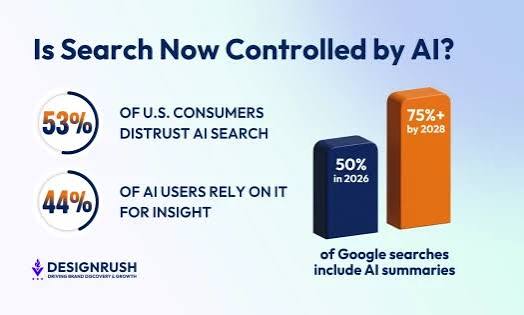
    The numbers tell the story. Google still handles over 8.5 billion searches a day, but its market share has slipped below 90% for the first time in years. Meanwhile, ChatGPT reached 100 million weekly users in two years, and Perplexity an AI-native answer engine—has carved out 10 million monthly users. The queries aren’t disappearing; they’re just going elsewhere. And when they do stay, they often don’t lead to a click at all. Zero-click searches are on the rise, and that has publishers and advertisers alike scrambling.

    The End of the Ten Blue Links

    For most of search’s history, the goal was to send you to a website. Google’s PageRank, launched in 1998, was a clever way to rank pages by their backlinks, and it worked beautifully—so well that it made Google the default gateway to the web. But over the years, the search engine has been slowly answering more questions itself. Featured snippets, knowledge panels, and ‘people also ask’ boxes were early steps toward keeping you on the page.

    Generative AI is the logical endpoint. Instead of a list of links, you get a synthesized paragraph, assembled from multiple sources and written in natural language. Google’s AI Overviews, Microsoft’s Copilot, and Perplexity’s cited answers all do this. The shift is profound: search is no longer about finding a website; it’s about getting an answer. That’s a better experience for many queries, but it’s a nightmare for the publishers who relied on referral traffic to fund their work.

    The Economic Engine Under Stress

    Search engines are, at their core, advertising businesses. Google’s search ads generate over $175 billion annually. That revenue subsidizes the free access we all enjoy. But AI answers threaten the model. If a user gets their answer directly on the search results page, they never click on an ad, and they never visit the website that might have shown them an ad. The click-through rate on organic results has already declined to under 50% for many query types, and AI integration accelerates that trend.

    Microsoft, which partnered with OpenAI to make Bing’s AI search a reality, is betting that the future is conversational and ad-supported in new ways. But the tension is real: every AI-generated answer is a potential ad impression lost. The economic model that funded the internet’s index for two decades is being pulled in two directions—user experience and revenue. How that resolves will shape everything from content creation to the survival of independent media.

    The Antitrust Hammer Falls

    Google’s dominance hasn’t just been a matter of superior algorithms. In August 2024, a federal judge ruled that Google illegally maintained a monopoly in search and text advertising. The remedies are still being determined, but the implications are enormous. If Google is forced to change its default search deals—like the one that makes it the default on iPhones—then Bing, DuckDuckGo, or even a newcomer could gain ground.

    The EU has already acted. The Digital Markets Act designates Google as a ‘gatekeeper,’ requiring choice screens and prohibiting self-preferencing. These regulations are designed to crack open the market, but they also create uncertainty. Will they fragment the search landscape into regional silos? Or will they foster a new wave of innovation?

    Either way, the era of Google as the unchallenged monarch is over. The question is who benefits from the power vacuum: Microsoft, a privacy-focused upstart, or an AI-native answer engine we haven’t met yet.

    The New Rivals: Vertical and Niche

    Google isn’t just losing ground to AI chatbots. It’s losing ground to specialized search engines that do one thing better. For product searches, people go to Amazon. For video, they go to YouTube. For authentic community answers, Reddit has become the default, so much so that Google now pays Reddit to license its data for AI training. For younger demographics, TikTok has replaced Google entirely as the discovery engine for restaurants, fashion, and even news.

    These vertical players don’t aim to replace Google wholesale; they just siphon off the most lucrative and frequent queries. And then there’s the niche players: DuckDuckGo and Brave Search for privacy, Kagi for a paid, ad-free experience. They’re small—Kagi has maybe 50,000 users—but they represent a growing demand for alternatives to the surveillance economy.

    The Trust Problem: Hallucinations and the Black Box

    AI search engines have a problem: they make things up. Large language models are prone to hallucination—presenting false information with complete confidence. Google’s AI Overviews famously recommended putting glue on pizza and cited satirical sources as fact. These are edge cases, but they illustrate the deeper issue: users can’t audit how an answer is generated. With a list of links, you can see the source and judge its credibility. With an AI paragraph, you get an opaque synthesis.

    Proponents argue that AI can be more accurate because it can synthesize across languages and formats, and that it can attribute sources, as Perplexity does. But the ‘black box’ problem remains. When a model is trained on biased or incorrect data, it amplifies those biases. And when the incentives are to keep you on the page, there’s a risk that AI answers will be optimized for engagement rather than accuracy.

    The Publisher’s Dilemma: Adapt or Die

    For websites, the rise of AI search is an existential threat. If Google’s AI Overviews answer your query, you’ll never see the click. Small and independent publishers are most vulnerable—they don’t have the bargaining power to strike licensing deals with AI companies. Large media companies are racing to sign agreements, like the one between OpenAI and The Associated Press, to ensure their content is used in AI training and cited in outputs.

    But there’s a counterargument: AI search could drive more queries overall, because it lowers the friction of asking a question. And it could surface long-tail content that users would never have found through a traditional search. The problem is that these benefits are speculative, while the loss of referral traffic is immediate. Publishers are being forced to adapt—focusing on newsletters, subscriptions, and direct traffic—or face extinction.

    The Privacy Tightrope

    Personalized AI search requires data—lots of it. The more the AI knows about you, the better it can answer your questions. But that’s a privacy nightmare. The trade-off between convenience and surveillance is intensifying. Privacy-focused engines like DuckDuckGo and Brave are growing, but they’re a tiny fraction of the market. And the AI era may only widen the gap: if you want the best AI answers, you might have to let the AI into your life.

    The EU AI Act and other regulations are trying to set boundaries, but the technology is moving faster than the law. The core question is whether we can have the benefits of personalized, conversational search without surrendering our privacy. The answer, so far, is unclear.

    The search engine is not dying; it’s mutating. The next decade will see a multi-front war: Google fighting to keep its ad empire, AI startups pushing for a post-link world, verticals carving out their niches, and regulators reshaping the battlefield. The winners will be those who can balance the demand for fast, accurate answers with the need to sustain the web’s open ecosystem. But the web that emerges may look nothing like the one we know. Search’s future is not a single product—it’s a fragmented, personalized, and increasingly AI-driven landscape.

    Summary

    • Google still dominates with 8.5 billion searches a day, but its share is eroding due to AI, antitrust, and vertical rivals.
    • AI search engines like Perplexity and Google’s AI Overviews shift from links to synthesized answers, threatening the ad-based economic model.
    • The August 2024 antitrust ruling against Google could force changes in default search deals, opening the door for competitors.
    • Vertical searches (Amazon, TikTok, Reddit) siphon off high-value queries, while privacy-focused alternatives gain niche followings.
    • Trust and accuracy are major challenges: LLM hallucinations and black-box algorithms undermine confidence in AI answers.

    FAQ

    Q: Will Google be replaced by AI search engines?
    A: Not overnight. Google still holds ~90% market share and has deep pockets, but AI-native engines like Perplexity are growing. The more likely outcome is a hybrid: Google and Bing integrate AI, while niche players carve out specific use cases.

    Q: How will AI search affect website traffic?
    A: It could reduce referral traffic significantly because AI answers often keep users on the search page. Publishers may need to diversify traffic sources, build direct audiences, or strike licensing deals with AI companies.

    Q: What is a ‘zero-click search’?
    A: A search where the user finds the answer directly on the search results page—via a featured snippet, knowledge panel, or AI overview—without clicking any organic result. This is increasingly common and is a major concern for publishers.

    Q: Are AI search engines accurate?
    A: They can be, but they are prone to hallucination—confidently giving false information. They also lack transparency in how answers are generated. Users should verify critical information from primary sources.

    Q: What can I do to protect my privacy in the age of AI search?
    A: Use privacy-focused engines like DuckDuckGo or Brave, consider paid options like Kagi, and be mindful of the data you share with AI assistants. Remember that personalized AI often requires more personal data.