Tag: antibiotics

  • The Mold That Changed Medicine: How a Dirty Lab Bench Gave Us Penicillin

    The Mold That Changed Medicine: How a Dirty Lab Bench Gave Us Penicillin

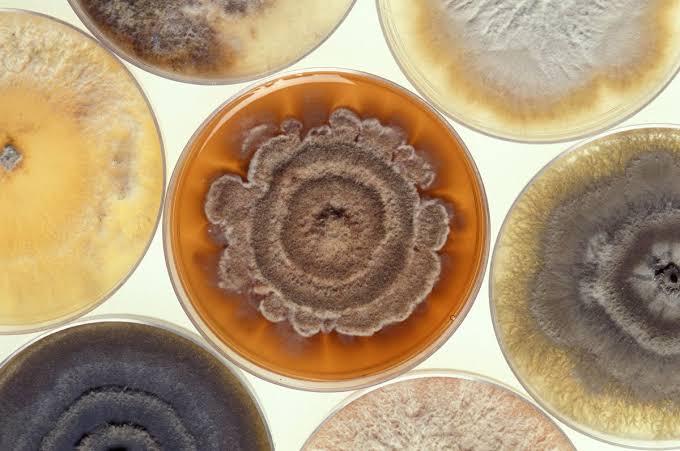
    In September 1928, a Scottish bacteriologist named Alexander Fleming returned from a two-week holiday to find a messy laboratory bench in London. Among a stack of dirty Petri dishes, one had been contaminated by a stray mold. Instead of tossing it out, Fleming took a closer look and noticed something remarkable: the mold had created a clear ring where bacteria had been destroyed. That chance observation set off a chain of events that would eventually save hundreds of millions of lives.

    This is the story of how a fortunate accident, combined with years of painstaking work by many scientists, turned a curious mold into the world’s first antibiotic. It’s a tale of missed opportunities, wartime urgency, and the power of collaborative science.

    A Messy Bench and a Lucky Break

    Fleming was not a tidy researcher. His lab at St. Mary’s Hospital was cluttered, and he often left cultures out for weeks while he attended to other matters. Before leaving for vacation, he had stacked several Petri dishes seeded with Staphylococcus bacteria, intending to clean them later. When he returned, he noticed that one dish had a patch of mold growing on it. Most people would have seen only a ruined experiment. Fleming saw something else: a halo of clear agar around the mold, where the bacteria had been killed.

    He later remarked, “That’s funny,” and instead of discarding the plate, he took a sample of the mold. It was later identified as Penicillium notatum, likely drifted from a mycology lab downstairs where a colleague was studying mold allergens.

    The First Hints of a “Wonder Drug”

    Fleming found that the mold produced a substance that killed many harmful bacteria, including those causing strep throat, pneumonia, and diphtheria. He named it penicillin. He also tested it on animals and found it surprisingly non-toxic. In 1929, he published his findings in the British Journal of Experimental Pathology, but the paper received little attention.

    Why didn’t Fleming pursue it further? The main obstacle was that he could not isolate the active ingredient. The penicillin in the mold broth was unstable, and he lacked the chemistry skills to purify it. He tried using crude filtrates to treat eye infections with some success, but results were inconsistent. By the early 1930s, he had moved on to other research, and the mold sat in storage.

    Enter the Oxford Team

    A decade later, a team at Oxford University picked up the thread. Howard Florey, a pathologist, and Ernst Chain, a biochemist, were interested in natural antibacterial substances. They came across Fleming’s paper and decided to investigate. With the help of biochemist Norman Heatley, they developed methods to extract and purify penicillin from the mold broth. Heatley’s ingenuity was crucial: he designed a freeze-drying process to concentrate the drug and used solvent extraction to purify it. They also devised ways to grow the mold in large quantities using improvised containers like bedpans and milk churns.

    In May 1940, they tested their purified penicillin on mice infected with lethal doses of streptococci. All treated mice survived; all untreated mice died. It was a spectacular result, but they needed to test it on humans.

    The First Human Patient

    In February 1941, they treated their first patient, a policeman named Albert Alexander, who had a severe facial infection that had spread to his eyes and scalp. Penicillin worked wonders—Alexander improved dramatically within a day. But the supply was limited, and the team had to extract penicillin from his urine to reuse it. When the supply ran out, Alexander relapsed and died. It was a heartbreaking setback, but it proved the drug’s power.

    The Oxford team published their results in The Lancet in August 1940, but Britain was at war and could not mass-produce penicillin. They needed help.

    The American Solution

    In mid-1941, Florey and Heatley traveled to the United States to seek industrial partners. They ended up at the USDA’s Northern Regional Research Laboratory in Peoria, Illinois. There, scientists worked on two key problems: finding a better mold strain and developing a method for large-scale production.

    A breakthrough came when a lab assistant brought in a moldy cantaloupe from a local market. The mold on it, Penicillium chrysogenum, produced far more penicillin than the original strain. Another breakthrough was the development of deep-tank fermentation, led by chemical engineer Margaret Hutchinson Rousseau. This method grew the mold in large vats using a nutrient-rich corn steep liquor, allowing production on an industrial scale.

    Pharmaceutical companies like Pfizer, Merck, and Squibb joined the effort, coordinated by the US government. By D-Day in June 1944, there was enough penicillin to treat all Allied casualties. It was hailed as “the wonder drug.”

    The Nobel Prize and the Unsung Hero

    In 1945, Fleming, Florey, and Chain shared the Nobel Prize in Physiology or Medicine. Norman Heatley, whose practical genius made the purification and production possible, was not included—a decision that many historians consider a grave oversight. Heatley’s contribution was essential: without his freeze-drying and extraction techniques, penicillin might have remained a laboratory curiosity.

    The Legacy of Penicillin

    Penicillin’s discovery transformed medicine. It turned once-fatal infections into treatable conditions and sparked the development of other antibiotics. It also highlighted the role of chance in science, but as Louis Pasteur once said, “Chance favors the prepared mind.” Fleming’s curiosity and the Oxford team’s persistence turned an accident into a life-saving breakthrough.

    Today, antibiotics save millions of lives each year, but their overuse has led to antibiotic resistance, a growing threat. The story of penicillin reminds us of the delicate balance between discovery and stewardship.

    The discovery of penicillin is a powerful example of how a chance event, combined with scientific rigor, can change the world. It also underscores the importance of collaboration and the need to preserve the effectiveness of antibiotics for future generations. As we face new challenges like antibiotic resistance, the lessons from that moldy Petri dish remain as relevant as ever.

    Summary

    • In 1928, Alexander Fleming accidentally discovered that a mold called Penicillium notatum killed bacteria, naming the active substance penicillin.
    • Fleming could not purify penicillin, so the project stalled until a team at Oxford (Florey, Chain, and Heatley) developed methods to extract and purify it in the early 1940s.
    • The first human trial in 1941 was promising but ran out of drug, leading to the patient’s death.
    • American scientists and pharmaceutical companies, with the help of a moldy cantaloupe, developed large-scale production methods, making penicillin widely available by 1944.
    • Fleming, Florey, and Chain won the Nobel Prize in 1945, but Heatley’s crucial contributions were overlooked.

    FAQ

    Q: What exactly did Fleming observe on the Petri dish?
    A: He saw a mold colony surrounded by a clear ring where staphylococci bacteria had been destroyed, indicating the mold produced a bacteria-killing substance.

    Q: Why didn’t Fleming develop penicillin himself?
    A: He lacked the chemistry skills to isolate and purify the unstable compound, and his crude extracts gave inconsistent results, so he abandoned the project.

    Q: Who were the key people at Oxford that made penicillin a reality?
    A: Howard Florey, Ernst Chain, and Norman Heatley. Heatley’s techniques for purification and large-scale growth were essential.

    Q: How did American scientists help mass-produce penicillin?
    A: They found a better mold strain from a cantaloupe and developed deep-tank fermentation using corn steep liquor, enabling industrial production.

    Q: Why didn’t Norman Heatley share the Nobel Prize?
    A: The Nobel committee only awarded it to Fleming, Florey, and Chain, but many historians believe Heatley’s contributions were equally deserving of recognition.
  • The Mold That Won the War: How Penicillin Beat Infection and Saved Millions

    The Mold That Won the War: How Penicillin Beat Infection and Saved Millions

    In the summer of 1944, as Allied troops stormed the beaches of Normandy, each medic carried a small tin box containing a yellow powder that would redefine battlefield medicine. That powder penicillin had been discovered sixteen years earlier in a cluttered London laboratory, but it took a world war to turn it into the miracle that saved an estimated 200,000 soldiers on D-Day alone.

    This is not just a story of a lucky accident. It’s a story of desperate improvisation, a rotting cantaloupe, and an industrial push that rivaled the Manhattan Project. It’s the story of how a fragile mold became the most sought-after substance on Earth, and how it changed medicine forever.

    A Petri Dish and a Stroke of Luck

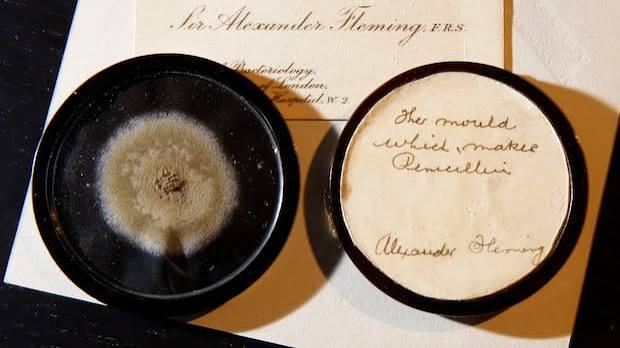
    On a September morning in 1928, Alexander Fleming returned from vacation to his cluttered lab at St. Mary’s Hospital in London. Before leaving, he had stacked a pile of Petri dishes inoculated with staphylococcus bacteria. Now, one dish was contaminated with mold. But instead of tossing it, Fleming noticed something odd: around the mold, the bacteria had been destroyed.

    The mold was Penicillium notatum, a common airborne fungus. Fleming published his findings in 1929, but he couldn’t isolate the active compound. The mold produced penicillin in such tiny amounts that purifying it seemed impossible. For a decade, the discovery languished as a lab curiosity.

    Oxford’s Improvised Assembly Line

    In 1939, a team at Oxford University pathologist Howard Florey, biochemist Ernst Chain, and biochemist Norman Heatley took up the challenge. They had a hunch that Fleming’s mold could be the key to fighting bacterial infections that killed millions. But they faced a brutal problem: how to produce enough penicillin to test it in humans.

    Heatley’s solution was ingenious in its simplicity. He grew the mold in a broth of nutrients, using whatever vessels he could find bedpans, milk churns, even old bookshelves lined with glass jars. The “surface culture” method was laborious: each container yielded only a few drops of the precious liquid. But it worked.

    By 1941, the team had enough penicillin to treat their first patient, a British policeman named Albert Alexander. Alexander had scratched his face on a rose bush, and the wound had become infected with a deadly mix of staphylococci and streptococci. He was near death when the Oxford team administered penicillin. Within days, his fever broke, and the infection began to clear. But the supply ran out before he was cured. Alexander relapsed and died. The lesson was stark: penicillin worked, but producing it at scale was a matter of life and death.

    The American Solution

    Britain, battered by the Blitz and stretched thin by war, couldn’t build the production facilities penicillin demanded. So Florey crossed the Atlantic in 1941, carrying a precious sample of mold in his coat pocket. He appealed to the U.S. government, and the Office of Scientific Research and Development (OSRD) launched a crash program—secret, urgent, and massive.

    The USDA’s Northern Regional Research Laboratory in Peoria, Illinois, became the epicenter of the search for a better mold. Scientists scoured the globe for samples, testing hundreds of strains. The winner came from a rotting cantaloupe in a Peoria grocery store. This strain, Penicillium chrysogenum, produced 200 times more penicillin than Fleming’s original.

    The next breakthrough was engineering. Instead of shallow trays, Pfizer, a Brooklyn chemical company, developed deep-tank fermentation—giant vats where the mold grew in a constantly stirred, aerated broth. Corn steep liquor, a byproduct of corn processing, proved to be the perfect nutrient. By 1944, Pfizer’s plant in Brooklyn was producing penicillin around the clock.

    Triage and Triumph on the Battlefield

    Penicillin was so scarce that doctors had to make agonizing choices about who would receive it. In North Africa and Sicily in 1943, early trials showed dramatic results: soldiers with infected wounds, gangrene, and pneumonia recovered in days. But there wasn’t enough for everyone. Some doctors reserved penicillin for soldiers with battle wounds, while those with venereal disease had to wait—a moral calculus that haunted many physicians.

    By D-Day, June 6, 1944, the supply had caught up with the need. Allied forces carried enough penicillin to treat an estimated 200,000 casualties. Field medics applied it as a powder to wounds, and penicillin became standard in every medical kit. The results were staggering: mortality from bacterial pneumonia in military hospitals fell from about 18% to just 1% in some studies. Gangrene and sepsis, the scourges of WWI, became treatable.

    A Nobel Prize and a New Era

    In 1945, Fleming, Florey, and Chain shared the Nobel Prize in Physiology or Medicine. By the end of the war, U.S. production had reached over 600 billion units per month—enough to treat every wounded soldier and still have surplus for civilians.

    Penicillin’s success didn’t just save lives; it transformed medicine. It proved that government, industry, and academia could collaborate on a scale never before attempted. It sparked a golden age of antibiotics—streptomycin, tetracyclines, and beyond—and set the mold for how modern drugs are developed and mass-produced.

    But the story also has a cautionary edge. The scarcity that forced doctors to choose who lived and who died is a reminder of the ethics of triage. And the patents and production disputes between the U.S. and Britain foreshadowed today’s global battles over drug access. Penicillin was a miracle, but it was a human-made miracle—fraught with the same ambitions, conflicts, and inequalities that shape all human endeavors.

    The story of penicillin is not just about a mold that happened to kill bacteria. It’s about the power of collaboration, the urgency of war, and the audacity to scale a fragile discovery into a global lifesaver. Fleming noticed the mold, but it took the Oxford team’s ingenuity, the Peoria cantaloupe, and the industrial might of American companies to turn it into a weapon against death. As we face new infectious threats, the lesson of penicillin endures: a breakthrough in the lab means nothing until it can be produced, distributed, and used—often in the chaos of a battlefield or a pandemic.

    Summary

    • Alexander Fleming discovered penicillin in 1928, but it took over a decade to purify and produce it.
    • The Oxford team (Florey, Chain, Heatley) developed methods for extraction and testing, including the first human trial in 1941.
    • The U.S. led mass production during WWII, with a crucial breakthrough from a cantaloupe mold and deep-tank fermentation.
    • Penicillin reduced mortality from infections dramatically, saving an estimated 200,000 soldiers on D-Day alone.
    • The drug’s success established models for government-industry-academic collaboration and sparked the antibiotic era.

    FAQ

    Q: Why did it take so long to develop penicillin after Fleming’s discovery?
    A: Fleming couldn’t isolate or stabilize the active compound, and the mold produced it in tiny amounts. It wasn’t until the Oxford team in 1939 developed methods to extract and concentrate penicillin that it became viable for testing in humans.

    Q: What was the ‘surface culture’ method?
    A: Norman Heatley’s technique involved growing penicillin mold in shallow layers of broth in improvised vessels like bedpans and milk churns. It was laborious but allowed the Oxford team to produce enough penicillin for early experiments and the first human trial.

    Q: How did a cantaloupe contribute to penicillin production?
    A: In 1943, the USDA lab in Peoria, Illinois, found a mold strain (Penicillium chrysogenum) on a rotting cantaloupe from a local market. This strain produced 200 times more penicillin than Fleming’s original, making mass production feasible.

    Q: Was penicillin used on D-Day?
    A: Yes, Allied forces carried enough penicillin to treat an estimated 200,000 casualties, and it was standard in field medical kits, dramatically reducing infection deaths.

    Q: Why is Norman Heatley often called ‘the forgotten man’?
    A: Heatley developed the extraction and purification methods and the surface culture technique, but he was not included in the Nobel Prize, which went to Fleming, Florey, and Chain. His contributions were vital to making penicillin practical.