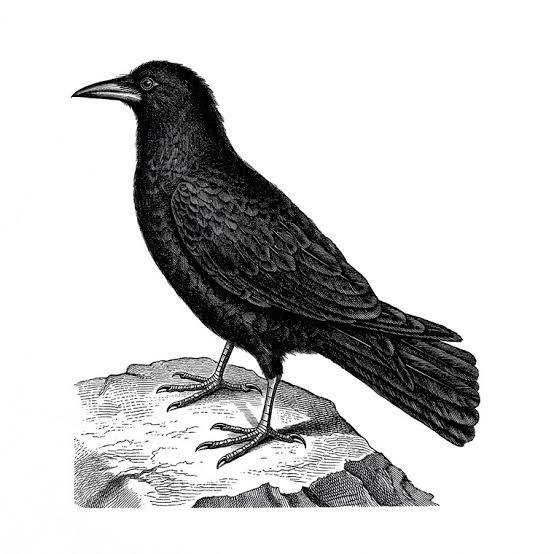
Imagine walking through a park and hearing a crow caw. It might sound like a simple, harsh call, but to another crow, that sound could be a warning, a greeting, or a sign of a food stash. Crows are not just noisy birds; they have a complex vocal system that varies across the globe, much like human languages.
Recent research has shown that crows have regional dialects, can recognize individual human faces, and pass down vocal traditions through generations. This article explores the secret language of crows, revealing how their calls and social structures differ around the world, and what this tells us about animal intelligence and culture.
The Crow’s Vocal Toolkit
Crows are members of the genus Corvus, which includes over 40 species worldwide. From the American Crow (Corvus brachyrhynchos) to the New Caledonian Crow (Corvus moneduloides), these birds produce a wide range of sounds: caws, rattles, clicks, and coos. The familiar “caw” is not a single sound it varies in pitch, duration, and rhythm depending on the situation. For instance, a short, sharp caw might signal alarm, while a longer, softer caw could be a contact call between mates.
Scientists use spectrograms visual representations of sound to analyze these calls. By examining the frequency and timing, they can identify distinct call types and even individual variations. This is similar to how a human voiceprint can identify a person.
Regional Dialects: A Crow’s Accent
Just as humans from different regions speak with distinct accents, crows have regional dialects. Studies on American Crows have found that the structure of their caw and rattle calls differs measurably between populations, such as those in California versus New York. These differences are not genetic; they are learned. Juvenile crows acquire their calls by listening to their parents and group members, a process known as vocal learning.
This cultural transmission means that a crow’s “accent” is passed down through generations, much like a human language. In urban environments, crows have also adapted their calls to overcome background noise, producing higher-pitched or shorter sounds. This is a form of behavioral plasticity, allowing them to communicate effectively in noisy cities.
Social Structures and Family Ties
Crows are highly social birds, often living in extended family groups with cooperative breeding. Offspring may stay with their parents for 1 to 5 years, helping to raise younger siblings. This extended family structure is crucial for vocal learning, as young crows pick up calls from multiple family members, not just their parents.
The social complexity of crow groups is reflected in their communication. They have calls for different predators, food sources, and social interactions. For example, a crow might use a specific call to alert others to a hawk, while another call signals the discovery of a carcass. This ability to convey specific information suggests a level of cognitive sophistication.
Individual Recognition and Memory
Crows are famous for their ability to recognize individual humans. In a well-known study at the University of Washington, researchers wearing masks captured crows. Later, the crows scolded those same masks, even years later, showing they remembered the faces. They also communicated this information to other crows, who would scold the masks without having been captured themselves.
This individual recognition extends to vocalizations. Crows can identify the calls of specific individuals, whether other crows or humans. This skill is likely tied to their complex social lives, where keeping track of friends and foes is essential.
Cultural Transmission: More Than Instinct
Crow vocalizations are not purely innate; they are learned, making them a form of animal culture. This challenges the old view that animal behavior is purely instinctual. The New Caledonian Crow, famous for its tool-making abilities, also shows cultural variation in tool use. Different populations use different techniques, passed down through social learning.
This cultural transmission is a key feature of crow intelligence. It allows them to adapt to new environments and challenges, such as urban living or new food sources. By learning from others, crows can acquire knowledge without having to figure it out from scratch.
The Question of Language
While crows have a complex vocal system, scientists are careful not to call it a “language” in the human sense. Human language has syntax and grammar, allowing for infinite combinations of words. Crows, on the other hand, use a limited set of calls, though they may combine them in sequences to convey more information.
However, the study of crow communication offers insights into the evolution of language. By understanding how crows use calls to convey specific messages, we can learn about the building blocks of communication in animals. This research also highlights the intelligence of crows, which rivals that of some primates.
Global Perspectives: Crows Across Cultures
Crows are found on every continent except Antarctica and South America, and they have adapted to a variety of environments, from wilderness to urban centers. Their behavior varies accordingly, with urban crows often being bolder and more innovative.
Human cultures have also shaped how we perceive crows. In Japanese folklore, crows are messengers of the gods; in some Native American traditions, they are tricksters. The same “caw” may be seen as an omen of death in one culture and a sign of good luck in another. These cultural interpretations reflect our long history with these intelligent birds.
Conservation and Coexistence
As crows thrive in human-dominated landscapes, they sometimes come into conflict with people, leading to calls for culling. However, understanding their communication and social structures can help us find ways to coexist. For example, noise pollution can disrupt crow calls, so reducing noise in urban areas might help them communicate better.
Research on crow behavior also has implications for conservation. By studying their dialects and social structures, we can better understand how populations are connected and how they respond to environmental changes. This knowledge can inform conservation strategies for both crows and other species.
The secret language of crows is a testament to their intelligence and adaptability. Regional dialects, individual recognition, and cultural transmission all point to a complex social world that we are only beginning to understand. As we continue to study these remarkable birds, we not only learn about them but also about the nature of intelligence and communication itself.
Summary
- Crows have a diverse vocal repertoire, including caws, rattles, clicks, and coos, each with specific meanings.
- Regional dialects in crow calls are learned, not genetic, and are a form of cultural transmission.
- Crows live in complex family groups with cooperative breeding, which aids in vocal learning.
- They can recognize individual human faces and voices, and pass this information to other crows.
- Their communication system, while not a language in the human sense, offers insights into animal intelligence and the evolution of language.
FAQ
Q: Do crows have different dialects in different regions?
A: Yes, studies have shown that crow calls, such as the caw and rattle, differ measurably between geographically separated populations. These dialects are learned, not genetic, and are passed down through social learning.
Q: Can crows recognize individual humans?
A: Yes, crows can remember human faces and voices for years. In experiments, they have scolded researchers who captured them, even when the researchers wore masks, and they have communicated this information to other crows.
Q: Is crow communication considered a language?
A: No, crow communication does not have syntax or grammar like human language. However, they use a variety of calls and can combine them in sequences to convey more complex information, which is a subject of ongoing research.
Q: How do crows learn their calls?
A: Crows learn their calls by listening to their parents and other group members during a juvenile period. This is a form of vocal learning, similar to how humans learn speech.
Q: Why do crows adapt their calls in urban areas?
A: Urban crows have been observed producing higher-pitched or shorter calls to overcome background noise, a phenomenon known as the “urban noise effect.” This is a behavioral adaptation that helps them communicate effectively in noisy environments.