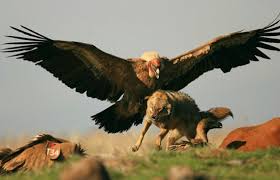
The Andean condor is one of the largest flying birds on Earth, with a wingspan that can stretch to 3.2 meters (10.5 feet). But this bird doesn’t use its immense wings for long, flapping journeys. Instead, it’s a master of soaring, riding warm air currents for hours without a single wingbeat. Its life is a study in extremes: it can fly over 200 kilometers in a day, soar above 6,500 meters, and live for over half a century. Yet, this magnificent creature is often misunderstood, feared, and poisoned by humans.
This article explores the curious case of the Andean condor, from its unique physical adaptations to its critical role as a scavenger. We’ll look at how it thrives in the harsh Andes, why it’s facing an uncertain future, and what it takes to protect a bird that reproduces so slowly that every individual counts.
A Bird of Extremes
The Andean condor, scientifically known as Vultur gryphus, is the only member of its genus, and it’s easy to see why it stands apart. It belongs to the Cathartidae family, the New World vultures, which are more closely related to storks than to the vultures of Africa and Asia. Recent DNA studies suggest they might be a sister group to both, but their ecological role is clear: they are nature’s cleanup crew.
Adult condors are mostly black, but they sport a striking white collar of fluffy down around their necks and white patches on their wings that are visible when they soar. Their heads and necks are bald, a practical adaptation for a scavenger. Feathers would trap blood and bacteria when they feed inside carcasses, so bare skin is much easier to keep clean. The skin can even flush red or pink during emotional displays or to help regulate body temperature.
Sexual dimorphism is evident in this species: males have a prominent comb (caruncle) on their heads and a large wattle under their chins, and they have white irises, while females have red irises. Males are also larger, weighing 11–15 kilograms, while females tip the scales at 8–11 kilograms. This is unusual among raptors, where females are typically the larger sex.
The Art of Soaring
The Andean condor is a gliding specialist. With a wingspan of up to 3.2 meters and a body weight that can reach 15 kilograms, it has a low wing-loading—meaning its wings are large relative to its body weight. This allows it to soar slowly and efficiently, using thermal updrafts and mountain ridge lift to stay aloft. Studies have shown that condors flap their wings less than 1–2% of their flight time. Imagine flying from New York to Washington, D.C., with just a few flaps—that’s the condor’s daily reality.
GPS tracking studies in Patagonia have recorded condors flying over 200 kilometers in a single day without flapping. They can reach altitudes above 6,500 meters, where the air is thin and cold. Their hemoglobin is specially adapted to bind oxygen efficiently at high altitudes, allowing them to cover vast distances across the Andes without exhausting themselves.
This energy-efficient flight is crucial for a scavenger. Carrion is unpredictable, so condors must search large areas to find a meal. Their soaring ability lets them survey hundreds of square kilometers with minimal energy expenditure.
A Scavenger’s Life
Condors are obligate scavengers, meaning they feed almost exclusively on dead animals. They don’t hunt live prey, except in rare cases of weak or injured animals. Historically, they dined on large mammals like guanacos, vicuñas, and Andean deer. Today, they rely heavily on introduced livestock—cattle, sheep, and horses—and in coastal areas, on marine mammal carcasses like seals and whales.
Their role as scavengers is vital. By consuming carcasses quickly, they prevent the spread of diseases like botulism and anthrax, and they recycle nutrients back into the ecosystem. They are the keystone of the cleanup crew, dominating at carcasses and displacing smaller vultures, though they defer to larger predators like pumas when a kill is fresh.
Condors have a clever way of finding food: they watch other scavengers, such as caracaras and other vultures, and follow them to a meal. This behavior, called “local enhancement,” means that when one condor finds a carcass, others soon arrive, sometimes from great distances.
A Slow Life History
The Andean condor lives life in the slow lane. It’s one of the longest-lived birds in the world, with wild condors estimated to live 50–60 years, and captive ones over 75. But this longevity comes at a cost: they have the lowest reproductive rate of any bird of prey.
Condors don’t reach breeding age until they are 5–8 years old. Pairs are monogamous and may stay together for life. They nest on inaccessible cliff ledges, often at high elevations, and lay a single egg every one or two years. Both parents incubate the egg for about 54–58 days. The chick fledges at six months but remains dependent on its parents for up to two years—one of the longest parental care periods of any bird.
Given this slow pace, a pair might successfully raise only two or three chicks in a decade. This makes every individual critical to the population’s survival, and it means that threats like poisoning can have a devastating impact.
Conservation: A Race Against Time
The Andean condor is currently listed as Near Threatened on the IUCN Red List, with an estimated 6,700 mature individuals and a declining trend. It ranges along the entire Andes, from Colombia and Venezuela in the north to Tierra del Fuego in the south, and also in lowland areas of Patagonia and coastal regions. But its numbers are dropping due to several human-caused threats.
Poisoning is the biggest threat. Ranchers sometimes lace carcasses with poison to kill predators like pumas and foxes, and condors, as scavengers, consume the poison and die. They also ingest lead from ammunition left in carcasses. Habitat loss, collisions with power lines, and outright persecution by people who mistakenly believe condors kill livestock add to the pressure.
Conservation efforts are underway. Captive breeding and reintroduction programs have been established in Colombia, Venezuela, and Argentina. In Peru and Chile, education programs work with rural communities to reduce persecution and promote coexistence. But protecting the condor requires more than just these efforts; it requires changing perceptions and ensuring that the skies remain safe for this scavenger king.
The Andean condor is a marvel of evolution, a bird that has mastered the art of flight and carved out a niche as a scavenger. Yet its survival hangs in the balance. With a reproductive rate that can’t keep up with human-induced mortality, every condor lost is a blow to the population. But there is hope. Conservation programs, education, and a growing understanding of the condor’s ecological importance are making a difference. The condor’s fate is tied to our willingness to coexist with nature’s cleanup crew, and to recognize that a bird that can soar above 6,500 meters deserves a place in our skies for generations to come.
Summary
- The Andean condor is one of the largest flying birds, with a wingspan up to 3.2 meters and a weight of up to 15 kilograms.
- It is a master of soaring, flapping less than 2% of its flight time, and can fly over 200 kilometers in a day.
- Condors are obligate scavengers, feeding on carrion, and play a crucial role in preventing disease spread.
- They have an extremely slow reproductive rate, with a single egg every 1-2 years and parental care lasting up to 2 years.
- The species is Near Threatened, with major threats including poisoning, habitat loss, and persecution.
FAQ
Q: How big is an Andean condor?
A: Andean condors have a wingspan of 2.7 to 3.2 meters (8.9–10.5 feet). Males weigh 11–15 kilograms, and females are slightly smaller at 8–11 kilograms.
Q: What do Andean condors eat?
A: They are scavengers and feed exclusively on carrion (dead animals). They prefer large mammals like guanacos and livestock, and in coastal areas, they eat marine mammal carcasses.
Q: How long do Andean condors live?
A: In the wild, they can live 50–60 years, and in captivity, they have lived over 75 years.
Q: Why are Andean condors endangered?
A: They are listed as Near Threatened. The main threats are poisoning from carcasses laced with poison by ranchers, lead poisoning from ammunition, habitat loss, and collisions with power lines.
Q: Do Andean condors hunt live prey?
A: No, they are scavengers and do not hunt live animals, except in extremely rare cases of weak or injured individuals.