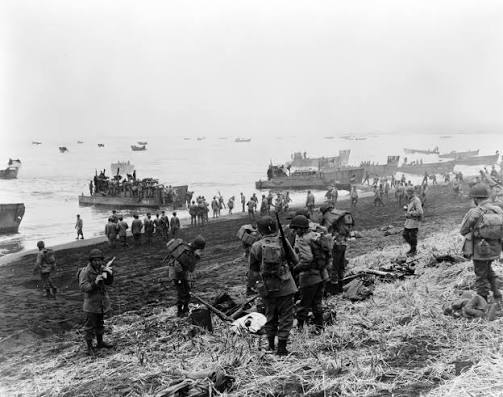
In the cold, fog-shrouded Aleutian Islands, a battle raged that most Americans have never heard of. It was the only World War II battle fought on North American soil, a campaign of brutal weather and fierce combat that lasted 14 months and claimed thousands of lives. Yet, it remains overshadowed by the simultaneous Battle of Midway, a name that echoes in history while the Aleutians are forgotten.
This is the story of a forgotten war, where the enemy was as much the weather as the Japanese, where the fog could hide an entire evacuation, and where American soldiers fought and died on their own continent. It is a tale of strategic feints, heroic sacrifices, and the harsh lessons learned in a place described as ‘a place where the wind never stops and the fog never lifts.’
As we explore the Aleutian Islands Campaign, we uncover a critical chapter of WWII that shaped the Pacific War and taught the U.S. military costly lessons that would prove vital in the island-hopping campaigns to come. This is the battle on American soil that time forgot.
The Aleutians: A Strategic Afterthought
When the Japanese attacked Dutch Harbor on June 3, 1942, they struck a remote U.S. naval base in the Aleutian Islands, a volcanic archipelago stretching over 1,000 miles from mainland Alaska. The attack was not a desperate gamble but a calculated feint. Japan’s primary objective was Midway Island, where they hoped to lure the U.S. Pacific Fleet into a decisive battle. The Aleutian assault was designed to draw American carriers north, away from Midway, and to establish a defensive perimeter against potential U.S. bombing raids on Japan via Alaska.
The Aleutians sit along the Great Circle Route, the shortest air path between North America and Asia, making them strategically valuable. The U.S. feared Japan would use the islands as a staging ground to attack the West Coast or interdict the Alaska-Siberia lend-lease air route. So, when Japanese troops landed unopposed on Kiska and Attu on June 6–7, 1942, the U.S. had no choice but to respond.
But the attack on Dutch Harbor and the invasions of Attu and Kiska were a diversion. And the Americans, thanks to codebreakers, knew it. They did not divert forces from Midway, and Japan lost four carriers there. The Aleutian campaign, however, was just beginning, and it would become a long, arduous fight in one of the most inhospitable places on Earth.
The Battle of Attu: Blood and Ice
The first major confrontation came in May 1943, when U.S. forces landed on Attu. The 7th Infantry Division, trained for desert warfare, was ill-prepared for the Aleutian tundra. They expected a quick victory over a small Japanese garrison, but they faced entrenched defenders in the mountains, and the weather was a relentless adversary.
From May 11 to May 30, the Battle of Attu raged. The Japanese, led by Colonel Yasuyo Yamasaki, fought from fortified positions. The U.S. troops suffered from frostbite, trench foot, and pneumonia, with more casualties from weather than from enemy fire. The fog prevented air support and naval bombardment, leaving the infantry to fight a brutal, close-quarters battle.
On May 29, Yamasaki launched a final banzai charge, one of the largest of the war. It broke through U.S. lines before being annihilated. Nearly all of the 2,500 Japanese defenders died, with only 28 captured. The U.S. lost 549 killed and 1,148 wounded, with over 2,100 casualties from weather-related causes. The battle was a sobering preview of the bloody island campaigns to come in the Pacific.
The Battle of Attu was the only land battle fought on American soil during WWII, and its cost was high. It taught the U.S. military valuable lessons about amphibious assaults, logistics, and the importance of adapting to extreme environments. But the Aleutians were not done with the Americans yet.
The Ghost of Kiska: Evacuation and Friendly Fire
Following Attu, the Allies turned their attention to Kiska, the larger Japanese base. For weeks, the U.S. subjected Kiska to relentless bombing, with over 1,200 sorties, making it the most heavily bombed island in the Pacific relative to its size. But the Japanese, under the cover of fog, had secretly evacuated on July 28, 1943, using cruisers and destroyers. The U.S. Navy never detected the evacuation.
On August 15, 1943, a force of 34,000 U.S. and Canadian troops landed on Kiska, expecting a fierce battle. Instead, they found an empty island. The Japanese had vanished, leaving behind booby traps and abandoned equipment. In the confusion and fog, Allied forces fired on each other, triggering booby traps, and suffering accidents. In the end, 313 Allied casualties were incurred, all from friendly fire, booby traps, and accidents. The Japanese had evacuated without a single combat loss.
The Kiska landing was a humiliating anti-climax, but it ended the Aleutian campaign. On August 24, 1943, Kiska was declared secure, and the only battle on North American soil was over.
The Legacy: Lessons Learned and Forgotten
The Aleutian Islands Campaign is often overshadowed by Midway, but its significance extends beyond its place in history. It was the first major amphibious assault by U.S. forces in the Pacific, providing critical lessons in amphibious warfare, logistics, and the challenges of fighting in extreme environments. The mistakes made at Attu, from inadequate clothing to poor coordination, were addressed in later campaigns.
Strategically, the campaign secured the northern flank of the Pacific theater, preventing Japan from using the islands as a staging ground for attacks on the West Coast or disruptions of shipping lanes. It also demonstrated the vital role of intelligence, as the U.S. was able to anticipate Japanese moves.
Yet, the campaign remains forgotten. The veterans of Attu and Kiska returned to a nation that didn’t know they had fought on American soil. The fog that hid the Japanese evacuation also hid the campaign’s memory. Today, the Aleutian Islands are a remote, windswept outpost, but they hold the graves of hundreds of Americans who died to defend their country. It is time to remember them.
The Aleutian Islands Campaign is a reminder that war is not just about grand battles and famous names. It is about soldiers fighting in freezing fog, on islands few could locate on a map, for reasons that seemed distant and abstract. Yet, their sacrifice was real, and their victory secured the northern frontier of the United States. As we honor the veterans of WWII, let us not forget those who fought in the forgotten battle on American soil. The wind still blows across Attu and Kiska, but the memory of their courage should not be lost to the mist.
Summary
- The Aleutian Islands Campaign was the only WWII battle fought on North American soil, lasting from June 1942 to August 1943.
- Japanese forces bombed Dutch Harbor and occupied Attu and Kiska as a diversion from the Battle of Midway.
- The Battle of Attu in May 1943 resulted in nearly all 2,500 Japanese defenders killed, with 549 U.S. deaths and thousands of weather-related casualties.
- The invasion of Kiska in August 1943 found the island abandoned, with 313 Allied casualties from friendly fire and booby traps.
- The campaign provided crucial lessons in amphibious warfare and secured the northern Pacific flank.
FAQ
Q: Why is the Aleutian Islands Campaign often forgotten?
A: It occurred simultaneously with the Battle of Midway, a turning point in the Pacific War, and the campaign’s remote location and harsh conditions made it difficult to report. Additionally, the Kiska landing’s anti-climactic end (finding the island empty) overshadowed the earlier fighting.
Q: What was the strategic importance of the Aleutian Islands?
A: The islands sat along the Great Circle Route, the shortest air path between North America and Asia. They were valuable for staging attacks and defending against potential Japanese strikes on the U.S. West Coast or disruption of shipping lanes.
Q: How did the weather affect the campaign?
A: The Aleutians are notorious for dense fog, storms, and freezing temperatures. More U.S. casualties on Attu came from weather-related injuries like frostbite and trench foot than from Japanese fire. Fog also hampered air support and naval bombardment and enabled the Japanese evacuation of Kiska.
Q: What lessons were learned from the Aleutian campaign?
A: The campaign was the first major U.S. amphibious assault in the Pacific. It highlighted the need for proper cold-weather gear, better coordination, and the importance of intelligence. These lessons were applied in later island-hopping campaigns.
Q: Were there any civilians in the Aleutian Islands during the campaign?
A: Yes, a small U.S. weather station on Attu was captured, and the Japanese took prisoners. Additionally, the U.S. evacuated the native Aleut population from the islands for their safety, but they were relocated to internment camps in Alaska, a tragic episode in itself.