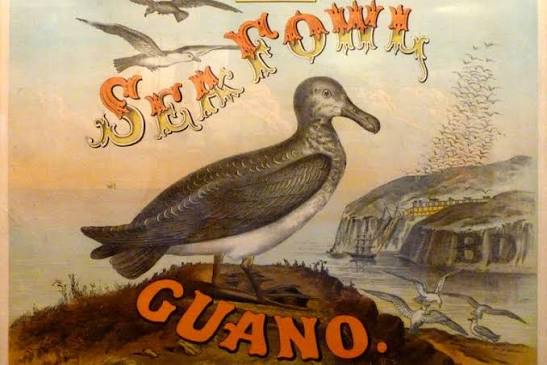
Tag: agriculture

  • The Guano Boom: How Bird Droppings Built Empires and Changed Agriculture Forever

    The Guano Boom: How Bird Droppings Built Empires and Changed Agriculture Forever

    In the mid-1800s, the world’s most sought-after commodity wasn’t gold, oil, or spices it was bird excrement. Peruvian guano, a potent natural fertilizer, sparked a global rush that funded wars, toppled governments, and transformed farming. But the story of this ‘accidental empire’ is more than a tale of manure: it’s a lens through which to see how resource exploitation, geopolitics, and scientific discovery intersected in the 19th century.

    Today, when we sprinkle synthetic fertilizer on our gardens, we rarely think about the fact that modern agriculture once depended on the accumulated droppings of seabirds on remote islands. The guano era shaped borders, economies, and labor practices in ways that still resonate. It’s a remarkable chapter in history—one that explains why the U.S. claims tiny Pacific islands, why Chile and Bolivia went to war, and why Peru’s economy boomed and busted.

    The Stuff That Made the Desert Bloom

    Guano is the accumulated excrement of seabirds, bats, and seals, but in the 19th century, the term meant one thing: the nitrogen-rich deposits on arid islands off the coasts of Peru, Chile, and Namibia. These islands had the perfect recipe for guano formation: a rainless climate that wouldn’t wash the nutrients away, massive seabird colonies (cormorants, boobies, and pelicans), and the cold, nutrient-rich Humboldt Current that supported enormous fish populations—which the birds ate and turned into fertilizer.

    Peruvian guano was exceptionally potent, with nitrogen content often exceeding 12–15%, compared to modern synthetic fertilizers. That nitrogen, along with phosphorus and potassium, made it a superfood for crops. But it wasn’t just the chemistry that mattered; it was the scale. Over millennia, seabirds had deposited layers of guano dozens of feet thick on islands like the Chincha Islands, creating a seemingly endless supply.

    The Agricultural Crisis That Created a Monster Demand

    By the early 1800s, European agriculture was in trouble. Centuries of intensive farming had exhausted the soil, and traditional fertilizers—animal dung, night soil, bone meal—were nowhere near enough. The Industrial Revolution had also driven rapid urbanization, meaning more mouths to feed with fewer hands in the fields. It was a genuine crisis, often called the ‘manure crisis.’

    Enter science. In 1840, German chemist Justus von Liebig published Organic Chemistry in Its Application to Agriculture and Physiology, proving that plants need specific mineral nutrients. This made guano’s value scientifically undeniable, not just folkloric. When Prussian naturalist Alexander von Humboldt brought guano samples back to Europe in 1802, they were a curiosity. By the 1840s, they were a strategic resource.

    The demand was explosive. British farmers, in particular, were desperate, and guano became a household word. At its peak, a ton of guano sold for $50–$80 in Europe—equivalent to several thousand dollars today. It was literally worth its weight in gold, and the race was on.

    Peru’s Boom and Bust

    Peru was sitting on the world’s richest guano deposits, accumulated over millennia on its rainless islands. The government nationalized extraction and contracted foreign firms—mostly British—to mine and ship the stuff. Between 1848 and 1875, Peru exported an estimated 11–12 million tons of guano.

    The revenue was staggering. At its peak, guano funded roughly 60% of Peru’s national budget. The money paid off foreign debt, built railroads, and financed a lavish state apparatus. It was a classic ‘resource curse’—a sudden influx of wealth that distorted the economy and created dependency.

    But the boom had a dark side. The labor force was composed of convicts, Chinese indentured laborers (over 100,000 between 1849 and 1874), and conscripted indigenous workers. Conditions were brutal. Workers inhaled guano dust, which caused respiratory diseases, and they faced exhaustion, malnutrition, and high mortality. The guano islands were, in effect, a prison and a death sentence for many.

    The U.S. Guano Islands Act: Claiming Islands for Bird Poop

    American farmers also needed fertilizer, and U.S. merchants and whalers had already been scooping up guano from Caribbean and Pacific islands. In 1856, Congress passed the Guano Islands Act, which allowed any U.S. citizen to claim an unoccupied guano island for the United States. Once claimed, the island became U.S. territory.

    This legislation was a foundational piece of U.S. overseas expansion, predating the more famous acquisitions of Alaska, Hawaii, and the Philippines. Under the Act, the U.S. claimed over 100 islands. Many of those claims are still U.S. territories today—Baker Island, Howland Island, and Jarvis Island, for instance, are almost entirely forgotten, but they remain part of the United States because of bird droppings. The Act is still on the books, vestigial but never repealed.

    The War of the Pacific: When Fertilizer Caused a War

    Guano wasn’t just an economic resource; it was a geopolitical flashpoint. The Atacama Desert, which stretched across the borders of Chile, Peru, and Bolivia, contained both guano deposits and sodium nitrate—another fertilizer and a key ingredient in gunpowder. In 1879, disputes over taxation and control of these resources erupted into the War of the Pacific.

    Chile fought against Peru and Bolivia, and won decisively. Chile annexed Peru’s southern provinces and took Bolivia’s entire coastline, leaving Bolivia landlocked to this day. Peru’s guano economy collapsed, and the country was left bankrupt and politically destabilized. The war was, in many ways, a fight over who would control the literal excrement that kept global agriculture alive.

    The Decline: Faster Than the Birds Could Poop

    Guano deposits were mined faster than they could regenerate. Seabird guano accumulates at a rate of just 1–2 mm per year, so the islands’ reserves were finite. By the 1870s, the quality of Peruvian guano was visibly declining as miners reached lower-grade deposits.

    The final blow came with the development of the Haber-Bosch process in the early 20th century. In 1909–1913, German chemists Fritz Haber and Carl Bosch figured out how to synthesize ammonia from atmospheric nitrogen, creating a virtually unlimited source of nitrogen fertilizer. This broke the link between food production and mined excrement.

    Synthetic fertilizer didn’t just replace guano; it revolutionized agriculture. The world’s food supply no longer depended on the whims of seabird populations or political control of remote islands. But the guano era left its mark: it accelerated the expansion of synthetic fertilizers, which now feed billions of people. Ironically, the modern agricultural system that guano helped create is the very system that made guano obsolete.

    The guano boom was a bizarre and brutal chapter in global history. It was a period when the world’s most powerful nations fought over bird droppings, when Peru’s economy soared and crashed, and when the U.S. quietly expanded its empire one island at a time. But it also laid bare the fragility of a world dependent on a single, non-renewable resource. The lessons from the guano era—about resource exploitation, labor practices, and the environmental costs of agriculture—are still relevant today. Next time you fertilize your garden, remember: it wasn’t always as simple as a bag from the hardware store.

    Summary

    • Guano is the accumulated excrement of seabirds, rich in nitrogen, phosphorus, and potassium, and was a vital fertilizer in the 19th century.
    • Peruvian guano exports funded ~60% of the national budget during the boom years (1848–1875), but extraction relied on brutal labor.
    • The U.S. Guano Islands Act of 1856 led to the claim of over 100 islands, many of which remain U.S. territories today.
    • The War of the Pacific (1879–1884) was fought over guano and nitrate-rich territories, leaving Bolivia landlocked and bankrupting Peru.
    • The Haber-Bosch process (1909–1913) made synthetic nitrogen fertilizer, displacing guano and transforming global agriculture.

    FAQ

    Q: What exactly is guano?
    A: Guano is the accumulated excrement of seabirds, bats, or seals. In the 19th-century trade, it referred specifically to seabird guano from arid islands, prized for its high nitrogen content.

    Q: Why was Peruvian guano so valuable?
    A: Peruvian guano had an exceptionally high nitrogen content (often 12–15%), making it an extremely effective fertilizer for nitrogen-hungry crops. It also contained phosphorus and potassium, essential plant nutrients.

    Q: How did the Guano Islands Act affect U.S. territory?
    A: The Act allowed U.S. citizens to claim unoccupied guano islands for the U.S., leading to the acquisition of over 100 islands. Many remain U.S. territories today, such as Baker Island and Howland Island.

    Q: What caused the War of the Pacific?
    A: The war was fought over control of the Atacama Desert, which contained valuable guano and sodium nitrate deposits. Chile defeated Peru and Bolivia, annexing territory and leaving Bolivia landlocked.

    Q: Why did guano stop being used?
    A: Guano deposits were depleted faster than they could regenerate, and the Haber-Bosch process (developed 1909–1913) allowed synthetic production of ammonia fertilizer, which was cheaper and unlimited in supply.
  • The Humble Potato: How a South American Tuber Conquered the World

    The Humble Potato: How a South American Tuber Conquered the World

    Every day, billions of people eat potatoes in some form mashed, fried, boiled, or baked. This starchy tuber is so common that it’s easy to forget its extraordinary journey: from a wild plant in the Andes to a global staple that shaped empires, fueled industrial revolutions, and even triggered a humanitarian catastrophe. The potato’s story is a testament to how a single crop can transform economies, diets, and destinies.

    But the potato’s influence isn’t just historical. Today, it’s the world’s fourth-largest food crop, with over 370 million metric tons produced annually. Its adaptability and nutritional density make it a critical tool in the fight against hunger. Yet, the same vulnerabilities that led to the Irish Potato Famine still loom, reminding us that our food systems are more fragile than they appear.

    The Birthplace: The Andes

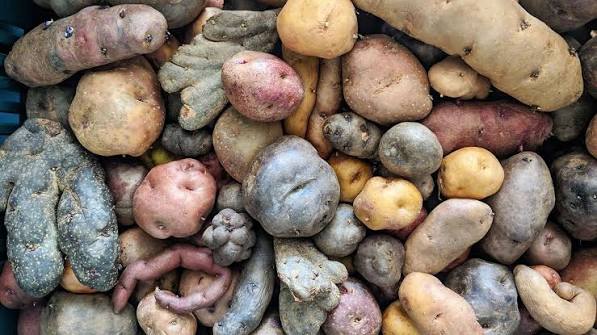
    Potatoes were first domesticated 7,000–10,000 years ago in the highlands of southern Peru and northwestern Bolivia, near Lake Titicaca. The Incas were master potato breeders, cultivating hundreds of varieties in every color and shape imaginable. They even invented freeze-drying a process called chuño which allowed them to store potatoes for years, sustaining armies and feeding entire cities.

    This was no accident. The potato is a member of the nightshade family, alongside tomatoes and peppers, and it thrives in the harsh Andean climate where other crops fail. Its ability to grow at altitudes up to 4,000 meters made it invaluable to ancient civilizations.

    The European Arrival: From Suspicion to Staple

    When Spanish conquistadors brought potatoes to Europe in the 1570s, they were met with deep skepticism. Europeans believed the tuber caused leprosy, was poisonous (it’s related to deadly nightshade), or was simply unfit for Christians because it wasn’t mentioned in the Bible. For over a century, potatoes were mostly fed to livestock or grown as botanical curiosities.

    The turning point came in the 18th century, thanks to two unlikely champions. Frederick the Great of Prussia distributed free seed potatoes to peasants and even threatened to cut off the noses of those who refused to plant them. Meanwhile, in France, a pharmacist named Antoine-Augustin Parmentier used more cunning tactics: he posted armed guards around potato fields during the day, making the crop seem precious, then allowed “thefts” at night. The ruse worked, and potatoes quickly spread across Europe.

    Fueling the Industrial Revolution

    The potato’s high yield per acre far exceeding grains like wheat provided cheap, abundant calories that fueled Europe’s population boom. This surplus labor powered the Industrial Revolution, as workers flocked to cities and factories. In Ireland, however, the reliance on potatoes became dangerously absolute. By the 1840s, a third of the Irish population depended almost exclusively on the potato for survival, cultivating just one variety: the Irish Lumper.

    When a fungus-like pathogen called Phytophthora infestans struck in 1845, it devastated the crop. The Irish Potato Famine killed about 1 million people and forced another 1–2 million to emigrate. The disaster exposed the fatal flaw of monoculture a single disease could wipe out an entire nation’s food supply.

    The Potato Goes Global

    While Europe embraced the potato, Portuguese traders carried it to Asia in the late 16th century. In China, it became a lifeline for poor farmers in marginal highlands, and today China is the world’s largest potato producer, growing over 90 million tons annually. In India, the potato became a staple during British colonial rule, and in Africa, colonial powers introduced it, making it a key crop in countries like Kenya and Rwanda.

    The potato’s adaptability made it a perfect candidate for the Green Revolution of the 20th century. Research centers like the International Potato Center (CIP) in Lima, Peru, have developed blight-resistant and drought-tolerant varieties, ensuring that this humble tuber can continue to feed a growing planet. The UN even declared 2008 the International Year of the Potato to highlight its role in food security.

    Environmental and Economic Realities

    Potatoes are relatively efficient: they require less water than rice and can grow in diverse climates. However, modern industrial farming often relies on heavy chemical inputs, raising sustainability concerns. Additionally, cosmetic standards lead to significant food waste—blemished or oddly shaped potatoes are often discarded before reaching consumers.

    Economically, potatoes are a lifeline for smallholder farmers worldwide, providing income and food security. But their future depends on addressing these environmental and social challenges.

    The potato’s journey from the Andes to every corner of the globe is a story of resilience, adaptation, and human ingenuity. It has fed civilizations, sparked revolutions, and taught us hard lessons about the dangers of overreliance. As we face climate change and a growing global population, the humble potato may once again prove to be one of our most valuable allies.

    Summary

    • Originated in the Andes 7,000–10,000 years ago; Incas developed hundreds of varieties and freeze-drying techniques.
    • Introduced to Europe in the 1570s, initially met with suspicion and myths; promoted by figures like Frederick the Great and Parmentier.
    • Fueled Europe’s population boom and the Industrial Revolution, but the Irish Potato Famine (1845–1852) showed the perils of monoculture.
    • Now the world’s fourth-largest food crop, with China as the top producer; crucial for food security in Asia and Africa.
    • Modern challenges include environmental sustainability, food waste, and the need for disease-resistant varieties.

    FAQ

    Q: Why was the potato initially rejected in Europe?
    A: Europeans feared it caused leprosy, considered it un-Christian because it wasn’t in the Bible, and believed it was poisonous due to its relation to nightshade plants.

    Q: What caused the Irish Potato Famine?
    A: The famine was caused by late blight (Phytophthora infestans), a pathogen that destroyed the potato crop in Ireland, where the population was heavily dependent on a single variety.

    Q: How many potatoes are produced globally each year?
    A: Over 370 million metric tons are produced annually, making potatoes the fourth-largest food crop after rice, wheat, and corn.

    Q: What is chuño?
    A: Chuño is a freeze-dried potato product developed by the Incas, which allowed them to preserve potatoes for years and store them for long campaigns.

    Q: Are potatoes nutritious?
    A: Yes, a medium potato (about 150g) provides about 110 calories, 26g of carbohydrates, 3g of protein, and significant amounts of vitamin C, potassium, and vitamin B6.

  • Why White Farmers Still Own Most of South Africa’s Land: The Market-Based Reform That Backfired

    Why White Farmers Still Own Most of South Africa’s Land: The Market-Based Reform That Backfired

    Twenty-nine years after the end of apartheid, South Africa remains one of the most unequal countries in the world when it comes to land ownership. Despite a constitutional promise to transfer 30% of farmland to Black citizens, white South Africans—who make up less than 10% of the population—still control roughly 72% of individually owned farmland. Black South Africans, who constitute about 80% of the population, own just 4–5%.

    How did this happen? The answer lies in the ‘willing buyer, willing seller’ mechanism that was enshrined in the post-apartheid constitution. Designed as a compromise to reassure white landowners and investors, this market-based approach has paradoxically enriched many white farmers while failing to meaningfully redistribute land. New research shows that the system has often become a subsidy for the very people it was meant to displace.

    The Legacy of Apartheid’s Land Grab

    To understand the current crisis, we must look back to 1913, when the Natives Land Act reserved just 7% of South Africa’s land for Black ownership. This was later expanded to 13% under the 1936 Trust and Land Act, leaving the remaining 87% for whites. During apartheid, forced removals displaced an estimated 3.5 million Black South Africans from ‘white’ areas, creating a deep wound that remains unhealed.

    When democracy arrived in 1994, the new government faced a monumental task: rectify this injustice while maintaining economic stability. The negotiated settlement that ended apartheid protected property rights, leading to the adoption of the ‘willing buyer, willing seller’ principle. Under this system, the state purchases land at market prices from owners who volunteer to sell. It was a compromise that sought to reassure white farmers and investors that their assets would not be seized.

    The 30% Target That Was Never Met

    The government set an ambitious goal: transfer 30% of agricultural land to Black owners by 2014. That deadline came and went, and the target was extended to 2030. By 2023, only about 10% of agricultural land had been transferred through land reform programs, according to official data. Independent researchers put the figure even lower—around 7–8%—because some ‘transferred’ land was later re-sold or consolidated.

    Why such slow progress? The market-based mechanism is a key culprit. Land prices in South Africa rose sharply after 1994, partly because the state’s willingness to buy at market rates created a seller’s market. White farmers could demand premium prices for their land, knowing the government was a guaranteed buyer.

    The Market Approach: A Windfall for White Farmers

    Recent academic studies (2023–2025) have revealed a troubling pattern: land reform has often financially benefited white farmers while failing to redistribute land. Here’s how:

    • Price inflation: The state’s readiness to purchase at market rates drove up land prices, allowing white farmers to sell at inflated values.
    • Strategic selling: Farmers often sold marginal or unproductive land to the state while retaining prime agricultural land. This meant the government was buying the least valuable land, while the best farmland remained in white hands.
    • Lease-back loopholes: Many redistributed farms were leased back to the original white owners because new Black owners lacked capital, equipment, or training. White farmers continued to profit from the land they had ‘sold’—sometimes even managing it under state contracts.
    • Slow bureaucracy: Land claims can take 10–20 years to process, and many remain unresolved. The administrative burden has clogged the system, further delaying transfers.

    The Human Cost: Black Beneficiaries Left in Limbo

    For Black South Africans, the experience of land reform has often been deeply frustrating. Many beneficiaries report receiving land without title deeds, capital, or training. Some have been evicted from ‘redistributed’ farms by white owners who retained legal title. The promise of land ownership has turned into a bureaucratic nightmare, with little tangible improvement in livelihoods.

    Communities have expressed anger that land reform has become a ‘white subsidy’ program—white farmers profit from selling land, then often continue to farm it under lease. This has fueled calls for more radical measures, such as expropriation without compensation, which the government introduced in 2018 but has implemented only sparingly due to legal and political challenges.

    Different Perspectives on the Failure

    Academics and pro-reform advocates argue that market-based reform is structurally incapable of achieving redistribution because it relies on voluntary white participation and market prices that favor sellers. They contend that the 30% target was always a political compromise, not a genuine commitment to justice. The real goal, they say, should be broader agrarian reform that addresses power dynamics, not just ownership transfer.

    The government acknowledges slow progress but blames budget constraints, legal challenges, and the complexity of claims. It frames the 2018 expropriation bill as a corrective to the failed market approach, though its implementation has been limited and contested.

    White farmer organizations (like AgriSA) argue that land reform has been mismanaged: many redistributed farms fail due to lack of support, and productive land is being taken out of cultivation. They insist that ‘willing buyer, willing seller’ was a fair compromise and that the real problem is post-transfer support, not the mechanism itself.

    Black beneficiaries often express frustration at the lack of support and the loopholes that allow white owners to retain control. They see the system as perpetuating inequality rather than dismantling it.

    International observers compare South Africa’s experience to Zimbabwe’s fast-track land reform, which involved forced seizures and led to economic collapse. South Africa’s cautious approach has avoided that catastrophe, but it has also failed to deliver justice. The challenge is finding a path that achieves redistribution without destroying agricultural productivity.

    The Road Ahead

    As South Africa approaches the 2030 deadline, the question remains: can land reform be salvaged? Some experts suggest that a more assertive state role—including targeted expropriation of underutilized land, combined with robust post-transfer support—could break the impasse. Others argue that the focus should shift from ownership to access, ensuring that Black farmers can lease land on fair terms and receive the training and capital they need to succeed.

    What is clear is that the current system has failed to meet its goals. The ‘willing buyer, willing seller’ approach, intended as a compromise, has become a barrier to justice. Without a fundamental rethink, South Africa’s land inequality will persist, and the wounds of apartheid will remain open.

    South Africa’s land reform was designed to heal the wounds of apartheid, but the market-based mechanism has instead perpetuated inequality. White farmers still dominate land ownership, while Black South Africans remain marginalized. The failure is not just a matter of missed targets—it is a structural flaw in the approach itself. As the country debates its next steps, the lessons from this experience are clear: voluntary, market-driven reform cannot deliver justice when the market itself is skewed by historical privilege. South Africa must find a new path, one that prioritizes equity over compromise, if it is to truly transform its rural landscape.

    Summary

    • White South Africans own approximately 72% of individually owned farmland, while Black South Africans—who make up 80% of the population—own just 4–5%.
    • The government’s target of transferring 30% of farmland to Black owners by 2014 was missed; by 2023, only about 10% had been transferred, with independent estimates lower.
    • The ‘willing buyer, willing seller’ mechanism has often benefited white farmers through inflated prices, strategic selling of marginal land, and lease-back arrangements.
    • Many Black beneficiaries receive land without title deeds, capital, or training, and some are evicted by white owners who retain legal title.
    • The failure has fueled calls for expropriation without compensation, but implementation remains limited and contested.

    FAQ

    Q: What is the ‘willing buyer, willing seller’ principle?
    A: It is a market-based mechanism where the state purchases land from owners who volunteer to sell, at market prices. It was enshrined in South Africa’s post-apartheid constitution as a compromise to protect property rights.

    Q: How much land has actually been transferred?
    A: According to government data, about 10% of agricultural land had been transferred by 2023. Independent researchers put the figure lower, around 7–8%, due to re-sales and consolidation.

    Q: Why has land reform been so slow?
    A: Key reasons include inflated land prices, strategic selling by white farmers, lease-back loopholes, and a slow bureaucratic process that can take 10–20 years to process claims.

    Q: What is the expropriation bill?
    A: Introduced in 2018, it allows land expropriation without compensation in certain cases, as a corrective to the failed market approach. However, its implementation has been limited and legally contested.

    Q: Are there any success stories?
    A: While the overall program has struggled, some individual projects have succeeded when beneficiaries received adequate support. However, these are the exception rather than the rule.