
Tag: aging

  • Why Some Animals Don’t Age: The Science of Negligible Senescence

    Why Some Animals Don’t Age: The Science of Negligible Senescence

    Imagine a creature that lives for over 500 years, or one that shows no signs of aging even as centuries pass. This isn’t science fiction it’s the reality for a handful of species on Earth. Scientists call this phenomenon ‘negligible senescence,’ and it challenges our basic understanding of aging.

    Aging, or senescence, is the gradual decline in function that most organisms experience after reaching maturity. But a few exceptional animals like the Greenland shark, the ocean quahog clam, and the tiny hydra seem to bypass this process entirely. They don’t age in the conventional sense, though they’re not immortal; they can still die from predators, disease, or accidents. The question is: how do they do it, and what can we learn from them?

    What Is Negligible Senescence?

    The term “negligible senescence” was popularized by biologist Caleb Finch in his 1990 book Longevity, Senescence, and the Genome. It refers to species that show no observable increase in mortality rate or decline in reproductive capacity with age after reaching sexual maturity. In other words, a 200-year-old bowhead whale is just as likely to die in a given year as a 50-year-old one, and its ability to reproduce remains intact.

    This doesn’t mean these animals live forever. They can still be killed by predators, diseases, accidents, or environmental changes. What they lack is the biological clock that causes most organisms to gradually deteriorate. For humans, aging is a one-way street: our cells accumulate damage, our DNA repair slows down, and our risk of disease rises each year. For animals with negligible senescence, that street seems to level out—they reach a plateau of health that they maintain for decades or even centuries.

    The Usual Suspects: Animals That Don’t Age

    Several species have been identified as displaying negligible senescence, each with its own unique adaptations.

    Greenland Shark: The 400-Year-Old Fish

    The Greenland shark is the longest-lived vertebrate known, with an estimated lifespan of 250 to 500 years. These sharks don’t reach sexual maturity until they’re about 150 years old, a testament to their slow, steady pace of life. They live in the cold, dark depths of the North Atlantic, where their slow metabolism and the chilly waters likely contribute to their extreme longevity.

    Bowhead Whale: The Arctic Centenarian

    Bowhead whales can live over 200 years, making them the only whale species known to surpass the two-century mark. They’re also remarkably resistant to cancer, despite having many more cells than humans. Researchers have identified unique genetic adaptations in bowhead whales that enhance DNA repair and suppress tumors, offering clues for human cancer research.

    Ocean Quahog Clam: Ming the Clam

    The ocean quahog clam is a burrowing shellfish that can live for 400 to 500 years. The most famous specimen, nicknamed “Ming,” was 507 years old when it was accidentally killed during research in 2006 (scientists had to break its shell to determine its age). These clams have extremely low metabolic rates and produce protective proteins that combat oxidative stress.

    Aldabra Giant Tortoise: Slow and Steady

    Aldabra giant tortoises, native to the Aldabra Atoll in the Indian Ocean, can live for 150 to 200 years or more. Unlike many animals, their mortality rate doesn’t increase with age; even elderly tortoises remain active and capable of reproduction. Their slow metabolism and efficient DNA repair systems play a role.

    Naked Mole-Rat: The Cancer-Resistant Rodent

    The naked mole-rat is a small, hairless rodent that lives up to 37 years—an extraordinary feat for a creature its size (mice live 3-4 years). They maintain fertility throughout their lives and show no signs of age-related decline. One key mechanism is their production of high-molecular-weight hyaluronan, a substance that inhibits cell overgrowth and prevents cancer.

    Hydra and Planarians: The Potentially Immortal

    Hydra are tiny, freshwater animals with a remarkable ability: they can regenerate their entire body from just a few cells. Their stem cells continuously divide, replacing old cells and effectively resetting the aging clock. Planarian flatworms have similar regenerative powers, fueled by high telomerase activity that maintains the protective caps on their chromosomes.

    Lobsters: Indeterminate Growth

    Lobsters grow throughout their lives, a trait called indeterminate growth. They produce telomerase, an enzyme that rebuilds telomeres, so their cells don’t suffer the shortening that leads to aging in other animals. While they’re often called “biologically immortal,” this is debated—lobsters can die from molting complications, disease, or predation.

    The Mechanisms: How Do They Do It?

    Scientists have identified several key mechanisms that allow these animals to escape the aging process.

    Telomere Maintenance

    Telomeres are protective caps at the ends of chromosomes that shorten each time a cell divides. When they get too short, cells stop dividing, contributing to aging. Most animals, including humans, have limited telomerase activity, so our telomeres slowly erode. But many negligible senescence species maintain or regenerate their telomeres throughout life, keeping their cells young.

    Enhanced DNA Repair

    DNA damage accumulates as we age, leading to mutations and cellular dysfunction. Species like the naked mole-rat have highly efficient DNA repair pathways that fix damage quickly and accurately, preventing the buildup of errors.

    Proteostasis: Keeping Proteins in Check

    Proteins are the workhorses of cells, but they can become damaged or misfolded over time, forming toxic clumps. Cells normally clear out these damaged proteins, but this process, called proteostasis, declines with age. Negligible senescence species maintain robust proteostasis, ensuring that cellular “garbage” doesn’t accumulate.

    Cancer Suppression

    Cancer is a disease of aging—the longer we live, the more opportunities for cells to mutate and grow uncontrollably. Animals like the bowhead whale and naked mole-rat have evolved powerful anti-cancer mechanisms. For example, naked mole-rats produce a unique form of hyaluronan that prevents cells from overcrowding, while bowhead whales have duplicated genes related to DNA repair and tumor suppression.

    Low Metabolic Rate and Oxidative Stress Management

    Many negligible senescence species are cold-blooded or have slow metabolisms, which reduces the production of harmful free radicals—reactive molecules that damage cells. By managing oxidative stress, they avoid the cellular wear-and-tear that accelerates aging in other animals.

    Regenerative Capacity

    Hydra and planarians take a different approach: they continuously regenerate their tissues, effectively creating new bodies from old parts. This constant renewal means their cells never accumulate enough damage to trigger aging.

    Why Did These Animals Escape Aging?

    The evolutionary theory of aging, developed by biologists like Peter Medawar and George Williams in the mid-20th century, explains why most organisms age. The force of natural selection declines with age: genes that harm you after you’ve reproduced have less pressure to be eliminated. This leads to two processes: mutation accumulation (harmful late-acting mutations build up) and antagonistic pleiotropy (genes that help early reproduction but hurt later in life, like those that cause cancer).

    Negligible senescence challenges this theory’s assumption that aging is inevitable. If a species has very low extrinsic mortality—that is, few predators, safe habitats, or other protections—natural selection can continue to act at older ages. In that case, it pays to invest in maintenance and repair, because individuals that stay healthy longer will produce more offspring over their extended lifetimes.

    This “live slow, die old” strategy is seen in many long-lived species: they mature late, have few offspring, and invest heavily in each one (a K-selected life history). The Greenland shark, for instance, doesn’t reproduce until 150 years old, a strategy that only works in a stable, low-mortality environment. In contrast, mice and shrews face high predation risk; for them, it’s better to reproduce quickly and die young than to spend energy on repair that might be wasted if they’re eaten.

    The “Immortality” Myth and the Trade-Off

    Popular media often calls these animals “immortal,” but that’s misleading. They can still die from accidents, disease, or predation. The hydra comes closest to biological immortality, but even it can be killed. Negligible senescence means no aging, not no death.

    There’s also a trade-off. Negligible senescence species typically reproduce slowly and late. Would humans want that? Probably not—we value our ability to reproduce early and often. But understanding the mechanisms of these animals could lead to therapies that delay aging, prevent cancer, or improve DNA repair, without requiring us to give up our reproductive strategies.

    What Can We Learn?

    Research on negligible senescence is still in its early stages, but it holds promise. By studying the bowhead whale’s anti-cancer genes, scientists hope to develop new cancer treatments for humans. The naked mole-rat’s cancer resistance has already inspired studies on the role of hyaluronan in tumor suppression. And the telomere-maintaining mechanisms of hydra and planarians could inform regenerative medicine.

    These animals show that aging is not an immutable law of biology. It’s a consequence of evolutionary trade-offs—one that can be modified. While we may never achieve the longevity of a Greenland shark, studying these creatures brings us closer to understanding the aging process and, perhaps, to extending healthy human life.

    Negligible senescence is nature’s reminder that aging is not inevitable. The Greenland shark, the ocean quahog clam, and the tiny hydra have found ways to maintain their bodies for centuries, offering a living blueprint for slowing the aging process. By studying these remarkable animals, we can uncover the genetic and biochemical secrets that might one day help us live longer, healthier lives—without expecting to become immortal.

    Summary

    • Negligible senescence means no observable aging after maturity, but it’s not immortality—animals still die from other causes.
    • Key species include the Greenland shark (250-500 years), bowhead whale (200+ years), ocean quahog clam (400-500 years), and hydra (potentially immortal).
    • Mechanisms include telomere maintenance, enhanced DNA repair, protein quality control, cancer suppression, low metabolic rates, and regeneration.
    • Evolutionary explanation: Low extrinsic mortality selects for maintenance and repair, leading to a “live slow, die old” strategy.
    • Research on these animals could lead to breakthroughs in cancer treatment and regenerative medicine for humans.

    FAQ

    Q: Are animals with negligible senescence truly immortal?
    A: No—they still die from predators, disease, accidents, or environmental stress. Negligible senescence means they don’t age, but they’re not invincible.

    Q: Why don’t humans have negligible senescence?
    A: Humans have relatively high extrinsic mortality throughout our evolutionary history, so natural selection favored reproduction over maintenance. We age because our genes haven’t been optimized for centuries-long lifespans.

    Q: What is the longest-lived animal ever discovered?
    A: The ocean quahog clam, with one specimen (Ming) living 507 years. Some Greenland sharks are estimated to be over 400 years old.

    Q: Can studying these animals help humans live longer?
    A: Yes—understanding their DNA repair mechanisms, cancer resistance, and telomere maintenance could lead to therapies that delay aging or prevent age-related diseases in humans.

    Q: Do all long-lived animals have negligible senescence?
    A: No—some animals, like elephants, live long but still show signs of aging. Negligible senescence is a specific lack of aging, not just a long lifespan.

  • The Immortal Jellyfish: How Turritopsis dohrnii Resets Its Life Cycle and What That Means for Biology

    The Immortal Jellyfish: How Turritopsis dohrnii Resets Its Life Cycle and What That Means for Biology

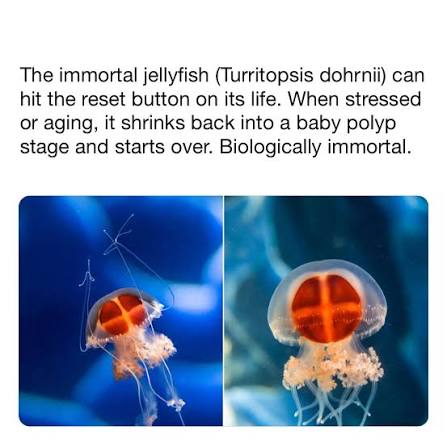
    In the late 1980s, a German marine biology student named Christian Sommer was watching a batch of jellyfish in his lab. Most of them were doing what jellyfish do: swimming, eating, and eventually dying after reproducing. But one species, barely the size of a pinky nail, did something no one expected. Instead of dying, it shrank back into its juvenile polyp stage, essentially reversing its development. That species, now known as Turritopsis dohrnii, has been dubbed the ‘immortal jellyfish’—and its trick has fascinated biologists ever since.

    This tiny creature, about 4.5 millimeters across, can cheat death in a way that no other multi-celled animal can. It doesn’t just slow aging; it turns back the clock entirely. When stressed, it transforms its mature cells into a younger state, rebuilding its body from scratch. This ability, called transdifferentiation, has profound implications for our understanding of aging, stem cells, and even regenerative medicine.

    In this article, we’ll explore how the immortal jellyfish pulls off this remarkable feat, why it matters beyond the realm of jellyfish, and what scientists hope to learn from it.

    A Life Cycle That Goes in Reverse

    Most jellyfish follow a predictable script. A fertilized egg becomes a planula larva, which settles on the seafloor and grows into a polyp—a sessile, tube-like creature that buds off tiny medusae. These medusae grow into the familiar bell-shaped jellyfish that swim freely, reproduce, and then die within weeks or months.

    Turritopsis dohrnii follows this script—until it doesn’t. When the medusa faces stress, whether it’s starvation, physical injury, or a sudden change in water temperature or salinity, it doesn’t just die. Instead, it sinks to the bottom, its tentacles and bell begin to degrade, and its cells reorganize into a cyst-like blob. Within days, that blob develops into a new polyp, which can then bud off fresh medusae. This isn’t a one-time trick; the jellyfish can cycle through this process repeatedly, effectively resetting its biological clock indefinitely.

    This reversal is not the same as simply living a long time. Some animals, like certain tortoises and whales, exhibit ‘negligible senescence’—they age so slowly that they seem to defy time. But T. dohrnii goes further: it actively reverses its development, turning an adult body back into a juvenile one. It’s as if a butterfly could transform back into a caterpillar and then into a butterfly again, over and over.

    The Cellular Magic: Transdifferentiation

    How does a jellyfish accomplish this feat? The key is a process called transdifferentiation, where a mature, specialized cell transforms directly into a different cell type without going through a stem-cell intermediate.

    In most animals, once a cell becomes a muscle cell or a nerve cell, it stays that way. But in T. dohrnii, cells from the bell, tentacles, and other tissues ‘forget’ their identity and revert to a more flexible state. They then reorganize into the different cell types needed for a polyp.

    This is a stark contrast to how our own bodies repair damage. When we get a cut, our skin cells divide to fill the gap, but they don’t turn into liver cells or brain cells. The jellyfish’s ability to reprogram its cells is a form of cellular plasticity that goes far beyond what we see in humans.

    Transdifferentiation isn’t unique to the immortal jellyfish—salamanders can regenerate limbs, and planarian flatworms can regrow their entire bodies from small fragments. But those animals still age. T. dohrnii is the only known metazoan that can reverse its developmental trajectory entirely.

    The Genetic Blueprint: What the Genome Reveals

    In 2022, a Chinese research team sequenced the genome of T. dohrnii and published their findings in the Proceedings of the National Academy of Sciences. The results offered a molecular glimpse into the jellyfish’s superpower.

    The genome shows expansions in genes related to DNA repair, telomere maintenance, and cell-cycle regulation. Telomeres are the protective caps at the ends of chromosomes; in most animals, they shorten with each cell division, acting as a biological clock. In T. dohrnii, however, telomere length is maintained during reversal, suggesting that the jellyfish has evolved mechanisms to protect its genetic material from the wear and tear of aging.

    The study also highlighted the role of the PI3K/Akt signaling pathway and FoxO transcription factors—molecules that are implicated in longevity and stress resistance across many species, including humans. These pathways help cells respond to stress and may be crucial for triggering the reversal process.

    Why Does It Matter for Human Biology?

    You might be wondering: if a jellyfish can live forever, what does that mean for us? The honest answer is that we can’t simply copy its tricks to make humans immortal. We’re vastly more complex, and our cells are far more specialized. But studying the jellyfish can still teach us valuable lessons about aging and regeneration.

    One area of interest is regenerative medicine. If we can understand how T. dohrnii‘s cells reprogram themselves, we might learn how to coax human cells into repairing damaged tissues without introducing artificial stem cells. For example, instead of growing new heart cells in a lab and transplanting them, we might one day be able to trigger the heart’s own cells to transform and repair the damage.

    Another area is aging research. By studying how the jellyfish avoids senescence, scientists hope to identify molecular pathways that could be targeted to slow aging in humans. The PI3K/Akt and FoxO pathways are already known to influence lifespan in other organisms, and the jellyfish’s genome provides a natural experiment in how those pathways can be finely tuned.

    It’s important to be clear: the immortal jellyfish is not truly immortal. It can still die from predation, disease, or catastrophic environmental changes. Its ‘immortality’ is really an ability to avoid aging and reset its life cycle when conditions are unfavorable. That’s a remarkable adaptation, but it’s not invincibility.

    An Invasive Hitchhiker

    The immortal jellyfish has a second claim to fame: it’s a global traveler. Originally described from the Mediterranean Sea, it has since been found in waters around Japan, Panama, Florida, Spain, and the Atlantic coast of Panama. It’s considered a cosmopolitan species, and it likely spreads by hitchhiking in ship ballast water—the water that ships take on board to maintain stability and then release at their next port.

    This raises ecological concerns. Because T. dohrnii can reset its life cycle, it might be able to survive harsh conditions that would kill other jellyfish, potentially allowing it to establish populations in new environments. While it’s not currently considered a major invasive threat, its resilience makes it a species worth watching.

    The Bigger Picture: What ‘Immortality’ Means in Nature

    The immortal jellyfish challenges our assumptions about aging and death. It shows that for at least one animal, the normal trajectory of life—from birth to maturity to death—is not inevitable. Instead, it’s a flexible process that can be reversed when the environment demands it.

    This has broader implications for evolutionary biology. The ability to revert to a polyp stage is likely an adaptation to unpredictable environments. When conditions are favorable, the jellyfish reproduces sexually, creating genetic diversity. When conditions turn sour, it can revert to its polyp stage, effectively hitting the pause button until things improve. This strategy trades reproductive output for persistence, allowing the jellyfish to wait out bad times.

    Understanding how T. dohrnii manages this balancing act could help scientists think about how organisms adapt to changing environments, including the challenges posed by climate change.

    What’s Next for Research?

    Scientists are still unraveling the jellyfish’s secrets. The 2022 genome sequencing was a major step, but many questions remain. For instance, what exactly triggers the reversal process at the molecular level? How do cells coordinate the complex reorganization required to build a new polyp? And can we apply these insights to human health?

    As research progresses, the immortal jellyfish will likely continue to inspire breakthroughs in regenerative medicine and aging research. It’s a tiny creature with a big lesson: life’s rules are more flexible than we once thought.

    The immortal jellyfish is a reminder that nature often defies our expectations. A creature smaller than a pinky nail has mastered a trick that has eluded every other multi-celled animal: the ability to reset its life cycle and avoid aging. While it won’t grant us immortality, its biology offers a window into the processes of cellular reprogramming and stress resistance that could one day transform medicine. So the next time you hear about a jellyfish that can live forever, remember that the real story is even more fascinating—it’s about the remarkable plasticity of life itself.

    Summary

    • Turritopsis dohrnii, the immortal jellyfish, can revert from its adult medusa stage back to its juvenile polyp stage when stressed.
    • This reversal is made possible by transdifferentiation, where mature cells transform directly into different cell types without a stem-cell intermediate.
    • The jellyfish’s genome shows expansions in genes related to DNA repair, telomere maintenance, and cell-cycle regulation, offering clues to its longevity.
    • While not truly immortal, it avoids senescence and can reset its life cycle indefinitely, but it can still die from predation or disease.
    • Studying this jellyfish may inform regenerative medicine and aging research, particularly through the PI3K/Akt and FoxO pathways.

    FAQ

    Q: Is the immortal jellyfish truly immortal?
    A: No, it can still die from predation, disease, or environmental catastrophes. Its ‘immortality’ refers to its ability to avoid aging and revert to a juvenile stage, effectively resetting its life cycle.

    Q: How does the immortal jellyfish reverse its development?
    A: Through a process called transdifferentiation, where mature cells from the medusa’s body transform directly into different cell types, allowing it to reorganize into a polyp.

    Q: What triggers the reversal?
    A: Stressful conditions such as starvation, physical injury, temperature shock, or changes in salinity can induce the medusa to revert to the polyp stage.

    Q: Can humans benefit from the jellyfish’s ability?
    A: While we can’t become immortal, studying the jellyfish’s cellular reprogramming may inform regenerative medicine, helping us develop ways to repair damaged tissues without artificial stem cells.

    Q: Where can the immortal jellyfish be found?
    A: It lives in temperate and tropical waters worldwide, including the Mediterranean Sea, Japan, Panama, Florida, and Spain, often spreading via ship ballast water.

  • Older Adults Can Adapt to Extreme Heat New Research Shows How

    Older Adults Can Adapt to Extreme Heat New Research Shows How

    For decades, public health advice has treated older adults as passive victims of extreme heat: stay indoors, crank the AC, avoid exertion. But a wave of new research is challenging that assumption. Studies from labs like the University of Sydney and Penn State suggest that healthy older adults retain a remarkable ability to acclimatize to heat comparable in key ways to younger people when given time and proper hydration.

    This isn’t just a lab curiosity. With global temperatures rising and heat waves becoming more frequent, the finding could reshape how we protect aging populations. Instead of only sheltering them from heat, we might one day prescribe ‘heat training’ a kind of vaccine against the worst effects of hot weather.

    The Old View: Aging Means Heat Intolerance

    It’s been a cornerstone of heat physiology: as we age, our bodies become less able to cope with high temperatures. Reduced sweat output, blunted skin blood flow, and a weaker cardiovascular response all of these were thought to combine into a dangerous vulnerability to heat. During the 2003 European heat wave, which killed around 70,000 people, most of the victims were over 65. The 2022 European heat wave repeated the pattern, with roughly 60,000 excess deaths concentrated among older adults.

    The conventional wisdom made sense: if thermoregulation degrades with age, then older adults are simply less equipped to handle heat. But that wisdom came from studies that often tested older adults under acute stress a single session in a hot chamber, with no time to adapt. That’s like testing someone’s fitness by asking them to run a marathon without any training.

    The New Discovery: Adaptation Is Possible

    Recent studies have flipped the script. Instead of a single exposure, researchers used repeated heat sessions over 7–10 days—a protocol designed to trigger acclimatization. In one typical study, healthy adults aged 60–80 spent 60–90 minutes in a 40°C (104°F) chamber each day, with controlled fluid intake to prevent dehydration. A younger control group (ages 20–35) went through the same protocol.

    The results: after the acclimatization period, older adults showed a 20–30% improvement in sweating response, and their core temperature during exercise in the heat dropped significantly. Their skin blood flow—the vasodilation that helps dissipate heat—also improved with repeated exposure. In several measures, the older group’s adaptation was comparable to that of the younger group.

    This suggests that the thermoregulatory system retains more plasticity than we assumed. Just as muscle adapts to exercise, the sweating and vascular systems adapt to heat—even in older adults.

    Why It Matters: A Shift from Fear to Empowerment

    This has big implications. Current heat-health action plans from the WHO, CDC, and European agencies treat older adults as inherently fragile, advising them to stay indoors and avoid heat altogether. But if adaptation is possible, we could shift from a purely defensive stance to a more active one.

    Imagine a prescription for ‘heat acclimatization’ before summer arrives—a structured series of safe heat exposures, like a physiotherapy program. That could help older adults maintain independence, stay socially active, and even exercise outdoors during hot weather. It could reduce hospitalizations for heat-related illness, and improve quality of life for millions.

    The research also points to a broader reframing: heat as manageable exposure, not just disaster. Cities might invest in ‘heat parks’—shaded, misted, monitored outdoor spaces—rather than only air-conditioned shelters. But that raises equity concerns: adaptation is a privilege. Low-income older adults without access to safe heat exposure or healthcare may not benefit.

    The Caveats: Not Everyone Can Adapt

    The studies so far have focused on healthy, community-dwelling older adults. That’s a crucial limitation. People with heart disease, diabetes, or dementia—or those taking medications that affect sweating or thirst—may not see the same benefits. For them, the old advice to avoid heat remains essential.

    There’s also a danger of overcorrection. If public messaging says ‘older adults can adapt,’ some might take it as ‘heat is no big deal.’ That would be a serious mistake. The adaptation requires time, hydration, and monitoring—and it doesn’t make anyone immune to heat stroke.

    Another issue: the research needs replication. The findings come from a few labs, mostly in high-income countries, and need to be tested across different climates, ethnicities, and health statuses. Earlier studies that found diminished capacity may have been flawed by dehydration protocols or small samples; the new wave corrects for that, but more work is needed.

    A Roadmap for the Future

    So what should we do with this evidence? First, don’t throw out heat warnings. But second, start exploring how to help older adults build heat resilience safely. Public health could develop pilot programs for supervised heat acclimatization in community centers or clinics. Researchers could identify which older adults are most likely to benefit, and how to tailor protocols for those with chronic conditions.

    Urban planners might design public spaces that encourage safe heat exposure—with shade, water fountains, and misting stations—rather than just shuttling people into air-conditioned rooms. And clinicians could start thinking of heat acclimatization as a preventive intervention, like a flu shot for summer.

    The research is young, but the direction is clear: older adults are not simply victims of heat. They can adapt—if we give them the chance.

    The discovery that healthy older adults can acclimatize to heat is a hopeful correction to decades of fatalistic assumptions. It doesn’t erase the real dangers of extreme heat, especially for the frail, but it opens a new path: empowering older people to cope with a warming world. The next step is to translate this research into practice—safely, equitably, and with proper precautions.

    Summary

    • Older adults retain significant ability to acclimatize to heat, comparable to younger adults, when given repeated exposure and proper hydration.
    • Studies show 20-30% improvement in sweating response and reduced core temperature after 7-10 days of heat exposure.
    • This challenges the old view that aging irreversibly impairs thermoregulation.
    • Findings could lead to ‘heat training’ as a preventive intervention, but only for healthy older adults; frail individuals remain vulnerable.
    • More research is needed across diverse populations, and public health must avoid overcorrecting into complacency.

    FAQ

    Q: Is it safe for all older adults to try heat acclimatization?
    A: No. The studies involved healthy, community-dwelling adults. Those with chronic conditions like heart disease or diabetes, or who take certain medications, should not attempt heat exposure without medical supervision.

    Q: How does heat acclimatization work?
    A: Repeated heat exposure triggers physiological adaptations: sweating becomes more efficient and starts earlier, skin blood flow improves, and the body maintains a more stable core temperature.

    Q: What was wrong with earlier studies that said older adults couldn’t adapt?
    A: Many tested a single heat exposure (acute stress) or allowed dehydration, which confounded results. Newer studies use repeated exposures and controlled hydration, revealing greater adaptability.

    Q: Could this research lead to changes in public health advice?
    A: Possibly. Instead of only telling older adults to avoid heat, future guidance might include structured, safe heat exposure for those who are healthy enough, similar to exercise recommendations.

    Q: What about equity?
    A: Adaptation requires resources—like access to safe heat environments and healthcare. Low-income older adults may not benefit unless public policies address these barriers.