Every four years, the world tunes in to watch the beautiful game, but few realize that the ball itself has undergone a quiet revolution. From the waterlogged leather spheres of the 1930s to the sensor-laden Al Rihla of 2022, the World Cup ball has evolved from a simple piece of equipment into a high-tech marvel that shapes how the game is played and officiated. This evolution is not just about materials and design—it’s a story of commercial ambition, aerodynamic science, and the relentless pursuit of perfection.
For players, the ball is the most intimate piece of equipment—it’s the object they strike, trap, and caress. For fans, it’s a symbol of the tournament itself, with iconic designs like the Telstar and Tango becoming cultural touchstones. But behind the nostalgia lies a complex history of innovation, controversy, and even failure. The Jabulani’s erratic flight in 2010, for instance, sparked a global outcry and forced FIFA to rethink how balls are tested. Now, with the 2026 World Cup on the horizon, the ball is poised to become even smarter, blurring the line between equipment and data-collection device.
The Early Days: Leather, Water, and Compromise
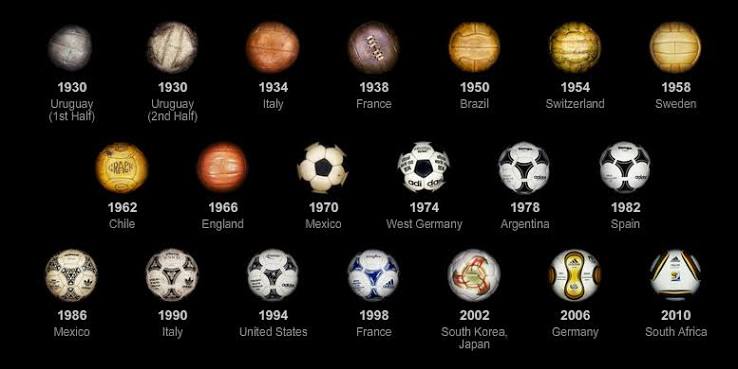
The first World Cup in 1930 had no official ball. In the final between Uruguay and Argentina, the two teams couldn’t agree on which ball to use, so they settled on a split: Argentina’s ball for the first half, Uruguay’s for the second. Uruguay came from behind to win 4-2, and legend has it that the switch played a role. This anecdote highlights a fundamental truth: the ball matters, and its behavior can influence outcomes.
In the 1930s and 1940s, balls were made of leather panels sewn around a rubber bladder. They were heavy, absorbed water like a sponge, and became deformed in wet conditions. The 1954 Swiss World Champion was a breakthrough with its plastic-coated surface, but it wasn’t until 1958 that the Top Star introduced PVC, a synthetic coating that offered better water resistance. Still, these were incremental changes. The real turning point came in 1966, when the Slazenger Challenge became the first ball with a white-and-black panel design, specifically to improve visibility on the newly popular black-and-white televisions. This was a harbinger of things to come: the ball was no longer just a tool; it was a broadcast asset.
The Adidas Era: Telstar and the Birth of a Monopoly
The 1970 World Cup in Mexico marked a seismic shift. Adidas, a German sportswear company, introduced the Telstar, the first ball with a FIFA license. Its 32-panel black-and-white design was not just aesthetically iconic—it was engineered for visibility on TV. The Telstar’s success established a template that would endure for over half a century: Adidas has supplied every World Cup ball since, a streak of 14 tournaments. This wasn’t a FIFA rule, but a commercial partnership that became de facto standard, turning the ball into a lucrative branding opportunity.
The Telstar also introduced the use of polyurethane coatings (the Durlast version in 1974) to improve weather resistance. But the 1978 Tango went further, with a design of 20 triads that created an optical illusion of 12 circles. This design language was so successful that it was reused for decades, with variations like the Tango España in 1982, which added micro-perforations and waterproofing. By the 1980s, the shift from leather to synthetic was nearly complete. The 1986 Azteca was the first fully synthetic, machine-stitched ball, offering consistency and durability that leather could never match.
The Science of Flight: From Jabulani to Brazuca
As balls became lighter and smoother, they also became more unpredictable. The 2010 Jabulani, with its 8 panels and thermally bonded construction, was a disaster in the eyes of many players. Goalkeepers like Iker Casillas called it a “beach ball,” and its erratic flight at altitude (the tournament was played in South Africa’s high veld) led to a FIFA-commissioned study. The problem was aerodynamic: the smooth surface and reduced panel count caused the ball to knuckle and swerve unpredictably. This was a wake-up call for manufacturers.
In response, Adidas went back to the drawing board. The 2014 Brazuca featured 6 panels and was extensively tested with over 600 players in 30 countries. The result was a ball that was widely praised for its stability and predictability. The 2018 Telstar 18 kept the 6-panel design but added an NFC chip, allowing fans to interact with the ball via smartphone. This was a hint of what was to come.
The Connected Ball: Al Rihla and the Future
The 2022 Al Rihla in Qatar was a quantum leap. It was the first ball with “connected ball technology,” featuring a CTR-CORE inertial sensor that tracks the ball 500 times per second. This data is fed to VAR for semi-automated offside decisions, reducing average review time from 70 seconds to about 25 seconds. The ball is no longer passive; it’s an active participant in officiating. This shift has profound implications for the game, from how goals are judged to how players strategize.
But the Al Rihla also sparked debate. Goalkeepers like Alisson Becker complained about its flight, saying it moved too much. This is a recurring theme: as balls become more engineered, they also become more sensitive to spin and strike. The challenge for manufacturers is to balance performance with predictability. The 2026 World Cup ball is expected to continue this trend, with even more advanced sensors and perhaps even customizable features.
The Player’s Perspective: A Love-Hate Relationship
Players have always been the most vocal critics of new ball designs. Goalkeepers, in particular, have a unique vantage point—they see the ball from a different angle and are most affected by its flight. The Jabulani was vilified by keepers, while the Brazuca was praised. Outfield players often appreciate lighter, faster balls for shooting but complain about the knuckleball effect, where a ball with little spin can dip and swerve unpredictably. This is not just a matter of preference; it affects tactics. A ball that moves erratically can make it harder to play short passes, favoring long shots and set pieces.
The Manufacturer’s Dilemma: Innovation vs. Consistency
For Adidas, each new ball is a chance to showcase engineering prowess. But there’s a tension between innovation and consistency. A ball that’s too different can alienate players and disrupt the game. The Jabulani was a lesson in this regard. As a result, subsequent balls have been more conservative in design, focusing on incremental improvements rather than radical changes. The 2026 ball will likely continue this trend, with perhaps more integration of data and connectivity, but with a nod to the classic designs that players trust.
The World Cup ball has come a long way from the leather spheres of 1930. It’s now a high-tech instrument that can track itself, communicate with referees, and even influence the outcome of matches. But at its core, it’s still the same object that players kick, head, and carry across the pitch. The evolution of the ball is a testament to human ingenuity, but it also raises questions: How much technology is too much? Will the ball ever become so smart that it changes the fundamental nature of the game? As we look to 2026, one thing is certain: the ball will continue to evolve, and with it, the beautiful game.
Summary
- The World Cup ball has evolved from leather to high-tech sensors, with Adidas supplying every official ball since 1970.
- Key milestones include the 1970 Telstar (32 panels, TV-friendly), the 1986 Azteca (first fully synthetic), and the 2022 Al Rihla (first with inertial sensors for VAR).
- The Jabulani (2010) was a turning point, leading to improved testing and design protocols.
- The ball’s flight affects gameplay, with players often criticizing new designs for unpredictability.
- The 2026 ball is expected to continue sensor integration, potentially changing how the game is officiated.
FAQ
Q: Why did the 2010 Jabulani ball behave so erratically?
A: The Jabulani had only 8 panels and a smooth surface, which reduced aerodynamic stability, especially at high altitude. This caused unpredictable knuckleball effects, leading to widespread criticism from players.
Q: How does the 2022 Al Rihla’s sensor technology work?
A: The Al Rihla contains a CTR-CORE inertial sensor that tracks the ball 500 times per second. This data is used for semi-automated offside decisions, helping VAR make faster and more accurate calls.
Q: Why has Adidas made every World Cup ball since 1970?
A: It’s not a FIFA rule but a commercial partnership. Adidas has held the contract for the official match ball since 1970, making it a de facto standard.
Q: What are the main differences between leather and synthetic balls?
A: Leather balls absorb water, become heavy, and deform in wet conditions. Synthetic balls (PVC, polyurethane) are water-resistant, consistent, and durable, offering better performance in all weather.
Q: Will the 2026 World Cup ball have even more technology?
A: It’s expected. The trend is toward more sensor integration and data collection, potentially including real-time tracking for enhanced officiating and fan engagement.