In 1971, a 500,000-dollar independent film about a Black sex worker’s son on the run from the police grossed over ten million dollars at the box office. Sweet Sweetback’s Baadasssss Song was written, directed, produced, and scored by Melvin Van Peebles, who also starred in it. The movie was defiant, experimental, and unapologetically pro-Black. It proved that a film made by and for Black audiences could make serious money, and it cracked open a door that Hollywood had kept locked for decades.
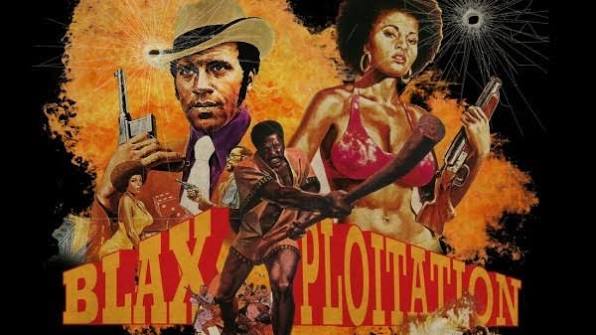
That door led to the Blaxploitation era, a roughly five-year period from 1970 to 1975 when studios produced a wave of films featuring Black leads, Black stories, and Black music. These movies gave us John Shaft, Foxy Brown, and a funk soundtrack for every scene. But beneath the leather coats and afros, the genre was doing something more radical than just entertaining audiences—it was dismantling the stereotypes that had defined Black characters in American cinema since its inception. The films were rough, uneven, and often deeply problematic. Yet they succeeded in ways that no previous movement had: they made Black defiance profitable, and they forced Hollywood to reckon with a demographic it had long ignored.
Before Blaxploitation: A Century of Caricatures
To understand what Blaxploitation did, you have to look at what it replaced. For most of Hollywood’s history, Black characters were not people—they were types. There was the Mammy, the Uncle Tom, the Sambo, the tragic mulatto, and the comic buffoon. These caricatures stretched back to D.W. Griffith’s The Birth of a Nation (1915), which portrayed Black men as threats to white womanhood and celebrated the Ku Klux Klan as heroes. The film was a commercial blockbuster and a propaganda weapon that helped revive the Klan in the 1920s.
In response, independent Black filmmakers like Oscar Micheaux produced “race films” from the 1910s through the 1940s—movies with all-Black casts that showed doctors, lawyers, and everyday families. But these films rarely reached mainstream theaters. They played in segregated venues and were often ignored by white critics.
The Civil Rights era brought a shift. By the late 1960s, films like Guess Who’s Coming to Dinner (1967) presented Black characters with dignity—but the dignity came with strings attached. Sidney Poitier, the era’s most bankable Black star, played characters that were nearly perfect: brilliant, patient, and non-threatening. He was there to teach white audiences a lesson, not to challenge them. As the critic Donald Bogle wrote, Poitier’s roles were designed to “appease” rather than provoke.
By 1970, that formula was stale. The studios were in financial freefall. Television had gutted their audiences, and big-budget flops like Hello, Dolly! (1969) were sinking entire companies. Hollywood needed cheap hits, and it began noticing that urban theaters—especially in Black neighborhoods—were packed. A 1968 study by the Motion Picture Association found that Black moviegoers were a significant portion of the urban audience. The message was clear: there was money to be made in Black stories. The question was what kind of stories to tell.
The Badass Arrives: 1971’s Double Blow
Two films in 1971 changed everything. The first was Sweet Sweetback’s Baadasssss Song. Van Peebles financed it himself after Hollywood turned him down. He shot it in 19 days with a non-union crew, and the film’s ending—Sweetback running to the border, fist raised—was a call to arms. The title song, performed by the band Earth, Wind & Fire, became a hit. Black audiences flocked to see it, and the film grossed over $10 million. It was a proof of concept that a Black-made film could be a box-office phenomenon.
The second was Shaft, directed by Gordon Parks Sr. for MGM. Richard Roundtree played John Shaft, a private detective who walked through Harlem like he owned it. He was a Black man with a gun, a leather coat, and an attitude that said: I answer to no one. The film was a hit, and Isaac Hayes’s “Theme from Shaft” won the Academy Award for Best Original Song—the first time a Black composer won in that category. Hayes’s soundtrack, with its wah-wah guitar and funky groove, became as famous as the movie itself.
These two films established the Blaxploitation formula. The protagonist was usually an outsider—a detective, a vigilante, a pimp, or a drug lord. He (or she) operated outside the law, often against it. The villains were corrupt white authority figures: cops, politicians, mobsters. And then there were the “Uncle Tom” characters—Black people who had sold out to the white establishment, and who received the audience’s particular contempt.
The films were set in gritty urban landscapes: Harlem, Watts, Chicago’s South Side. The fashion was bold—leather, fur, wide-brimmed hats. And the soundtracks were often bigger than the movies. Curtis Mayfield’s score for Super Fly (1972) sold over a million copies. James Brown scored Black Caesar (1973). Marvin Gaye wrote the music for Trouble Man (1972). These soundtracks gave the films a cultural weight that extended far beyond the theater.
The Heroes: Pam Grier, Richard Roundtree, and the Badass Who Looked Like You
Blaxploitation stars were a new kind of Black hero. Richard Roundtree’s Shaft was confident, sexy, and unapologetic. Ron O’Neal in Super Fly was a cocaine dealer who wanted out—a morally complicated figure, to say the least. Fred Williamson and Jim Brown brought their athletic backgrounds to roles that emphasized physical power. But perhaps the most revolutionary figure to emerge was Pam Grier.
Grier starred in Coffy (1973) and Foxy Brown (1974), both directed by Jack Hill. She played women who took revenge on the drug dealers and mobsters who destroyed their families. Grier’s characters were not sidekicks or love interests—they were the protagonists. They used their sexuality as a weapon, and they were just as violent as any male hero. This was a radical reversal of the “tragic mulatto” or the “jezebel” stereotypes that had limited Black women in film for decades. Grier became the first Black female action star, and her influence can be seen in everyone from Uma Thurman’s Bride in Kill Bill to the women of Luke Cage.
There was also Tamara Dobson, who starred as Cleopatra Jones (1973), a government agent who drove a tricked-out car and took on an international drug ring. The film was produced by Warner Bros., a major studio, and it gave audiences a Black female action hero who answered to no one but herself.
These heroes were not polite. They did not wait for white approval. They blew things up, shot first, and asked questions later. In doing so, they flipped a century of cinematic tropes on their heads. The “bad Negro” of old Hollywood, who was always punished for his aggression, became the hero. The audience was meant to cheer when he (or she) beat the system.
The Problem with Blaxploitation: Critiques and Contradictions
The genre was not without its critics—many of them Black. The term “Blaxploitation” itself was coined by Junjus Griffin, the president of the Beverly Hills–Hollywood NAACP, in a 1972 article in Variety. Griffin used it as an insult. He called the films “a blatant exploitation of the black community.” He was right to be concerned.
Many of the films glamorized crime. Super Fly was the most notorious example. It followed Youngblood Priest, a cocaine dealer who wears expensive suits and drives a Cadillac. The movie was meant to be a cautionary tale, but audiences read it as a how-to guide. Curtis Mayfield’s soundtrack was filled with anti-drug warnings, but the imagery was seductive. The film was banned in Chicago for a time, and the NAACP and the Congress of Racial Equality (CORE) publicly condemned it.
There was also the question of who was making the films. While Van Peebles and Parks were Black directors, many Blaxploitation films were made by white filmmakers like Jack Hill and Ralph Bakshi (who directed the animated Coonskin in 1975, a film so controversial it was protested by CORE). White producers were eager to cash in on the trend, and they often replicated the most formulaic elements: violence, sex, and revenge fantasies.
The stereotypes did not disappear—they mutated. The “pimp” and the “drug dealer” became new stock characters, just as limiting as the old ones. Some critics argued that Blaxploitation traded one set of images for another, replacing the submissive Uncle Tom with the hyper-masculine “buck.” These were fantasies, not realistic portraits of Black life.
And there was a structural problem. The films were made cheaply, and Black actors were often paid less than their white counterparts. Black directors were rarely given control over the final cut. The genre may have created jobs, but it did not create lasting power for Black filmmakers. When the trend faded, as all Hollywood trends do, the industry moved on, and Black actors found themselves back in supporting roles.
The Legacy: From Shaft to Black Panther
By 1975, the Blaxploitation wave had crashed. The studios had flooded the market, and audiences grew tired. A few films like The Mack (1973) and Black Caesar (1973) had their moments, but the genre was winding down. Some point to Mandingo (1975), a film about slavery that was both exploitative and historically dubious, as the ugly end of the era.
But the impact did not fade. The films introduced a generation of Black actors to the screen, many of whom became enduring stars: Grier, Roundtree, Williamson, Brown, and others. They also gave Black composers a platform—the soundtracks of the era are still celebrated as masterpieces of funk and soul.
More importantly, Blaxploitation changed what was possible. It proved that Black audiences were a powerful economic force. When Hollywood ignored them, they went elsewhere. That lesson was not lost on the filmmakers who came after. The 1980s and 1990s saw a wave of Black filmmakers—Spike Lee, John Singleton, F. Gary Gray—who cited Blaxploitation as an influence. Lee’s Do the Right Thing (1989) and Singleton’s Boyz n the Hood (1991) carried forward the tradition of telling unapologetic Black stories, though with more nuance and less genre formula.
The direct line can be traced to 2018’s Black Panther, the first major superhero film with a predominantly Black cast. Director Ryan Coogler has spoken about the influence of Blaxploitation on his work. The film’s mix of style, politics, and commercial success would have been unimaginable without the trail blazed by Shaft and Sweet Sweetback.
There is also the question of the term itself. “Blaxploitation” remains contested. Some see it as a badge of honor, a label that names a moment of Black cultural power. Others see it as a reminder of how the industry exploited Black creativity for white profit. Both readings are true. The films were commercial products, made by a racist industry to make money. And they were also acts of subversion, created by Black artists who found a way to make their voices heard in a system that had excluded them for decades.
Judgment Call: The Good, the Bad, and the Complicated
Was Blaxploitation a net positive for Black cinema? The answer is not simple. On one hand, the films were often crass, violent, and politically ambiguous. They traded in stereotypes, and they did not present a fully rounded portrait of Black life. On the other hand, they gave Black audiences something they had never had: heroes who looked like them and who fought back.
The films also created a space for Black music and fashion to cross over into the mainstream. The soundtracks of Super Fly and Shaft are now recognized as cultural treasures. The look of the era—the leather, the afros, the bold colors—has been endlessly referenced in music videos, fashion shoots, and other films.
The final verdict may be best left to the artists themselves. Melvin Van Peebles, who lived until 2021, never wavered in his defense of Sweet Sweetback. He saw it as a declaration of independence. Pam Grier has expressed pride in her roles, even as she acknowledges their limitations. And Gordon Parks Sr., who directed Shaft, was a photographer and writer who used his art to document the Black experience with dignity.
What is certain is that Blaxploitation changed the conversation. It forced Hollywood to see Black audiences not as a sideline but as a central market. It gave a generation of Black artists a foothold in an industry that had excluded them. And it created a template for Black commercial cinema that persists to this day. The films were not perfect. But they were a beginning.
The Blaxploitation era was a messy, complicated, and necessary upheaval. It was a business decision that became a cultural movement. In less than five years, a handful of films flipped the script on Hollywood’s racist history, giving Black audiences heroes, villains, and soundtracks that they could call their own. The genre had its flaws—plenty of them—but it opened a door that could not be closed. When you watch a modern film like Black Panther, you are watching a descendant of Sweet Sweetback. The names and the budgets have changed, but the spirit of defiance remains. Blaxploitation was never “good” in the way that a prestige drama is good. It was something more important: it was real, it was loud, and it was Black.
Summary
- Blaxploitation emerged around 1971 and peaked between 1971 and 1974, driven by the success of Sweet Sweetback’s Baadasssss Song and Shaft.
- The genre subverted old stereotypes by presenting Black protagonists as powerful, defiant, and often anti-establishment figures.
- It gave rise to iconic stars like Pam Grier and Richard Roundtree, and launched celebrated soundtracks by Isaac Hayes, Curtis Mayfield, and others.
- Critics, including the NAACP’s Junjus Griffin, condemned the genre for glamorizing crime and reinforcing new stereotypes.
- The era’s legacy is mixed but undeniable, influencing later Black cinema from Spike Lee to Black Panther.
FAQ
Q: What exactly is Blaxploitation?
A: Blaxploitation is a film genre from the early 1970s that featured Black protagonists, often in action or crime stories, targeting Black audiences. The term combines “black” and “exploitation,” and it was originally used by critics who felt the films exploited Black communities.
Q: How did Blaxploitation subvert Hollywood stereotypes?
A: Before Blaxploitation, Black characters were often limited to demeaning roles like the Mammy, the Uncle Tom, or the comic buffoon. Blaxploitation flipped these stereotypes by making Black characters the heroes—strong, independent, and often fighting against corrupt white authority figures.
Q: Were all Blaxploitation films made by Black filmmakers?
A: No. While some like Melvin Van Peebles and Gordon Parks Sr. were Black, many were directed by white filmmakers like Jack Hill and Ralph Bakshi. The genre was a commercial trend, and studios often hired white directors to cash in.
Q: Why is the era considered problematic?
A: Critics argue that many films glamorized crime, especially drug dealing and pimping, and replaced old stereotypes with new ones like the “super-pimp” or the “buck.” The films also often lacked nuance and were made cheaply with little Black control behind the scenes.
Q: What is the legacy of Blaxploitation today?
A: Blaxploitation proved that Black audiences were a profitable market, which led to more opportunities for Black actors and filmmakers. Its influence is seen in music, fashion, and later films like Spike Lee’s Do the Right Thing and Marvel’s Black Panther.