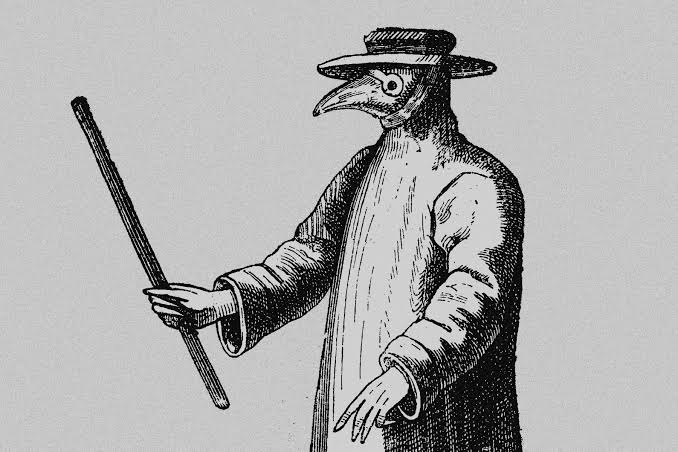
The image is instantly recognizable: a figure cloaked in black, face hidden behind a haunting bird-like mask, carrying a cane through plague-ridden streets. Pop culture has turned the plague doctor into a symbol of medieval dread, but the real story is far more nuanced and surprisingly practical.
This wasn’t a uniform worn across Europe for centuries. It was a specific, short-lived experiment in protective gear, mostly used in 17th-century France and Italy. And the people who wore it weren’t the heroic physicians of legend—they were often desperate, underqualified, or simply doing a municipal job that no one else wanted.
The Costume Wasn’t Standard Issue
The full regalia—waxed leather coat, beaked mask, wide-brimmed hat, gloves, boots, and cane—is most often credited to Charles de L’Orme, physician to French kings Louis XIII and Louis XIV, around 1619. It was primarily used in Paris and Rome, not across all of Europe. English plague doctors, for instance, are not depicted in such outfits in contemporary records.
Why the elaborate getup? At the time, medicine was ruled by the miasma theory: the belief that disease spread through foul, poisonous air. The beak was a crude respirator, stuffed with aromatic herbs and spices like camphor, mint, cloves, myrrh, laudanum, or rose petals. The theory was that these strong scents would purify the air before it entered the body. Vinegar-soaked sponges were also a common addition.
The glass eye openings and waxed leather were meant to block physical contact with the sick. The cane wasn’t a fashion statement—it was a tool to examine patients without touching them, take pulses, and lift clothing to check for buboes.
Who Became a Plague Doctor?
Many were not trained physicians. Qualified doctors often fled cities during outbreaks, leaving the work to second-rate practitioners, young physicians seeking experience, or barber-surgeons and apothecaries with minimal formal training. They were hired by city councils as public employees, tasked with recording deaths, performing autopsies, and enforcing quarantine protocols.
The job was dangerous. Plague doctors were often quarantined themselves for 40 days—the origin of the word “quarantine”—and many died from the very disease they were hired to fight. Pay could be good, but survival was far from guaranteed.
The plague doctor’s beak mask is not a symbol of medieval ignorance but of early, desperate attempts at infection control. It reflects a time when medicine had no germ theory, no antibiotics, and no real understanding of how disease spread. The costume was a practical, if flawed, response to an invisible threat. Next time you see that iconic image, remember: it wasn’t a uniform of terror, but a suit of hope, worn by people trying to do a job no one else wanted.
Summary
- The plague doctor costume was not standard across Europe; it was mainly used in 17th-century France and Italy.
- The beak was a makeshift respirator filled with aromatic herbs and spices to ward off ‘miasma’ or bad air.
- Many plague doctors were not trained physicians but barber-surgeons, apothecaries, or young doctors hired by cities.
- The cane was a practical tool for examining patients without touching them.
- The costume is documented in 1656 engravings by artists like Paulus Fürst, which are the primary visual evidence.
FAQ
Q: Did all plague doctors wear the beaked mask?
A: No. The costume was mainly used in 17th-century France and Italy. In England, for example, contemporary records do not show plague doctors in such gear.
Q: Why did they stuff the beak with herbs?
A: They believed plague spread through ‘miasma’—foul air. The herbs and spices were meant to purify the air before breathing it in, based on the idea that strong scents could counteract the bad vapors.
Q: Was the plague doctor a respected profession?
A: Not usually. Most were not fully trained physicians; they were often second-rate doctors, barber-surgeons, or apothecaries who took the job because qualified doctors had fled the city.
Q: Did plague doctors ever get sick?
A: Yes, many died from the plague. Despite the protective gear, it wasn’t effective against fleas or the bacterium, and the job required close contact with the sick.
Q: Where does the image of the plague doctor come from?
A: The most famous images come from 1656 engravings, such as one by Paulus Fürst depicting a plague doctor in Rome. These are the primary visual evidence for the costume’s existence.